Have you ever wondered why PLCs are so expensive (compared to control boards developed using STM32)? Why do they have such strong anti-interference capabilities? And why are they so stable?Today, let’s discuss these questions together, mainly from a hardware perspective!First, let’s take a look at the internal stacking structure of a PLC, as shown below: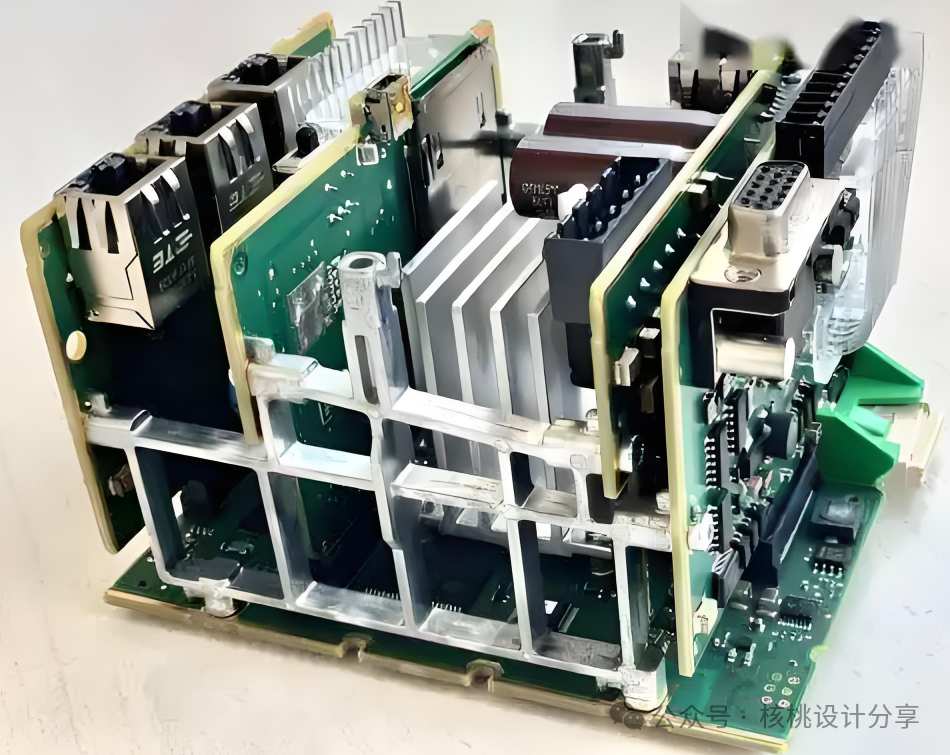 Generally speaking, due to limited internal space, PLCs use a stacked board design, typically consisting of two or three boards stacked together, mainly divided into a power baseboard, an interface board, and a main control board. If there are only two boards, the main control board and the interface board are usually combined.
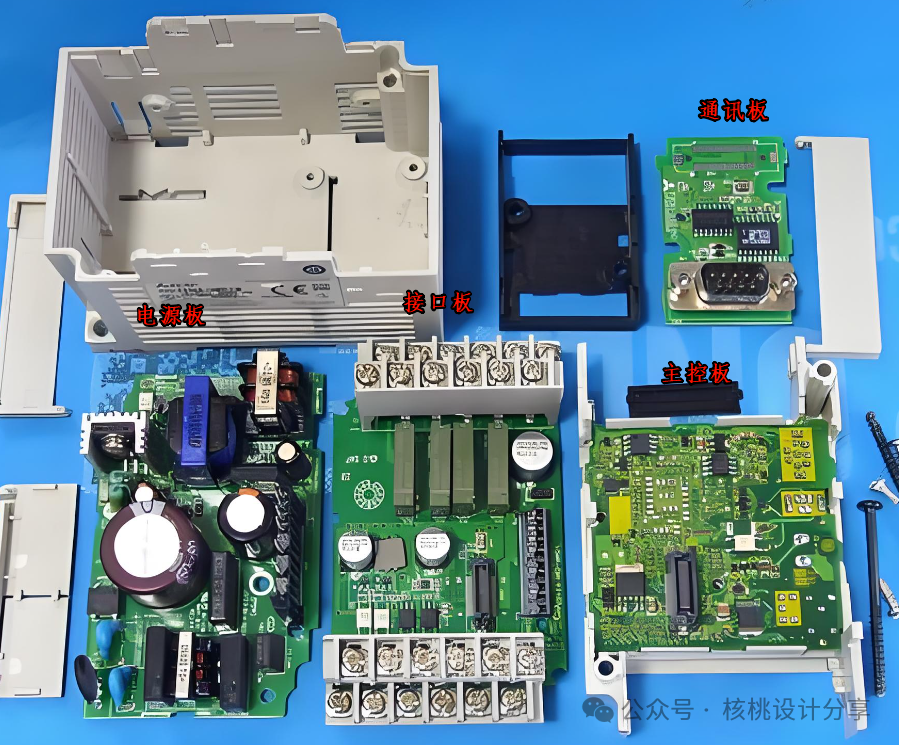 (1) Let’s start with the power board
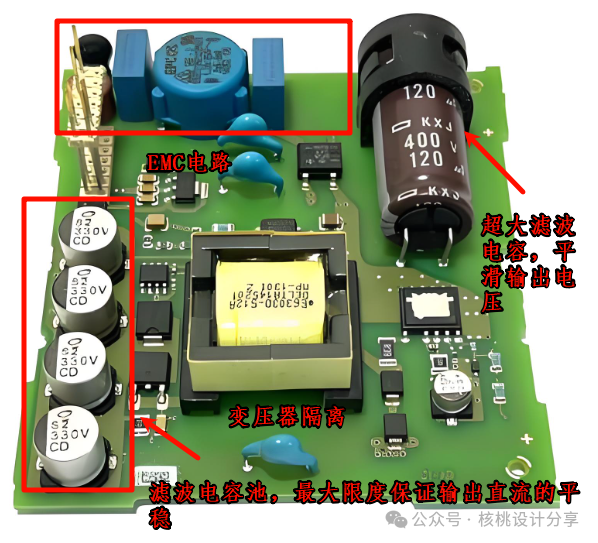 The entire power board uses high-quality materials, starting with the EMC circuit, which is quite solid. It employs an AC to DC solution, with AC input and DC output providing a stable power supply to the main control and logic chips. The transformer isolation effectively reduces interference from the power grid.(2) Interface Board
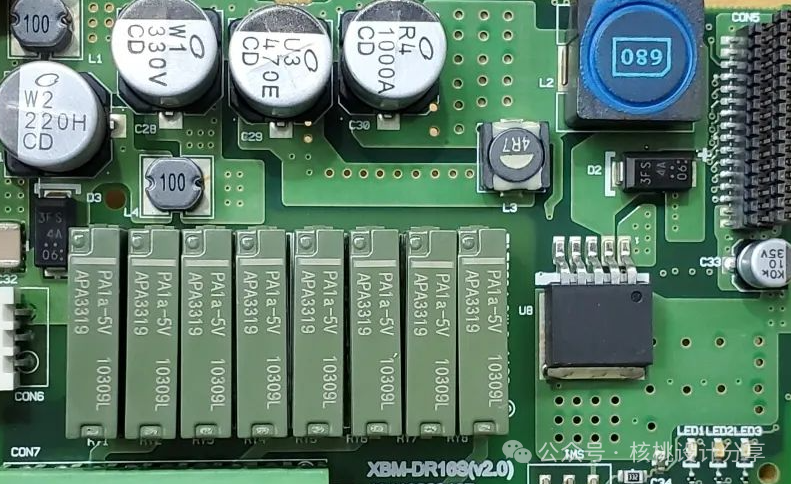 For external devices with higher power, relays are used for control, providing natural physical isolation.
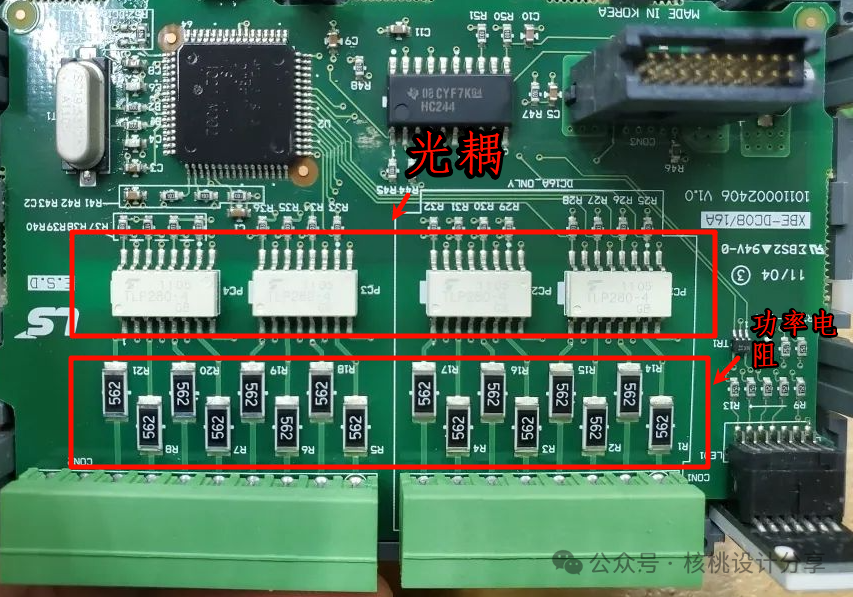 For input detection, opto-isolators combined with power resistors are used for effective isolation protection.It can be seen that PLCs have no blind spots when it comes to isolation, completely ensuring electrical isolation between the main control chip and external devices, fundamentally cutting off the path for external interference. However, this approach significantly increases costs, which is why PLCs are quite expensive—not just due to software costs, but also hardware costs.
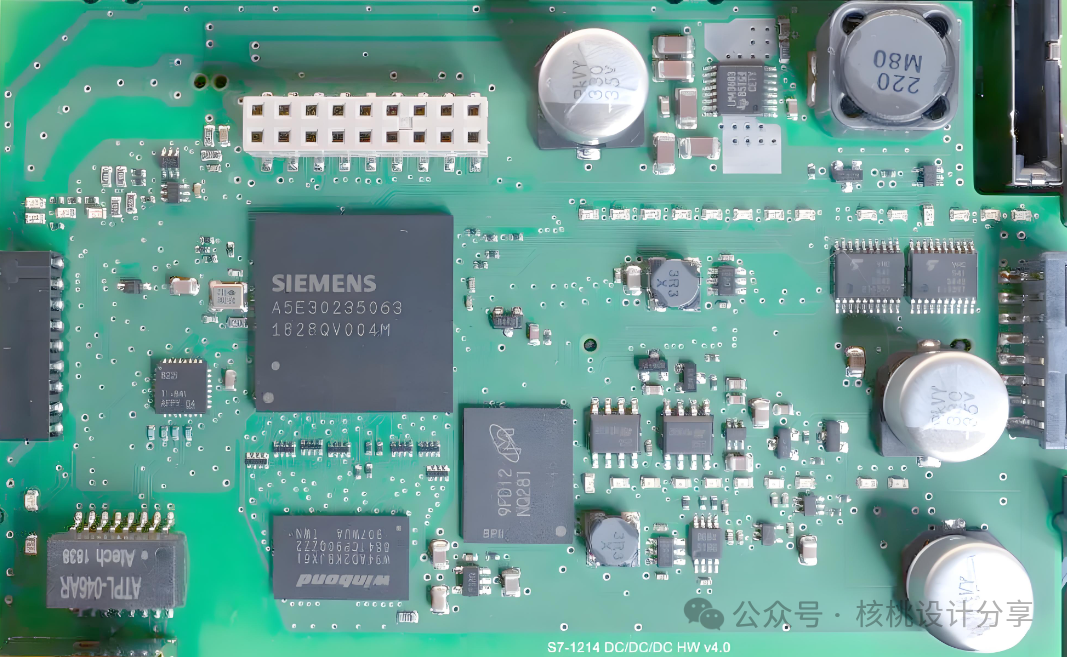 Conclusion:Essentially, a PLC is composed of microcontrollers and various chips, including isolated power supplies, opto-isolation, relay isolation, input isolation, communication isolation, and other methods to enhance hardware stability. Of course, compared to control boards designed using STM32, the costs are significantly higher.Moreover, the chips used in PLCs are of a different grade than those we typically use; the stability of consumer-grade and industrial-grade chips is not on the same level.The stability of PLCs has been developed over many years, optimized and improved for various environments, not only in terms of hardware but also through iterative updates on the software side.