With the acceleration of technologies such as eVTOL, electric vertical takeoff and landing aircraft, and drones moving towards commercialization, the “low altitude economy” is rapidly emerging as a significant trend in the new wave of technological revolution and industrial transformation. In this trend, additive manufacturing, with its advantages of lightweight design, rapid iteration, and high customization, is gradually integrating into the core manufacturing and application processes of low-altitude aircraft, becoming an important engine for driving industry upgrades.
This article introduces several application cases of additive manufacturing in low-altitude aircraft, including lightweight design of key structural components, rapid manufacturing of functional parts, and localized printing solutions in maintenance, repair, and operations (MRO).
AVIC MATE: Quadrotor Drone
AVIC MATE is actively exploring metal 3D printing solutions for the low-altitude industry, leveraging its one-stop comprehensive service advantages in metal 3D printing equipment, materials, and processes.
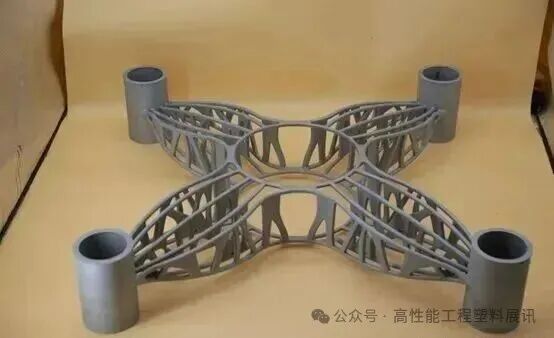
AVIC MATE uses its self-developed MT-Ti6Al4V titanium alloy powder and MT650 equipment, employing unique biomimetic design inspiration, drawing from the structures of bird bones and insect wings to optimize the topology of parts. This successfully overcomes the limitations of traditional manufacturing technologies in producing complex structures. This highly flexible integrated forming technology effectively addresses the challenges faced by traditional drones, such as excessive weight, short endurance, and poor design flexibility. Practical tests have shown that drones manufactured using AVIC MATE’s 3D printing technology have reduced weight by 40%, significantly improved flight flexibility, reduced energy consumption, and enhanced endurance by 26%, allowing drones to carry a wider variety of equipment and perform more complex tasks, thereby unlocking value in more application scenarios such as aerial photography, logistics delivery, and agricultural protection.
The company was selected in March 2025 as one of the first batch of excellent suppliers in the low-altitude economy industry for 3D printing.
HP: Smart Drone ATHERA Components
India’s first space AI drone startup, VECROS, is leveraging HP Multi Jet Fusion 3D printing technology to accelerate the product development and engineering implementation of its smart drone ATHERA. As an AI-driven drone with automatic navigation and obstacle avoidance capabilities, ATHERA poses higher structural complexity and performance requirements for inspection and monitoring scenarios across multiple industries, including mining, construction, telecommunications, and oil and gas.
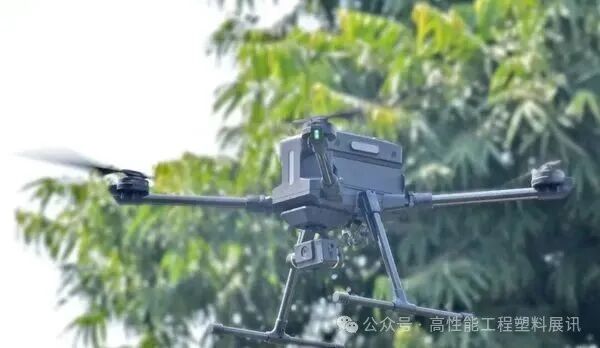
The VECROS team experimented with various additive manufacturing processes during the prototype design phase, ultimately selecting HP’s MJF technology to meet the comprehensive requirements for surface finish, strength, structural integration, and design flexibility. By utilizing the HP Jet Fusion 5210 printing platform and PA 12 material, VECROS not only significantly improved component performance but also accelerated iteration speed and reduced costs for mold manufacturing and small batch production. VECROS stated that with the help of HP 3D printing technology, they achieved rapid conversion from concept to real-world testing, and the current version of ATHERA is nearing the ideal state in terms of design and functional integration, with further optimization possibilities to be explored in subsequent versions.
Formlabs: Lightweight Drone Frame
ION Mobility is actively introducing additive manufacturing technology in drone development to address the practical needs for complex structures, small batch customization, and rapid iteration. Previously relying on traditional machining, the manufacturing cycle was long, and once design changes occurred, iteration costs soared. To solve these bottlenecks, the company introduced Formlabs‘s Fuse 1+ 30W selective laser sintering (SLS) 3D printer, achieving rapid internal manufacturing of key components.
With this system, the R&D team can complete high-density printing tasks within hours, autonomously producing terminal parts with complex geometric structures while ensuring strength and surface quality.
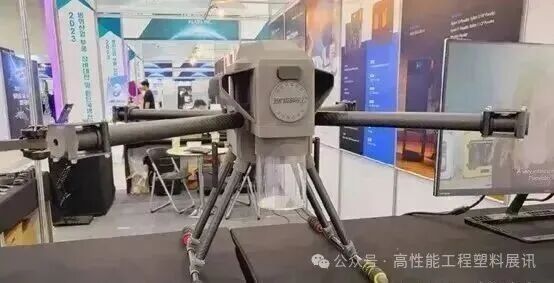
By using Formlabs‘ nylon 12 GF (glass fiber reinforced nylon) powder, ION Mobility successfully created a lightweight fuselage, high-heat-resistant motor mounts, and precision-compliant task equipment enclosures, with key components maintaining stable performance in extreme environments. This entire additive manufacturing solution not only meets the stringent requirements for structural strength, weight control, and thermal stability in drones but also significantly enhances product development efficiency—reducing overall R&D costs by approximately 60% and increasing design iteration speed by up to 70%. The application of SLS technology has significantly accelerated the entire process from prototype design to small batch production, providing strong support for product performance optimization and market responsiveness.
Chuangrui Laser: Lattice Core Wing
Breakthroughs in key technologies such as online monitoring of plasma beam additive manufacturing and digital twin intelligent control technology, as well as precise control of in-situ preparation components, have achieved efficient and low-cost manufacturing of high-quality 600mm-grade titanium alloy/high-entropy alloy gradient lattice rudders and 3m-grade titanium alloy lattice core wings. The lattice rudder samples have been validated through ground static tests, and the drone lattice wing samples have achieved flight test validation, promoting the application of plasma beam additive manufacturing technology in the aerospace field.
A+PLUS: Hydrogen Energy Drone
A leading hydrogen fuel cell technology company in China has begun to deploy hydrogen fuel cell systems in various special drone models based on A+PLUS‘s Blast X agile manufacturing platform.
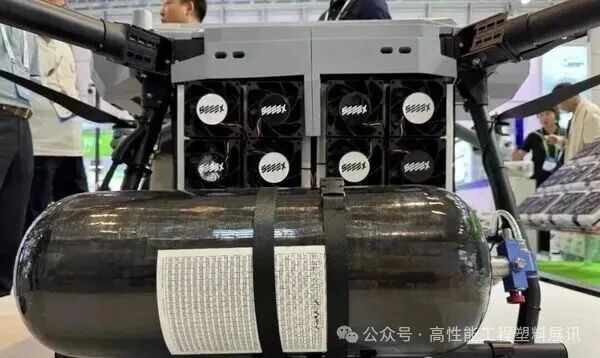
Special drones have high requirements for structural functional components due to their complex application scenarios, requiring both excellent mechanical strength and environmental adaptability, while also posing challenges for customization and delivery timeliness. The Blast X platform, with its high-precision linear motor system and industrial-grade dual-nozzle architecture, combined with engineering-grade carbon fiber composite materials such as BlastMate PAHT-CF / PET-CF, achieves a one-stop in-house manufacturing capability for structural components from modeling to mass delivery.
This not only demonstrates the manufacturing potential of the Blast series in the integration of new energy and unmanned systems but also reaffirms its leading advantages in high-performance composite printing, flexible customization, and rapid response, providing strong manufacturing support for the large-scale implementation of hydrogen energy drones.