Metal 3D printing is considered the pinnacle of all 3D printing. When it comes to strength and durability, nothing compares to metal. The earliest patent for metal 3D printing was DMLS (Direct Metal Laser Sintering), obtained by the German company EOS in the 1990s. Since then, metal 3D printing has gradually developed many types of printing processes. Nowadays, each metal 3D printer typically uses one of the following four types of processes: Powder Bed Fusion, Binder Jetting, Direct Energy Deposition, and Material Extrusion.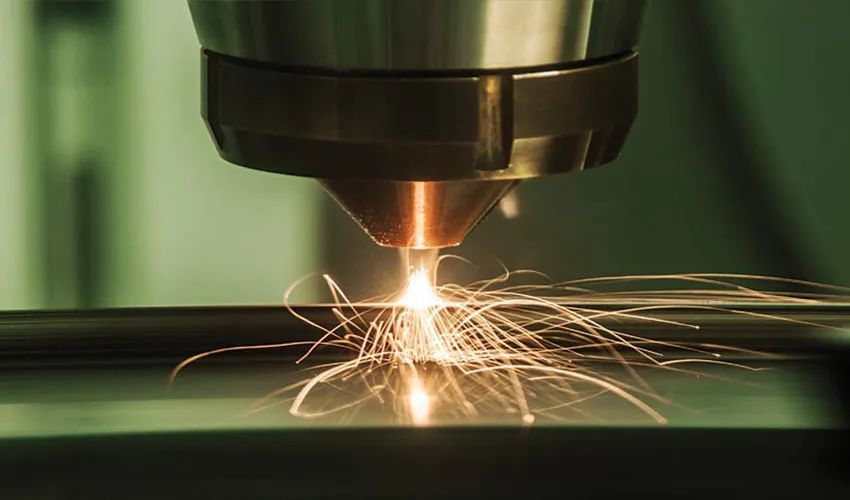 △ Metal 3D PrintingMetal Powder Bed FusionCommon Processes: DMLS (Direct Metal Laser Sintering), SLM (Selective Laser Melting), and EBM (Electron Beam Melting).Description: Metal parts produced using PBF melting technology can reduce residual stress and internal defects, making them ideal for demanding applications in the Aerospace and Automotive industries.
-
Direct Metal Laser Sintering (DMLS): Can be used to construct objects from almost any metal alloy. DMLS spreads a very thin layer of metal powder over the surface to be printed. The laser slowly and steadily passes over the surface to sinter this powder, causing the metal particles to fuse together even without being heated to a fully molten state. Additional layers of powder are then applied and sintered, effectively “printing” one cross-section of the object at a time. After printing is complete, the object is allowed to cool slowly, and excess powder can be recovered and recycled from the build chamber. The main advantage of DMLS is that the objects produced have no residual stress or internal defects, which is crucial for metal parts under high stress (e.g., aerospace or automotive components), while the main disadvantage is that it is very expensive.
-
Selective Laser Melting (SLM): Uses high-power lasers to completely melt each layer of metal powder, rather than just sintering it, resulting in printed objects that are very dense and strong. Currently, this process can only be used with certain metals, such as stainless steel, tool steel, titanium, cobalt-chrome alloys, and aluminum. The high-temperature gradients that occur during the SLM manufacturing process can also lead to internal stresses and misalignments in the final product, compromising its physical properties.
-
Electron Beam Melting (EBM): Very similar to Selective Laser Melting, capable of generating dense metal structures. The difference between these two technologies is that EBM uses an electron beam instead of a laser to melt the metal powder. Currently, electron beam melting can only be used with a limited number of metals. Although cobalt-chrome alloys can also be used, titanium alloys remain the primary raw material for this process. This technology is mainly used for manufacturing parts in the aerospace industry.
Technical Advantages: Can manufacture almost any geometric shape with high precision. A wide range of metals can be used, including the lightest titanium alloys and the strongest nickel superalloys, which are difficult to process with traditional manufacturing techniques. Mechanical properties can rival those of forged metals, and parts can be machined, coated, and treated like traditionally manufactured metal parts.Technical Disadvantages: High material, mechanical, and operational costs. Parts must be connected to the build plate through support structures (to prevent warping), resulting in waste and requiring manual post-processing removal. Limited build size, and handling metal powder is hazardous, requiring strict process control.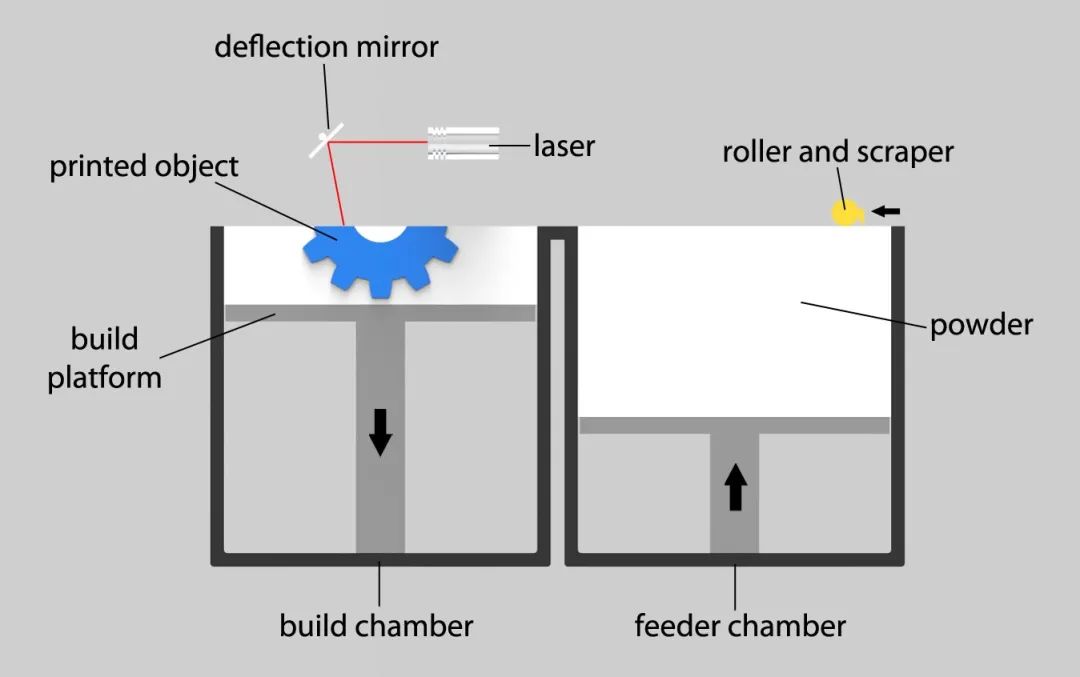 △ PBF Powder Bed FusionMetal Binder JettingCommon Processes: MJF (Multi Jet Fusion), NPJ (Nano Particle Jetting)Description: This technology uses inkjet to selectively drop a binder onto a flat powder bed. The areas receiving the droplets are cured, while the remaining powder remains loose. This process is repeated layer by layer until the entire object is generated. This technique can handle materials such as metal, sand, ceramics, etc. Since metal binder jetting machines operate at room temperature, warping does not occur, and no supports are needed. Therefore, binder jetting machines can be much larger than powder bed fusion machines and can stack objects, making full use of the entire build chamber, making it a popular choice for small batch production and on-demand manufacturing.Technical Advantages: Can print large volumes, parts do not need to be connected to the build plate, allowing for nesting to utilize all available build volume. There are fewer geometric restrictions, and supports are typically not needed. Warping does not occur, allowing for larger parts to be made. The printing speed is very fast, and the cost of printing metal is lower than powder bed fusion.Technical Disadvantages: Parts must undergo a time-consuming debinding and sintering process post-printing, and the machine and material costs are high. Porosity is higher than in powder bed fusion, leading to poorer mechanical properties, and fewer materials are available.
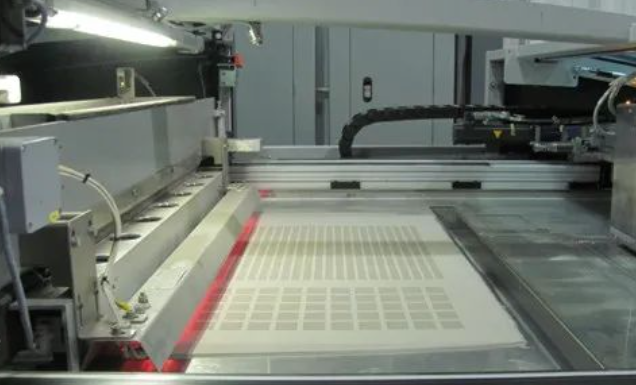
△ Binder Jetting 3D PrinterDirect Energy DepositionCommon Processes: DED (Direct Energy Deposition), WAAM (Wire Arc Additive Manufacturing), LMD (Laser Metal Deposition)Description: This method involves extruding metal, either in powder or wire form, which is then immediately subjected to high-energy impacts (achieved through plasma arcs, lasers, or electron beams to achieve melting). The energy melts the metal, and the molten pool is immediately lowered into 3D space, manipulated by a robotic arm. It is very similar to welding, so one of its main applications is to repair existing metal parts and enhance the functionality of parts.Technical Advantages: Metal wire is the most affordable form of metal 3D printing material, and some machines can even use two different metal powders to create alloys and material gradients. 5-axis and 6-axis motion can produce models without the need for supporting materials. Damaged metal parts can be repaired and new components added. The build volume is large, material usage is efficient, parts are dense, mechanical properties are good, and printing speed is fast.Technical Disadvantages: Parts have a poorer surface quality and usually require machining and finishing, making small details difficult or impossible to achieve. Mechanical and operational costs are high.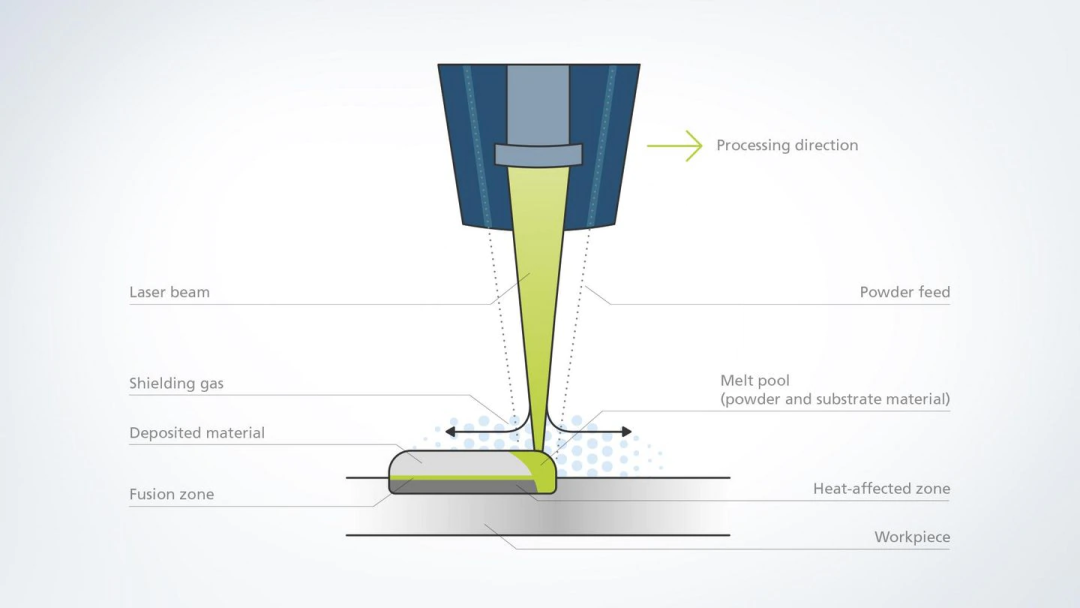 △ Laser Metal Deposition (LMD)Metal Material ExtrusionCommon Processes: FDM (Fused Deposition Modeling)/FFF (Fused Filament Fabrication)Description: This technology was created specifically to enable affordable metal 3D printing for small and medium-sized enterprises. Design studios, machine shops, and small manufacturers use metal material extruders to iterate designs, create fixtures and jigs, and complete small batch production. The latest development in the field is metal wire, which can be used in most desktop FDM 3D printers, making metal 3D printing accessible to almost everyone. The working principle of Metal Material Extrusion:
-
Polymer filament or wire infused with metal particles is 3D printed layer by layer according to the designed shape.
-
Clean the 3D printed parts to remove some of the binder.
-
Place the parts in a sintering furnace, where the metal particles melt into solid metal.
Technical Advantages: Affordable, easy to operate, and safe.Technical Disadvantages: Parts must undergo the same debinding and sintering processes as binder jetted parts. More restrictions on geometry and supports are needed to prevent warping, and parts have high porosity, failing to achieve the same mechanical properties as forged metals. Parts are not as dense as those produced using PBF or DED, and the shrinkage in the furnace is less accurate.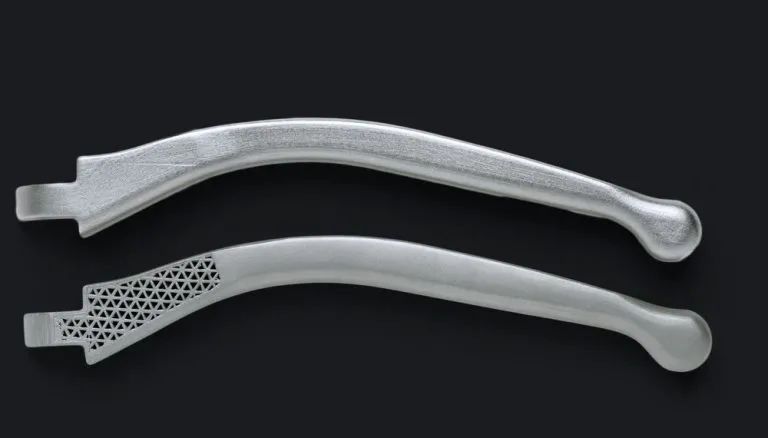 △Markforged Metal X 3D Printer Sample Parts [Image Source: Markforged]Other Metal 3D Printing ProcessesJoule Printing: Digital Alloys’ Joule Printing looks very similar to DED, but the metal wire is melted using electrical current instead of heating with an arc or beam. This allows for faster printing speeds, with up to 2 kg of titanium printed per hour.Liquid Metal Additive Manufacturing: Vader Systems created a liquid metal additive manufacturing technology that deposits liquid metal droplets at 1200°C in a manner similar to inkjet printing.Electrochemical Deposition: Exaddon’s CERES nanoscale metal 3D printer can create metal objects smaller than the width of a human hair using electrochemical deposition.DLP Metal Printing: ADMATEC and Prodways provide metal DLP printing. Similar to Metal Material Extrusion, metal powder is mixed with photopolymer resin, and the 3D printed parts must undergo the same debinding and sintering processes as in the Metal Material Extrusion method.Cold Spray Metal Printing: Cold spray metal printing was initially used by NASA to build metal objects in space. Its main feature is speed (6 kg of aluminum or copper per hour), but it is not as accurate. Australian companies Titomic and SPEE3D are leaders in this technology.Ultrasonic Consolidation (UAM): Uses sound to bond thin layers of metal foil together, machining away excess material from each layer before bonding the next layer of foil, thus combining additive manufacturing and subtractive manufacturing. Fabrisonic’s SonicLayer 3D printer series utilizes this technology.Laser Engineering Net Shaping (LENS): A laser-based method that requires a very controlled environment. This process requires a sealed chamber, usually using argon to remove oxygen, keeping oxidation levels as low as possible. The power of LENS lasers ranges from 500W to 4kW. It can be used to process titanium, stainless steel, and chromium-nickel alloys. Despite the challenges of maintaining an oxygen-free chamber, LENS offers users better precision and control.Electron Beam Freeform Fabrication (EBF3): Originally developed by NASA, this method is primarily used in the aerospace industry. It can create complex geometries without wasting any material and can produce lightweight shapes to promote fuel savings.
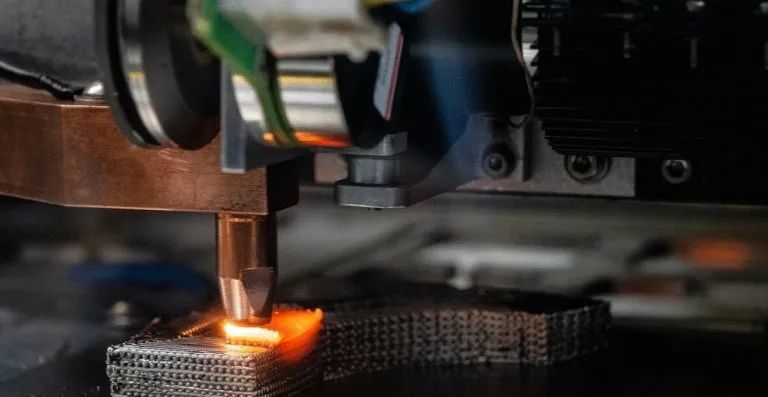 △ Digital Alloys’ Joule 3D Printing Process [Image Source: Digital Alloys]
Source: Antarctic Bear 3D Printing