1. Internet of Things and Wireless Sensor Networks1. Introduction to the Internet of Things
The Internet of Things (IoT) is referred to as the third wave of the information industry following computers and the internet, representing the direction of development in information and communication technology.The English name for the Internet of Things is “the Internet of Things”. It connects devices and networks through sensing devices according to agreed protocols, enabling information exchange and communication, allowing for intelligent identification, location tracking, monitoring, and management.
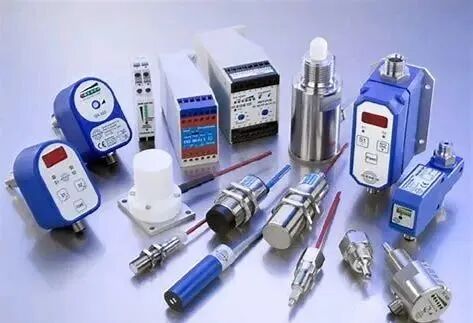 The IoT can be divided into three layers in terms of technical architecture: the perception layer, the network layer, and the application layer. The perception layer comprehensively senses and captures information about objects using technologies such as RFID, GPS, cameras, sensors, and sensor networks, allowing for information collection and acquisition anytime and anywhere. The network layer is responsible for reliable transmission, ensuring that information and communication can occur reliably through various communication networks and the internet.
The application layer is responsible for intelligent processing, analyzing and processing vast amounts of cross-departmental, cross-industry, and cross-regional data and information to gain insights into various activities in the physical world and economic society, enabling intelligent decision-making and control.
Sensors, computers, and communication are metaphorically compared to human senses, brain, and nerves, forming the three pillars of electronic information technology. Due to the relatively mature development of computer and communication technology, sensors play a crucial role in the development of the IoT industry, becoming a key technology of the IoT.
2. Wireless Sensor NetworksA wireless sensor network (WSN) is a distributed sensor network composed of a large number of inexpensive micro-sensor nodes deployed in a monitoring area, forming a multi-hop self-organizing network through wireless communication. Its capability is to collaboratively sense, collect, and process information about the sensed objects within the network coverage area and provide it to observers.
Sensors, sensed objects, and observers are the three essential elements of a wireless sensor network. A large number of sensor nodes are randomly deployed within or near the monitoring area, capable of forming a network through self-organization.
The data monitored by sensor nodes is transmitted hop-by-hop to other sensor nodes, and during the transmission process, the monitored data may be processed by multiple nodes, ultimately routing to a sink node after multiple hops, and finally reaching the management node via the internet or satellite.
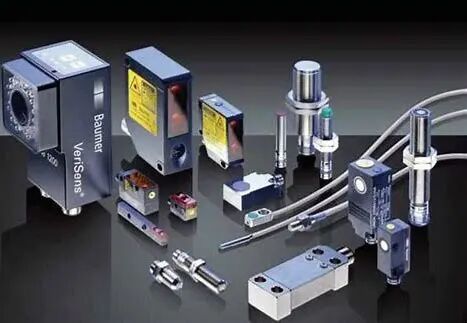
Users configure and manage the network through the management node, sending monitoring tasks and collecting monitoring data. External networks include targets such as UAVs, satellite communication networks, the internet, etc.
2. SensorsThe term sensor is derived from the word “sense”. Among human sensory organs, the eyes can perceive the shape, size, and color of objects, the ears can perceive sound, the nose can perceive smell, and the tongue can perceive taste.
Humans rely on these senses to perceive the external world, but when studying natural phenomena, natural laws, and production activities, their functions are far from sufficient, necessitating the use of sensors. If computers are likened to the brain, sensors can be seen as extensions of human sensory organs, referred to as “electronic senses”. Sensor technology is ubiquitous across various industries and plays an irreplaceable role.
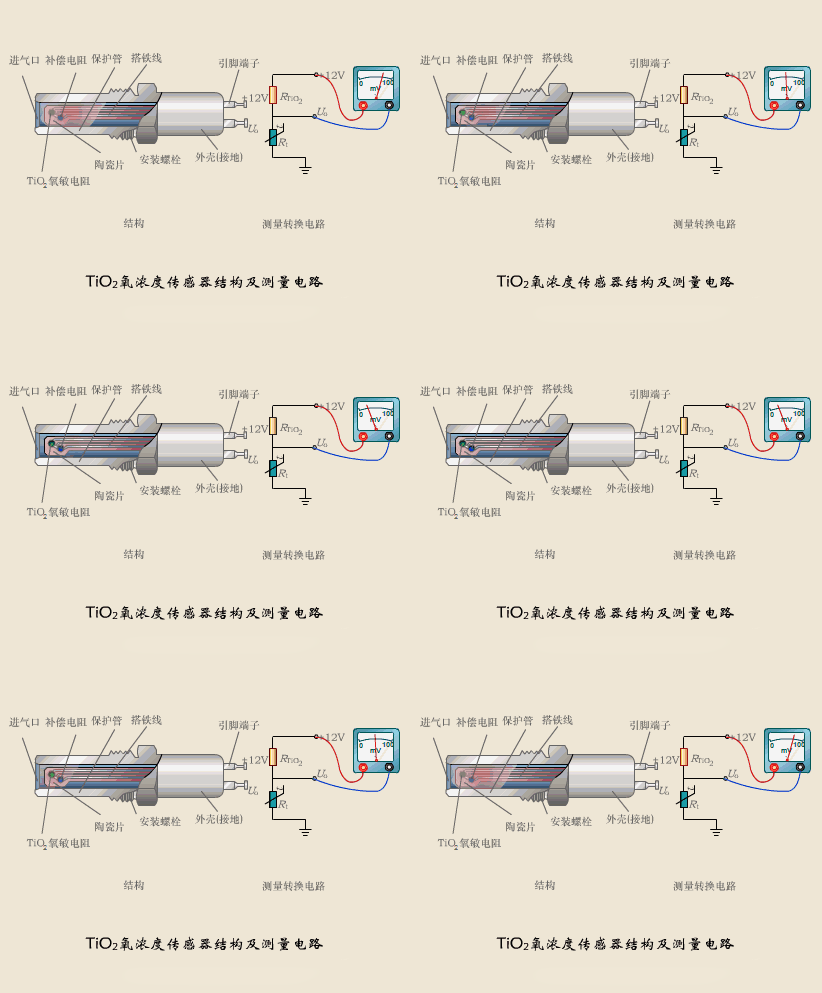 1. Definition of SensorsAccording to the national standard of the People’s Republic of China (GB7665-2005), a sensor (transducer/sensor) is defined as a device or apparatus that can sense a specified measurement and convert it into a usable output signal according to certain rules. Generally, the definition of a sensor is: a device or apparatus that can convert external physical quantities into electrical quantities according to certain rules.
The definition of a sensor includes the following four aspects:1. A sensor is a measuring device that can complete the signal acquisition task.2. The input quantity is a specific measurement, which may be a physical quantity, chemical quantity, biological quantity, etc., but is influenced by other quantities.
3. The output quantity is a certain physical quantity, which should be convenient for transmission, conversion, processing, display, etc. This quantity can be gas, light, electrical quantity, etc., primarily electrical quantity.4. There is a correspondence between input and output, and it has a certain degree of accuracy.
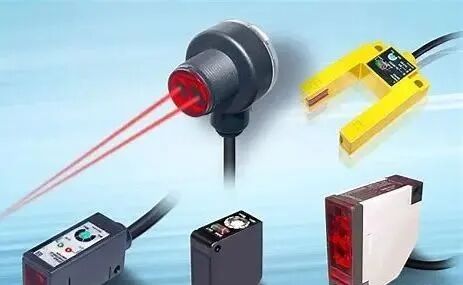 2. Structure of SensorsSensors have the function of “sensing and transmitting”, meaning they sense the measured information and transmit it. A sensor generally consists of a sensitive element, a conversion element, and a measurement conversion circuit.
The sensitive element refers to the component in the sensor that can sense the measured quantity and output a certain physical quantity that has a definite relationship with the measured quantity; the conversion element refers to the component in the sensor that can convert the measured quantity sensed or responded to by the sensitive element into an electrical signal suitable for transmission or measurement; the measurement conversion circuit is used to further convert and process the electrical signal output by the conversion element, such as amplification, filtering, and compensation.
3. Types of SensorsSensors come in a wide variety, and even the same type of measurement can be performed using different types of sensors. For example, pressure detection can be measured using piezoelectric, strain, capacitive, and other types of sensors; while a single type of sensor can measure multiple physical quantities, such as capacitive sensors that can be used to measure displacement, pressure, acceleration, etc. Therefore, there are many classification methods for sensors.