With the development of technology,
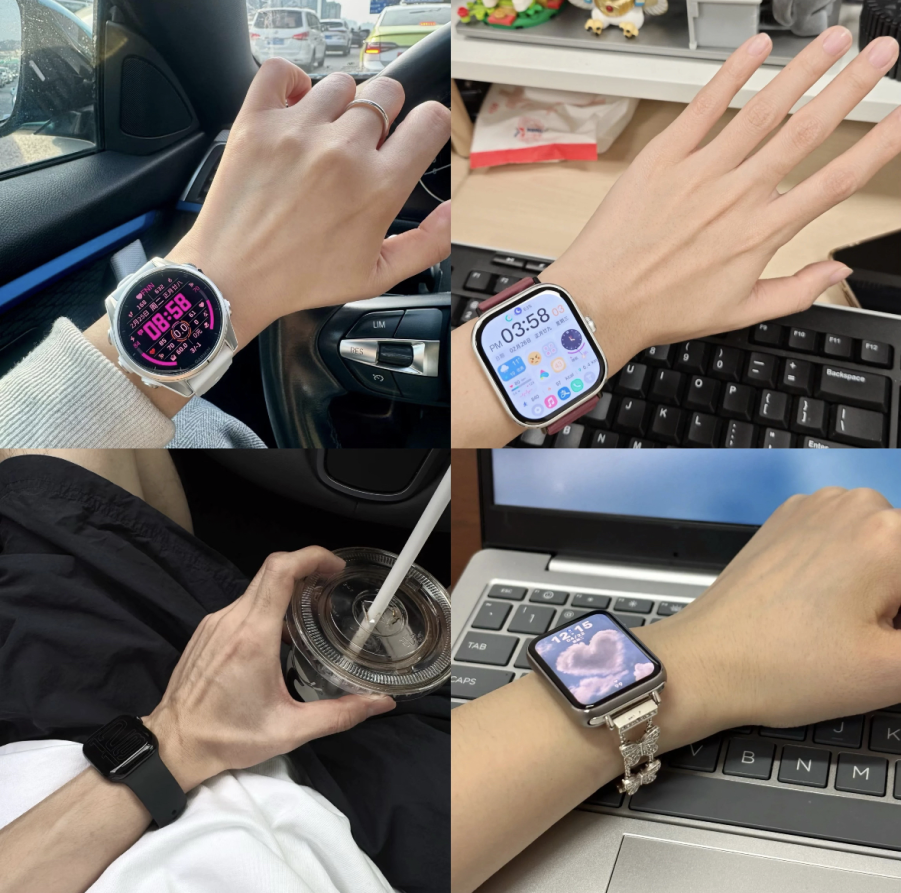
smartwatches have become our “close companions” in daily life.
They not only remind us of the time and receive messages,
but also monitor our steps, heart rate, sleep, and other health data.
But have you ever wondered howaccurate the data presented by these devices really is?
Today, let us delve into the field of measurement to find out.
All data relies on measurement.
01Measurement: The Invisible “Referee” in Life
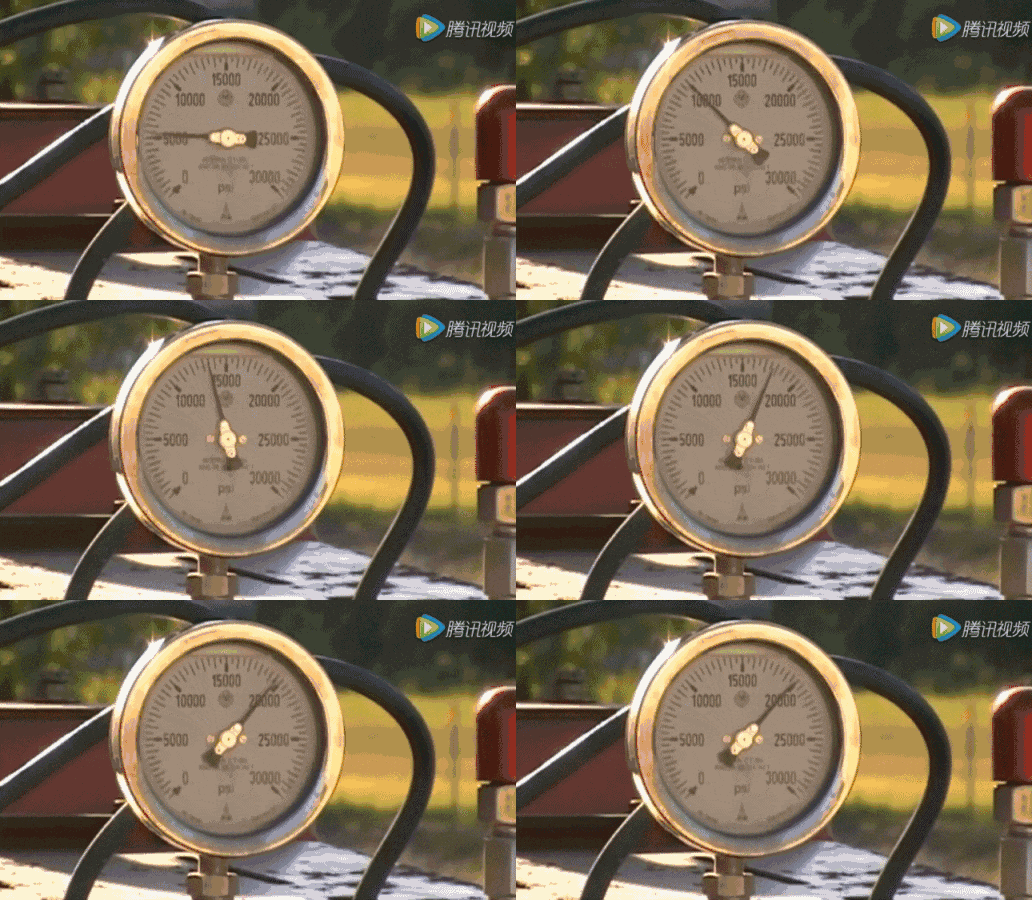
Measurement, as the “eyes” of science and technology and the “foundation” of social development, has always been an important tool for humanity to understand and transform the world, from ancient measurement units based on human body parts to modern precision measurement systems based on quantum physics. The trajectory of measurement development profoundly influences the progress of human civilization. In daily life, whether it is the electronic scales in the market or the nanometer-level measurements in aerospace, measurement acts like an invisible “ruler” and a fair “judge,” safeguarding the reliability of data. For smartwatches that carry our health data, measurement is even the core factor determining thecredibility of the data.
Next, let us explore the measurement secrets inside smartwatches.
02Unveiling the “Data Production Chain” Inside Smartwatches
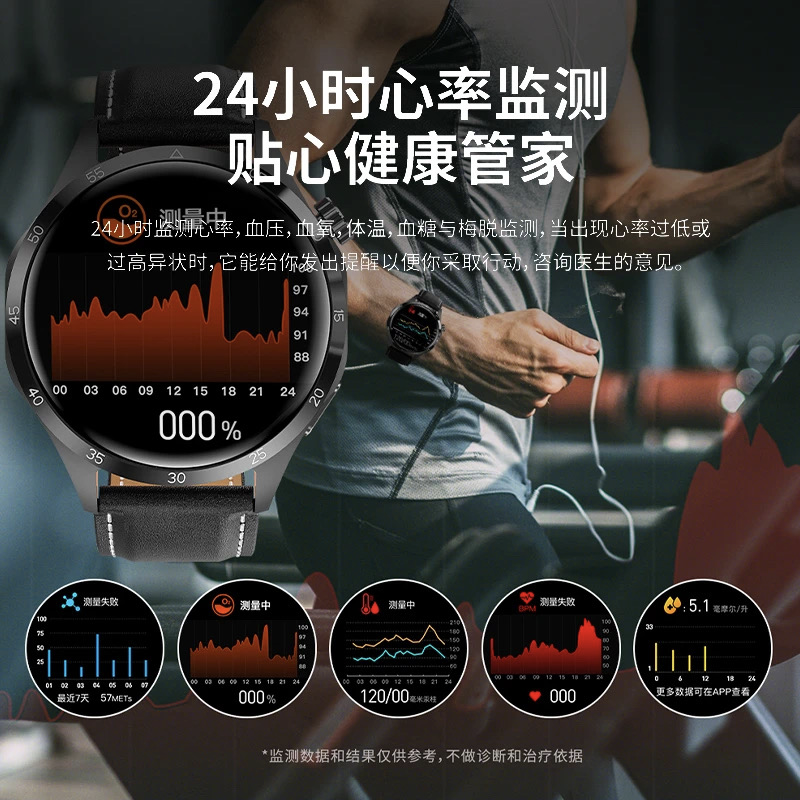
The inside of a smartwatch is like a precise “micro-measurement laboratory,”where various sensors act as precise “measurement probes,” undertaking the responsibility ofdata collection.
·Heart Rate Monitoring: Mainstream optical sensors emit light at specific wavelengths to capture real-time changes in light reflection intensity caused by blood vessels in the wrist due to heartbeats, converting light signals into electrical signals, and finally calculating heart rate values through measurement algorithms.
·Step Counting and Activity Recognition: Accelerometers sense the acceleration changes of wrist movements hundreds of times per second based on inertia, combined with precise integral calculations to achieve step counting and activity posture recognition.
·Sleep Monitoring: Multiple sensors (heart rate, acceleration, etc.) work together, using data fusion algorithms from metrology to comprehensively analyze parameters such as heart rate fluctuations and body movement frequency to estimate sleep duration and stages.
These complex “data production processes” are closely related to the precision of measurement technology at every stage.
Although the data collection mechanisms seem precise,
various factors can lead to data deviations in actual use.
Let us take a look at the specific manifestations of these data deviations.
03Measurement Deviations: The “Gray Area” of Data Accuracy
1. Heart Rate Monitoring:Wobbling Between Precision and Error
-
At Rest: Most smartwatches can control heart rate monitoring errors within ±3 – 5 beats/minute, thanks to the basic calibration of their built-in sensors.
-
During Intense Exercise: Measurement errors can significantly amplify. For example, during high-intensity running, irregular wrist movements can cause changes in contact pressure between the sensor and the skin, and the electrolyte composition of sweat can interfere with optical signal transmission. These factors can disrupt the original measurement balance, leading to measurement errors of up to ±10 – 15 beats/minute.
2. Sleep Monitoring:Duration is Easy to Measure, Stages are Hard to Distinguish
-
Total Duration: Mainly relies on the body movement threshold measurement of the accelerometer, with an accuracy rate of 70% – 90% through the established “static time – body movement intensity” measurement model.
-
Stage Analysis (Deep Sleep/REM): Lacking professional measurement indicators such as EEG and EOG, relying solely on single-dimensional data like heart rate variability and body movement frequency leads to identification error rates of deep sleep and REM sleep stages as high as 20% – 70%, failing to meet medical-grade measurement standards.
3. Activity Tracking:Measurement Errors Under Environmental Interference
-
Step Counting: Essentially a threshold determination of acceleration waveforms, achieving over 95% accuracy when the activity pattern matches the standard measurement model. However, in non-standard activity scenarios, such as irregular household movements or carrying items, misjudgments can easily occur.
-
GPS Distance Measurement: In environments with urban canyon effects or indoor signal obstructions, positioning accuracy can drop from an ideal ±2-5 meters to ±20-50 meters, severely affecting data credibility.
So what factors influence data accuracy?
 04The “Behind-the-Scenes” Factors Affecting Data Accuracy
1. Differences in Sensor Performance
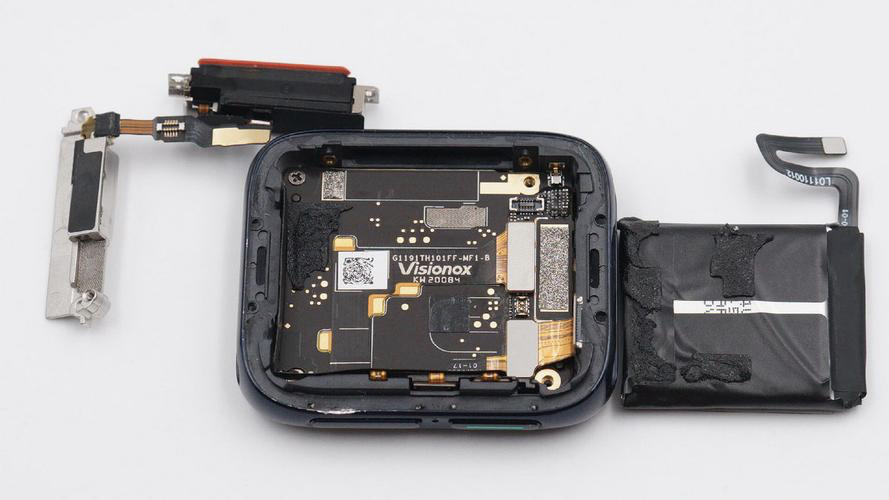
Different brands and price ranges of smartwatches have significant differences in the quality and performance of their built-insensors. High-end products typically use more advanced and precise sensors, while some mid-range and low-end products may compromise on sensors, directly affecting data collection accuracy.
2. Degree of Algorithm Optimization
In addition to hardware,software algorithms also play a crucial role. Excellent algorithms can analyze and correct the data collected by sensors more reasonably, reducing errors (such as more accurately identifying sleep stages). Insufficient algorithms can easily lead to data deviations.
3. Wearing Method and Environmental Factors
-
Wearing Method: Wearing too loosely or too tightly can affect the contact between the sensor and the skin, thus impacting data accuracy.
-
Environmental Interference: External factors such as temperature, humidity, and magnetic fields can also interfere with the normal operation of sensors.
What impact will the continuous advancement of measurement technology have on smartwatches?
05Measurement Research Safeguarding Data Accuracy
In the face of measurement challenges for wearable devices, research forces are actively intervening: The China National Institute of Metrology and other authoritative institutions have launched special research. Research teams are establishing “dynamic motion simulation – multi-parameter calibration” measurement standard devices to simulate physiological signal characteristics under different exercise scenarios, providing precise measurement traceability for smartwatch sensors. At the same time, AI-based measurement algorithm optimization projects are also underway, constructing error correction models based on massive real-world data, reducing measurement uncertainty by over 30%. These cutting-edge research results act like a “measurement safety lock” for wearable devices, ensuring that their data measurements are “traceable and reliable,” continuously improving the accuracy of our close companions.
Although the data from smartwatches is not absolutely accurate,
it still provides significant help for our health management and activity monitoring.
Understanding theaccuracy and limitations
of this data can help us use wearable devices more scientifically,
allowing technology to better serve our lives.
Source: Yifu Metrology Museum
Friendly Reminder
 Due to WeChat’s recent changes to its push rules, readers need to frequently leave comments or click “View” or “Like”; otherwise, they will gradually stop receiving notifications! If you still want to see our updates daily,please follow Haina Metrology, and set Haina Metrology【as a star】 or click “View” or “Like” at the bottom of the page after reading, thank you all.
If there are any copyright issues with the content pushed by this account, please let us know, and we will handle it promptly. The internet is an ecosystem of resource sharing, and reprinting is for free dissemination and sharing. This account does not guarantee the authenticity of reprinted content, and the views expressed in the articles are for reference only!
For inquiries, contact Tian Ge at 18610813406, WeChat same number. We take measurement seriously. Haina Metrology F Group QQ 849455800
Haina Metrology Matrix

Haina Metrology |

Haina Metrology Technology |
Haina Metrology Academy |

Haina Metrology Bilibili Account |

Haina Metrology Video Account |

Haina Metrology WeChat Store |

We take measurement seriously!