When the weather is cold,
there is always a major problem to face,
that is: my hands are so cold when using my phone!!!

However, when wearing gloves, the fingers lose their fingerprints
and cannot touch the phone.

Then I saw a friend

To solve this problem,
“touchscreen gloves” were born.
A must-have for heavy smartphone users!

However, due to the lack of corresponding product standards and market access thresholds, touchscreen gloves on the market vary in category, style, and material, with prices ranging from a few yuan to hundreds. Poor quality touchscreen gloves not only have issues with the conductive parts but also have outdated knitting technology regarding textile threads, materials, and color fastness. Poor quality touchscreen gloves can easily scratch your phone and may even cause microcurrents that could damage the fingertip nerves.

How to choose touchscreen gloves in the face of a dazzling array of options?
Difference between touchscreen gloves and regular gloves
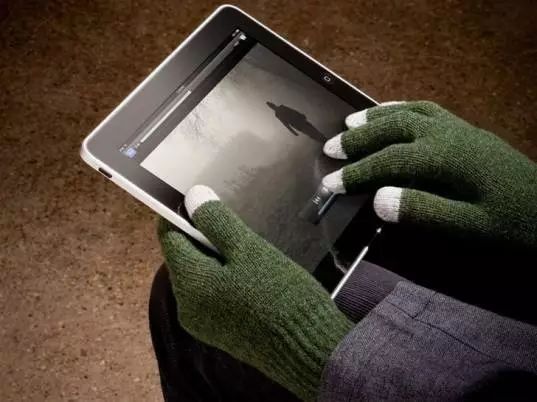
Currently, the touchscreen screens on smartphones and tablets are basically capacitive screens, which work based on the human body’s induced electric current. The reason regular gloves cannot work on touchscreen devices is that they are made of thicker insulating materials. The fingertip areas of touchscreen gloves use conductive materials, such as conductive yarn, to achieve effective induced electric current between the fingertip and the screen for touchscreen functionality. Conductive yarn is made from a certain proportion of stainless steel fibers or other conductive metal fibers mixed with regular fibers, and the blending ratio can vary. Conductive yarn is the core component of touchscreen gloves, and its quality depends on the blending level, taking into account the conductivity of the conductive fibers and the spinnability of the blended fibers. Therefore, choosing a relatively balanced blending ratio and grasping the critical value of blending is key to the technology of conductive yarn. Currently, the conductive yarn used in touchscreen gloves on the market is mainly blended with acrylic and metal conductive materials, and during the glove manufacturing process, materials such as cotton, linen, wool, and even cashmere are added to improve warmth and comfort. High-end touchscreen gloves even combine genuine leather with conductive yarn.

Touchscreen glove production lacks corresponding standards and specifications

As a new product, there are no relevant product standards for touchscreen gloves, which results in manufacturers lacking a unified production standard to follow. Manufacturers include both large companies and family workshops.
Currently, the touchscreen gloves on the market mainly refer to the textile safety category GB 18401-2010 “National Basic Safety Technical Specification for Textiles” Class B, GB/T 12624-2009 “General Technical Conditions for Protective Gloves”, FZ/T 73047-2013 “Knitted Civil Gloves”, or QB/T 1616-2005 “Sports Gloves” for labeling purposes.

It can be seen that these standards do not reflect the characteristics that should be assessed for touchscreen gloves, such as the quality of conductive yarn, touchscreen sensitivity, safety of finger use, potential damage to capacitive screens, and warmth. Therefore, there is an urgent need to establish corresponding industry standards to regulate the market access standards for touchscreen gloves, allowing this emerging industry to develop in a sustainable and orderly manner.
How to choose touchscreen gloves

Based on price. The price difference of touchscreen gloves is mainly due to the cost of conductive yarn, as different conductive yarn technologies have significant price differences. In addition, some high-end touchscreen gloves include more expensive materials such as cashmere or lambskin to enhance warmth, which can also increase their price. Therefore, consumers should thoroughly understand the conductive materials and try to purchase products from well-known brands, avoiding touchscreen gloves priced below the market average and those without production permits and after-sales guarantees.
Based on usage needs. Consumers who prioritize style and windproof warmth can choose leather touchscreen gloves, but these gloves can only perform sliding unlocks, dialing, etc. If you want to send a text message, it’s better to use a voice assistant or dictation function; if you enjoy winter outdoor activities like skiing, consider multifunctional touchscreen gloves, which are usually bulkier, made of high-tech composite materials, and often have a dual-layer design with conductive yarn inside and a flexible outer layer that can be put on or taken off, meeting both sports and smartphone usage needs while providing good windproof and warmth effects, but their operational accuracy may be lower; for daily use, you can choose common wool touchscreen gloves, which are relatively inexpensive, usually costing only a few dozen yuan, as they can tightly wrap the palm, providing the best precision for operations, but they also have drawbacks like pilling, lack of durability, and single-layer design that does not provide enough warmth.

Source: China National Gate Times, Comprehensive Network