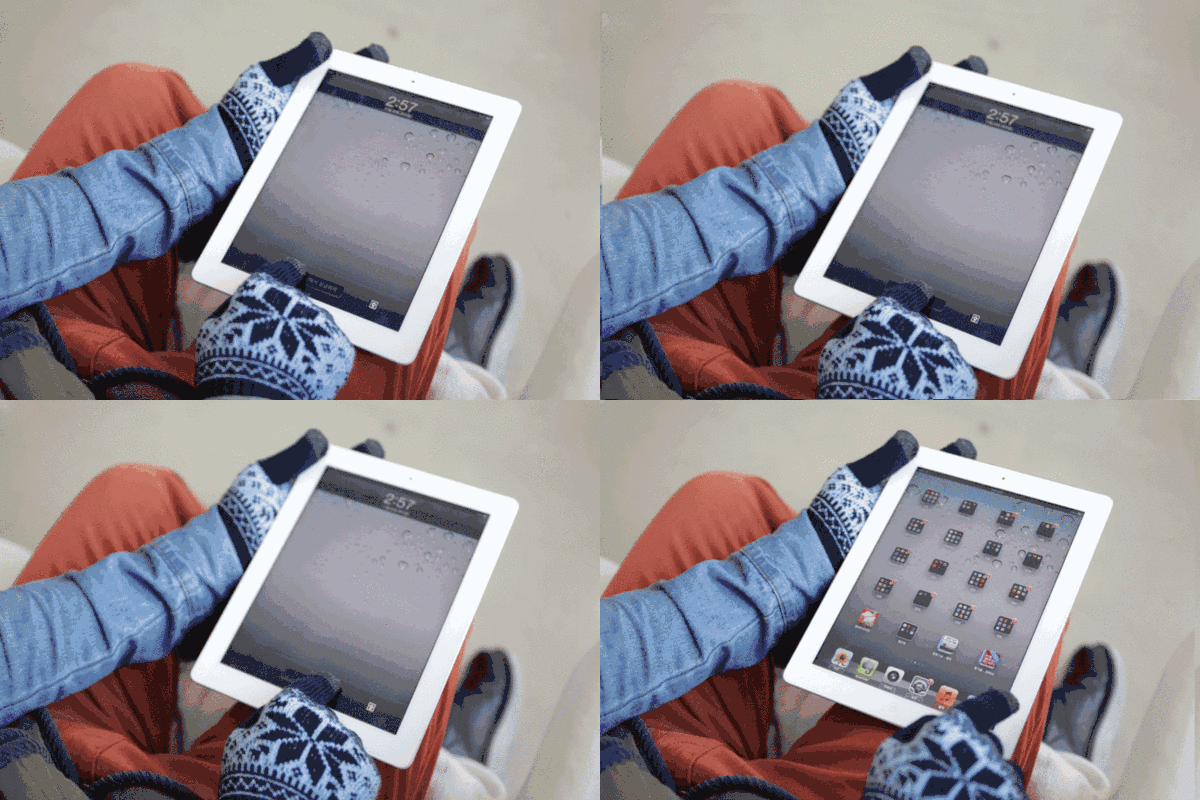
In winter, when the temperature is low, how can we keep our fingers in close contact with the touchscreen? “Touchscreen gloves” have emerged to solve this problem. However, due to the lack of product standards and market access thresholds, touchscreen gloves vary widely in categories, styles, and materials in the market, with prices ranging from a few yuan to hundreds. Poor quality touchscreen gloves may scratch phones and could also cause microcurrents that damage the nerve endings in fingers. So how should consumers choose from the wide variety of touchscreen gloves available?
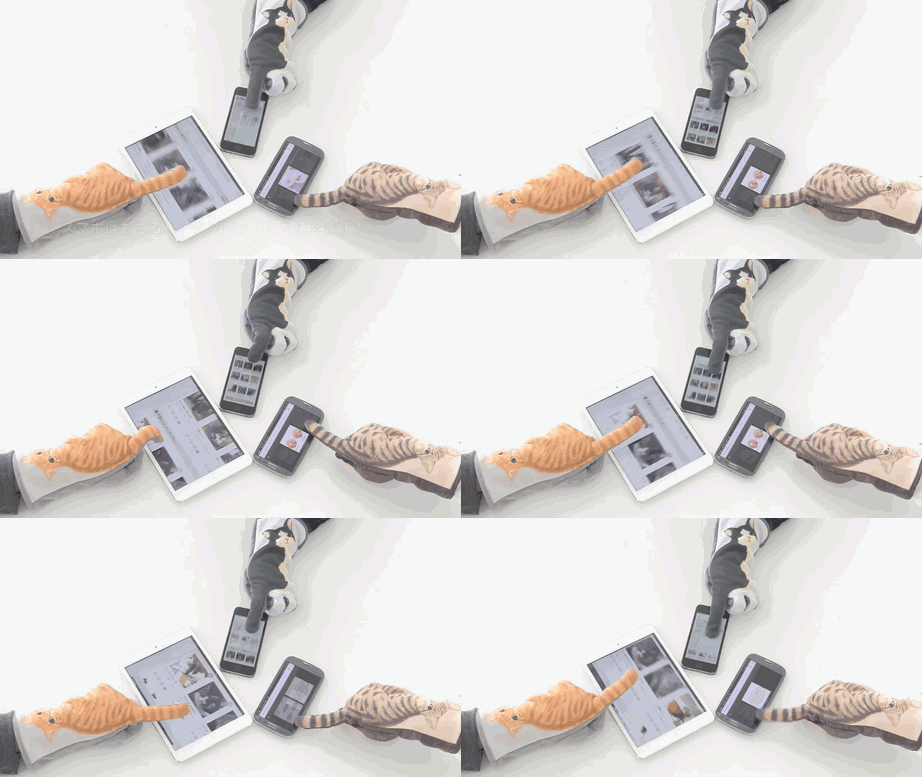
The Difference Between Touchscreen Gloves and Regular Gloves
Currently, the touchscreens on smartphones and tablets are mostly capacitive screens, which work based on the body’s induced electric current. Regular gloves cannot interact with touchscreens because they are made of thicker insulating materials. Touchscreen gloves use conductive materials, such as conductive yarn, in the fingertip areas, allowing effective sensing of electric currents between the fingertips and the screen, achieving touchscreen functionality. Conductive yarn is the core component of touchscreen gloves, and its quality depends on the blending level, considering the conductivity of the conductive fibers and the spinnability of the blended fibers. Therefore, selecting a relatively balanced blending ratio and grasping the critical value of blending is key to conductive yarn technology.
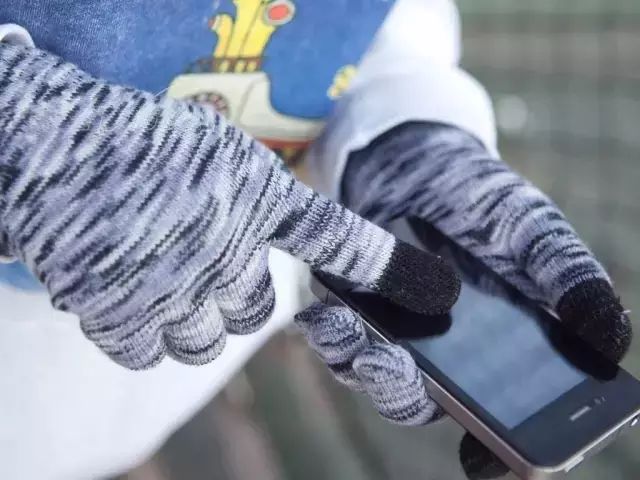
Currently, the conductive yarn used in commercially available touchscreen gloves is mainly a blend of acrylic and metal conductive materials. When making gloves, cotton, linen, wool, and even cashmere are added to improve warmth and comfort. Higher-end touchscreen gloves even combine genuine leather with conductive yarn.
Lack of Standards in Touchscreen Glove Production
As a new type of product, touchscreen gloves do not have relevant product standards, which results in manufacturers lacking a unified production standard to follow. The market is a mix of large manufacturers and small workshops. Currently, the touchscreen gloves sold on the market primarily refer to textile safety categories such as GB 18401-2010 “National Basic Safety Technical Specifications for Textiles” Class B, GB/T 12624-2009 “General Technical Conditions for Protective Gloves”, FZ/T 73047-2013 “Knitted Civil Gloves”, or QB/T 1616-2005 “Sports Gloves”. It can be seen that these standards do not reflect the characteristics that touchscreen gloves should be evaluated on, such as the quality of conductive yarn, touchscreen sensitivity, safety of finger usage, potential damage to capacitive screens, and warmth. Therefore, there is an urgent need to establish corresponding industry standards to regulate market access for touchscreen gloves, allowing this emerging industry to develop sustainably and orderly.
How to Choose Touchscreen Gloves?
1. Based on Price
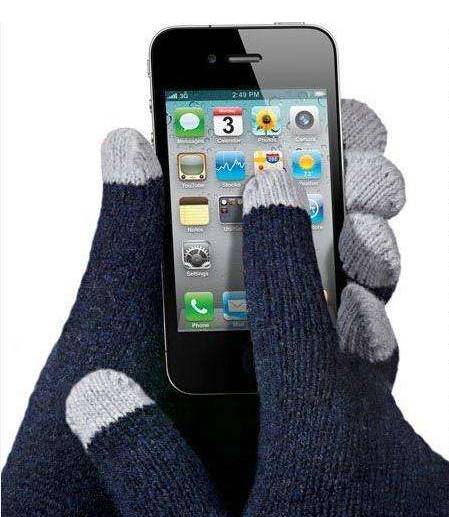
The price difference in touchscreen gloves is mainly caused by the cost of conductive yarn, which varies greatly between different conductive yarn technologies. Additionally, some high-end touchscreen gloves incorporate expensive materials like cashmere or lambskin to enhance warmth, which can also raise the price. Therefore, consumers should thoroughly understand the conductive materials and try to purchase products from well-known brands, avoiding touchscreen gloves priced below the market average and those without production permits and after-sales support.
2. Based on Usage Needs
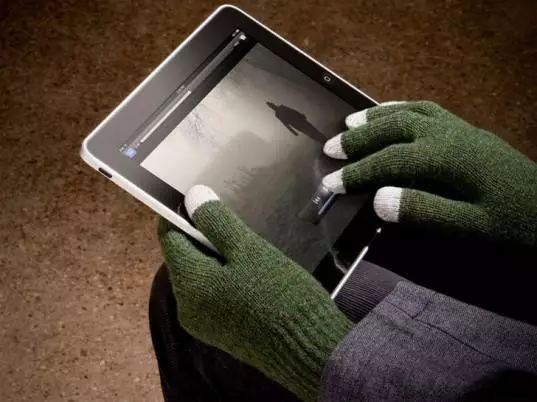
If consumers prioritize fashion and windproof warmth, they may choose leather touchscreen gloves, but these gloves can only perform basic functions like sliding to unlock and dialing. For texting, it is better to use a voice assistant or dictation function. If one enjoys winter outdoor sports like skiing, multifunctional touchscreen gloves should be considered. These gloves are typically bulkier, made from high-tech composite materials, and often feature a double-layer design with conductive yarn on the inside and a removable outer layer, satisfying both sports and phone use needs, providing good windproof and warmth effects, but their precision of operation may be lower. For everyday use, common wool touchscreen gloves can be chosen, which are usually inexpensive, costing only a few dozen yuan. They tightly wrap around the palm, allowing for the best precision, but they may also pill easily, lack durability, and have a single-layer design that does not provide enough warmth.
Source: China Quality News Network