1. IdentificationThe customer’s vehicle cannot start, checking DTC fault P0339: Crankshaft sensor signal interruption fault. Replacing the CKP sensor and several other components did not resolve the issue.2. Analysis2.1. Fault Description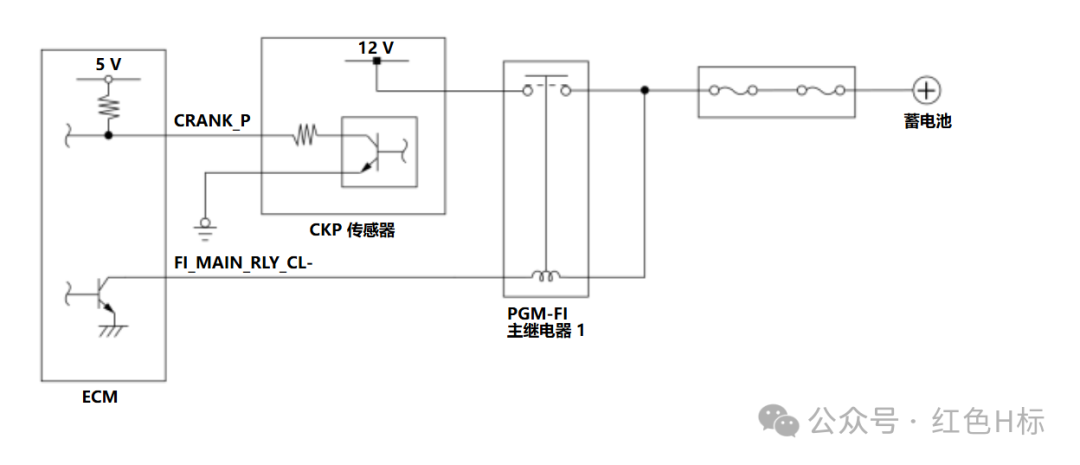 The Crankshaft Position (CKP) sensor detects the fuel injection/ignition timing and engine speed for each cylinder. The CKP sensor consists of a rotor and a semiconductor that detects the rotor’s position. After the engine starts, the rotor rotates, and the magnetic flux in the semiconductor device changes. The change in magnetic flux is converted into a pulse signal sent to the Engine Control Module (ECM). If an anomaly is detected in the pulse signal from the CKP sensor, the ECM detects a fault and stores the DTC. Fault Threshold: The number of pulses detected during the reference pulse interval corresponding to each crankshaft revolution is not 58. This condition has been detected at least 30 times.2.2. Possible Causes of the Fault:
- Abnormal CKP signal disk
- CKP sensor and wiring
- Internal fault in PCM
3. Isolation3.1 Check the cranking data:
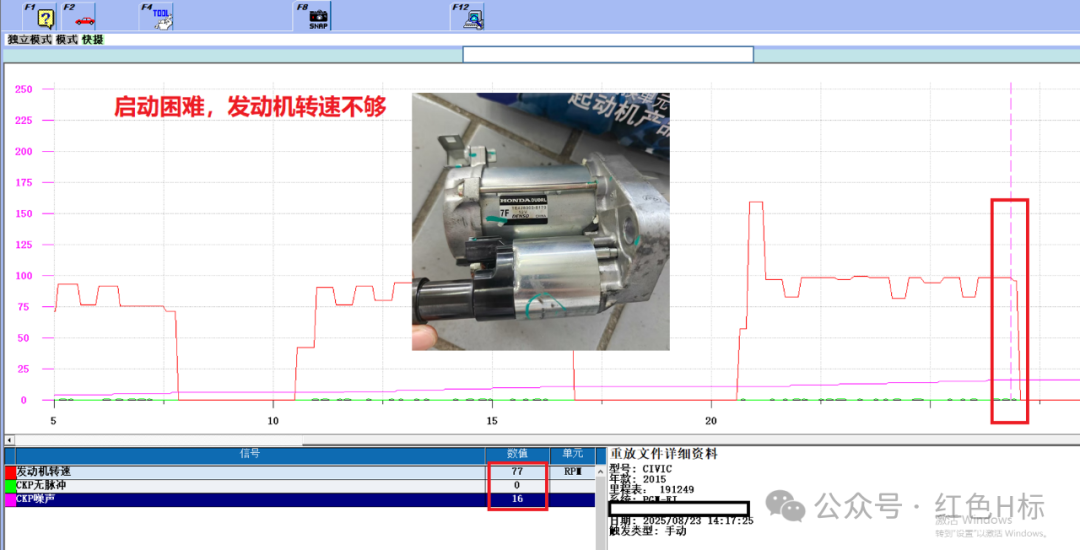
- Battery voltage normal: 9-11V
- Engine speed abnormal: 60-125RPM does not meet the minimum starting speed requirement
- CKP noise detection normal: data increases from 0 to 16 (varies with engine speed)
- MAP/MAF data normal: varies with speed and is within range
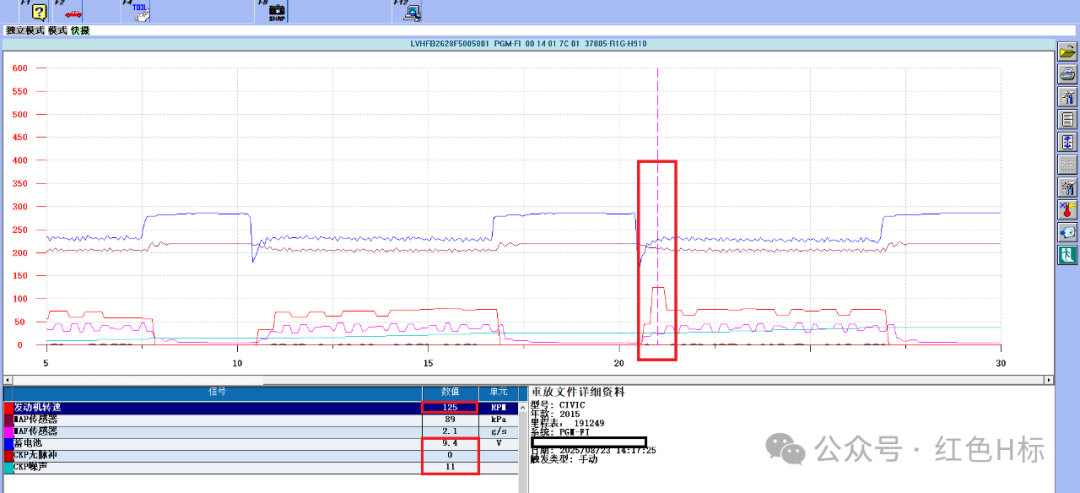
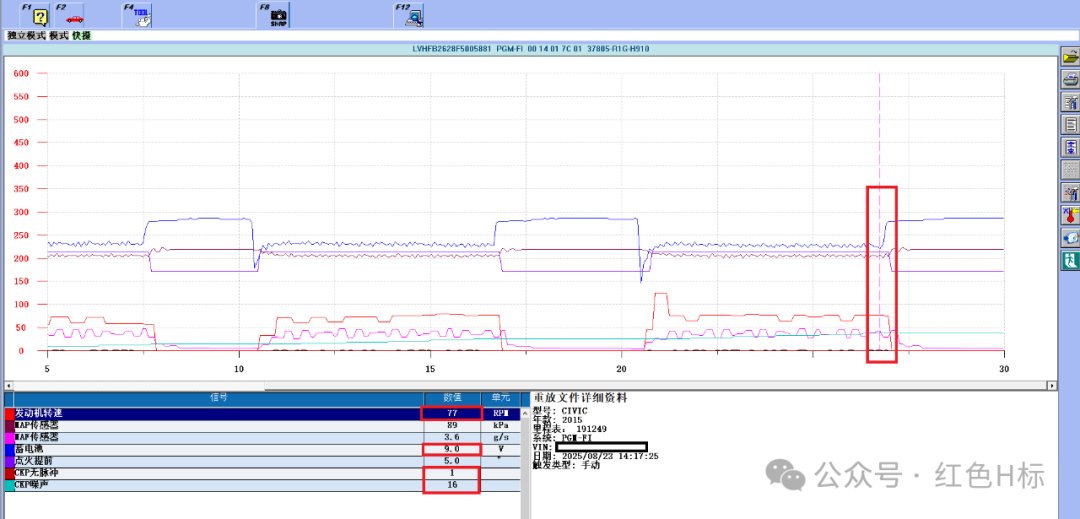 3.2. Based on cranking data and maintenance history summary: The engine starting speed is too low and needs to be investigated further.
- Due to the low engine starting speed, the PCM misjudges the CKP signal interruption (the CKP sensor and related components have been replaced and tested at other shops).
- Fuel, ignition, intake system, and related components have been replaced and verified (replaced at other repair shops).
- This speed also does not meet the minimum starting speed requirement, leading to difficulty in starting the engine. Further inspection of the starter is needed.
4. RepairRemove and inspect the starter, which is a non-original (Denso imitation), and replace it for confirmation.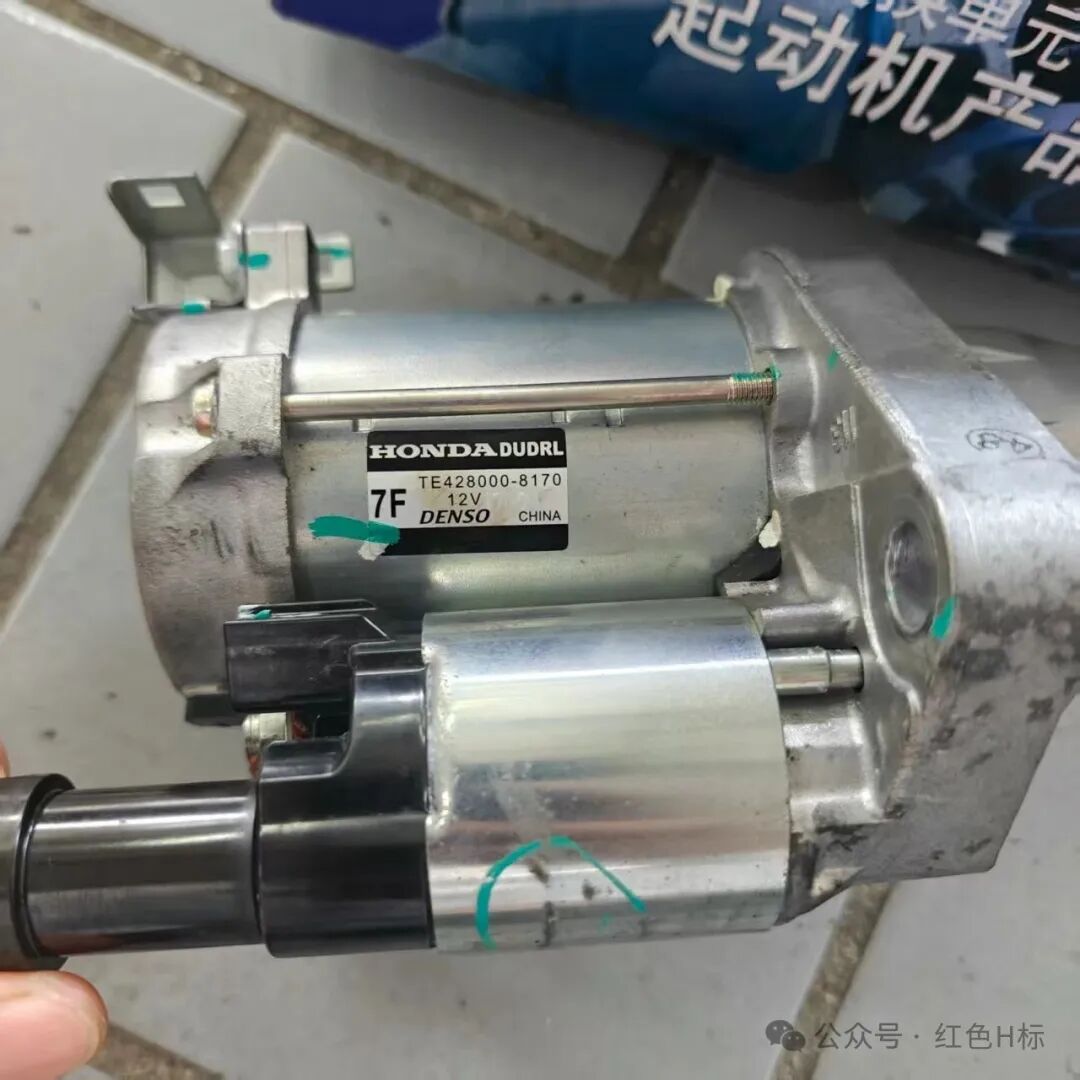 5. ConfirmationAfter replacing the starter, the engine starts normally.
 6. Explanation of P0339 data and different fault patterns illustrated:
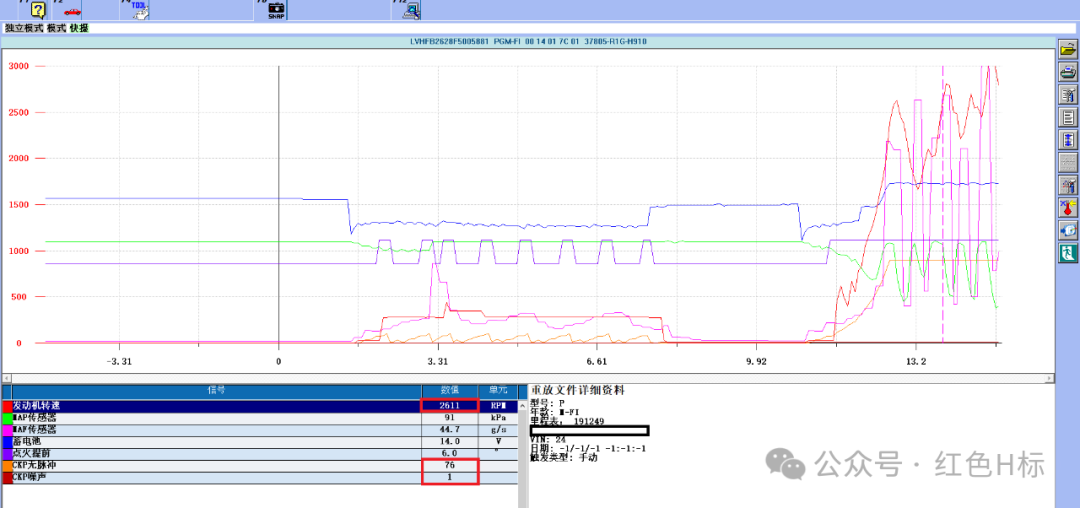
- CKP noise: CKP pulse noise count for a crank angle of 6 degrees timing system. For every 360 degrees of crankshaft rotation, if an anomaly in the crank pulse is detected, the anomaly count will increase this count.
- CKP no pulse: CKP pulse disappearance count for a crank angle of 6 degrees timing system. If the CKP sensor experiences a signal disappearance, the detection of a normal TDC sensor signal can increase this count.
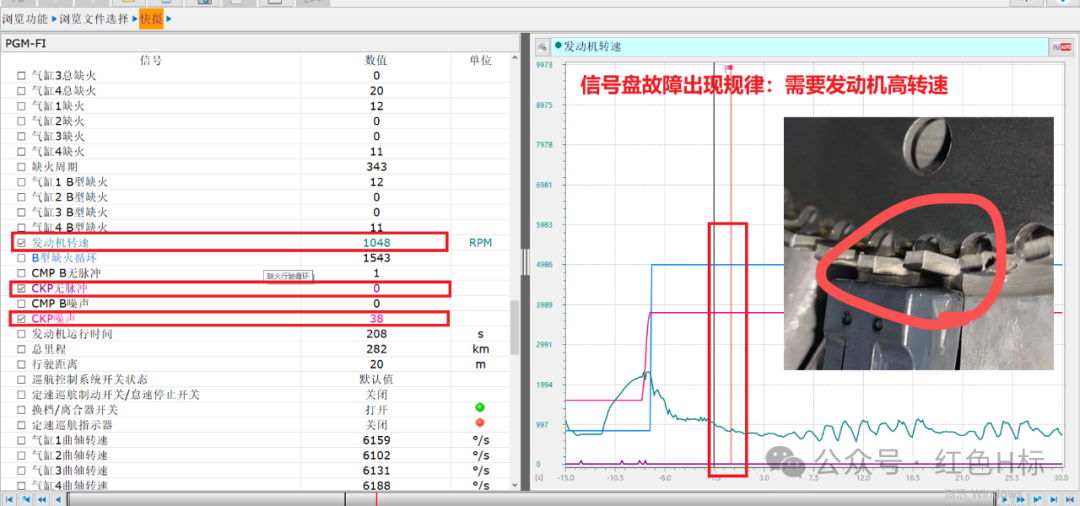
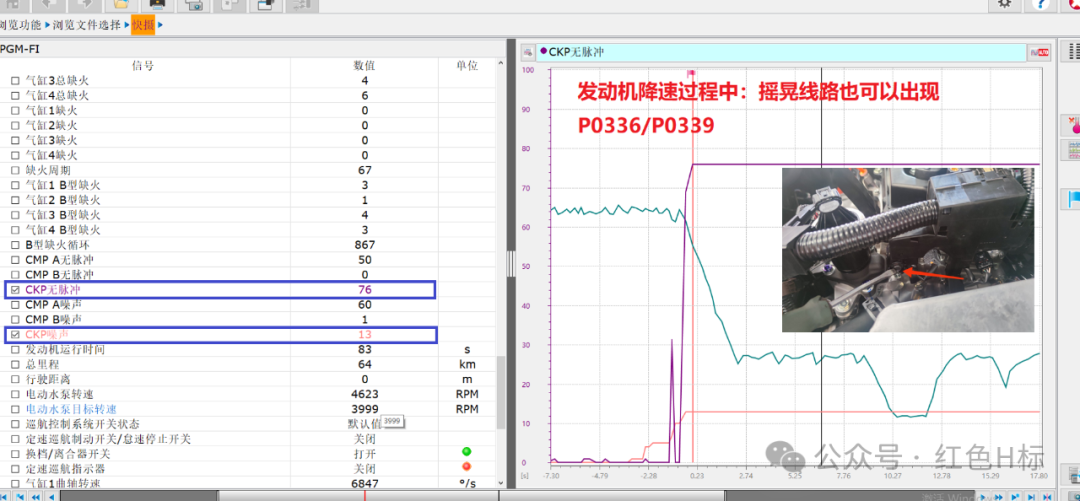
- Below are the HDS data patterns for P0339 caused by signal disk abnormalities (tooth deformation), poor circuit contact, and aftermarket starters for reference.
 7. Case Study on Engine Starting Difficulties: Vehicle stalls, difficult to start? Check these data points, saving time and effort!
  Everyone is welcome to discuss and share in the comments section