As an employee in SMT processing, have you ever wondered about the difference between PCB and PCBA, two abbreviations that seem quite similar? In the electronics manufacturing industry, PCB and PCBA are two terms that are frequently mentioned.
Although they are both related to circuit boards, there are significant differences in functionality, manufacturing processes, and the final product forms.
Below, we will explore the differences between PCB and PCBA in detail.
1. PCB – Printed Circuit Board
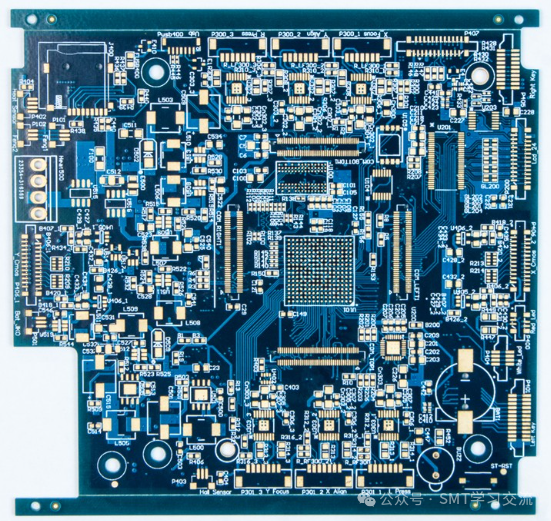
Definition: The abbreviation for Printed Circuit Board. It primarily serves as a carrier for electronic components, connecting various electronic components in a circuit through conductive copper foil + insulating materials (such as epoxy resin) to establish a complete electrical connection. PCB is the “mounting carrier” for electronic components (such as the green/black circuit boards in phones and computers).
Core Function: To connect various components and achieve stable transmission of current signals.
PCB is the cornerstone of all electronic products. Its manufacturing process does not involve the installation of components, and the main steps include:
Design: Designing the circuit layout based on the circuit schematic.
Board Fabrication: Transferring the designed drawings onto the copper-clad board.
Etching: Using chemical solutions to etch away unnecessary copper foil, leaving only the designed circuit.
Drilling: Drilling through holes or blind holes where components need to be installed or inter-layer connections are required.
Electroplating: Metalizing the walls of the holes to allow electrical connections between different layers.
Lamination: For multilayer boards, laminating multiple core boards into a single unit.
Solder Mask: Applying a green (or other color) solder mask to protect the circuit and prevent short circuits during soldering.
Silkscreen: Printing component designators, parameters, and other white text for easier assembly and maintenance.
At this point, a bare PCB has been completed. It cannot perform any electronic functions yet.
2. PCBA – Printed Circuit Board Assembly
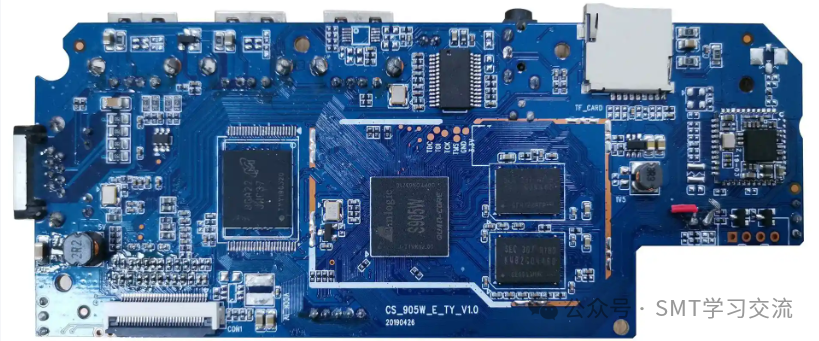
Definition: The abbreviation for Printed Circuit Board Assembly, which refers to the installation of electronic components (such as resistors, capacitors, chips, etc.) on a PCB and forming a complete circuit board assembly with specific functions through soldering or connection processes.
Core Difference: PCB is an “empty board” while PCBA is a “finished board with components installed”.
PCBA is built upon the PCB, where a series of complex assembly processes are used to accurately install the required electronic components at their corresponding positions on the PCB, forming reliable electrical connections. The main processes include:
SMT (Surface Mount Technology):
lSolder Paste Printing: Applying solder paste onto the PCB pads through a stencil.
lComponent Placement: Using a pick-and-place machine to accurately place small surface mount components (such as chips, small resistors, capacitors) onto the solder paste.
lReflow Soldering: Passing the PCB with placed components through a reflow oven, where high temperatures melt the solder paste, cooling it afterward to securely solder the components onto the board.
lDIP (Dual In-line Package): For larger components (such as large capacitors, connectors) that are not suitable for surface mounting, they need to be manually or machine-inserted into the through holes of the PCB.
lWave Soldering: Passing the bottom of the board through a wave of molten solder to solder the pins of the inserted components onto the board.
Inspection and Testing:
lAOI (Automated Optical Inspection): Checking for defects in soldering, such as short circuits, missing components, misalignment, etc.
lICT (In-Circuit Testing): Testing whether the electrical connections on the circuit board are correct.
lFCT (Functional Testing): Simulating the working environment of the entire machine to test whether the overall functionality of the PCBA is normal.
Only after completing all the assembly and testing steps can we obtain a fully functional PCBA, which can be enclosed in a casing to become the electronic products we use daily, such as phones, computers, and televisions.
Conclusion
PCB is the foundation, PCBA is the result.
First comes PCB, then comes PCBA.
PCB manufacturing belongs to the “printing” industry, while PCBA assembly belongs to the “electronic manufacturing” industry.