Meta released its third-quarter financial report, with revenue of $51.24 billion, a year-on-year increase of 26%. However, net profit plummeted from $15.69 billion in the same period last year to $2.71 billion, a decline of 83%.
During the earnings call, Zuckerberg stated that the AI glasses series set to launch in 2025 has received a warm response. The newly released Meta Ray-Ban Display glasses weresold out in almost every store within 48 hours, and demonstration appointments are fully booked until the end of next month, prompting the company to increase investment to boost production capacity. Benefiting from the growth of Meta’s glasses business, the world’s largest eyewear manufacturer, EssilorLuxottica, achieved double-digit year-on-year sales growth in the third quarter.
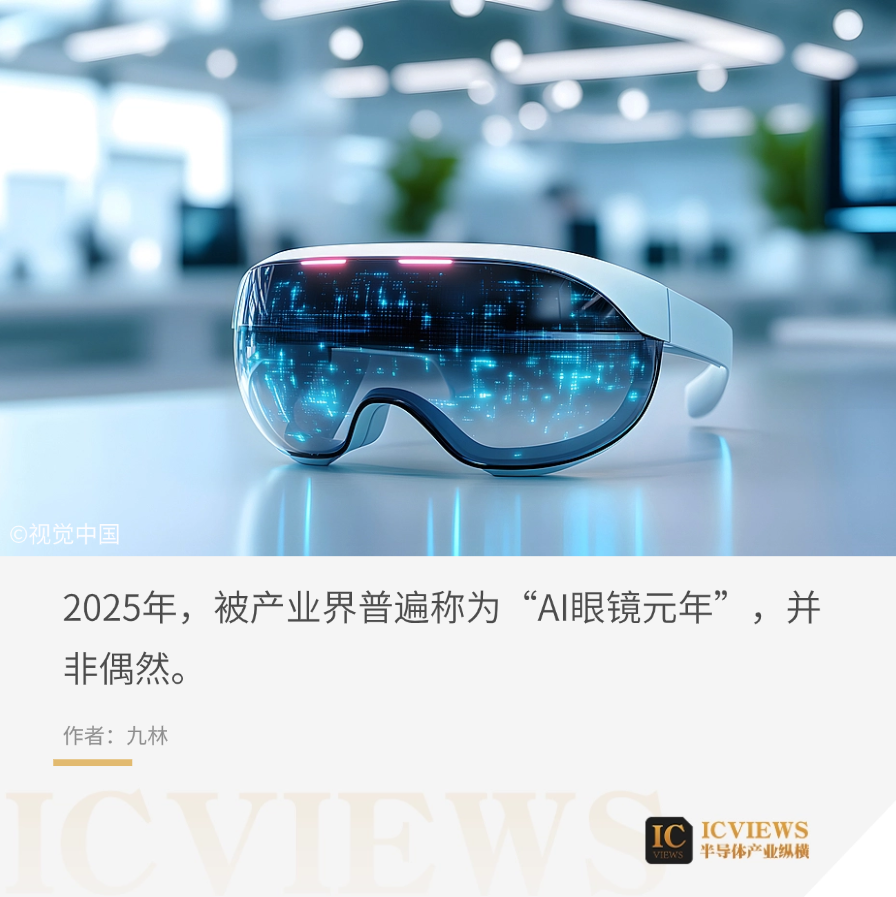
AI glasses are no longer just a concept or niche product; they are entering a phase of large-scale consumer adoption. The year 2025 is widely referred to as the “Year of AI Glasses” in the industry, and this is not coincidental.
 01Doubling Shipments, China Leads Growth
According to IDC data, the global shipment of smart glasses in the second quarter of 2025 is expected to reach255,500 units, a year-on-year increase of54.9%. The Chinese market performed particularly well, with shipments reaching664,000 units, a year-on-year increase of 145.5%.
Data from the JD.com platform shows that in the first half of 2025, the transaction volume of smart glasses increased by more than ten times year-on-year, with the number of brands entering the market tripling, and a new product being launched on average every nine days. This rapid product iteration reflects the fast maturation of the supply chain.
The core driver of this growth is the substantial implementation of “AI + imaging” capabilities. The new generation of AI glasses generally features the following functions:
-
Real-time voice assistant wake-up (e.g., “Hey Meta”)
-
First-person perspective shooting and automatic editing
-
Offline voice translation and text transcription
-
Visual search and object recognition
These functions rely on powerful local computing support, which all starts with a suitableSoC. According to research, in smart glasses equipped with shooting and AI processing capabilities,the BOM cost of SoCs and related chips can account for up to one-third of the total device cost.This means that chip selection not only affects performance but also directly relates to product pricing strategies and gross margin potential.
We previously analyzed the three chip solutions for AI glasses in “The Next “Chip Gold Mine”, where players are already in position: SoC, MCU-level SoC + ISP, and SoC + MCU. SoCs are often based on Qualcomm products, while MCUs include solutions like the BES2500YP from Hengxuan Technology and the W517 from Unisoc.
It is worth noting that several high-end AI glasses set to launch in 2025 are beginning to adopt a “dual-chip” design. For example:Alibaba’s Quark AI glasses are equipped withQualcomm’s AR1 flagship chip + Hengxuan BES2800 co-processor, and feature a “dual battery + replaceable battery compartment” design, supporting hot-swappable main battery replacement, with a maximum battery life of 24 hours.Xiaomi’s AI glasses also adopt a dual-chip architecture, using the Qualcomm AR1 flagship chip along with the Hengxuan BES2700 chip solution.
This collaborative design approach stems from practical constraints: a single SoC is often unable to meet the demands of high-performance AI computation and all-day standby. By allowing the co-processor to continuously monitor microphones, accelerometers, and other sensors, the main chip can be awakened only upon detecting keywords, significantly reducing standby power consumption and extending usage time.
 02Qualcomm Leads the High-End Market
In the current high-end AI glasses market, Qualcomm’s AR1 Gen1 has become the de facto mainstream platform. This chip, released in September 2023, is Qualcomm’s first dedicated processor designed for lightweight AI/AR glasses, utilizing advanced 6nm process technology, offering high integration and energy efficiency.
Its core configuration includes a multi-core CPU + GPU architecture, third-generation Hexagon NPU (AI computing power of about 4 TOPS), support for single-eye maximum resolution of 1280×1280 full-color Micro-OLED display, and built-in ISP supporting multi-camera synchronous input, suitable for spatial positioning and environmental understanding.
Thanks to a mature development toolchain and extensive ecosystem support, AR1 Gen1 has been adopted by several leading manufacturers, including Xiaomi AI glasses, Alibaba’s Wow AI smart glasses (yes, that’s the name), Thunderbird V3/X3 Pro, Rokid Glasses, and some models of Meta Ray-Ban Display. It can be said that AR1 Gen1 has formed a “platform effect” in the high-end market, lowering the R&D threshold for manufacturers.
In June of this year, Qualcomm released an upgraded version of the AR1 chip, the Snapdragon AR1+ Gen 1 chip. Compared to Qualcomm’s AR1 Gen 1, the new high-end AR1+ Gen 1 has reduced its size by 26%, allowing for thinner smart glasses legs, potentially reducing the width of the legs by at least 20%; the power management of AR1+ Gen 1 has also improved, optimizing power consumption for core scenarios including AI image recognition, voice wake-up, Bluetooth connectivity, and video streaming, resulting in an overall power reduction of about 7%, thereby extending battery life.
AR1+ Gen 1 also enhances the ISP, which has a critical impact on shooting effects. At the same time as the release of AR1+ Gen 1, Qualcomm showcased a prototype glasses equipped with the Meta Llama-3.2-1B chip running entirely on the device.
Qualcomm’s Executive Vice President Ziad Asghar stated that Qualcomm is experiencing a wave of demand for smart glasses that will last for several years. “Every chip we launch can run a billion-parameter small language model (SLM) locally on the glasses, something no one else can do in the world. It does not need to connect to the cloud or a mobile phone.”
 03Diverse Layout of AI Glasses SoCs
The current mainstream AI glasses solution providers are adopting a diversified platform structure.
Companies like Qingteng Wireless, Moyang Technology, and Yinka Intelligent generally useAllwinner Technology V821 as the main control chip, while Youchuangyi opts forStarry Technology platform, Baitai Technology uses Woqi solutions, and Kouding Technology pairs withGuoke Micro, while Weike Intelligent adoptsBotong Integrated, and Xiaonuo Rice introducesUnisoc W517 while Mojie Technology is based onSTMicroelectronics STM32 series development, and Kangguan Co. directly connects to the Qualcomm AR1 platform.
Currently, Allwinner Technology’s V821 essentially dominates the mid-to-low-end market, with Qingteng Wireless being one of the largest solution providers, maintaining a monthly shipment of 50,000 to 80,000 units, generally adopting the“Allwinner V821 + Jieli AC7018” dual-chip architecture, focusing on cost-effectiveness.
More critically, the cost of V821 is highly competitive, officially disclosed to be only $3 to $5, far below Qualcomm’s AR1 Gen1 price of about $60. Based on this, Allwinner Technology has launched an AI glasses solution named “Huiyan”, integrating chip layer, solution layer, resource layer, and AI large model interface, helping small and medium-sized manufacturers quickly complete product definition and mass production.
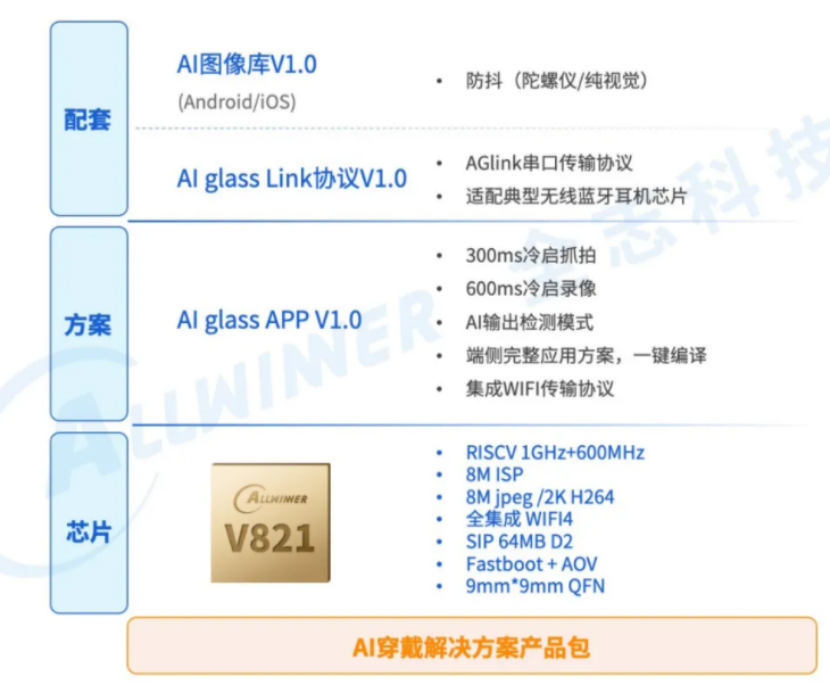
For customers seeking higher performance, Allwinner Technology has also launched an iterative product, the V881. This chip features a new AI-ISP 2.0 image processing unit, integrating hardware-level functions such as AI noise reduction (AI-NR), AI sharpening (AI-Sharp), EIS stabilization, fast focus acceleration engine, and lens distortion correction (LDC), significantly enhancing low-light detail and imaging stability, achieving “all-weather AI image quality”. Allwinner Technology’s Smart Video Division General Manager Guo Qi stated:“The total BOM cost of an 8-megapixel AI glasses is no more than 200 RMB, and affordable products will be launched soon.”
Juchip Technology has officially released two products, INMO and Halliday, based on the ATS308X solution for AI glasses, and the company has multiple types of AI glasses solutions in development with various clients. Additionally, the company will soon release a new generation of chips aimed at the smart wearable field,ATW609X series chips, applicable to smartwatches, AI glasses, and other wearable products.
Meanwhile, in August of this year, NXP released three new chips, i.MX RT500, RT600, and RT700, specifically targeting AI glasses application scenarios. Among them, the i.MX RT700 adopts a dual DSP (HiFi4/HiFi1) architecture, supporting various complexities of algorithm processing, equipped with a 2.5D GPU display controller and MIPI DSI interface, capable of driving a maximum of 720P, 60 frames graphics display, performing excellently in voice processing and low-power scenarios, suitable for hearing aids and navigation devices.
Additionally, upstream in the chip industry, the layout of IP (intellectual property cores) is becoming a new focus of competition.
Chipone Technology is a leading domestic semiconductor IP supplier, having launched a series of ultra-low power IPs and DDR-Less technology, serving wearable devices. More than30 SoC customers for watches have obtained its low-power IP authorization, and several AI/AR glasses customers are also in negotiation for cooperation. Its FLEXA interconnect technology and DECNano data compression scheme are optimized for low bandwidth and low power scenarios, expected to enhance the overall energy efficiency of wearable devices.
Ankai Micro focuses on IoT smart hardware SoCs, with over 75% of its self-developed IP, covering core technologies such as ISP, NPU, and machine learning. The KM01W low-power smart vision chip launched in the first half of 2025 integrates ISP, NPU, and Wi-Fi/BLE modules, showcasing its IP integration capabilities. The system development platform based on this chip has also been released, marking the entry of related technologies into the market promotion stage.
 04Conclusion
According to a report by Bank of America Securities, over 80% of the manufacturers in the global smart glasses supply chain are from China, covering key areas such as cameras, optical waveguides, micro-electromechanical systems (MEMS), and batteries, from components to complete assembly, with global market shares exceeding 50% for camera modules, optical coatings, and complete assembly.
As chip platforms mature and supply chains improve, more and more technology companies are joining the AI glasses race.
Baidu has launched the new AI shooting glasses, Xiaodu AI Glasses Pro, featuring the newly released multimodal AI smart assistant “Super Xiaodu”, with a standard charging case priced at2299 RMB.Lenovo will launch the AI glasses V1 on October 31, weighing 38 grams, with lenses as thin as 1.8 mm, built-in “Tianxi Personal Super Intelligence”, supporting multilingual translation, AI Q&A, smart navigation, and teleprompter functions,with a launch price of3999 RMB.Additionally,BOLON AI glasses will start pre-sales on JD.com on October 30, priced at2199 RMB, excluding the charging case, with pre-orders quickly surpassing380 units.
In terms of pricing, the no-screen AI glasses are more segmented, with audio AI glasses mainly concentrated in the <1000 RMB price range, and audio + photo AI glasses mainly in the 1000-2000 RMB range, primarily covering the mass market with affordable pricing. High-end products are priced above 3000 RMB.
Industry insiders believe that although the AI glasses industry is growing significantly, true widespread adoption still needs to overcome challenges in battery life, interaction, and ecosystem. In the next 3 to 5 years, with chip optimization, cloud collaboration, and differentiated scenario implementation, AI glasses are expected to reach a consumer inflection point.

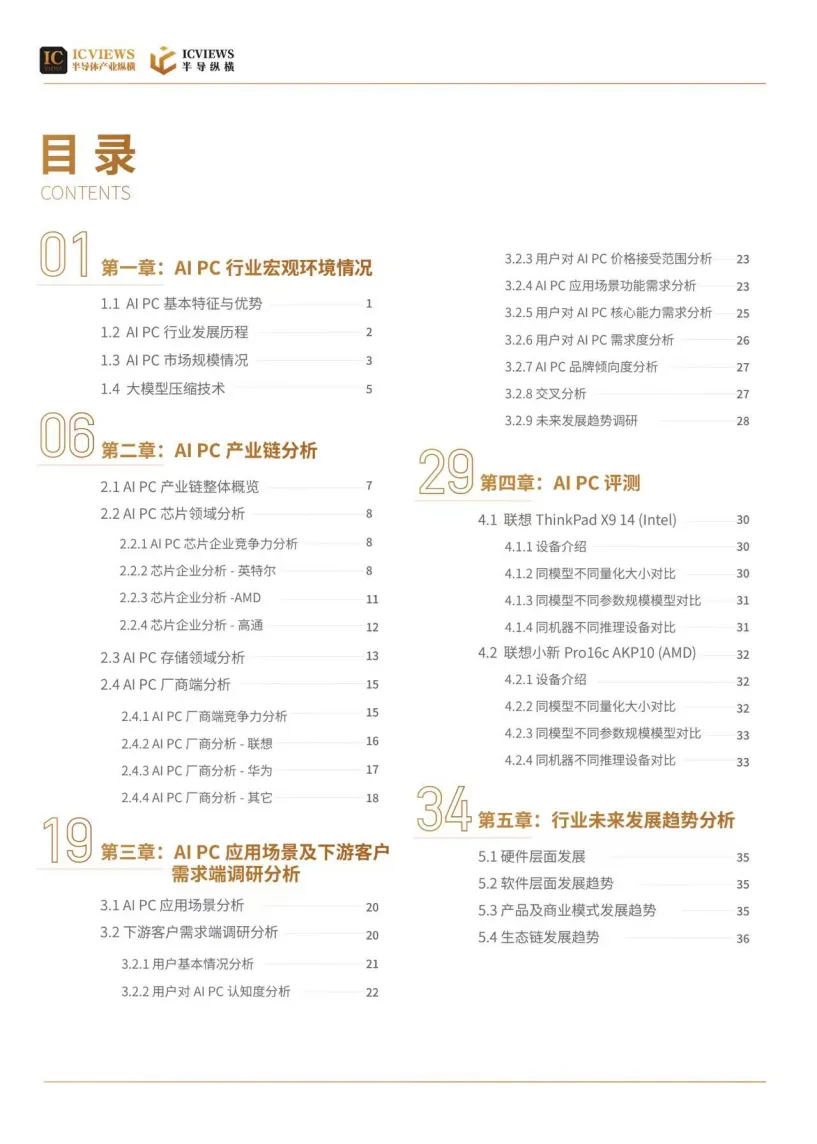
The “2025 AI PC Industry Research Report” has been released
To help players across the hardware, software, model, and terminal layers in the PC field better understand the current development status and future trends of the AI PC industry, the semiconductor industry has released the “2025 AI PC Industry Research Report”.
The report mainly analyzes the macro environment of the AI PC industry, the AI PC industry chain, user research and analysis, product evaluation, and future development trends.
The user research covered first-tier cities in China, such as Beijing, Shanghai, and Shenzhen, collecting over a thousand valid samples from end users and store sales personnel. The research content includes user demographics, AI PC awareness, product function preferences, and industry future trend judgments.
The product evaluation focused on Lenovo ThinkPad X9 14 (Intel) and Lenovo Xiaoxin Pro16c AKP10 (AMD), analyzing dimensions including comparisons of different quantization sizes of the same model, comparisons of models with different parameter scales, and comparisons of different inference devices on the same machine.
Report acquisition:
1. Report price: printed version 599 RMB/ copy
2. Purchase method: Please scan the code to fill out the report purchase intention form

3. Report inquiries:
WeChat ID icviews2 or Joy8432211
Report directory: