With the deep application of artificial intelligence technology in the medical field, AI medical robots have demonstrated unprecedented precision and efficiency in diagnosis, surgery, and care. However, when these “digital doctors” make mistakes leading to medical accidents, the issue of responsibility becomes a new challenge in the fields of law and ethics. This article will systematically analyze the challenges of responsibility allocation in AI medical accidents from four dimensions: identification of responsible parties, application of liability principles, distribution of burden of proof, and future legal regulations.
1. Legal Dilemmas of Responsible Parties

In traditional medical accidents, the responsible party is clearly defined as qualified medical personnel. However, when AI systems intervene in the diagnosis and treatment process, the identification of responsible parties becomes complex and multifaceted. Currently, the legal community generally adopts a “human-object” dichotomy, believing that AI medical robots, as tools, do not possess independent subjectivity and therefore do not bear civil liability for torts. This view positions AI systems as advanced medical devices, denying their legal subject status.
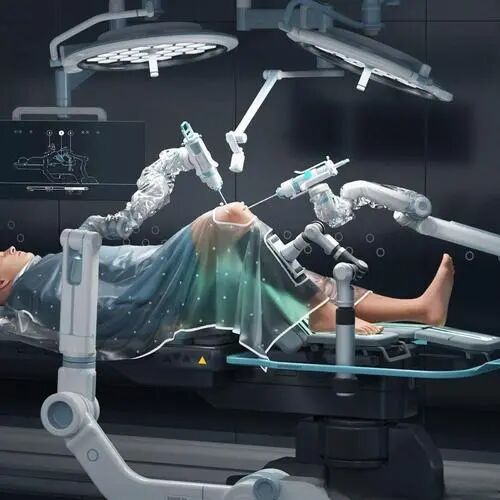
Regarding criminal liability, the consensus is clearer: surgical robots do not possess the status of criminal liability and cannot be the responsible party for medical accident crimes. In cases of medical accident crimes involving surgical robots, the responsible parties should be the medical professionals directly involved in diagnosis and care. This position upholds the basic principle in criminal law that “action and responsibility coexist,” but it also raises concerns about the excessive burden on medical personnel.
2. Applicable Scenarios for Multiple Liability Principles
The allocation of responsibility in AI medical accidents cannot simply apply a single standard but should use different liability principle systems based on the specific causes of the damage:
-
Product Defects Apply No-Fault Liability: When damage is caused by defects in the AI product itself (such as algorithm errors or hardware failures), the no-fault liability principle in product liability should apply, with the producer or seller bearing responsibility. This strict liability encourages companies to improve product quality and aligns with the principle of risk and benefit equivalence.
-
Operational Faults Apply Presumed Fault: When damage arises from improper operations by hospitals or medical personnel, the presumed fault liability principle should be adopted. Considering the complexity of medical AI systems and the unpredictability of algorithms, it is unrealistic to require medical personnel to fully understand the underlying logic, thus it is inappropriate to impose no-fault liability. However, medical institutions, as professional service providers, should bear a higher duty of care.
-
Multiple Causes Apply Joint Liability: When damage is caused by both product defects and operational faults, producers, sellers, and users should bear joint liability. This system design protects the rights of victims and encourages all relevant parties to fulfill their maximum duty of care in their respective fields.
3. Reasonable Distribution of Burden of Proof
The traditional principle of “he who asserts must prove” in medical disputes faces challenges in AI medical scenarios. Due to the “black box” nature of AI systems, patients often find it difficult to obtain and interpret relevant technical data, making it extremely challenging to prove the hospital’s fault. Therefore, the legal community has proposed two improved solutions:
Presumed Fault Principle directly shifts the burden of proof; as long as the patient proves the facts of the damage and the causal relationship, the medical institution must prove its lack of fault. This method effectively balances the differences in the burden of proof between the two parties, especially suitable for AI systems with low algorithm transparency.
Apparent Proof Rule is more flexible; patients only need to prove objective facts (such as a robot left inside the body after surgery), and the court can infer the existence of fault based on experiential rules. This rule significantly reduces the burden of proof on patients while maintaining procedural fairness.
4. Future Paths for Legal Regulation Improvement
In the face of rapid developments in AI technology, the current legal framework urgently needs targeted adjustments:
-
Clarify the Legal Status of AI Systems: Although currently denying the subject status of AI is reasonable, with the emergence of autonomous AI, it may be necessary to create new legal concepts such as “electronic personality” to lay the foundation for more complex responsibility allocation.
-
Establish Specialized Insurance Systems: Drawing on the experience of mandatory insurance for motor vehicles, establish AI medical liability insurance to balance technological innovation and patient protection through risk socialization mechanisms.
-
Improve Technical Standards and Certification: Develop unified safety standards for AI medical products and implement graded and classified management to provide technical basis for liability allocation.
-
Strengthen Algorithm Transparency Obligations: Require developers to maintain interpretable decision logs, ensuring the possibility of responsibility tracing while protecting trade secrets.
Conclusion
The allocation of responsibility in AI medical accidents is by no means a simple “either-or” situation, but requires finding a dynamic balance between technological innovation and patient rights protection. In the short term, improving the presumed fault and apparent proof rules can alleviate the burden of proof; in the long term, it is necessary to construct a multi-faceted relief system covering product liability, medical liability, and insurance compensation. With the gradual improvement of relevant legal regulations, we have reason to believe that AI in medicine will better benefit human health on a clear responsibility track.
#AI Medical Accidents#Robot Surgery