Recently, the United States undertook a “low-key” major operation—disassembling 127 DJI drones down to the last screw. This was not an environmental initiative, but rather an attempt by America to learn through “brute force disassembly”.
What was the result? After disassembly, they were left scratching their heads at the parts: why couldn’t they assemble a flying “alternative”?
In the tech world, “disassembly equals learning” is a common tactic; from smartphones to chips, there are always those looking to take shortcuts. However, this time, the U.S. hit a brick wall—DJI’s “moat” is not in the components.
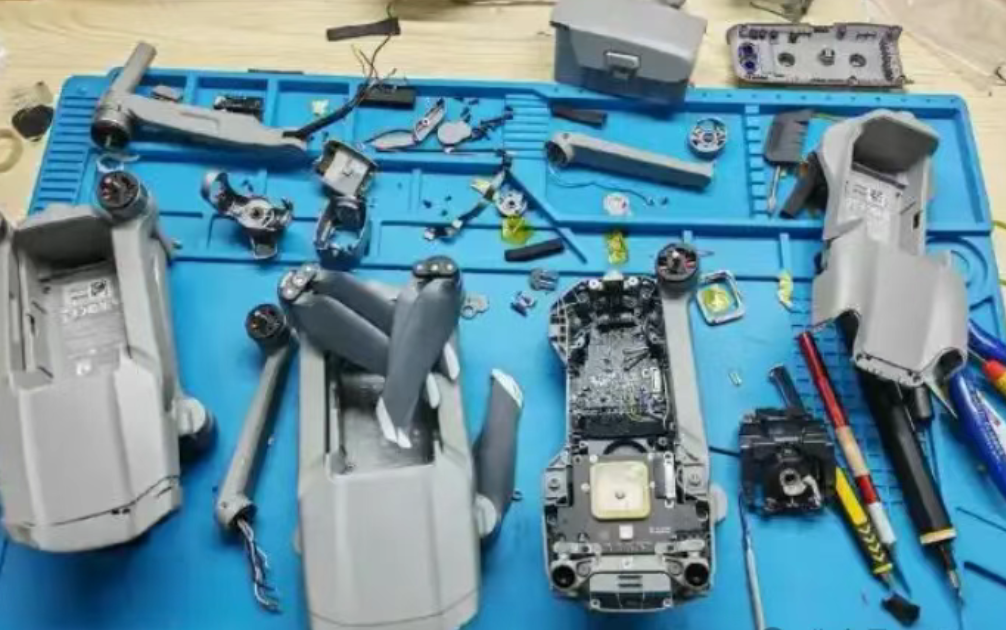
Many believe that tech products are a “parts competition”; having the schematics in hand means you can replicate them. But DJI does not play by the rules. Its obstacle avoidance system can process thousands of environmental data points per second; the flight control algorithms have been honed over more than a decade and countless drones.
These data are the result of billions of hours of real flight experience, not just calculations from a lab. You can disassemble every chip, but you cannot learn the “muscle memory”—just like disassembling a piano and gathering all the parts won’t produce a pianist capable of playing Chopin.
The U.S. lacks not just the schematics, but the entire system. They can build drones, but they cannot produce ones that are “usable, affordable, and stable”. In the same price range, American consumer drones have less than half the flight time of DJI’s, a transmission range only one-fourth, and their stability is laughably poor. Even more embarrassingly, they are highly dependent on imported modules, unable to produce key components domestically, with very few companies capable of mass production.
In contrast, DJI is backed by China’s entire drone industry chain. Sensors, cameras, control chips… all these components are produced domestically, becoming more streamlined and affordable with each generation. DJI is not an island; it is a “giant ship” supported by an ecosystem. Want to replicate it? First, replicate the supporting industries—this is not something that can be solved by “burning money”; it requires decades of accumulated manufacturing experience.
Thus, the U.S. cannot produce drones after disassembly; the issue is not the technical difficulty, but that this is not something a single company can accomplish independently. It’s like wanting to create a full-course banquet; having the recipe is not enough; you also need farms that can grow all the ingredients, schools that can train top chefs, and culinary traditions that have been passed down for centuries. Without any one of these links, you can only drool over the recipe.
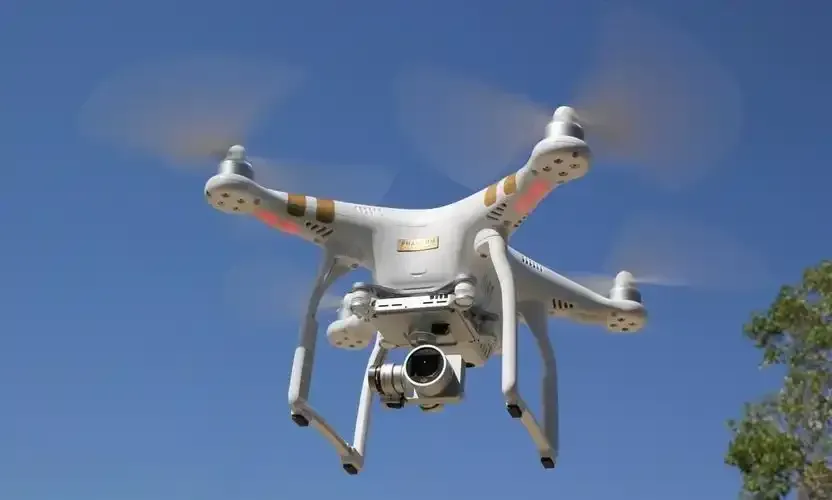
More dramatically, while the U.S. publicly banned DJI, local governments and emergency departments were secretly “slapping their faces”. Some media reported that certain American fire departments labeled their procurement records as “photography equipment” to continue using DJI for firefighting, search and rescue, and inspections. Even the Wall Street Journal criticized: “The U.S. is suspicious of Chinese technology while simultaneously relying on it.” This scene is reminiscent of a child caught sneaking candy, stubbornly insisting, “I didn’t eat any.”
In fact, the U.S. has a simple thought: the technology is indeed good, but we cannot produce it. It’s like envying a neighbor’s luxury car, disassembling it for research, only to find that the engine is custom-made, the chassis is specially designed, and the tires are proprietary formulations—at this point, do you continue to disassemble, or admit that you “cannot learn”?
DJI has reached where it is today not through “explosive technology”, but through day-to-day accumulation. Every algorithm update, flight control parameter optimization, and module improvement comes from countless test flights, crash summaries, and user feedback corrections. It has not emerged through marketing hype, but through technological sedimentation.
The U.S. attempted to find answers through “disassembly”, but what they saw was merely the “form”, unable to grasp the “soul”. This is akin to a thief eyeing a museum’s treasure, thinking that stealing it means they can replicate it, only to discover that the real treasure lies in centuries of accumulated craftsmanship, skills passed down through generations, and cultural heritage embedded in the national identity.
America disassembled DJI, but could not dismantle the confidence behind China’s technological rise; they want to replicate, but cannot replicate the “soul” of Chinese manufacturing.
This “disassembly show” is merely the last struggle of the U.S. before the decline of its technological hegemony—while they are still trying to steal results through such primitive means as “disassembly”, Chinese technology has already built an insurmountable wall through independent innovation and systemic advantages.
In the end, the U.S. will be left far behind by the tide of the times, trapped in its own arrogance and incompetence.