

Think Tank Highlights#GlobalDefenseDynamics #USMilitaryDynamics #RussianMilitaryDynamics #TaiwanNews #WeChatStoreAvailable
#SouthKorea #Raytheon #Japan #ElectronicWarfare #NortheastAsiaMilitaryDynamics #Drones

The Role of Drones in Future Terror Attacks
Author: Military Eagle Think Tank Source: Military Eagle Dynamics
IntroductionToday’s technology, while impressive, is evolving the tactics and techniques for future terror attacks. The most prescient technology that will enable future acts of terrorism is drones. Drones have the capability to provide long-range attacks, allowing terrorists to conduct multiple strikes almost simultaneously, rapidly amplifying their overall impact. Terror attacks aim to create an atmosphere of fear, influencing the target audience—civilians or governments—to force or impose political change. The significant increase in the appearance, functionality, accessibility, and operability of low-cost drones will make them the weapon of choice for future terrorists.Most past terrorist attacks relied on readily available weapons and materials. In the United States, most of the materials needed for the most severe attacks in the past 30 years, namely the Oklahoma City bombing and the 9/11 attacks in New York, were legally purchased. In addition to acquiring materials, terrorist organizations also need individuals to carry out the attacks. Many groups typically launch attacks expecting their members to sacrifice themselves in the process, either by being captured or killed. However, the use of drones allows individuals or small groups to carry out multiple attacks without self-sacrifice.
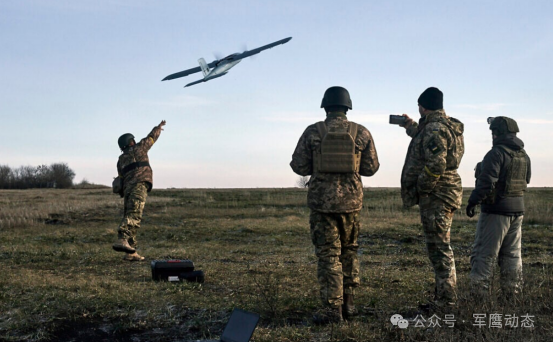 ▲On December 15, 2022, Ukrainian soldiers launched drones at Russian positions near Bakhmut in the Donetsk region
The Past Development and Adaptation of DronesSince World War II, professional militaries have used large unmanned aerial vehicles to support combat operations. They achieved limited success as weapon systems during World War II and expanded into intelligence gathering by the time of the Korean War. Like other military technologies, over time, the capabilities of these systems have found commercial applications. Since the early 21st century, the private use of drones has surged, primarily due to higher energy capacities of drone batteries, reduced motor sizes, and increased power outputs. These factors have allowed for much smaller designs, with many drones having diameters of less than 2 feet (0.6 meters), enabling commercial production at significantly reduced costs.Between 1994 and 2019, drones were used in over 14 planned or attempted terror attacks. Some of these include:·In 1994, the Aum Shinrikyo attempted to use a remote-controlled helicopter to spray sarin gas, but the test failed after the helicopter crashed;·In 2013, local law enforcement thwarted al-Qaeda’s plan to use multiple drones in Pakistan;·In 2014, ISIS began to use commercial off-the-shelf and homemade drones extensively in military operations in Iraq and Syria;·In August 2018, two drones laden with explosives were used in an assassination attempt against Venezuelan President Maduro, which failed;·In January 2018, 13 homemade drones attacked two Russian military bases in Syria.Terrorist organizations have used or attempted to use drones for many different types of operations, including intelligence gathering, explosives delivery (through dropping bombs or using vehicles as impactors or drones equipped with some type of rocket launch systems), and chemical weapons delivery. Once Pandora’s box was opened, malicious actors quickly adapted and began using drones to plan and execute attacks.The number of non-state actors currently using drones is increasing every year. Currently, multiple groups are operating in Africa, the Middle East, the Arabian Peninsula, Southeast Asia, Eastern Europe, and South America.Current and Future DevelopmentsThe rapid proliferation of drones among ordinary consumers and businesses has created a market that will continue to drive technological advancements in drones for the foreseeable future. Improvements will extend to size, shape, energy storage, propulsion technologies, sensors, and the ability to harness and integrate advanced computing capabilities. Overall, these improvements will increase the range, lifting capacity, and overall capabilities of drones, making them more lethal and harder to counter.Currently, commercial uses of drones include using thermal cameras to inspect roofs, measuring large areas (such as farmland or disaster response), applying chemicals in agriculture, product delivery, photography, videography, and drone racing. Non-commercial uses can include all of the above, as well as personal uses by hobbyists. Unsurprisingly, each of these uses can be modified to support terrorist actions.
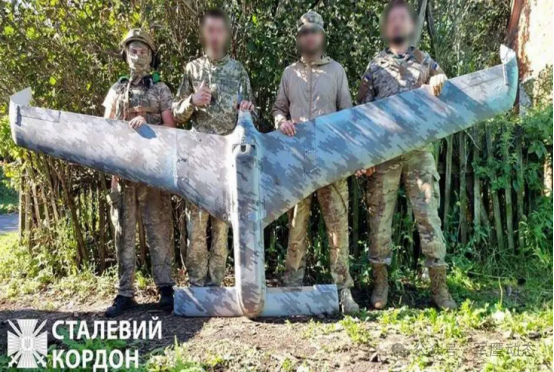 ▲The Ukrainian military has seized the latest generation Russian Eleron T-16 drone
The initial production models of modern drones were expensive, radio-controlled, gasoline-powered, small, fixed-wing aircraft and helicopters. As mentioned above, the increase in energy-dense batteries and efficient electric motors, combined with the reduction in weight and size of necessary electronics, began the “prosperity” of modern quadcopters. These small aircraft, with diameters of less than 2 feet (0.6 meters) and limited lift, quickly led to the development of eight-engine vertical take-off and landing drones capable of speeds exceeding 80 miles per hour (129 kilometers per hour) and ranges of 10 miles (16 kilometers) while lifting 500 pounds (227 kilograms). Gas turbine jet engines are being designed and produced for small drones, some of which can operate and land on water. These jet engines provide speeds exceeding 600 miles per hour (965 kilometers per hour) and altitudes up to 30,000 feet (9144 meters).However, speed is not limited to large drones; drone racing leagues have been established where small drones can fly at speeds of 80 miles per hour (129 kilometers per hour) with flight times of 3 to 5 minutes. The control of these high-speed drones is maintained through pilots using video goggles to utilize the drone’s first-person view.The increase in battery energy density has also enabled the manufacture of microchips small enough to fit in a person’s palm. Some models are equipped with optical cameras capable of traveling autonomously or under pilot control at speeds up to 15 miles per hour (24 kilometers per hour) for hundreds of yards or meters, all for less than $200.In 2020, the Federal Aviation Administration (FAA) in the United States approved the commercial use of drones beyond the pilot’s line of sight. The lifting of this restriction, combined with the introduction of regular commercial drone flights across the continental U.S., will make it more difficult to combat weaponized drones.In addition to improving drones, hobbyists and companies are also developing drones that can operate in various environments. Some drones are now capable of moving from wheeled systems to airborne systems. Other drones can move from underground (underwater) to airborne modes. The range of direct control has historically limited waterborne drones; however, advancements in automation and computing capabilities have recently improved their capabilities.Drones’ mobility technology is advancing. For example, some drones can now mimic animal movements, and several companies are using biomimicry in their technologies. Biomimetic technology has developed to the point where some drones can operate around and within wildlife without disturbing them, moving naturally in water, air, and on the ground. Some platforms can mimic the flapping of bird wings and the swimming motions of fish. Researchers have also begun experimenting with synthetic feathers as control surfaces. Feathered wings provide higher control efficiency and are lighter than standard carbon fiber and fiberglass control surfaces.These two improvements, along with more efficient power sources, allow onboard drones to operate in higher winds and provide longer flight times. Overall, these improvements have significantly increased the flight times of some drone models from a few minutes to nearly 30 minutes, achieving substantial advancements in their overall range and carrying capacity.The improvements in size and energy storage are critical to enhancing the practicality of modern drones, which can improve the ease of control and range or enable fully autonomous flight. Many early models of drones were difficult to control; they relied on simple one-way radio control between the pilot and the drone, meaning they needed a direct line of sight.
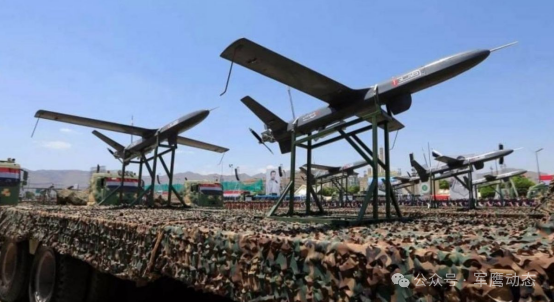 ▲On September 21, 2023, drones displayed at the official military parade marking the ninth anniversary of the Houthi takeover of Yemen’s capital Sanaa
Now, many modern drones operate within the radio frequency (RF) bands of 2.4 to 5 GHz, allowing for direct control of drones over greater distances. The increased RF bandwidth also enables drones to send information back to the pilot. Most modern drones use this capability to transmit real-time video to the pilot, meaning drones can fly beyond the pilot’s line of sight while still being controlled. As a result, some models can reach altitudes of 1,500 feet (457 meters) and fly distances of up to 5 miles (8 kilometers).The quality of computer-assisted piloting software in modern drones has improved significantly, with many platforms featuring self-correcting, fully autonomous flying, and visual capabilities to track people or objects. This autopilot functionality includes the ability to map out flight paths that the drone can execute independently of direct pilot control. Many drones equipped with such features allow pilots to program autonomous flight paths to distant locations through simple graphical user interfaces. Automated functions also include the ability to return to pre-programmed points in the event of a signal loss. Several companies have created fully autonomous drones that utilize various forms of object recognition technology, enabling the drones to navigate autonomously while tracking and following people or objects in real-time and avoiding obstacles in complex environments.In addition to increased capabilities, automation in flight and visual object recognition capabilities, optical and sensor capabilities have also rapidly and significantly improved. The capabilities of drone sensors are critical for enhancing their functionality and allow for the use of facial recognition technology. Optical sensors can now visualize and transmit video at 4K resolution, including infrared and night vision. Improvements in the optical systems carried by drones have also expanded zoom ranges, with some systems offering zoom ranges of up to 30x. Combined with advancements in facial and object recognition, these sensors enable drones to target and track people or objects from great distances.One of the latest developments in drone technology is the ability to coordinate multiple drones simultaneously. These so-called “swarms” can overwhelm defensive capabilities. In 2018, a swarm of drones attacked two Russian bases in Syria. In this attack, 13 fixed-wing drones attempted to drop aerial bombs from distances of over 31 miles (50 kilometers).Compared to commercial off-the-shelf systems, the technological level of these homemade drones is relatively low. Even homemade drones will begin to see improvements in onboard technology, as there are forums and websites dedicated to selling drone parts, allowing individuals to build custom drones. One technology that can improve the efficiency of drone swarms is ad-hoc Bluetooth networks. These Bluetooth networks are low-power local networks that can self-organize and share information in real-time. As computational capabilities improve, the self-organization and self-coordination abilities of swarms will continue to enhance, while also improving the drones’ autopilot capabilities.It is noteworthy that the rapid acceleration of drone technology is driven by the expectation that global drone sales will quadruple by 2024, increasing from $14.1 billion in 2018 to $43 billion.
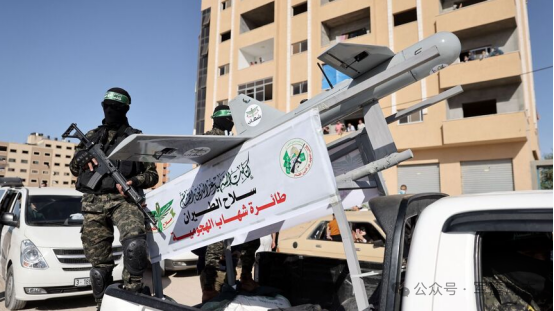 ▲In October 2023, Hamas forces in the Gaza Strip deployed drones in preparation for combat during the Israeli-Palestinian conflict
Detection SystemsThe military and industry recognize the weaponization of commercial drones. This recognition has driven the development of detection and countermeasure systems. In the United States, the Federal Aviation Administration has acknowledged that drones are becoming increasingly common in commercial and personal use, and there are currently no systems in place to track and eliminate aerial platform conflicts. It has even proposed rules that require drones above a certain weight to be equipped with radio transponders for tracking. Unfortunately, like most trackers, these systems can be easily disabled.Detecting aerial drones is critical for interception. These efforts are primarily divided into four categories: radio frequency analysis, acoustic sensors, optical sensors, and radar. Radio frequency analysis monitors the RF spectrum and detects the signals controlling the drones. Radio frequency analysis systems cannot detect drones that are pre-programmed or fully autonomous. As the spectrum becomes noisier and more crowded, detection in densely populated areas also becomes more challenging.Next, acoustic sensors can consist of one or multiple microphones used to listen for the sounds of drone motors or blades moving through the air. They are limited in range below 1,640 feet (500 meters) and are affected by noisy environments. A drone traveling at 80 miles per hour (129 kilometers per hour) will cover 328 feet (100 meters) in less than 3 seconds or at 15 miles per hour.Third, optical detection uses cameras and computer algorithms to detect drones. These systems experience high false positive rates and limitations under low light or weather interference.Finally, radar is the primary means of remote detection. The remote detection of drones can occur within a range of 1.9 miles (3 kilometers) and within line of sight. Radar can detect small drones flying at low altitudes, although it encounters difficulties in high-clutter environments. Most radar systems cannot distinguish between birds and small drones. However, advanced millimeter-wave radar systems can distinguish by detecting the rotation of drone rotor blades. As the use of biomimetic and synthetic feather flight systems increases, acoustic and radar detection will become more challenging, as this will minimize noise and eliminate hard surfaces and blade rotations detectable by radar.
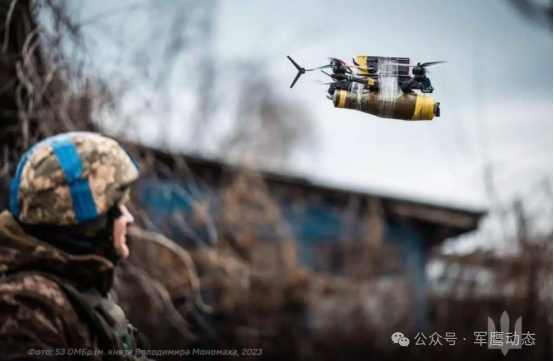 ▲An FPV drone launched into the air by Ukrainian soldiers
Research on detecting underwater drones primarily relies on listening for changes in ocean background noise. Researchers believe that a passing drone will cause significant changes in marine biological activity, thereby altering noise levels. Implementing these systems requires placing hydrophone arrays. Like acoustic detection of airborne drones, hydrophone detection is also impeded by noisy environments such as busy ports and waterways.Improvements in biomimicry, autopilots, and smaller profiles will continue to challenge detection systems. Combining these improvements with increased speed and range can enable drone operators to bypass detection systems.Countermeasure Systems and TacticsThere are several countermeasures and active defeat systems for drones. The first layer of failure for most commercially purchased systems is built-in software limitations, such as geofencing for GPS-supported drones. Through geofencing, GPS-supported drones are restricted from entering or operating within restricted areas. However, the geofencing database is managed by the companies that manufacture the drones, so it is often limited to critical facilities and military bases. Geofencing can be easily bypassed, either because the owner fails to update firmware or because an attacker hacks the device. Wrapping aluminum foil around onboard GPS antennas can effectively disable geofencing, but this also limits most operators’ driving options.During radio frequency interference, communication between the drone and the pilot or GPS is disrupted. The sizes and portability of radio frequency jamming systems vary widely, from rifle-sized jammers to systems mounted on vehicles or buildings. The radio signals emitted by these systems can overwhelm GPS signals or the operator’s transmitter. Disrupting this signal will cause many drones to take action in response to the loss of signal, either landing or returning to a pre-programmed location if enabled.The range and effectiveness of radio frequency jamming systems vary greatly. Most electronic rifle-style systems require line-of-sight; they also require the operator to aim the “electronic jamming rifle” at the drone while jamming the signal. Larger vehicle and building systems can perform omnidirectional jamming. The overall effectiveness of radio frequency jamming technology when targeting and intercepting unknown drone platforms is mixed.These mixed results are based on the fact that each commercial company manufactures drones according to its own specifications, and end users can further customize systems, including the choice of which radio frequency to use. This individuality means that countermeasures are largely tailored to each drone.Another risk of using large systems is that their broad overall output can interfere with all other systems operating using 2.4 to 5 GHz and GPS signals. In urban areas, radio frequency jamming can affect home security systems, Wi-Fi networks, car locks, and GPS navigation. Furthermore, technologies to counter radio frequency jamming are commercially viable; for example, Amazon has patented solutions to protect its proposed drone delivery fleet from radio frequency interference.From radio frequency jamming to physical countermeasures, most options appear in the form of nets. Nets are more favorable than physical impactors or bird strikes because they create a larger contact area against moving targets, making it more likely to entangle and disable the drone’s rotating blades. Net guns range in size from handheld flashlight-shaped devices that fire nets measuring 10×10 feet (3×3 meters) at ranges of 49 feet (15 meters) to shoulder-fired net rocket launchers that can reach distances of 328 to 820 feet (100 to 250 meters). Additionally, specialized shotgun ammunition has been designed to launch nets measuring 5 inches (13 centimeters) at distances of 164 feet (50 meters).Raptors have been used as natural impactors for a short time, but due to their limited operational time, territorial nature, and many other complex factors, they have largely been retired from drone countermeasure operations. Using flocks of birds can mitigate their weaknesses. For example, pigeons are attracted to the sounds and movements of drones and may soon play a role in some countermeasures. Similarly, since the 1960s, the U.S. Navy has used marine mammals to identify mines, retrieve equipment, and identify intruders. These marine mammals may be able to intercept underwater drones, although they may face limitations similar to those of birds.Ultimately, the effective range of radio frequency jamming is limited, and unintended interference renders jamming ineffective in large-scale continuous countermeasures. Most commercial off-the-shelf drones can fly at speeds of up to 1,500 feet (457 meters), making dynamic targeting difficult, if not impossible. Achieving this physical separation provides advantages to drone operators, as most countermeasure systems have maximum ranges below 656 feet (200 meters). Using animals to counter drones has potential, but further research and training are required.Other ConsiderationsCost is a factor in planning and executing terrorist attacks.The cost of the 1995 Oklahoma City bombing was approximately $5,000 (adjusted for inflation to $8,582 in 2020), while the cost of the 9/11 attacks in New York was between $400,000 and $500,000 (adjusted for inflation to $590,000 to $738,000 in 2020). The estimated cost of the November 26-29, 2008, attacks in Mumbai, India, was less than $150,000. These figures demonstrate the wide financial range and capability of terrorists to carry out attacks.Drones range in price from $20 to $20,000, with most commercial off-the-shelf drones capable of lifting weapon-sized payloads priced between $1,000 and $2,000. Most underwater drones cost between $1,000 and $4,500.While commercial purchases are an option, many hobbyists and terrorist organizations have begun building custom drones. Louisiana State University published an open-source article on how to build a homemade, GPS-guided, radio-controlled drone capable of carrying 10 pounds (4.5 kilograms) of material for 10 minutes, requiring no special equipment, using open-source software, for less than $2,000.Instructions on how to 3D print micro and small drone bodies are available online, needing only to purchase motors and computing components. The ease of access and production makes these systems ideal for low-cost attacks. Open-source software allows for the rapid addition of other functionalities, enabling other forms of control, such as inertial, terrain-following, or beacon-based control, eliminating the need for GPS or radio-controlled guidance.
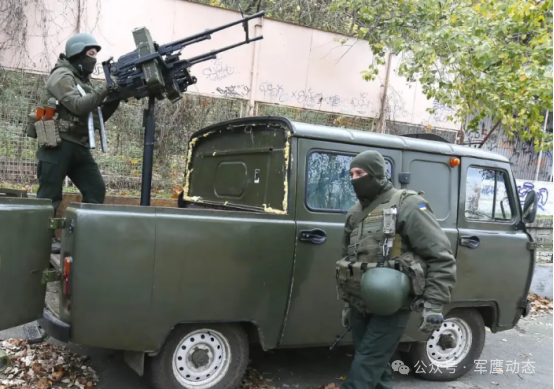 ▲A modified UAZ-452 equipped with two PKT machine guns displayed by a drone hunter in Mykolayiv, Ukraine
ConclusionTerrorist organizations have begun using drones to conduct and coordinate attacks. As these organizations learn from previous attacks, especially ISIS’s use of drones in Mosul, they will continue to adapt. The rapid improvements in drone technology and their enhanced capabilities will provide terrorist organizations with various new avenues to spread fear.One particularly frightening application of drones is the dissemination of chemical and biological agents, especially infectious diseases. Discussions about infectious diseases are widespread, and the fear is well-known. Terrorists do not even need to use real biological or chemical weapons to execute an attack. The simple act of spraying water or other household cleaners in crowded areas is enough to trigger panic.Critical infrastructure is also vulnerable; hardening thousands of locations to withstand attacks will at best be financially limited. Potential infrastructure targets include fuel or water storage facilities, natural gas pipelines, power distribution plants, and food supply locations, many of which are minimally or completely unmanned.In 2013, a targeted attack against a power distribution facility in California nearly plunged most of the state into darkness. This attack on an unmanned facility resulted in $15 million in damages. Due to the low production volume of specialized equipment, repairing damaged facilities and restoring normal operations can take weeks. If perpetrators attack multiple facilities, the disruption and destruction would be immense.The ability of a small group or individual to conduct multiple attacks simultaneously at relatively low costs and significant stand-off distances will make drones a primary strategy for future terrorist attacks. The advantage lies with the attackers; by adding or removing specific onboard systems or changing patterns, expensive drone countermeasure systems can be defeated. Terrorists have already begun attempting to use drones in their attacks—all it takes is one high-profile attack for all terrorist organizations to recognize and exploit this technology.