Voice-controlled lighting, automatic curtains, and appliance interconnectivity… Smart homes have transitioned from science fiction to everyday reality. As a core material in renovations, panels serve as the “framework” of living spaces, and now they must also become “collaborative partners” for smart devices. In light of the trend towards smart renovations, how should panels upgrade? Distributors with years of industry experience will break down the key logic for you.
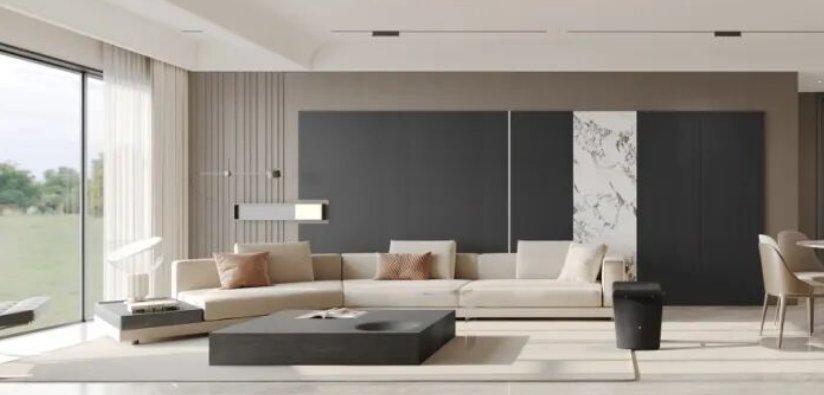
There are three core demands for panels to adapt to smart renovations. In the past, the selection of panels focused on environmental protection, wear resistance, and color patterns. Today, the interconnection logic of “people-devices-space” has given rise to three new demands, which are also key considerations for distributors.
1. Functional Adaptation: Not Just “Support” but Also “Compatibility”
Smart devices often require embedded installation, so panels must first have strong “support capacity”: precise holes for embedded refrigerators, sufficient weight-bearing capacity for temperature control panels, a flat surface and stable structure to ensure that hidden sockets do not loosen, and a uniform internal structure that remains stable even after grooving and drilling, making them the preferred choice for embedded installations. Compatibility is even more critical: the low heat generated by device operation can accelerate panel aging, so heat-resistant materials must be selected to avoid cracking and discoloration; smart cabinets must also ensure signal penetration, preventing overly dense materials from affecting interconnectivity response.
2. Design Adaptation: From “Single Decoration” to “Overall Integration”
Smart homes pursue “invisible aesthetics,” requiring panels to achieve “seamless integration.” The integrated design of smart locks with shoe cabinets and embedded appliances with cabinets demands precise matching of panel colors and thicknesses to custom requirements. The installation of rebounders in handle-less cabinets and the lightweight requirements of suspended ceilings place higher demands on panel adaptability. In the trend of minimalism, panels must also ensure the stability of hardware accessory installations while meeting the deformation resistance requirements of suspended structures; traditional ordinary panels are increasingly inadequate.
3. Environmental Adaptation: Smart Living Requires a “Healthy Foundation”
The embedding of smart devices creates enclosed spaces where pollutants can easily accumulate; device heating can further accelerate the release of harmful substances. When selecting panels, it is essential to focus on environmental standards. Homeowners pursuing smart living place greater emphasis on health, and panels that meet higher environmental standards, such as ENF grade, will become the mainstream choice in the market.
The trend is irreversible; those who adapt will win the future.
Smart homes do not disrupt traditional renovations but upgrade lifestyles. As a core carrier, the adaptability of panels directly determines the smart renovation experience. In the future, the core of competition will not be price, but the ability to meet new demands. Choosing the right smart-adaptive panels and honing professional service capabilities will allow one to seize the opportunity.