1. What is EtherCAT? A Clever Analogy
First, forget the traditional network concept. You can imagine it like this:Traditional Ethernet (like TCP/IP): It’s like a postman delivering letters to every household in an apartment building. The postman has to walk to each door (node), knock, wait, and hand over the letter (data) to the resident. It’s inefficient and has high latency.
EtherCAT: It’s like a high-speed “data train”. This train has only one engine (master), and it speeds along the track (network). Each platform (slave device) has a worker, and as the train passes, the worker at lightning speed:
takes the “cargo” (output data/commands) designated for them from the train.
puts on their own “cargo” (input data/status). When the train completes a lap around the entire loop and returns to the engine, all data exchanges are complete.
This “data train” mechanism is the core of EtherCAT’s high performance.
2. Core Advantages of EtherCAT
Based on the principles mentioned above, EtherCAT brings revolutionary advantages:
Extreme Speed and Ultra-Low Latency
Data: Updating 1000 digital I/O takes less than 30 microseconds (μs). Updating the position commands of 100 servo axes only takes 100 microseconds. This is dozens or even hundreds of times faster than traditional fieldbuses (like Profibus, DeviceNet).
High Synchronization Accuracy
Technology: Built-in distributed clock mechanism can calibrate the local clocks of all slaves in the network.
Effect: Achieves nanosecond-level synchronization accuracy. This means that hundreds or thousands of devices on the network (like servo drives) can perform absolutely synchronized actions as if commanded by the same brain.
Outstanding Flexibility and Topology
Supports linear, tree, star, and ring topologies, using standard Ethernet cables (like CAT5e) and connectors. Field wiring is extremely convenient, without the need for expensive switches.
High Bandwidth Utilization
Since data frames do not need to be received, unpacked, and repacked at each node, but rather “pass through”, the effective data bandwidth utilization can reach over 90%, far exceeding that of traditional Ethernet.
Significant Cost-Effectiveness
Hardware Cost: The cost of slave device controller chips is low.
Wiring Cost: Using standard Ethernet cables, flexible topology saves a lot of cabling and wiring labor.
Integration Cost: No additional network hardware (like switches) is needed, simplifying system structure.
Openness and Interoperability
Managed by the EtherCAT Technology Group (ETG), it is an open international standard (IEC 61158). This ensures that devices from different manufacturers can be seamlessly integrated, and users are not locked into a single vendor.
3. Main Applications of EtherCAT in Industry
EtherCAT is the “nervous system” of modern high-performance automation systems, mainly applied in:
High-Performance Motion Control: Controlling dozens or even hundreds of servo motors to achieve complex coordinated movements.
Distributed I/O Systems: Quickly and reliably collecting sensor signals and controlling actuators.
Real-Time Data Acquisition: Communicating with high-speed devices like vision systems and measurement sensors.
Safety Systems: Integrating standard control and safety functions on the same network through the Safety over EtherCAT (FSoE) protocol.
4. Examples of Multiple Practical Application Scenarios
Motion Control and Robotics
Six-Axis/Seven-Axis Industrial Robots
Scenario Description: Joint robots used for welding, handling, spraying, and assembly.
EtherCAT Advantages: Extremely low cycle time (<1ms) and nanosecond-level synchronization accuracy ensure that all joint axes move in strict synchronization, achieving smooth and precise trajectory control of the end effector.
Delta Parallel Robots (Spider Hands)
Scenario Description: High-speed sorting and picking operations in packaging and food industries.
EtherCAT Advantages: Extremely high refresh rate (up to 500μs) and deterministic latency allow the robot to accurately grasp moving objects at hundreds of times per minute.
SCARA Robots
Scenario Description: High-speed, high-precision planar positioning operations in the electronics industry, such as chip insertion.
EtherCAT Advantages: Fast response and synchronized control achieve precise coordination between the XY and Z axes, improving production rhythm.
Collaborative Robots
Scenario Description: Collaborating with humans in shared workspaces.
EtherCAT Advantages: In addition to high-performance motion control, it can integrate safety functions (like force feedback and area monitoring) through Safety over EtherCAT, achieving functional safety and standard control on the same network.
CNC Machine Tools (Five-Axis Linkage)
Scenario Description: High-precision milling and turning centers for aerospace and mold processing.
EtherCAT Advantages: Multi-axis nanometer-level interpolation and absolute synchronization ensure the precision and surface finish of complex surface machining. Electronic gear/electronic cam functions simplify mechanical structures.
Metal Sheet Laser Cutting/Welding Machines
Scenario Description: High-power laser equipment for two-dimensional or three-dimensional processing of metal sheets.
EtherCAT Advantages: High bandwidth allows real-time transmission of high-resolution processing path data to drives, strictly synchronizing with laser power control, achieving perfect control of cutting speed and cut quality.
Woodworking Processing Centers
Scenario Description: Used in furniture manufacturing to perform complex processes like carving, cutting, and drilling.
EtherCAT Advantages: Flexible network topology facilitates the connection of multiple spindles, saw blades, and a large number of I/O (pneumatic fixtures, vacuum suction), enabling quick tool changes and complex process flows.
Packaging, Material Handling, and Logistics
High-Speed Pillow Packaging Machines
Scenario Description: Continuous packaging of products like candies and biscuits.
EtherCAT Advantages: Achieving strict synchronization of film feeding, forming, sealing, and coding stations through the electronic cam function. When changing products, only parameters need to be modified without replacing mechanical parts, greatly enhancing flexibility.
Filling and Capping Production Lines
Scenario Description: Liquid filling and container capping in the beverage and pharmaceutical industries.
EtherCAT Advantages: Synchronizing the flow control of filling pumps, torque control of capping motors, and servo spindle of conveyor belts ensures filling accuracy and capping quality, while reducing the number of control cabinets through IP67 interface modules.
Automated Storage and Retrieval Systems (AS/RS)
Scenario Description: Stackers shuttle quickly in high-rise shelves to access goods.
EtherCAT Advantages: Precise synchronous positioning control of three servo axes (traveling, lifting, and forks) achieves high-speed, smooth, and low-impact operation, enhancing warehouse throughput efficiency.
Cross-Belt Sorters
Scenario Description: Sorting packages in express and logistics centers.
EtherCAT Advantages: The main PLC controls the servo drives of hundreds of sorting carts through EtherCAT, accurately controlling each cart to pop out packages at designated slots, with extremely low system latency and high sorting accuracy.
Semiconductors, Electronics, and Precision Manufacturing
Semiconductor Chip Mounters
Scenario Description: Mounting tiny electronic components onto PCBs.
EtherCAT Advantages: Extremely low communication jitter (<1μs) ensures absolute synchronization between the motion platform, vision camera, and suction nozzle, achieving micron-level mounting accuracy and high production capacity (CPH).
PCB Drilling Machines/Flying Probe Testers
Scenario Description: Drilling holes or conducting electrical tests on circuit boards.
EtherCAT Advantages: High bandwidth and determinism ensure that massive drilling coordinates or test point data can be transmitted to drives in real-time without delay, achieving high-speed and high-precision positioning.
Wafer Handling Robots
Scenario Description: Transferring silicon wafers in vacuum or cleanroom environments.
EtherCAT Advantages: Smooth motion control avoids vibrations, preventing fragile wafers from breaking. Linear topology simplifies wiring within vacuum chambers.
Wire Harness Processing Machines
Scenario Description: Automatically cutting, stripping, and crimping terminals on wires.
EtherCAT Advantages: Integrating wire feeding servos, rotating blade servos, and terminal machine control into the same network achieves high-speed, flexible production of various types.
Process Industries and Heavy Machinery
Plastic Injection Molding Machines
Scenario Description: Producing plastic products through processes like clamping, injection, and holding pressure.
EtherCAT Advantages: Integrating servo pump control systems, temperature controllers, and IO-Link masters achieves precise closed-loop control of injection speed, pressure, and temperature, saving energy and improving product quality.
Rubber Tire Molding Machines
Scenario Description: Compositing multiple layers of rubber and fabric to form green tires.
EtherCAT Advantages: Synchronously controlling multiple feeding racks, bonding heads, and spindles ensures the precision and uniformity of material laying while recording all process data for quality traceability.
Printing Machinery (Newspaper/Packaging Printing)
Scenario Description: Multi-color continuous printing.
EtherCAT Advantages: Distributed clock ensures micron-level registration accuracy between printing units, avoiding ghosting and color differences. No hardware switches make the system more reliable.
Wind Power Equipment Master Control Systems
Scenario Description: Control of large wind turbines.
EtherCAT Advantages: Achieving reliable communication over long distances (up to 100m between nodes) with high anti-interference through fiber optic ring networks connecting multiple controllers, pitch systems, and sensors at the top and bottom of the nacelle.
Testing, Measurement, and Special Applications
Automotive Simulators and Test Benches
Scenario Description: For vehicle dynamics simulation or component durability testing.
EtherCAT Advantages: Hard real-time performance perfectly combines with simulation models (like Simulink Real-Time), precisely synchronizing control of multiple hydraulic or electric servo actuators to simulate real road loads.
3D Coordinate Measuring Machines
Scenario Description: High-precision three-dimensional size measurement of workpieces.
EtherCAT Advantages: High-resolution position feedback is transmitted back in real-time via EtherCAT, combined with precise trigger signals, ensuring the accuracy and repeatability of measurement data.
Stage Machinery and Special Effects Equipment
Scenario Description: Controlling stage lifts, moving screens, and lighting positions in theaters.
EtherCAT Advantages: Multi-axis synchronization achieves complex and smooth group movements. Open protocols facilitate integration with third-party performance control systems, achieving precise audio-visual synchronization.
Large 3D Printers (Additive Manufacturing)
Scenario Description: Industrial-grade large-size, multi-material 3D printing equipment.
EtherCAT Advantages: Synchronously controlling multiple print heads, moving axes, and auxiliary devices (like heated beds) ensures precise printing paths and coordinated extrusion of different materials.
Smart Agricultural Machinery
Scenario Description: Large combine harvesters or seeders.
EtherCAT Advantages: Using IP67-rated slave modules, reliably connecting widely distributed sensors (flow, humidity, yield) and actuators (valves, motors) to achieve precision agriculture and autonomous driving.
Summary: In fact, EtherCAT has outstanding advantages in motion control and synchronized motion and control, mainly in this direction, and users with demands in this area can be explored.
5. The Role of IGH EtherCAT Master on ARM XY
The EtherCAT master is the only controller in the network that actively initiates communication. Its core functions can be summarized as:Organizing, scheduling, synchronizing, and managing the data flow and device status of the entire EtherCAT network.
1. Initiation and Termination of Data Frames
The master is the only device in the network that generates and sends the initial EtherCAT data frame. This frame passes through all slaves in sequence.
When the frame passes through all slaves and returns to the master, the master is responsible for reading and processing all input data contained in the frame.
2. Master Clock of Network Cycle
The master has the system’s master clock and precisely calibrates the local clocks of all slaves through the distributed clock (DC) mechanism.
This is the basis for achieving nanosecond-level synchronization accuracy, ensuring that hundreds or thousands of devices on the network can operate under the same time reference.
3. Manager of Process Data Mapping
The master is responsible for defining and managing process data mapping. This is a virtual data area where the master allocates the input and output data of each slave to specific addresses in memory.
In each communication cycle, the master automatically packages the output data into the corresponding position of the data frame and parses the input data from the corresponding position of the frame. For the user program, this is as simple as reading and writing local memory.
4. Master Controller of Network State Machine
The EtherCAT network has a clear state machine:Init -> Pre-Operational -> Safe-Operational -> Operational.
The master is responsible for controlling and advancing the states of all slaves. Only in the “Operational” state can process data cyclic communication occur.
5. Configuration and Diagnosis of Slaves
When powered on or running, the master reads the ESI files of each slave to understand their identity and functions.
The master is responsible for configuring the parameters of the slaves (like distributed clock, synchronization manager, etc.).
The master continuously monitors the network status, diagnosing communication errors, slave losses, or watchdog timeouts in real-time and responding accordingly.
6. How to Use IGH EtherCAT Master on ARM XY
Note: The latest version of IGH EtherCAT is 1.6.8, while the widely used version is 1.5.2. Currently, we support both versions, and if other versions are needed, they can be ported. Taking version 1.6.8 as an example (the EtherCAT master program has been cross-compiled):
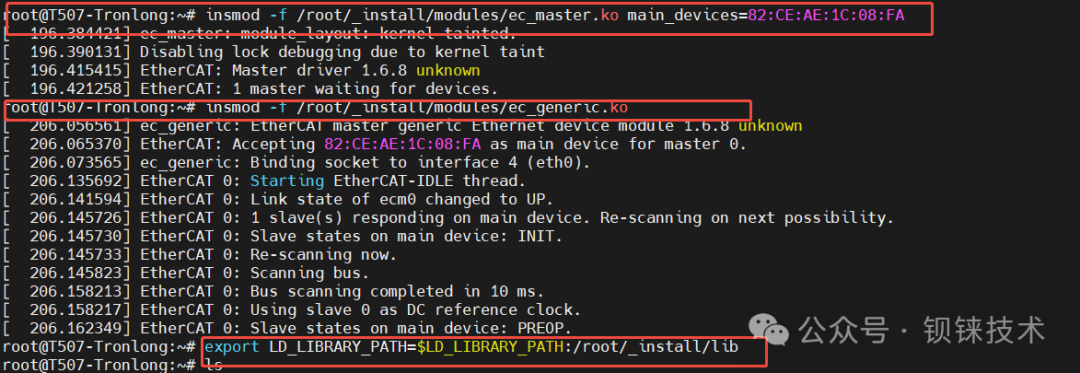
It must be an RT Linux kernel, taking T507 as an example, load the compiled master driver module and network card driver module into the kernel respectively, with the MAC address being the eth1 network card address. Pay attention to the loading order, then set the library environment variables. If the library has been placed in a directory already included in the system environment variables like /usr/lib, this step can be omitted. Since I have already connected the device, it has now scanned slave 0, which is in the PREOP pre-operational state. Users need to perform PDO process data allocation operations based on the ESI file.
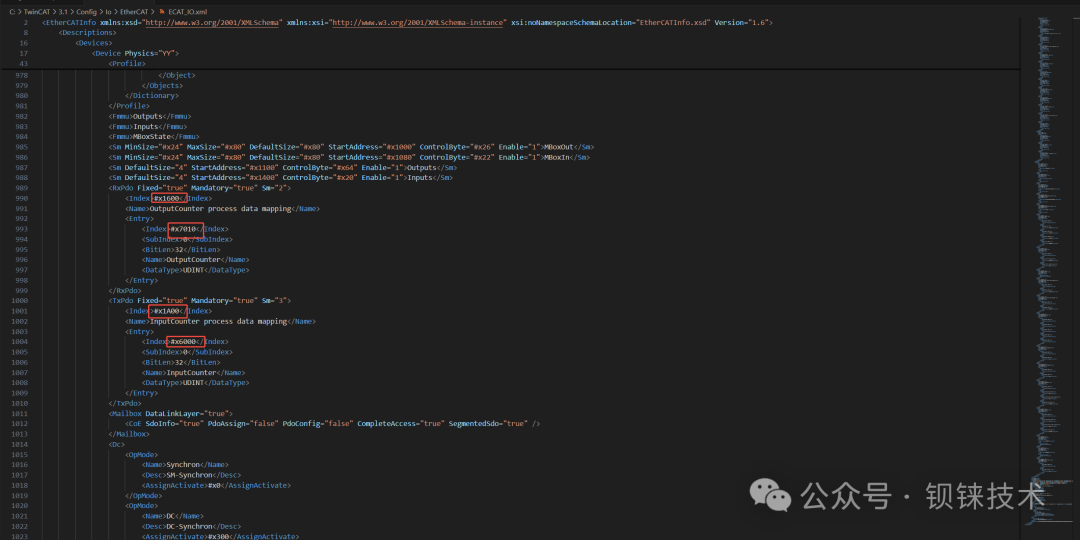
According to the ESI configuration file of the slave in TwinCAT, the IGH EtherCAT interface can be called.
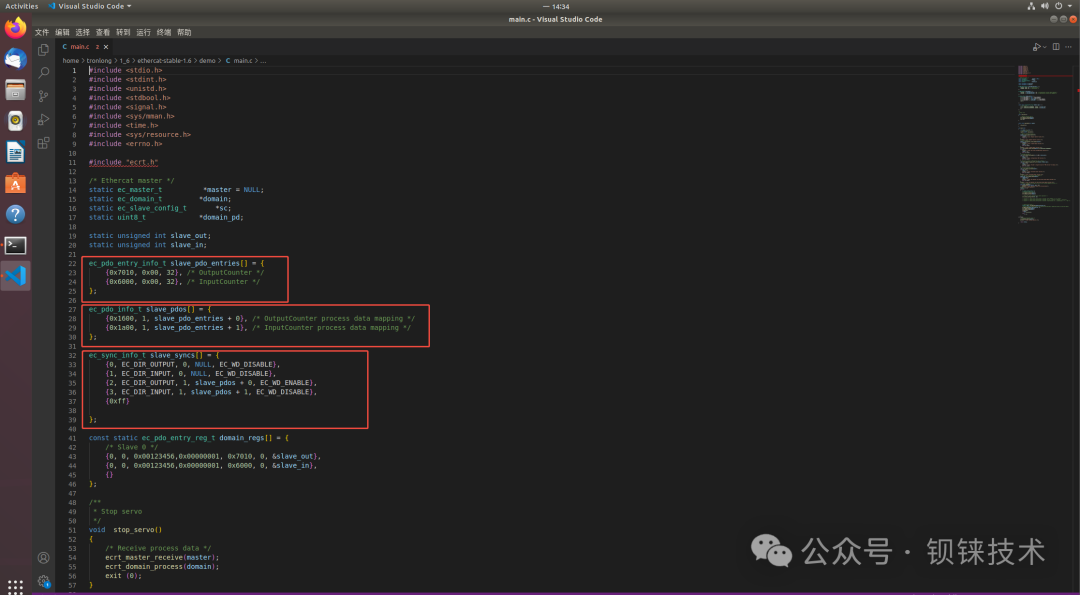
Configure PDO, consistent with the ESI file.
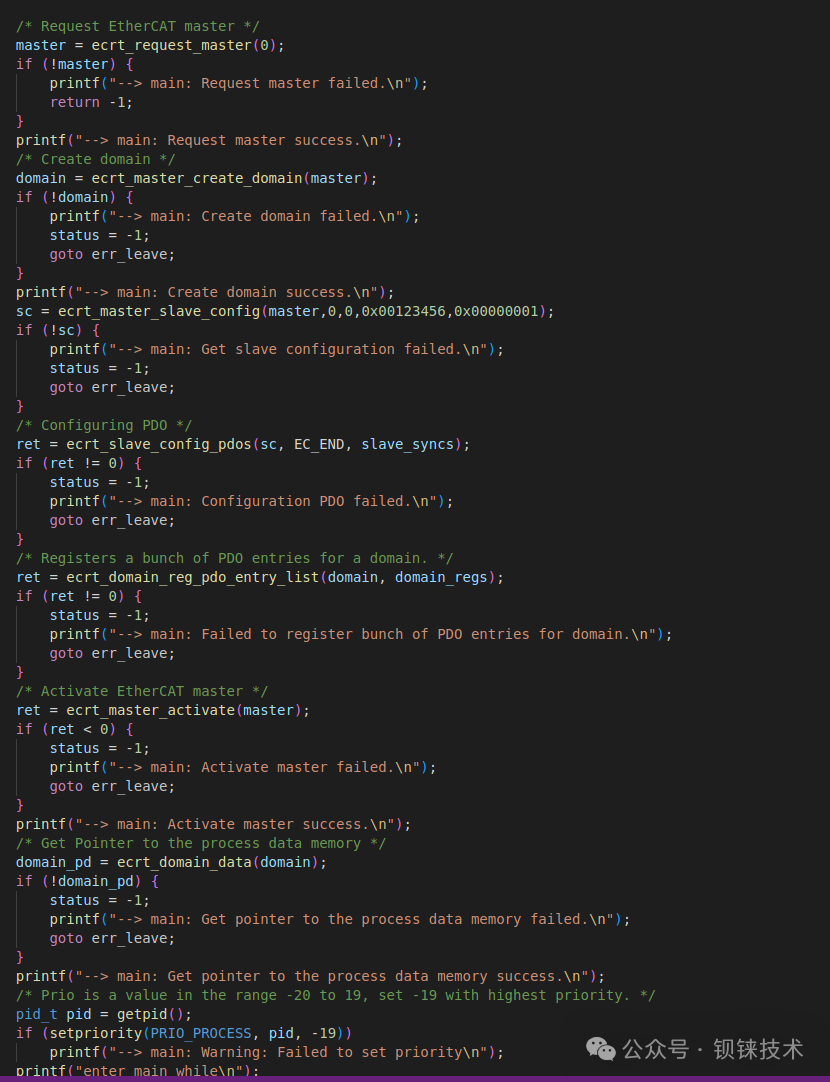
Call some basic interfaces to perform initialization operations and use the RT Linux API to increase task priority.
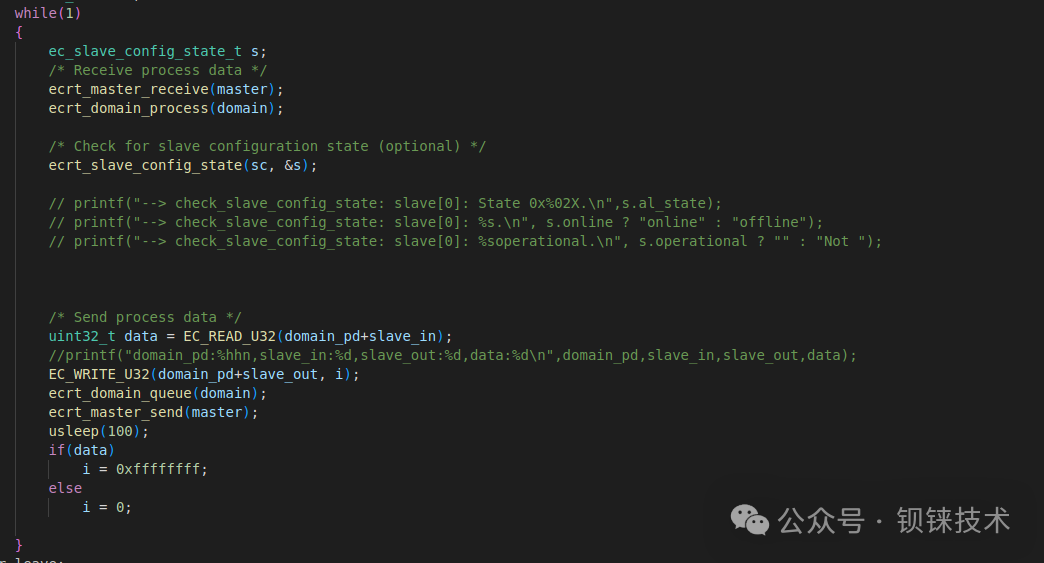
In the main loop, detect changes in input switches to control the on and off of two LED lights on the slave (the program logic is to detect input IO, turn on the light when connected, and turn it off when disconnected). After cross-compiling the program and uploading it to our ARM XY, the phenomenon is as follows:
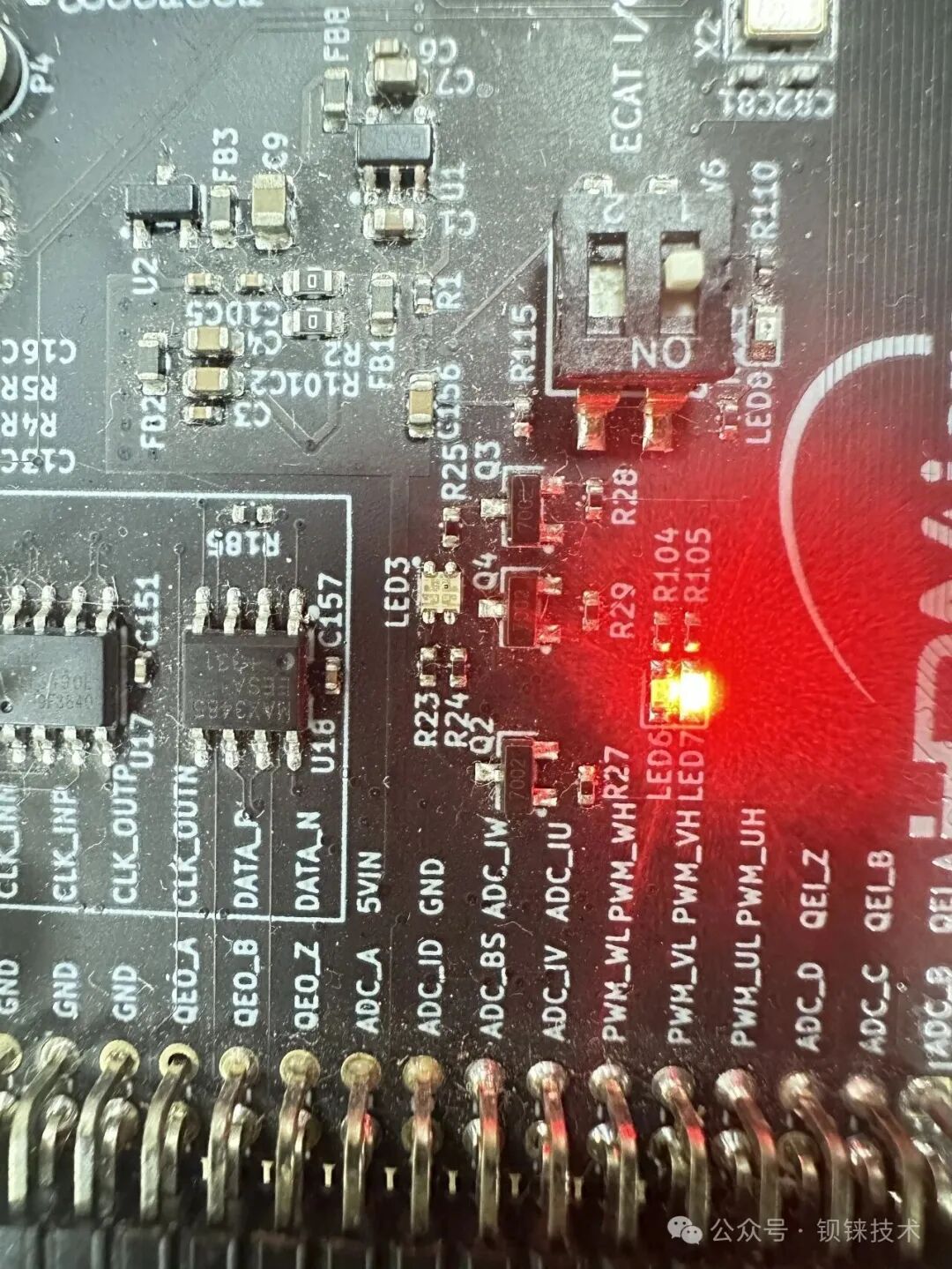
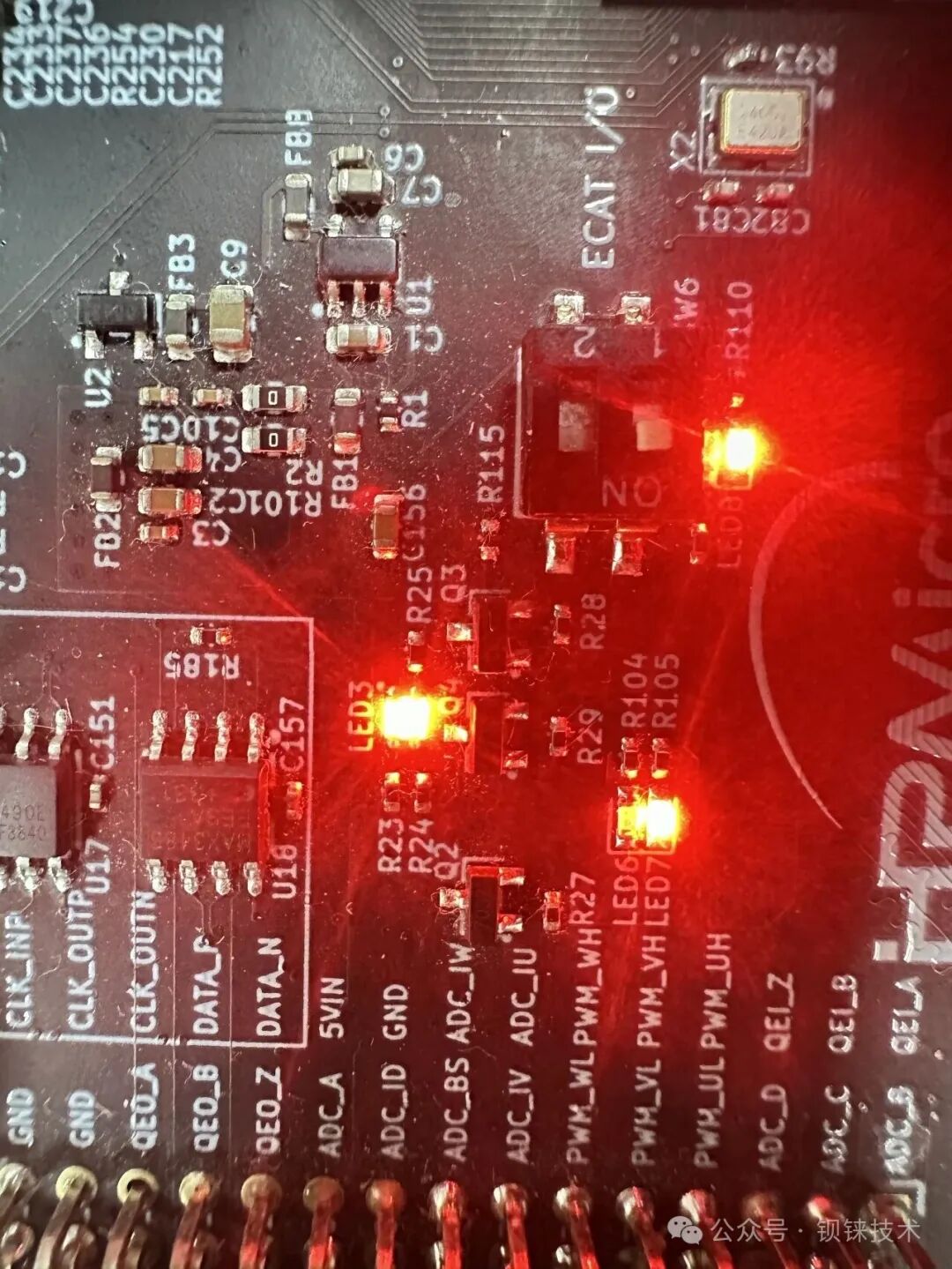
Phenomenon: You can see that when the switch is not ON, both lights are off, and when the switch is ON, both lights are on.
7. BL217 Slave
To be continued…
The slave coupler has also been completed, using the same IO modules from the BL210 series. Documentation can be referred to separately or inquired from testing personnel.