
“2025 Smart Home Device Experience Design Research Report” is published by Jian Lifang.The report points out that the smart home industry is entering an explosive growth phase driven by the Internet of Things, artificial intelligence, and 5G technology. However, users face pain points such as poor device compatibility, complex installation, limited interaction, and privacy security. Therefore, the report emphasizes that user-centered experience design is the key to the sustainable development of the industry, aiming to analyze four major aspects: installation configuration, daily use, scenario linkage, and maintenance upgrades from a three-dimensional perspective of “industry-user-product” and propose optimization suggestions.

This report consists of:28 pages.The complete PDF version of the report download method is at the end of the article.
Summary of the research report content is as follows:
1. Overview of the Smart Home Market
Definition and Classification
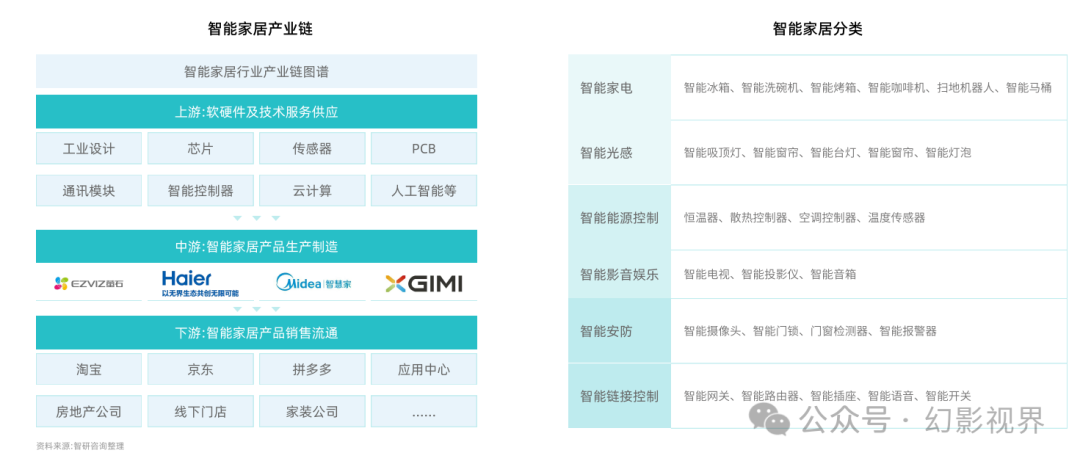
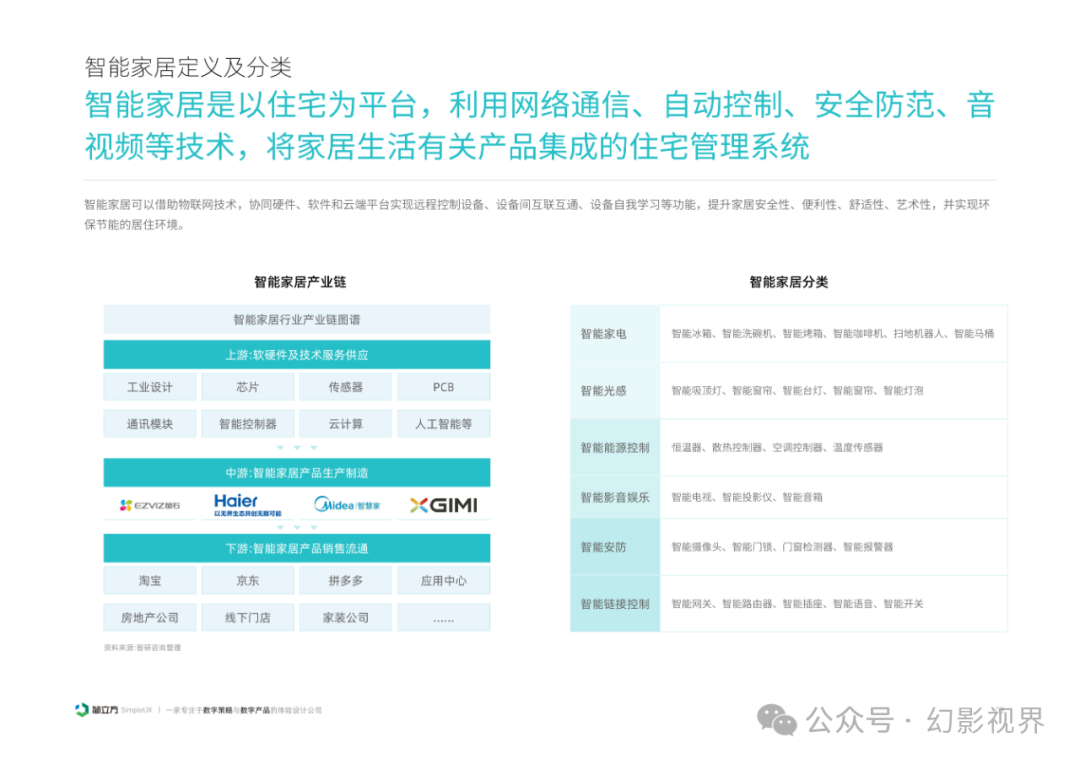
Smart home refers to a management system integrated using network communication, automatic control, and other technologies based on residential platforms, achieving device interconnection, remote control, and self-learning through the Internet of Things, enhancing safety, convenience, and energy efficiency. The report classifies smart homes into six categories:
- •Smart Appliances: such as smart refrigerators, robotic vacuum cleaners, and smart toilets.
- •Smart Lighting: such as smart ceiling lights and smart curtains.
- •Smart Energy Control: such as thermostats and air conditioning controllers.
- •Smart Audio-Visual Entertainment: such as smart TVs and smart speakers.
- •Smart Security: such as smart cameras and smart locks.
- •Smart Connectivity Control: such as smart gateways and smart plugs.
2. Market Size and Development
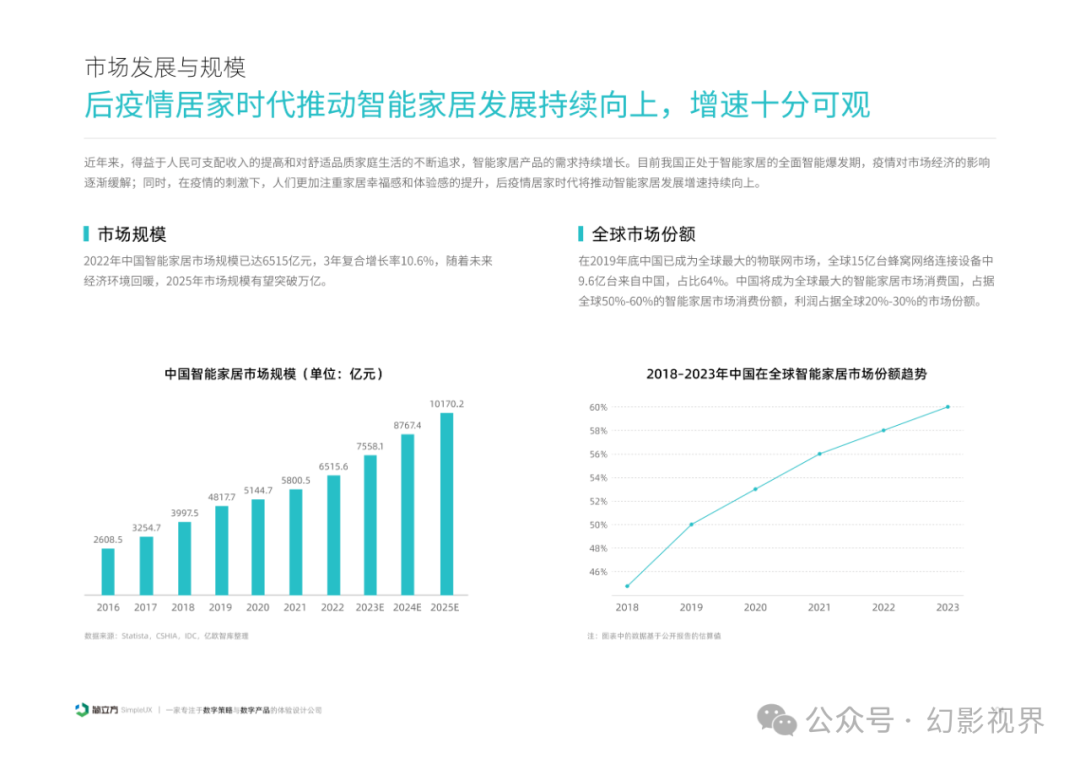
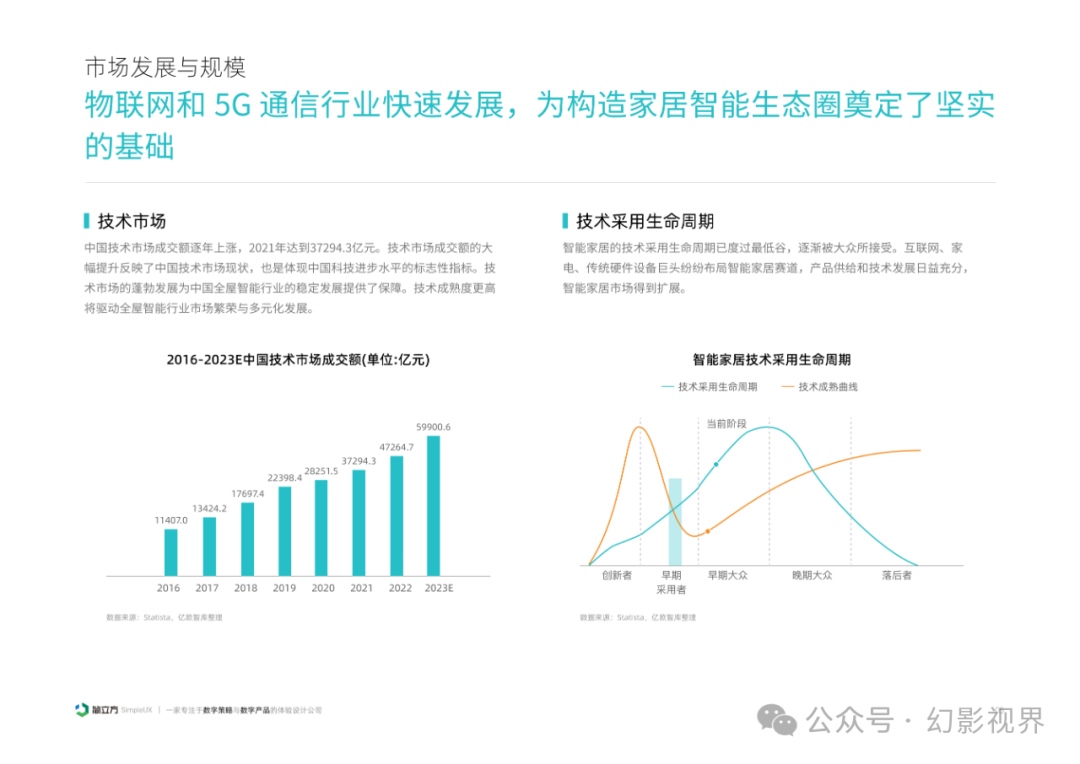
In the post-pandemic era, home demand has driven rapid growth in smart homes. In 2022, the market size in China reached 651.5 billion yuan, with a compound annual growth rate of 10.6% over three years, and it is expected to exceed one trillion yuan by 2025. China has become the largest IoT market globally, accounting for 50%-60% of global consumption. The transaction volume in the technology market has been increasing year by year, reaching 37,294.3 billion yuan in 2021, laying a foundation for the industry. The technology adoption lifecycle has passed its lowest point and has entered the stage of mass acceptance.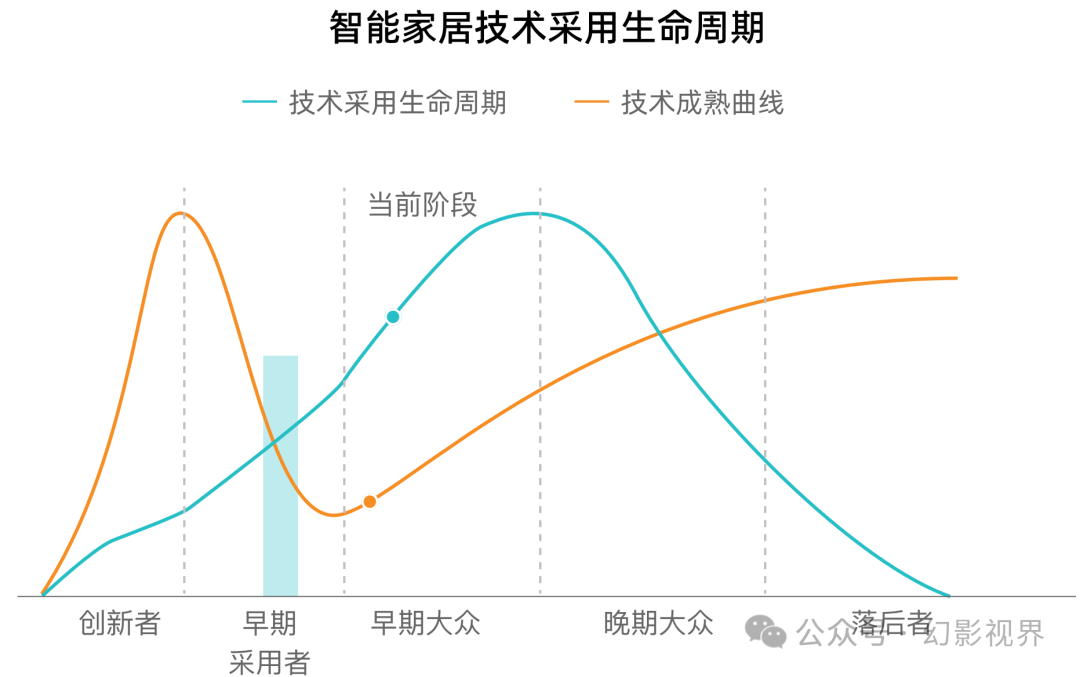
Mainstream Products and Ecosystem
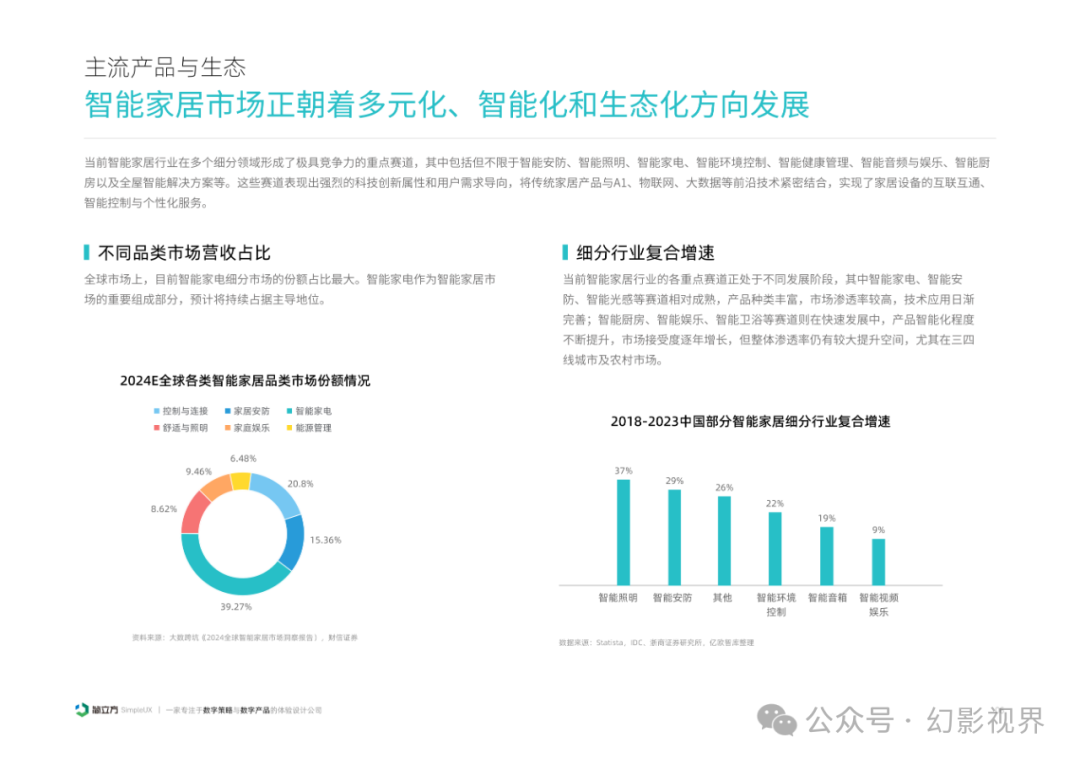
The industry is developing towards diversification, intelligence, and ecosystem. Smart appliances occupy the largest market share globally (predicted for 2024), but the growth rate in segmented tracks is uneven: smart appliances, security, and lighting are relatively mature; smart kitchens and entertainment still have room for penetration. From 2018 to 2023, some sub-sectors have shown significant compound growth rates, such as smart security exceeding 20%.
3. User Insights and Behavioral Characteristics
Younger User Demographics
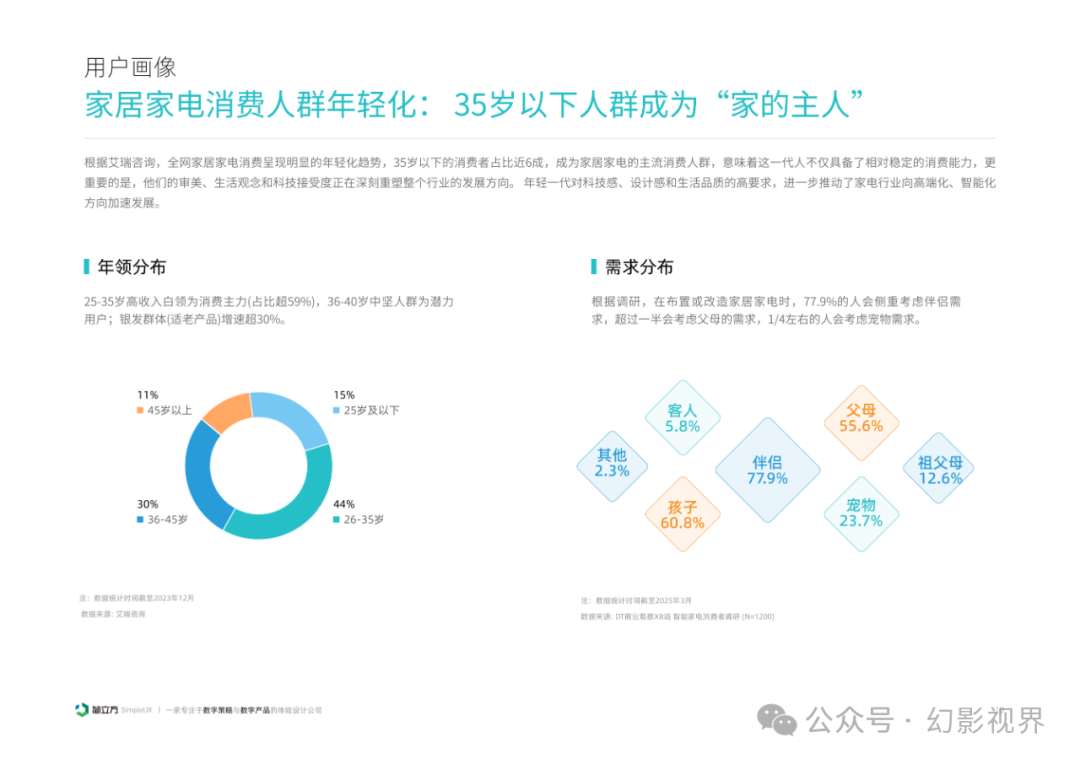
The consumer group for home appliances is primarily under 35 years old, accounting for nearly 60%, with high-income white-collar workers aged 25-35 being the main force. The elderly group (products for seniors) is growing at over 30%. Demand distribution shows that 77.9% of users consider their partner’s needs, over half consider their parents’ needs, and 1/4 consider their pets’ needs, reflecting a trend towards personalization.
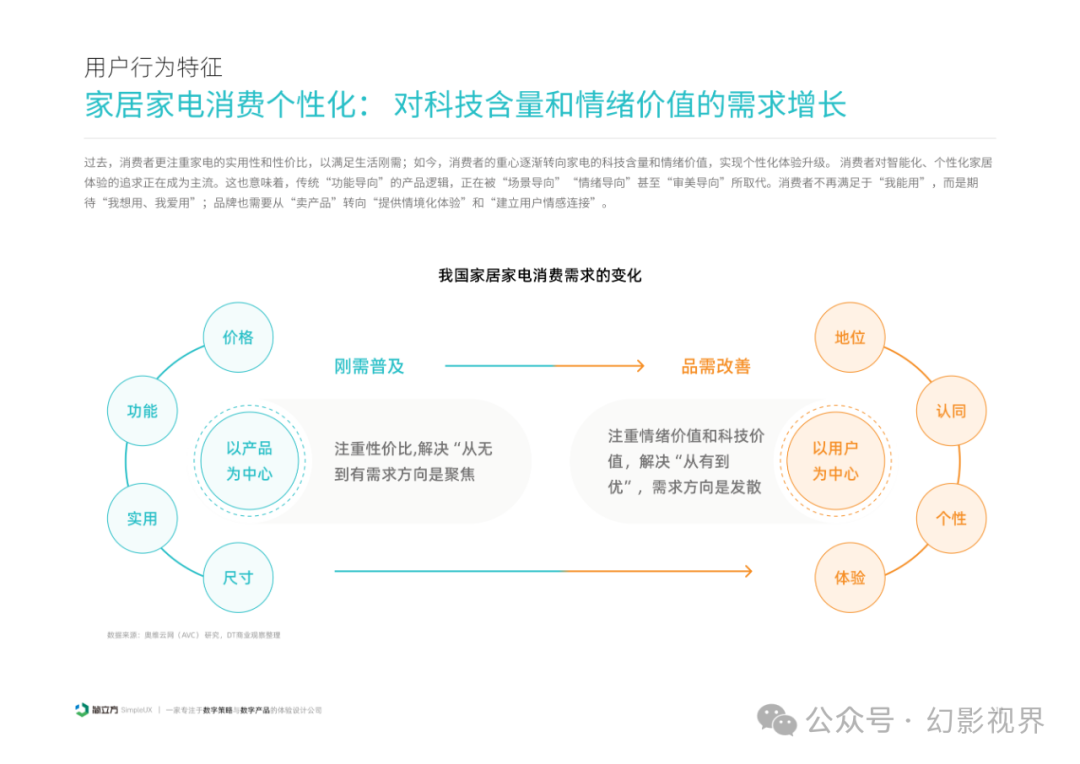
Behavioral Characteristics: From Function-Oriented to Emotional Value
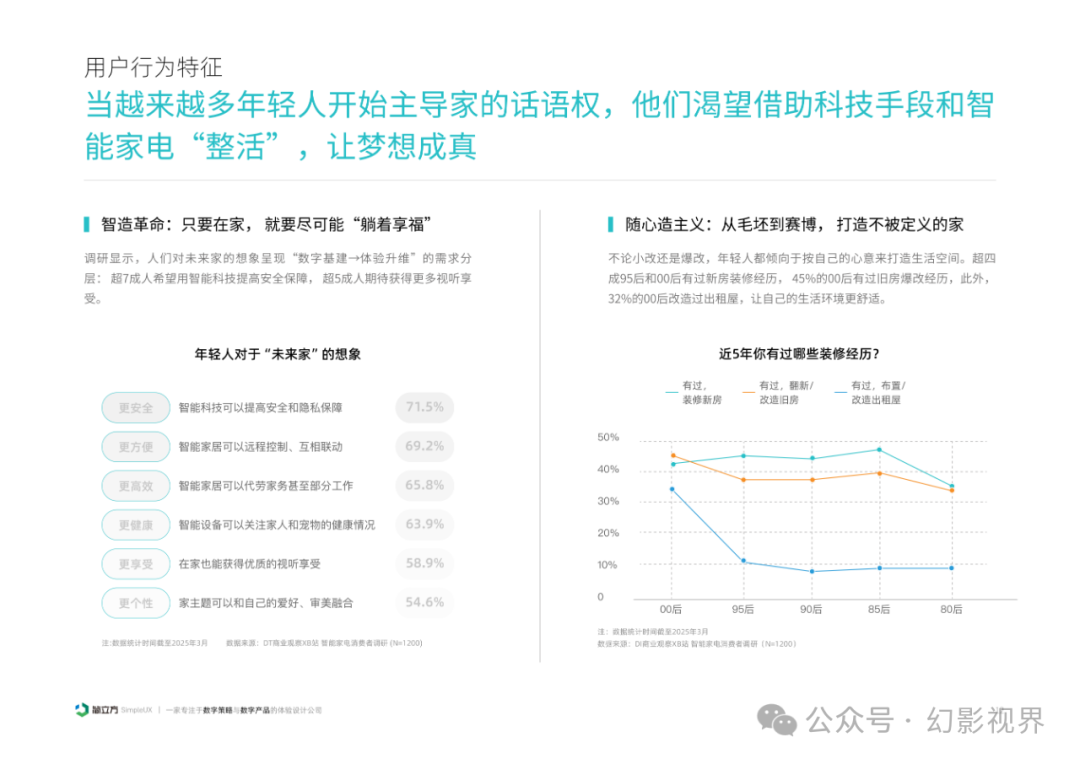
Consumers are no longer focused solely on practicality but are pursuing technological content and emotional value. Young people desire to “enjoy life” through smart appliances, with over 70% of users hoping to enhance safety and over 50% expecting audio-visual enjoyment. Renovation experiences show that 45% of post-00s have undergone significant renovations in old houses, and 32% have transformed rental properties, reflecting a trend of “freestyle creation”.
AI Technology Penetration
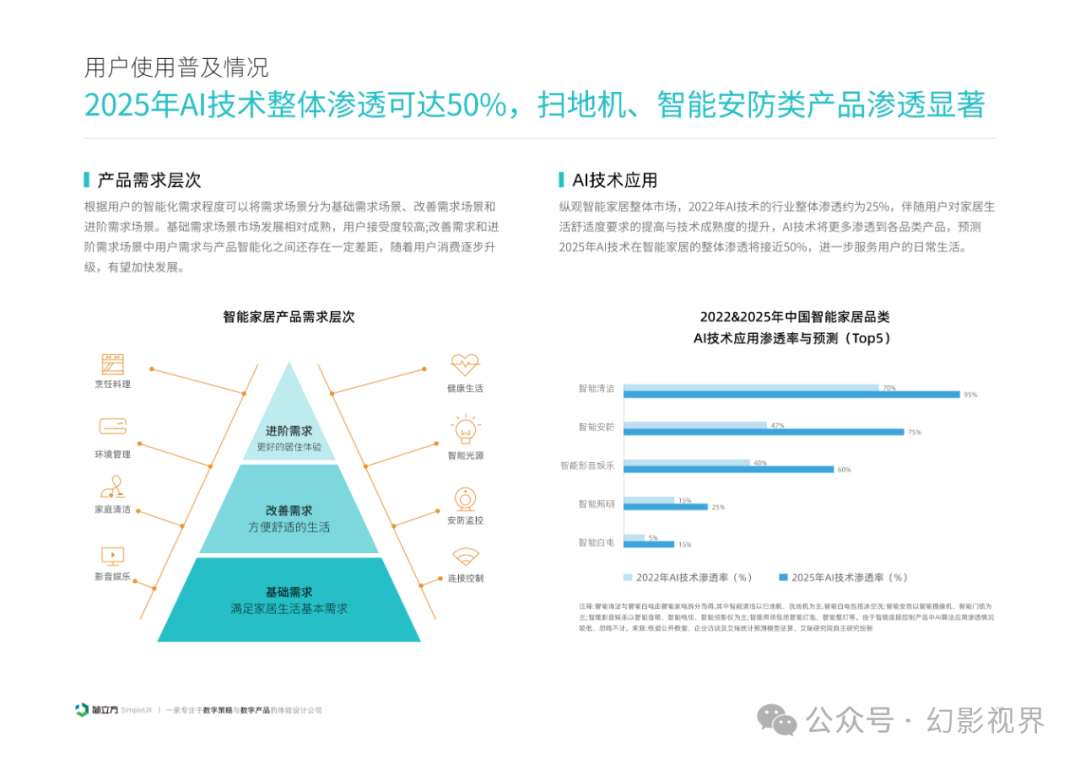
In 2022, the penetration rate of AI technology in smart homes was about 25%, expected to reach 50% by 2025. Smart cleaning products have the highest penetration rate (predicted 95% by 2025), followed by smart security (75%) and smart audio-visual entertainment (60%).
4. Experience Design Pain Points and Optimization Strategies
The report focuses on three major pain points and proposes targeted strategies.
Pain Point 1: Low Matching Degree Between User Needs and Product Functions
Product functions often “run ahead of users”, leading to redundancy or impracticality. Examples include:
- •Smart Blinds: Cannot be manually operated after network failure, exposing design disconnection.
- •Smart Appliance Networking: Devices often disconnect, leading users to abandon networking functions.
Pain Point 2: APP Functions Too Complex
Interface information overload and lengthy operation paths. Issues include:
- •Deep nesting of levels (e.g., multiple clicks needed to turn off lights).
- •Weak feedback mechanism (status indication is unclear).
- •Lack of personalization (interface cannot adapt to elderly or young users).
Optimization Strategies: Emphasize simplicity, with core measures including:
- •Dynamic cards on the homepage for one-click operation.
- •Scenario templating (e.g., “movie mode”).
- •Strengthening feedback (visual + auditory + tactile). An excellent example is the Mijia APP, which is clear and intuitive on the homepage, providing one-click modes.
Pain Point 3: Lack of Scenario Linkage
Device fragmentation and lack of collaboration. Issues include:
- •High false wake-up rate (industry average 5%).
- •Poor dialect recognition (recognition rate for non-Mandarin is less than 60%).
- •Cross-device delay (response time exceeds 2 seconds).
Optimization Strategies: Build multi-scenario linkage, achieving proactive service through AI habit learning. For example:
- •Establish a “space-time-behavior” three-dimensional model.
- •AI learns user habits (e.g., automatically executing Wednesday cinema mode).
5. Future Trends
Seamless Interaction
AI-driven smart homes are shifting from passive control to proactive service. Through sensors that perceive the environment (e.g., automatic temperature adjustment), achieving “invisible technology”. Trends include deep learning of user habits and anticipating needs (e.g., preheating the bathroom before arriving home).
Whole-Home Intelligence Systematization
The industry is shifting from “mass production” to “personal customization”, achieving scenario DIY based on IoT/AI. The core driving force is AI, pushing devices to become intelligent partners.
AI and Multimodal Interaction
AI achieves seamless experiences through perception and learning. The technological foundation includes user habit learning and environmental perception; the paradigm shift is from passive response to proactive service; the ultimate goal is to anticipate needs and reduce manual operations.
The following is an excerpt from the original report shared by Huanshi Vision:


 This article is for reference only and does not represent any investment advice from us.Huanshi VisionThe materials shared by Huanshi Vision are recommended for reading only, and the materials obtained by users are for personal learning. For usage, please refer to the original report.Huanshi Vision Industry Report Resource Library shares practical resources daily.Scan the QR code below to join and search for downloads directly, with a wealth of historical materials available for viewing and downloading at any time.
 Disclaimer: The above reports are obtained by this platform through public and legal channels, and the copyright of the report belongs to the original writing/publishing institution.If there is any infringement, please contact us for timely deletion; the content is for recommended reading only and for reference learning. If there are doubts about the content, please contact the original writing/publishing institution.
 Click“Read the original text” to download the report.