The early winter in the old alley of Shui Nan is particularly quiet, with only the occasional sound of the wind outside the old apartment. On a sunny weekend, Xiao Lin bought several plastic storage boxes, planning to organize her wooden bookshelf properly.
“I am—”
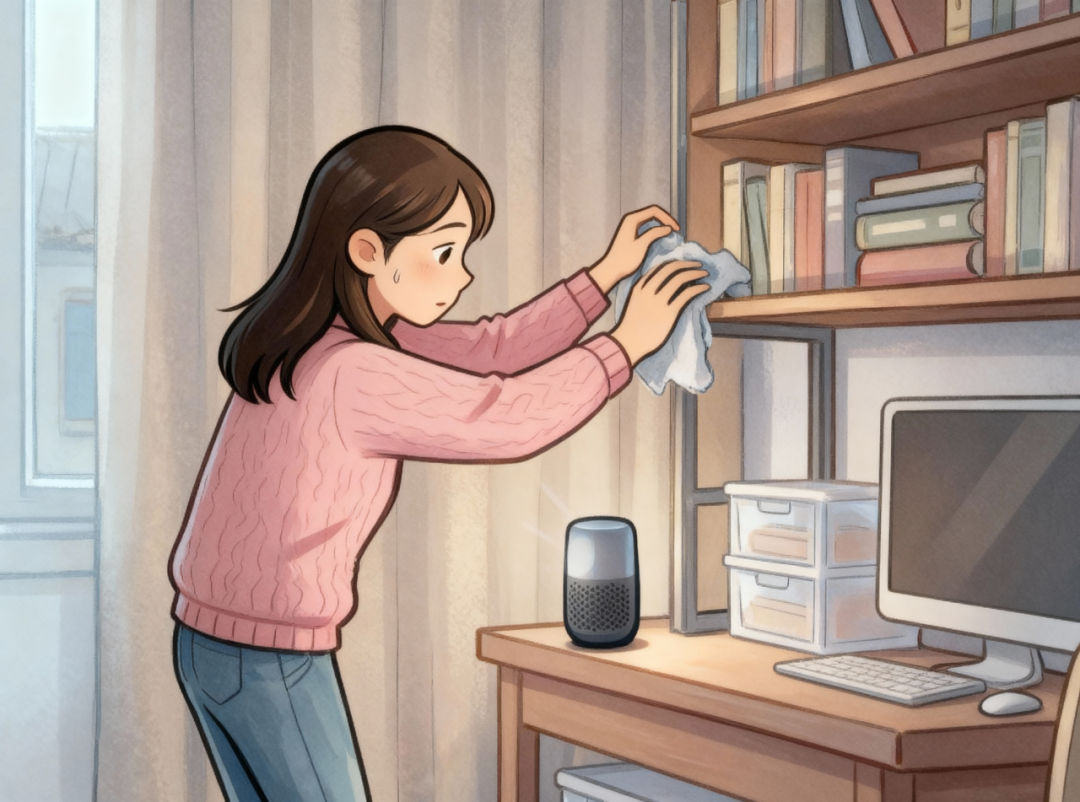
A cheerful response suddenly appeared. Clearly, no one called, yet the smart speaker responded inexplicably.
Although Xiao Lin found it a bit strange, she thought she had accidentally pressed the wake button while organizing, and soon forgot about it.
However, that night, while Xiao Lin was reading and went to get water, just as she stepped forward, the speaker suddenly started playing ethereal light music, startling her so much that the glass cup in her hand almost slipped.
After ruling out accidental touches, Xiao Lin thought that dust might have affected the device, so she carefully wiped the speaker with a dry cloth and tidied up the clutter around it. However, in the following week, the strange occurrences intensified: the rustling of turning pages would trigger responses, and even during quiet sitting, the speaker would suddenly sound off, becoming quite bothersome.
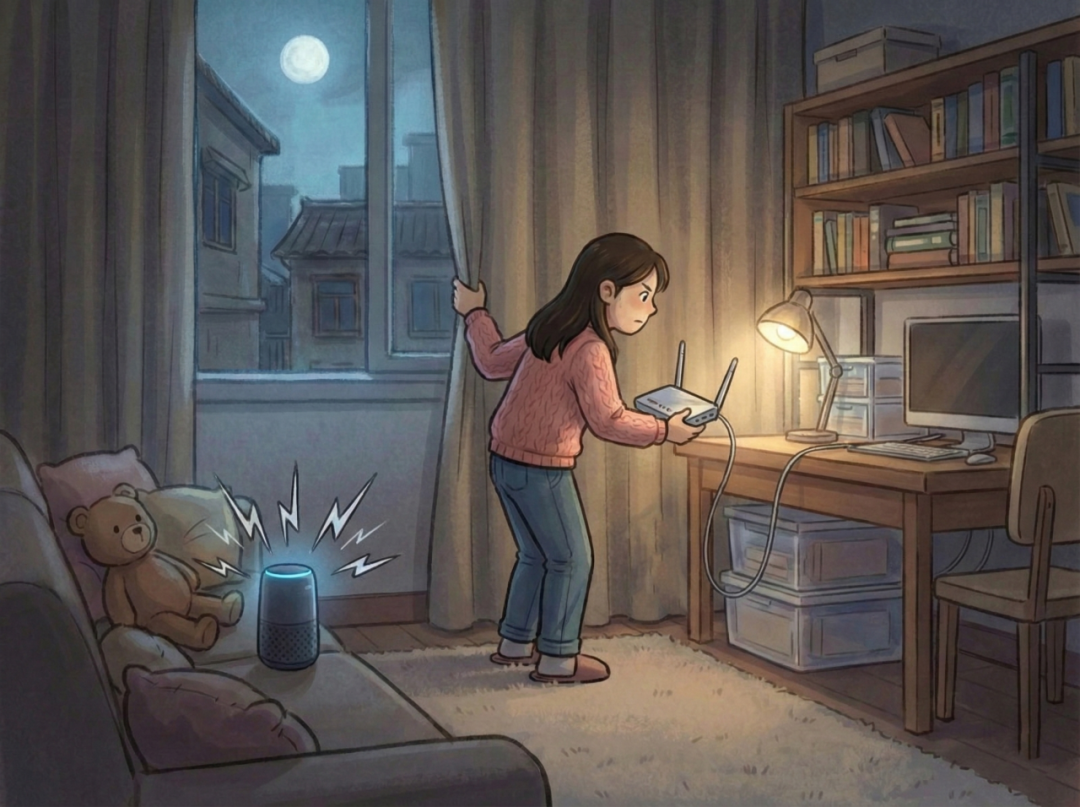
“Could it be a quality issue?” Xiao Lin first replaced the power socket with a brand new one, moved the speaker a meter away from the computer, and even deliberately disconnected the router to restart the network. However, these attempts were futile, and the speaker’s “autonomous consciousness” seemed to grow stronger.
In desperation, she contacted the brand’s customer service. A technician arrived with professional testing equipment and checked the device inside and out, only to shrug in resignation: “Miss, all the hardware, software, and voice recognition modules of your speaker are normal. Could it be that… there is a problem with your home network or electrical circuit?”
The property electrician then came to check and reached the same conclusion: “The voltage is stable, and the wiring is fine. Why don’t you think of other reasons?”
After two unsuccessful attempts, Xiao Lin’s heart sank. Although unplugging the power could stop the inexplicable sounds, the root of the problem remained unfound.
“Why not ask the power supply company?” While venting to a friend about this issue, she received this suggestion. Xiao Lin, with a try-it-and-see attitude, called the customer service hotline of the State Grid Longquan Power Supply Company. Half an hour later, Jin Feng, the district manager of the urban power supply center, appeared at her door with a tool bag.
Jin Feng quickly opened the tool bag, using a multimeter and voltage tester to check the socket voltage and circuit continuity, all values showing normal, creating a somewhat tense atmosphere. Just as they were at an impasse, Jin Feng walked around the room, and his finger accidentally brushed against a metal component on the wooden bookshelf.
“Hiss—” A sharp pain made him retract his hand suddenly, and he realized what the problem was.
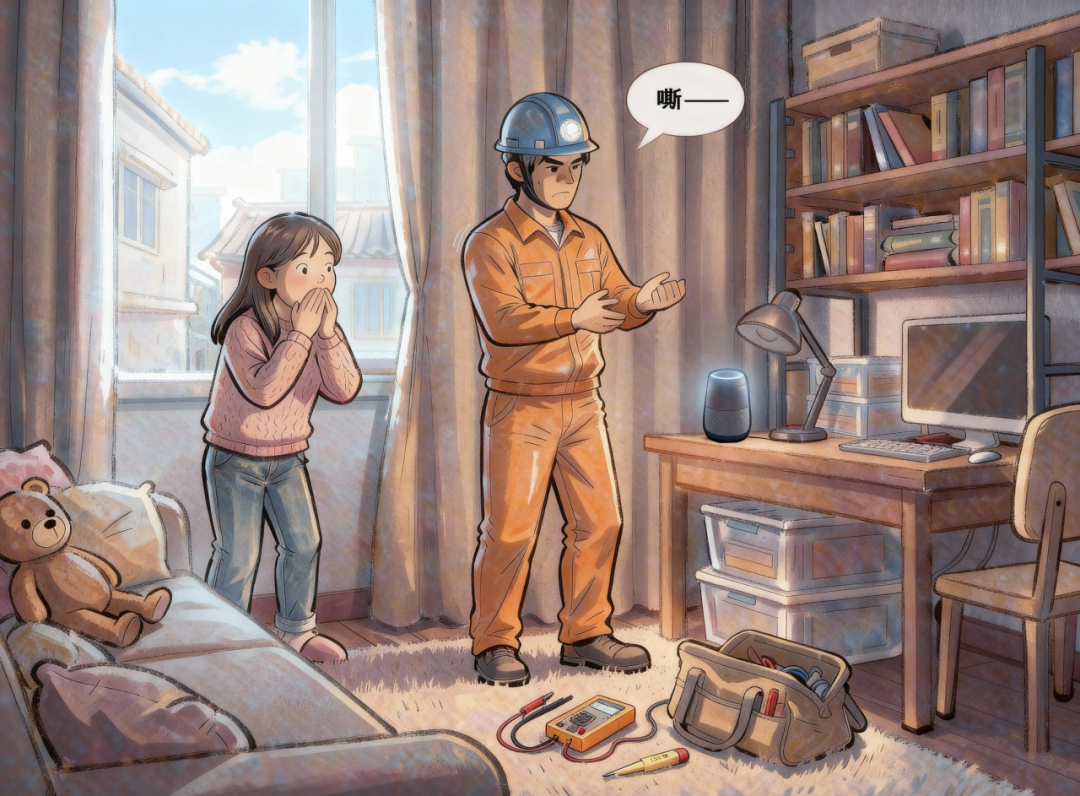
His gaze quickly swept across the entire room: synthetic fiber carpets covered the floor, thick velvet curtains blocked most of the sunlight, and the sofa was piled high with various plush cushions, while the desk and bookshelf were filled with plastic storage boxes of various sizes… all materials that easily generate static electricity.
To verify his thoughts, Jin Feng picked up a plastic storage box from the table and rubbed it vigorously and quickly on the synthetic carpet a dozen times before bringing it close to the speaker—
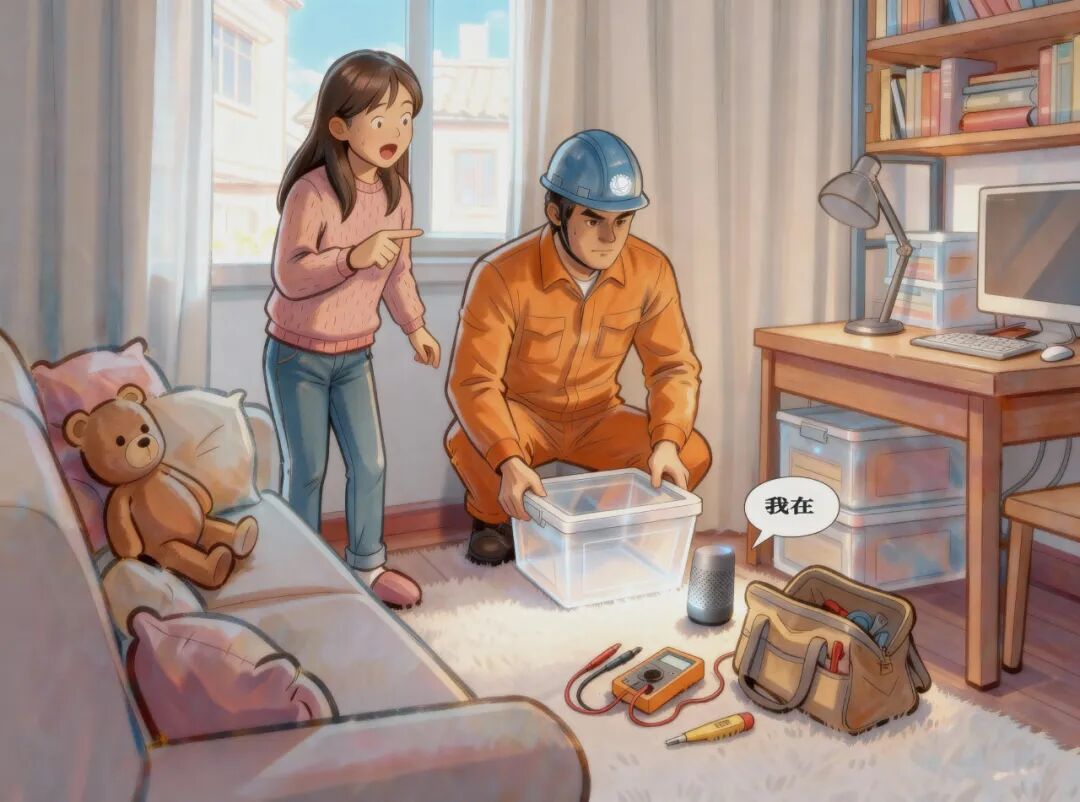
“I am,” the speaker immediately responded with the familiar voice. Xiao Lin was so shocked that she covered her mouth: “That’s the sound!”
Jin Feng put down the plastic box and explained: “This is not a device malfunction, nor is it haunted; it’s static electricity at play.” He pointed to the soft furnishings around, “In autumn and winter, the air is dry, making it easy to generate static electricity. The synthetic fibers, plush materials, and plastics in your home are all insulating materials that, when rubbed together, can accumulate static charges excessively and cannot release them. When you wiped the bookshelf and the speaker, the friction increased, leading to even more charge accumulation.”
He further educated her: “When these static charges accumulate to a certain level, they can cause a momentary discharge. Although the energy is very small, it is enough for the speaker to misinterpret it as a wake command, either responding or triggering the playback function. Your attempts to change the socket or move the speaker did not address the root cause, so naturally, they could not solve the problem.”
Xiao Lin suddenly understood and removed most of the plush cushions, took away the synthetic carpet, and even bought a humidifier. That night, she used the humidifier while reading at her desk until late, and the smart speaker sat quietly beside her, no longer making any inexplicable sounds.


Xiao E has something to say
In autumn and winter, the air is dry (relative humidity < 40%), and insulating materials such as synthetic fibers, plush, and plastics easily generate and accumulate static charges. When the static potential reaches thousands of volts (2kV-8kV), it may cause sensitive circuits (such as the voice front end of smart speakers, capacitive touch keys, microcontroller reset circuits, etc.) to trigger erroneously or experience temporary functional disruptions, affecting daily life experiences.
To effectively reduce static interference, the following measures can be taken:
Increase environmental humidity: Use a humidifier or place a basin of water in the home to moderately increase indoor humidity.
Choose home materials wisely: Reduce the use of synthetic fiber carpets, plastic decorations, and plush toys. Opt for natural fiber fabrics such as cotton, linen, and silk for curtains, sofa covers, and clothing materials.
Release static in advance: Before touching metal objects (such as door handles) or electronic devices, you can first touch a wall or a metal key you are carrying to discharge the static charge on your body.
Source
Li Shui Company Hong Yuyang
Li Shui·Longquan Company Wang Xiaoyi Chu Jinjing Li Fujun
Editor
Zhu Feibai
Proofreader
Deng Tong