
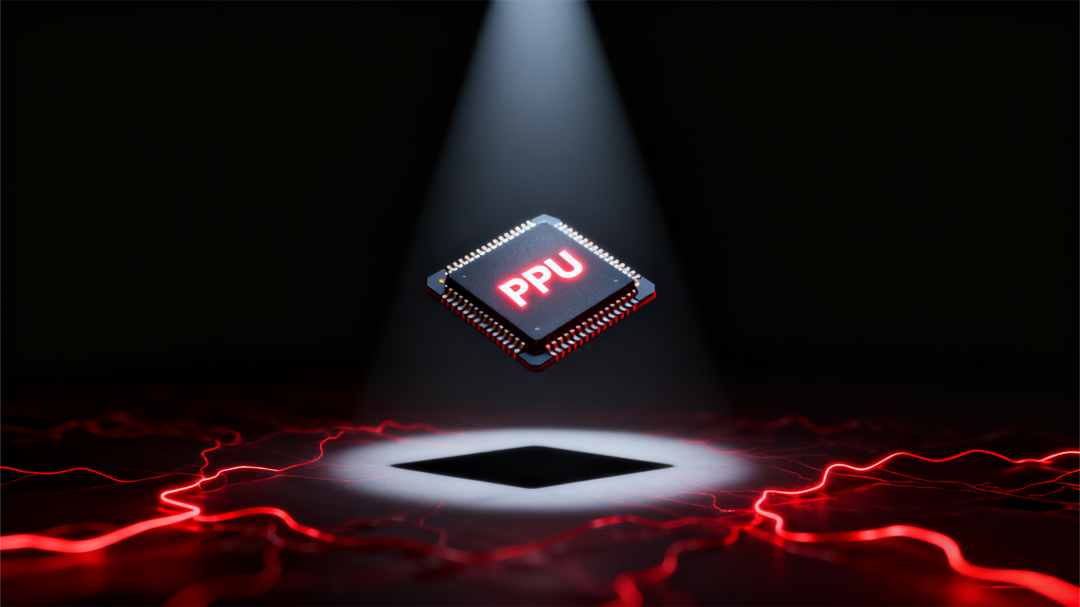
Parameter comparison shows that multiple indicators surprisingly surpass NVIDIA’s A800?
Total word count: 1573 words, estimated reading time: 4 minutes
Cover image: AI generated
According to Weike Network Electronics on September 17, during the CCTV “News Broadcast” on the evening of September 16, a subtle shot captured a parameter comparison table of Alibaba’s self-developed AI chip, the PingTouGe, alongside domestic and international competitors while reporting on China Unicom’s Sanjiangyuan Intelligent Computing Center project.
Alibaba’s PingTouGe chip, codenamed “PPU”, had its detailed specifications disclosed in this unexpected manner.
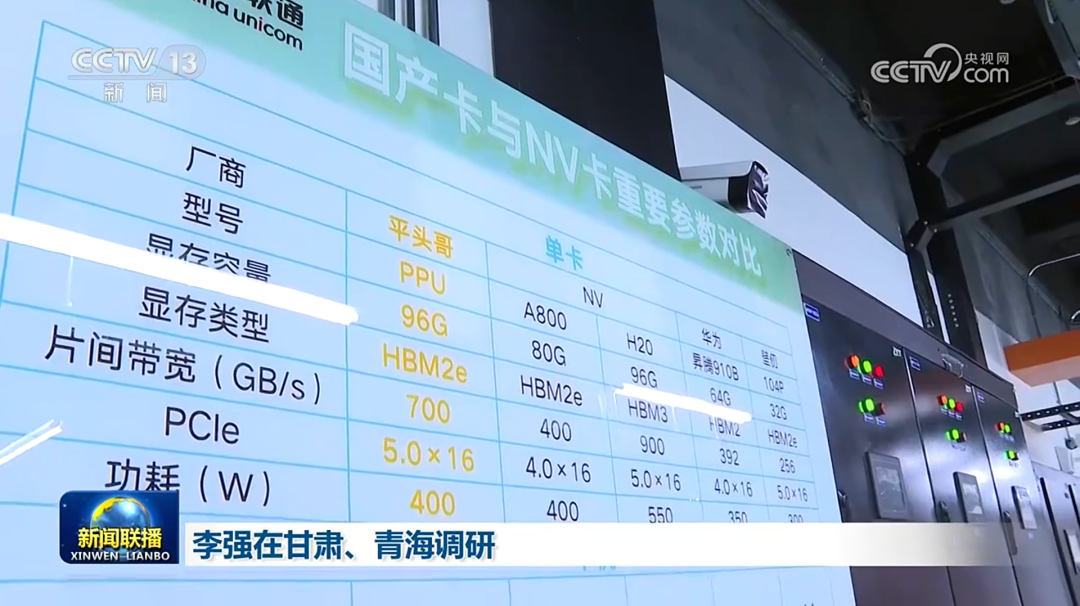
Parameters are “surprising”, multiple domestic chips appear simultaneously
From the table in the above image, it can be seen that the PingTouGe PPU uses HBM2e memory, with a memory capacity of 96GB, inter-chip bandwidth of 700GB/s, and overall power consumption controlled at 400W. In terms of interface selection, the PPU supports PCIe 5.0×15, which is currently a mainstream choice.
If we compare the parameters in detail, it is evident that the PingTouGe PPU has a pragmatic orientation—its inter-chip bandwidth of 700GB/s significantly outperforms the A800’s 400GB/s, although it is slightly lower than the H20’s 900GB/s. However, considering the power consumption control of 400W, the energy efficiency ratio is already excellent.
From the parameter performance, it also proves that this chip has surpassed NVIDIA’s A800 in multiple key indicators, and even approaches the level of the H20 in certain aspects.
Additionally, Huawei’s Ascend 910B and Birun Technology’s 104P were also compared in the CCTV footage. Although the PPU leads in most parameters, it is well known in the industry that Huawei’s latest model is the Ascend 910C chip, and this comparison reflects the subtle competitive dynamics among domestic chips.
Besides, Alibaba’s self-developed AI chip is not only used for its own business but is also beginning to expand into the market. Recently, at the end of August, Baidu’s Kunlun chip won a major order from China Mobile worth billions, securing a significant share in the “CUDA-like ecosystem” segment.
All these indicate an important signal: domestic AI chips are forming a collective breakthrough.
“A multitude of domestic computing power”
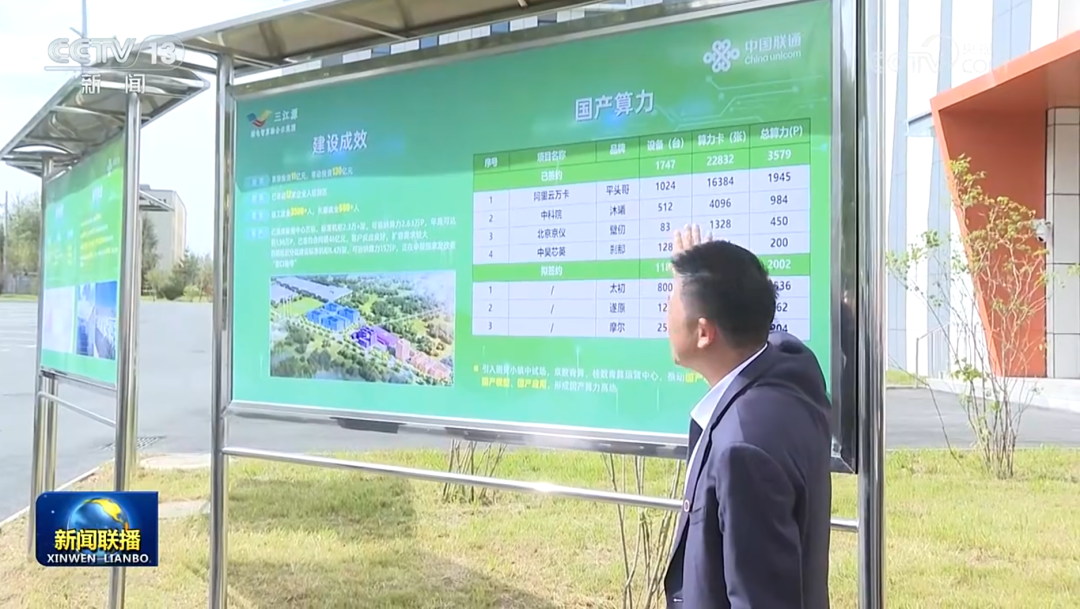
Especially from the signing situation of the China Unicom Sanjiangyuan project, it has already signed contracts for 1747 devices, 22832 computing cards, with a total computing power of 3579P.
Among them, Alibaba Cloud provides the majority with 1024 devices and 16384 PingTouGe computing cards, contributing 1945P of computing power; the Chinese Academy of Sciences provides 512 devices and 4096 Muxi computing cards, contributing 984P of computing power; Beijing Jingyi and Zhihua Xinying also participated in the project; while Taichu, Suiruan, and Moore are also on the proposed signing list.
This diversified supply pattern among domestic manufacturers is a very positive signal for the development of the domestic AI industry.
According to a report released by Bernstein in July, the uncertainty of NVIDIA’s chip supply and the recent antitrust investigations have created market space for domestic manufacturers. It is expected that by 2025, the demand for domestic AI chips will reach 39.5 billion USD, with the localization rate increasing from 17% in 2023 to 55% in 2027.
According to the latest IDC report, the scale of China’s AI chip market is expected to reach 85 billion RMB by 2026, with a compound annual growth rate of 18.7%.
Alibaba, leveraging its long-accumulated synergistic advantages in cloud services and e-commerce ecosystems, is likely to capture a significant share of this market. Of course, other manufacturers like Huawei are also competing for this massive AI incremental market, and domestic manufacturers are advancing together.
Conclusion
Looking back at the parameter performance of Alibaba’s PingTouGe PPU and other domestic chips, it further indicates that domestic AI chips have the strength to compete with international products on the hardware level.
However, transitioning from hardware parameters to forming real industrial competitiveness requires overcoming the threshold of ecosystem construction. Professor Zhai Jidong from Tsinghua University’s Computer Science Department pointed out: “Currently, the level of domestic computing power hardware is close to or even exceeds that of NVIDIA’s similar chips, but there is still room for improvement in the software ecosystem.
Software adaptation, developer support, application implementation… these aspects all require time to accumulate.
However, the rise of domestic computing power has just begun, and it is already very promising. What do you think?
Note: This article does not constitute any investment advice.
END
 Click the card aboveto star★and follow usto stay updated on major developments in the electronics industry!
If you find the content good, please take a moment toshare, like, and recommend it so more people can see it!

Share

Collect

Like

Recommend
▼Recommended Reading▼
Loongson’s first GPGPU chip development completed! Tape-out in the third quarter

A chip company in Shanghai, established just a few months ago, has received investment from the “Alibaba system”

Alibaba and ByteDance bet on a new chip star emerging from Shanghai!

A domestic GPU dark horse with “zero income” for a year and a half has secured another 500 million in financing!
▼Recommended Activities▼
 Business Cooperation Alice:13122434666Email:[email protected]