Perhaps we have all underestimated the speed of robot development.
Yesterday, the 3rd Independent Assault Brigade of Ukraine announced that in the Kharkiv region, they successfully forced Russian soldiers to surrender to unmanned equipment solely through the use of drones and suicide ground combat platforms. The report stated: “For the first time in history, Russian soldiers surrendered during an attack initiated purely by robotic systems.” In other words, the emergence of robots has brought unprecedented changes to the Russia-Ukraine conflict.
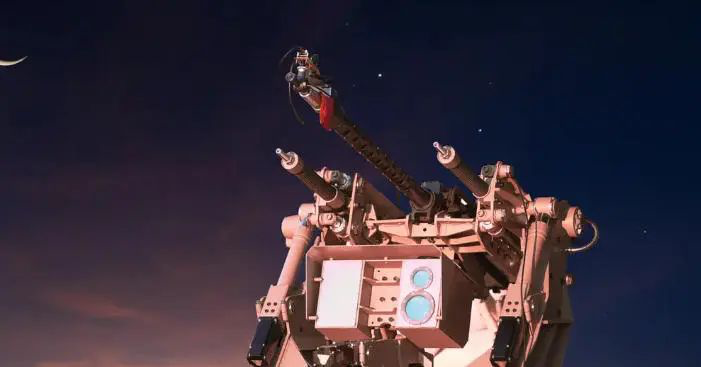
Fast forward a few days to July 2, when it was reported that the Ukrainian military’s artificial intelligence (AI) combat robots have been equipped with American caliber .50 inch (approximately 1.27 cm) M2 Browning heavy machine guns, which are currently operational on the battlefield in Ukraine.
It can be said that physical AI, robotics, and embodied intelligence may become the key to victory on future battlefields. The nature of warfare is evolving from “carbon-based dominance” to “silicon-carbon integration”.
So, what information is worth noting behind military robots, and what military robots are currently being developed in our country?
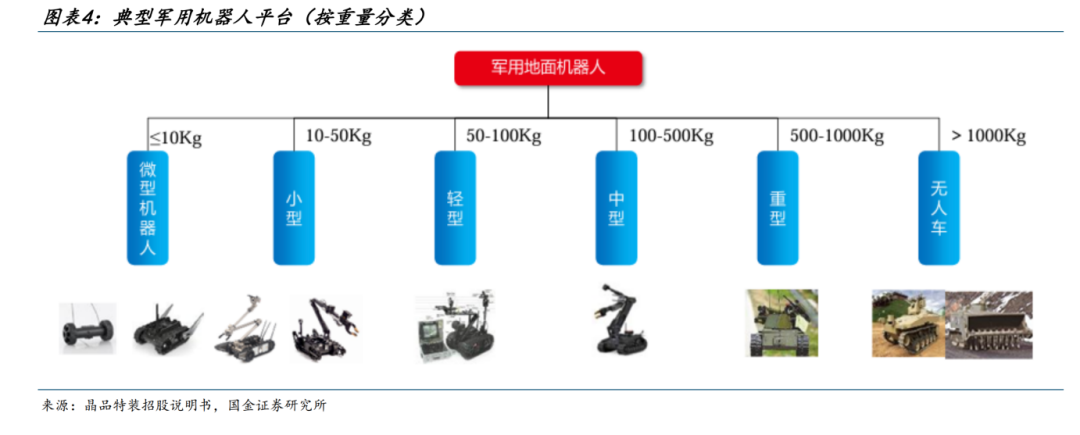
Classification of Military Robots
Military robots are infiltrating all combat fields, covering aerial drones (UAV), surface unmanned vessels (USV), and underwater unmanned vehicles (UUV). Among them, ground robots (UGV) face the most complex terrain and interact most frequently with the environment, making it the field with the greatest technical difficulty; the development speed of drones is also rapidly advancing.
On the ground, military ground robots are diverse and in high demand. Many have already been deployed in actual combat abroad, such as the U.S. Pack Bot and TALON series. Domestically, there is no clear classification, and they are usually categorized by platform weight into micro (≤10kg), small (10kg~50kg), light (50kg~100kg), medium (100kg~500kg), heavy (500kg~1000kg), and unmanned vehicles (>1000kg).
The technical characteristics of ground robots are reflected in multiple dimensions: the perception layer needs to integrate devices such as LiDAR, millimeter-wave radar, visual cameras, and inertial navigation systems (INS) to achieve centimeter-level positioning and obstacle recognition; the decision layer relies on machine learning algorithms to process massive data, such as using convolutional neural networks (CNN) for target recognition and reinforcement learning (RL) for path planning; the execution layer must adapt to various movement mechanisms such as wheeled, tracked, and legged systems to cope with complex terrains like deserts, mountains, and urban ruins.
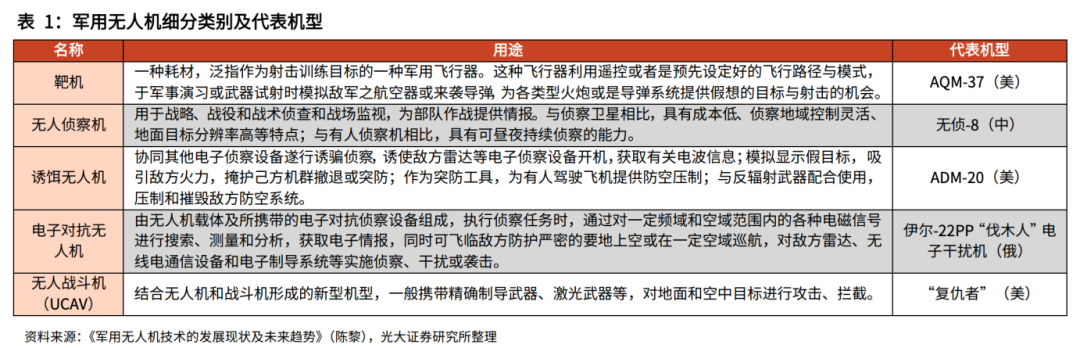
In the air, military drones have rapidly spread globally since the 21st century, frequently appearing in local battlefields such as Afghanistan, Syria, and Libya, with their application potential continuously increasing. Currently, over 80 countries have equipped various military drones.
According to Tianfeng Securities, the development directions of military drones in our country include medium-to-high altitude long-endurance reconnaissance-strike integrated drones, high-speed stealth attack drones, unmanned wingman drones, and distributed swarm drones.
The core of the high-tech barriers for drones lies in power technology, sensor technologies such as electro-optical and radar, communication data links, and artificial intelligence. Developments in these areas will bring significant value-driving effects.
Notable Mass Production Applications
Military robots have a wide range of uses, mainly including unmanned ground vehicles (UGV), unmanned aerial vehicles (UAV), and unmanned underwater vehicles (UUV). Here are several noteworthy applications.
The first is transport robots, which primarily serve to transport supplies and personnel. They typically use wheeled, tracked, or quadruped bionic designs to transport ammunition, bombs, and other supplies in complex terrains, and some can also be used for battlefield casualty evacuation.
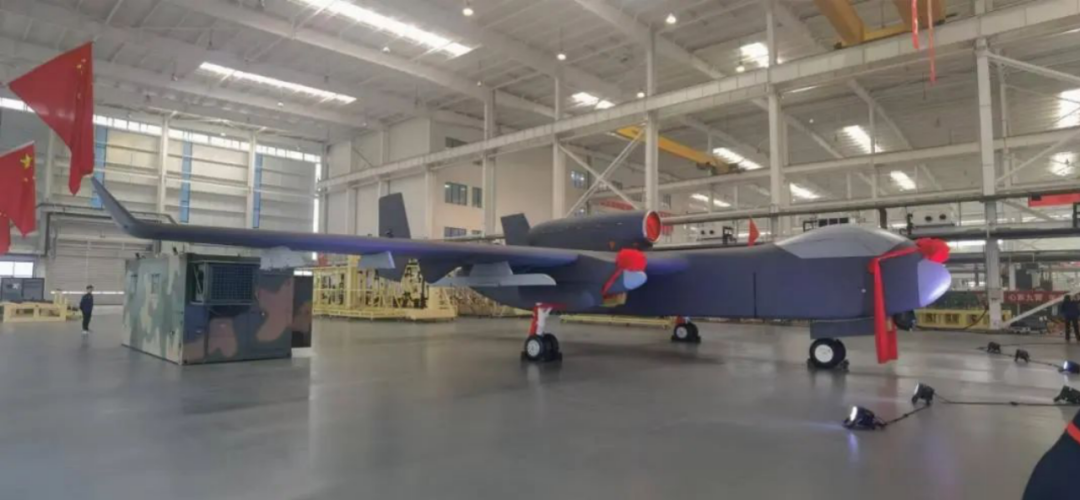
At the 2024 Zhuhai Airshow, the “Jiutian” unmanned aerial vehicle made its debut. It is a highly configurable heavy drone that can serve as both a transport aircraft and carry missiles and drones, making it the largest multi-purpose heavy drone currently in China.
The second is search and rescue robots, which can perform tasks in areas that are difficult for humans to reach. For example, the rescue robots deployed in the Fukushima nuclear accident in Japan were able to detect the environment and search for survivors in high-radiation areas. They come in various forms, mainly including quadruped robots, drones, etc.
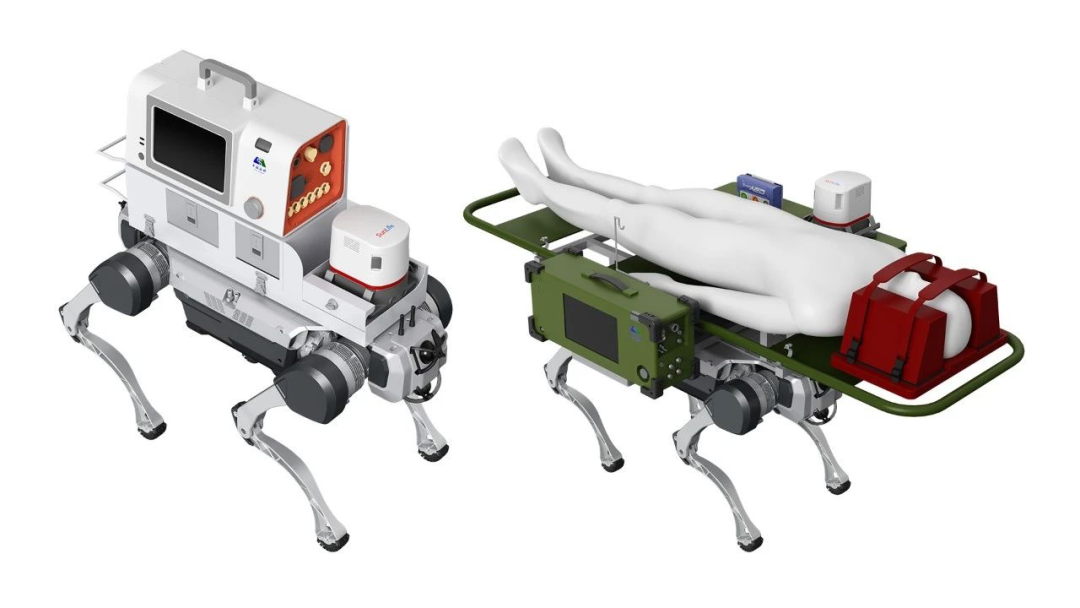
In June of this year, four “internationally pioneering” medical rescue equipment, including the “Emergency (Transport) Robot,” “Smart Medical Rescue Box Set,” “Portable Emergency Equipment,” and “Maritime Remote Medical Rescue Equipment,” developed jointly by our country, were unveiled in Beijing.
The third is bomb disposal robots, which detect the location of landmines and explosives using high-precision sensors and are operated remotely to complete detonation or dismantling tasks, significantly reducing the risks of clearing minefields. For example, the iRobot PackBot received high praise for its precise bomb disposal capabilities during the Iraq War.
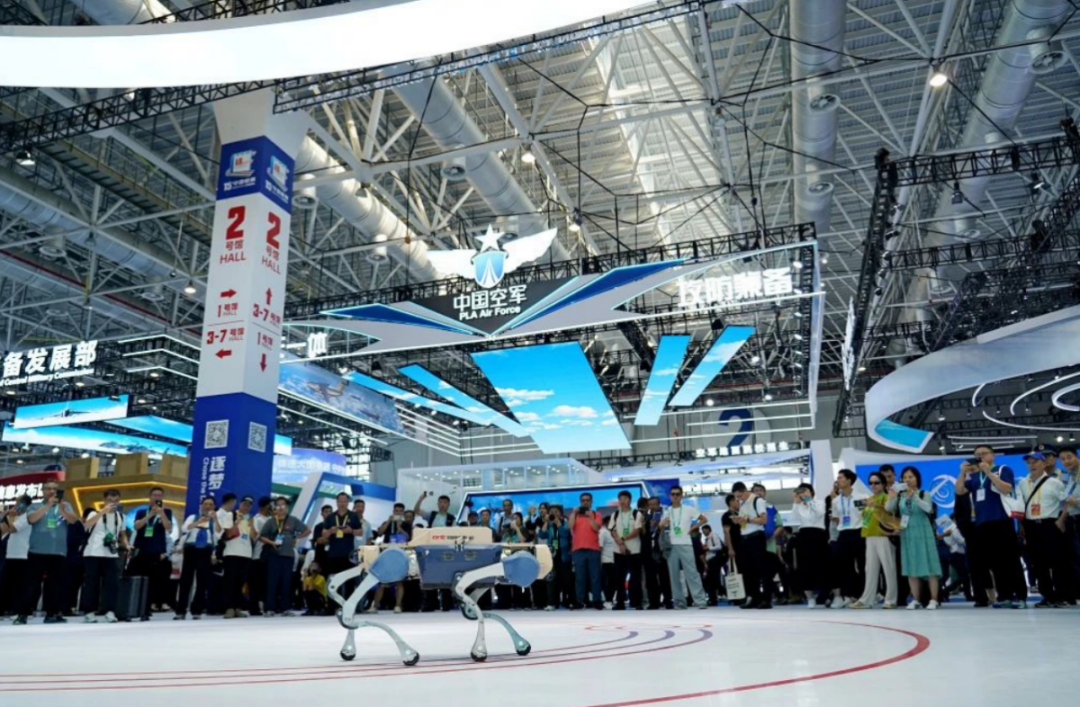
At the 2024 Zhuhai Airshow, the “Cavalry” quadruped robot was showcased, capable of performing bomb disposal tasks in complex terrains due to its dynamic balance design, suitable for various high-risk scenarios.
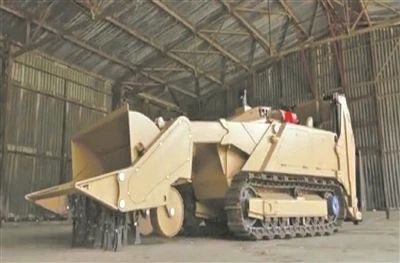
In science fiction, there are often highly intelligent heavy mechs, and in reality, there are also powered armor-like robots playing roles on the battlefield, such as Croatia’s “MV-4” mine-clearing robot, which is a multi-functional mech designed to clear landmines left by conflicts. It is covered in metal armor, designed to protect critical systems, and can be equipped with various devices to perform tasks such as reconnaissance, firefighting, and counter-terrorism, but its level of autonomy is generally low, requiring remote control from about 1500 meters away.
The fourth is reconnaissance and surveillance robots, which are core equipment for battlefield intelligence collection. They can be ground-based or aerial.
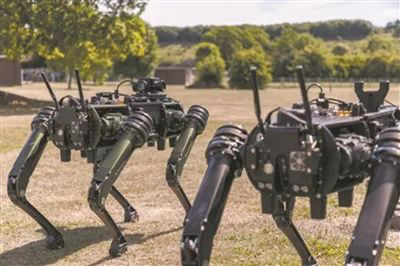
The ground quadruped robot “Ghost V60” developed by the American Ghost Robotics Company is representative. It is equipped with more than 10 cameras on its front, back, and sides to perceive the environment in real-time, and users can control its movement through accompanying software tools, completing tasks according to commands using algorithms, sensors, and global satellite navigation systems. Although there have been experiments with brain-machine interface control, it is mainly operated using a control panel similar to a game controller.
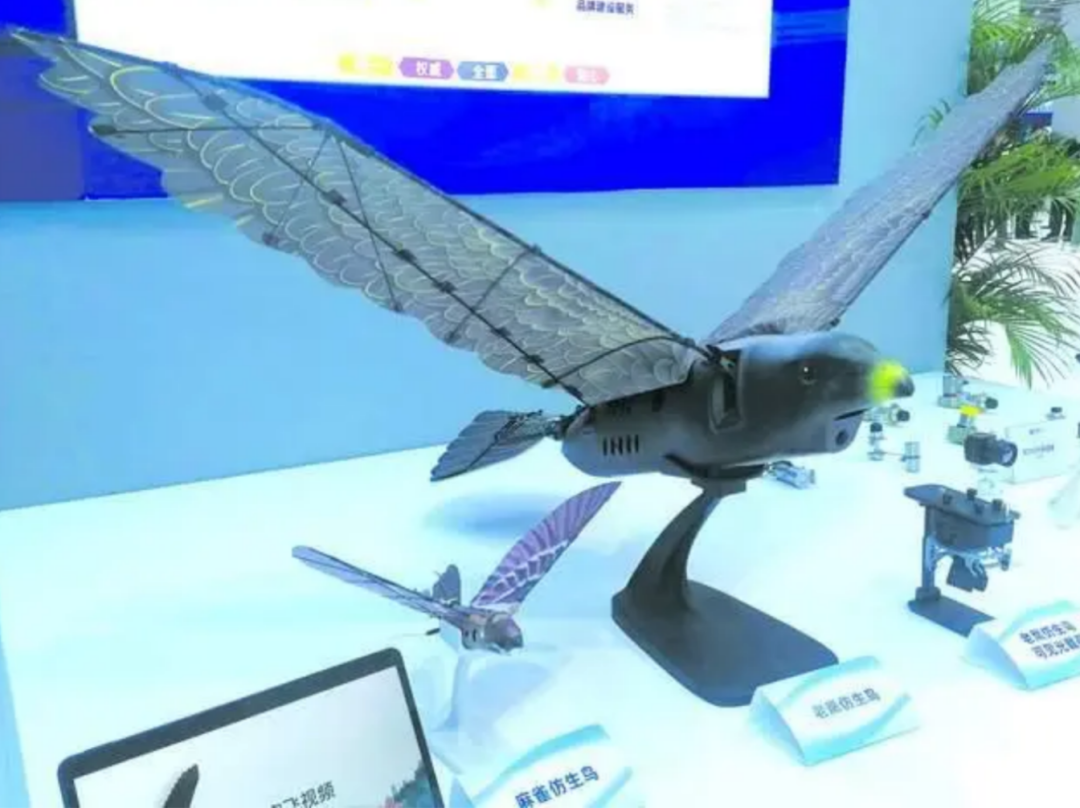
Unmanned aerial vehicles, such as the “Sparrow Bionic Bird” and “Eagle Bionic Bird” showcased at the 2024 Zhuhai Airshow, are also noteworthy. These bionic drones are not only difficult to distinguish from real birds in appearance but also fly very quietly, making them hard to detect by opponents, unlike rotor drones that produce obvious noise.
The fifth is armed robots, which directly participate in combat missions by integrating weapon systems. The robots appearing on the Russia-Ukraine battlefield are of this type.
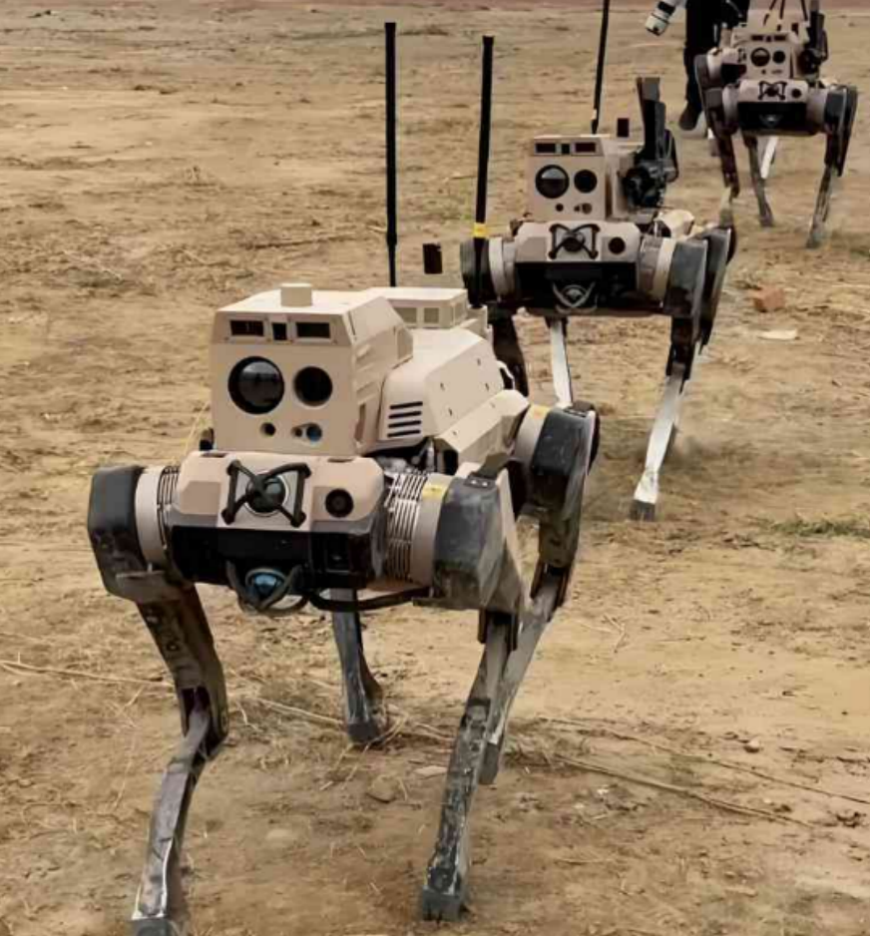
At the 2024 Zhuhai Airshow, a group of robots resembling future warriors, known as “Machine Wolves,” captured attention. Developed by China North Industries Group Corporation, the “Machine Wolf Pack” unmanned combat system is based on a typical quadruped robot platform equipped with different devices, allowing them to operate in a coordinated manner like a real wolf pack.
These “Machine Wolves” can collaborate within a range of 2 kilometers under the control of a command vehicle, with a endurance time of up to 3 hours. Theoretically, each “wolf pack” can consist of up to 30 “Machine Wolves.” Considering the complex environment of urban warfare, to enhance situational awareness on the local battlefield, the “Machine Wolves” can also cooperate with small drones to achieve a new mode of efficient collaborative combat with heterogeneous unmanned groups.
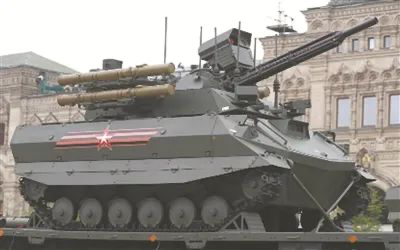
In addition to small robots like machine dogs and machine wolves, large combat robots are also developing rapidly. Russia’s “Uran-9” is a typical combat robot used directly for offensive operations. It possesses various means of optical reconnaissance, laser detection, and radar perception, and is equipped with a command module on an armored vehicle that serves as its “brain,” containing a command platform and battlefield situation display system, allowing it to issue commands at all times, enabling the “Uran-9” to operate in both autonomous and manual modes, with capabilities for automatic driving and situation handling under pre-programmed conditions.
The “Uran-9” includes multiple combat modules. These combat modules are mounted on a lightweight, universal chassis and include a 30mm automatic cannon, anti-tank missiles, machine guns, etc., which can be adjusted according to battlefield needs.
The sixth is training robots, which are used to simulate real combat environments and enhance soldiers’ combat skills.
For example, the RT (Robot Target) system developed by Polytronic International AG provides infantry with interactive live-fire training, simulating real combat scenarios. Recent studies have utilized human-guided machine learning technology to support soldiers in real-time correction of robot behavior during training, optimizing training effectiveness.
Humanoid Robots Have Many Uses
This year is undoubtedly a breakout year for humanoid robots. In fact, humanoid robots can not only serve as companion robots or work in factories but also play important roles on the battlefield.
The “PLA Daily” once stated that humanoid robots, which possess biological structures and natural adaptability to human environments, can use bionic knee walking and dynamic gait adjustment technology on complex terrains, with multi-degree-of-freedom hybrid joint designs. By simulating the contraction and relaxation of human muscles, they can flexibly adjust their movement posture while maintaining regular speed on flat terrain, completing complex actions such as walking on slopes, overcoming obstacles, and climbing non-continuous steps.
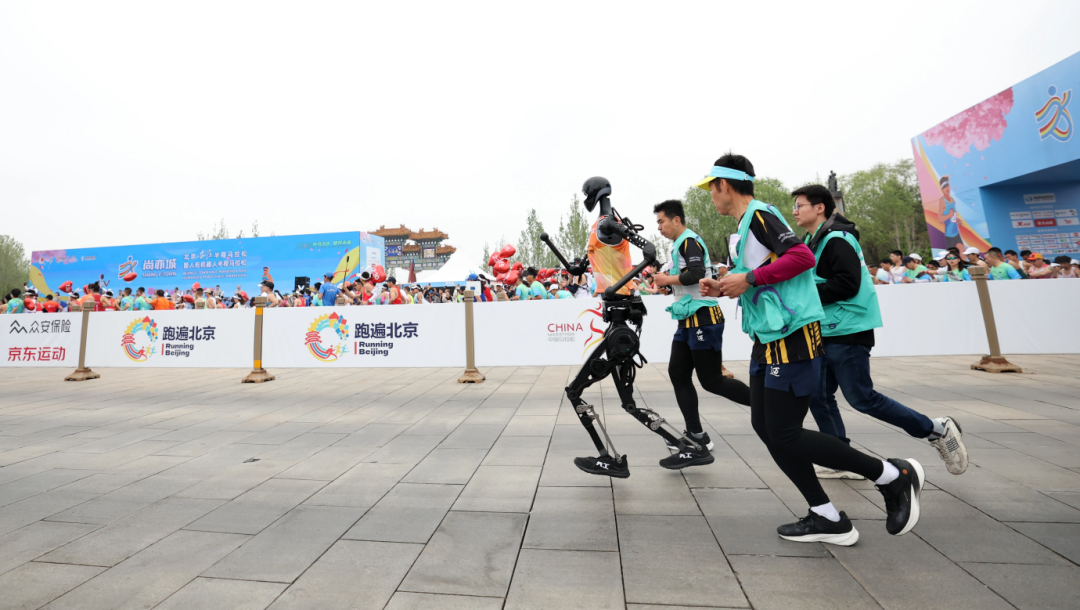
Many people may have seen the news of the “Tiangong” robot winning the world’s first humanoid robot half-marathon championship. The “Tiangong” robot, using dynamic balance algorithms, can continuously climb 134 steps on unstructured terrain, demonstrating the advantages of bipedal form in navigating ruins, stairs, and other battlefield environments.
In terms of weapon operation, humanoid robotic arms equipped with force tactile sensors can complete most tasks performed by human soldiers, achieving seamless adaptation of humanoid joint structures to active weapons.
Previously, a Russian robot’s bionic “hand” could directly operate light weapons, completing actions such as aiming and pulling the trigger, and its shooting demonstration video sparked heated discussions.
In summary, humanoid robots can adapt to complex environments on the battlefield, execute complex actions, enhance weapon control and task efficiency; they can make autonomous decisions and engage in combat, optimizing tactical execution; they can collaborate with humans, reshaping combat forms; they can withstand extreme environments and continue operations, and they can also exert psychological deterrent effects.
Looking Ahead to the Future of Military Robots
Although military robot technology has made significant progress, it still faces multiple challenges: first, the complexity of artificial intelligence algorithms may lead to decision-making errors, and the stability of communication systems is vulnerable to threats from network attacks. Although recent research has corrected robot behavior deviations through continuous assessment, their adaptability in complex terrains still needs optimization to ensure reliability; second, the rapid development of autonomous weapons has sparked widespread ethical and legal controversies; third, the high costs of research, deployment, and maintenance of military robots.
Looking to the future, there are several technological development directions for military robots: first, swarm technology (Swarm Robotics), allowing large numbers of autonomous drones or robots to work collaboratively, possessing reconnaissance, surveillance, and overwhelming defense capabilities. For example, the “Swarm 2” land combat vehicle showcased at the 2024 Zhuhai Airshow can carry 48 drones to perform diverse tasks; second, AI technology, with large models being integrated into robots, enabling them to understand soldier commands and relay battlefield observations in real-time; third, human-robot collaboration, whether through exoskeletons or soldiers fighting alongside robots, requires better interactive control interfaces; fourth, miniaturization, as demonstrated by the “Machine Wolf Pack” quadruped robot at the Zhuhai Airshow, which showcases the mobility of compact designs, necessitating compact embedded control systems that support high-density computing and low-power operation.
References
[1]80 Group Army:https://mp.weixin.qq.com/s/Tnu0zqZDYITlAIoFIdm-1w
[2]Army Artillery Air Defense Academy:https://mp.weixin.qq.com/s/D5owGe0V0QBvtReck3L8gw
[3]Guojin Securities:https://pdf.dfcfw.com/pdf/H3_AP202412231641392519_1.pdf?1734946865000.pdf
[4]Tianfeng Securities:https://pdf.dfcfw.com/pdf/H3_AP202205051563618559_1.pdf?1651777809000.pdf
[5]Everbright Securities:https://img.shangyexinzhi.com/xztest-file/report/report_049e77c0eb5c5d907f82340f14cba8a7.pdf

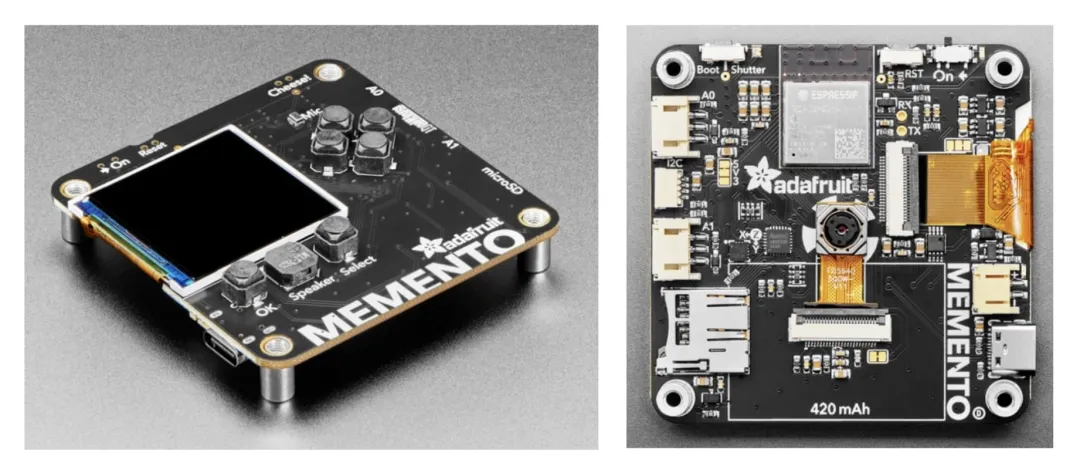
Adafruit MEMENTO Python Programmable
DIY Camera Bare Board Free Application


Scan the QR code above to apply for free!
· END ·
Follow the subscription account of EEWorld: "Robot Development Circle"
Reply "DS" to receive the complete version of "DeepSeek: From Beginner to Expert"

Scan to add the assistant and reply “Robot”
Join the group to exchange experiences face-to-face with electronic engineers