A public academic platform initiated by overseas scholars
Sharing information, integrating resources
Exchanging academic ideas, occasionally discussing other topics

 Rare treasures from the sea, easily picked up. Image source: pixabay.com01
One Move to Solve AI Cheating: Handwritten Answers

The convenience of AI brings certain benefits to everyone, but it also causes endless troubles for a specific group: middle and high school teachers and university professors are overwhelmed by how to distinguish the assignments submitted by students. They have to spend a lot of energy or try various tools to detect these contents. To combat this trend of AI misuse, many schools have adopted a retro but effective method: restoring the tradition of handwritten exams in classrooms.
Texas A&M University, the University of Florida, and the University of California, Berkeley have seen a surge in demand for old-fashioned blue notebooks, as teachers there are widely requiring students to write as much as possible by hand on paper to submit various course assignments, including numerous small exams that require students to write their answers in the classroom. The reason is simple: if students must write by hand in class, they have no opportunity to copy from ChatGPT or other AI assistants. Moreover, teachers generally believe that handwriting helps students improve their grammar and logical skills, making their narratives more concise and refined.
 Returning to simplicity, opposing excessive technologization. Editor
Article link:
https://www.foxnews.com/tech/schools-turn-handwritten-exams-ai-cheating-surges
02
AI Robot Independently Performs Cholecystectomy
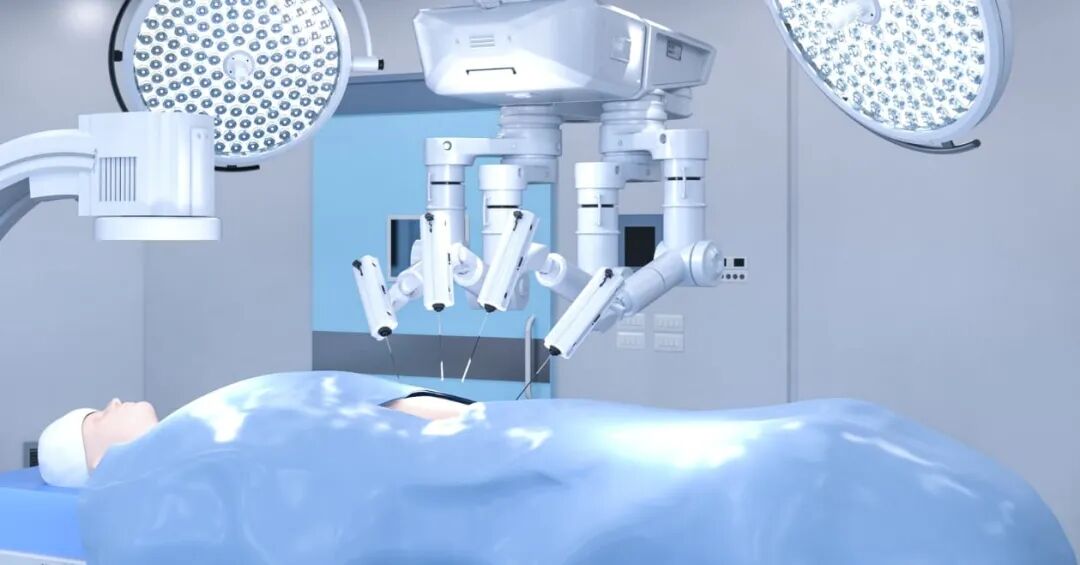 Image source: DALL-E
Researchers at Johns Hopkins University in the United States trained an AI robot using surgical videos and then allowed it to perform a cholecystectomy independently—without any mechanical assistance, only using voice commands, similar to how a surgical team assists the lead surgeon. This surgical robot, named SRT-H, absorbed the training content and translated it into practice, capable of repeatedly performing cholecystectomies and making real-time adjustments based on different situations.
All eight surgeries of SRT-H were performed on a highly realistic humanoid model, where the artificial tissue closely resembles human tissue. The robot successfully completed this surgery, which requires executing 17 tasks, each lasting several minutes. It can identify specific ducts and arteries and grasp them accurately, cleverly placing clips and cutting organs with scissors. Team members stated that this robot is currently not yet applicable to human patients, but they expect this to be realized within ten years as it progresses rapidly.
Robots do not accept red envelopes. Editor
Article link:
https://www.science.org/doi/10.1126/scirobotics.adt5254
03
Neanderthals Established a “Fat Factory” 120,000 Years Ago
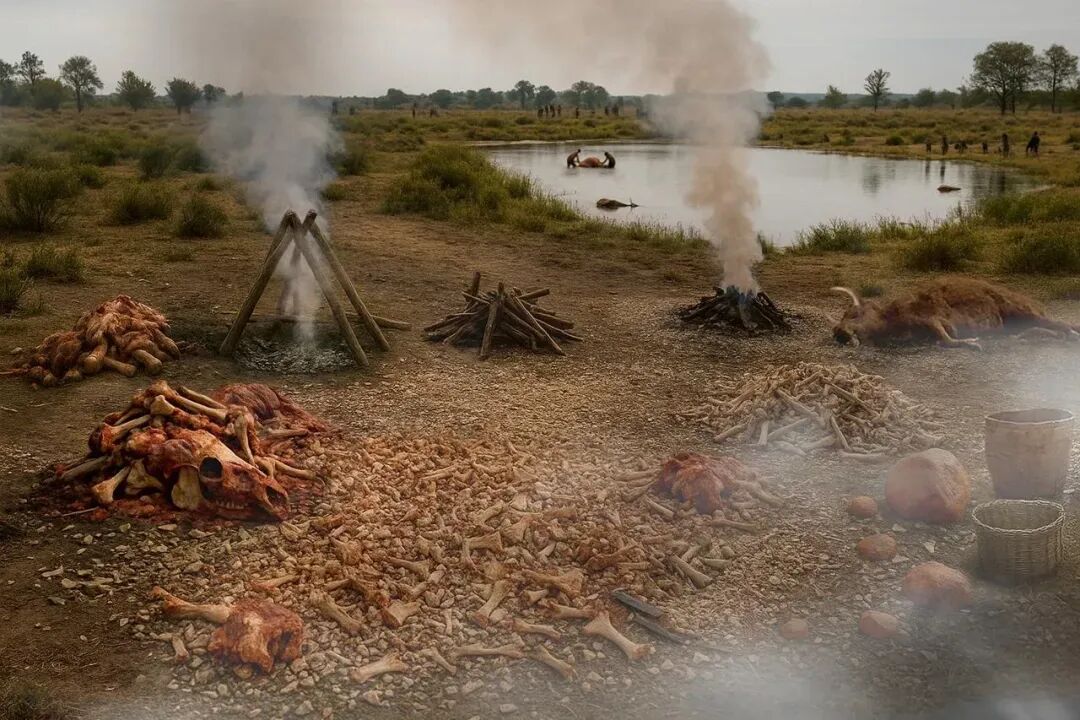
Artistic impression of the “Fat Factory” site activity
Image source:Scherjon, LEIZA-Monrepos
A new study reveals that about 125,000 years ago, Neanderthals at the Neumark-Nord 2 site in Germany processed animal bones using advanced techniques to extract fat, demonstrating remarkable resource management and nutritional awareness. Archaeologists found that Neanderthals crushed and boiled the bones of at least 172 large mammals using water and fire to extract calorie-rich bone fat. This “fat factory” is located by a lake and preserved over 118,000 bone fragments and 16,500 flint tools, indicating highly organized production behavior. The site also reveals the Neanderthals’ zoned activities: one area for hunting deer and light butchering, another for processing straight-tusked elephants, and a third specifically for fat extraction. Notably, cut marks from 76 rhinos and 40 elephants were also found at nearby sites like Taubach, indicating their capability to hunt such large prey must have significantly impacted the Pleistocene ecosystem.
Evolution has yielded results, but it has not been sustained. Editor
Article link:
https://archaeologymag.com/2025/07/neanderthals-operated-fat-factory-125000-years-ago/
04
New Drugs as Alternatives to Exercise?

Betaine is a compound that increases in the bodies of long-distance runners over the years. Research suggests that this substance can improve muscle function, enhance insulin sensitivity, and reduce inflammation levels, potentially activating exercise-related molecular mechanisms, thereby enhancing cellular energy metabolism and antioxidant capacity. The benefits of exercise on the body may partly stem from it, leading scientists to wonder if it could be made into a drug for those unable to engage in physical exercise, potentially producing similar effects.
In mouse experiments, mice supplemented with betaine exhibited anti-aging effects similar to those of exercise, but it cannot fully replace the comprehensive benefits of exercise, such as cardiovascular health and psychological improvements. However, as long as its side effects are manageable, it could help populations unable to engage in sufficient exercise, such as the elderly or those with mobility issues, to improve metabolic health.
A little is better than none. Editor
Article link:
https://www.nature.com/articles/d41586-025-01994-0
Click belowTalent Square to view the latest academic recruitment
Further Reading
The Tyrannosaurus Rex Image “Collapses”: Not a Fierce Predator, More Like a Scavenger
Long Hours of Overtime May Alter Brain Structure, Scientists Warn of Risks
Excavated Inscription Confirms the Kingdom of Israel Was More Open Than the Kingdom of Judah
Octopuses Are Smart, So They Should Not Be Farmed as Food?
For media reprint authorization, please see below