In the vibrant landscape of the global display industry, electronic paper (E-Paper) is stepping into the spotlight of mainstream displays with its unique paper-like feel, low power consumption, and visual health characteristics. Today, the electronic paper industry is experiencing a triple wave of development characterized by technological breakthroughs, market explosions, and application expansions, heralding the emergence of a trillion-dollar industry.
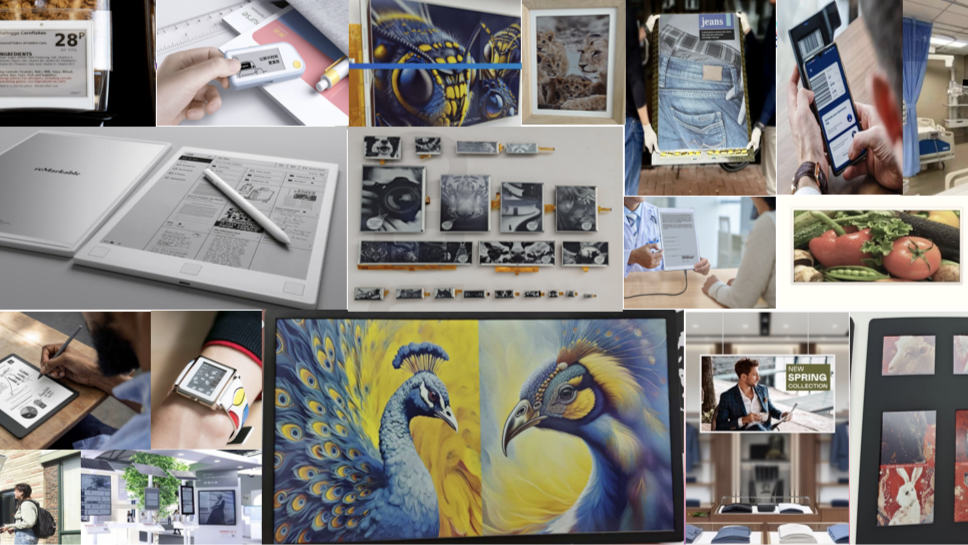
A wide variety of electronic paper products
Technological Wave: From “Black and White Static” to “Color Dynamic”
The diversification of technological pathways and continuous breakthroughs in core indicators have unlocked a broad range of scenarios for electronic paper, from reading to interaction, from indoor to outdoor, and from static to video.
Academician Huang Wei from the Chinese Academy of Sciences, who has long been engaged in the field of flexible electronics, pointed out: “Electronic paper is one of the display applications achievable by flexible electronics. Its breakthroughs are not just improvements in a single link, but a collaborative effort across the entire chain of materials, devices, processes, and applications.” This accurately reflects the current state of electronic paper technology development.
In the highly anticipated area of colorization, the two mainstream technological pathways for electronic paper—electrophoresis and electrowetting—are advancing simultaneously. Associate researcher Sun Hailing from South China Normal University introduced the electrowetting technology that her team is tackling at the 2025 World Display Industry Innovation Development Conference, which has already formed the capability to deliver customized prototypes of passive drive color video electronic paper for applications such as curtain wall decoration. The world’s first mass production line for color dynamic electronic paper panels (G2.5) has officially begun construction in Foshan, Guangdong.
Meanwhile, industry leader E Ink Technology represents the advancement direction of electrophoresis technology. Liu Senhua, General Manager of E Ink Technology’s China region, showcased a product matrix from Kaleido to Spectra to Marquee at the same conference. Among them, the full-color electronic paper technology E Ink Marquee adopts a new four-color particle display system, featuring gentle colors and wide temperature operation characteristics, capable of withstanding extreme cold and heat, supporting industrial, transportation, and outdoor display applications in harsh environments.
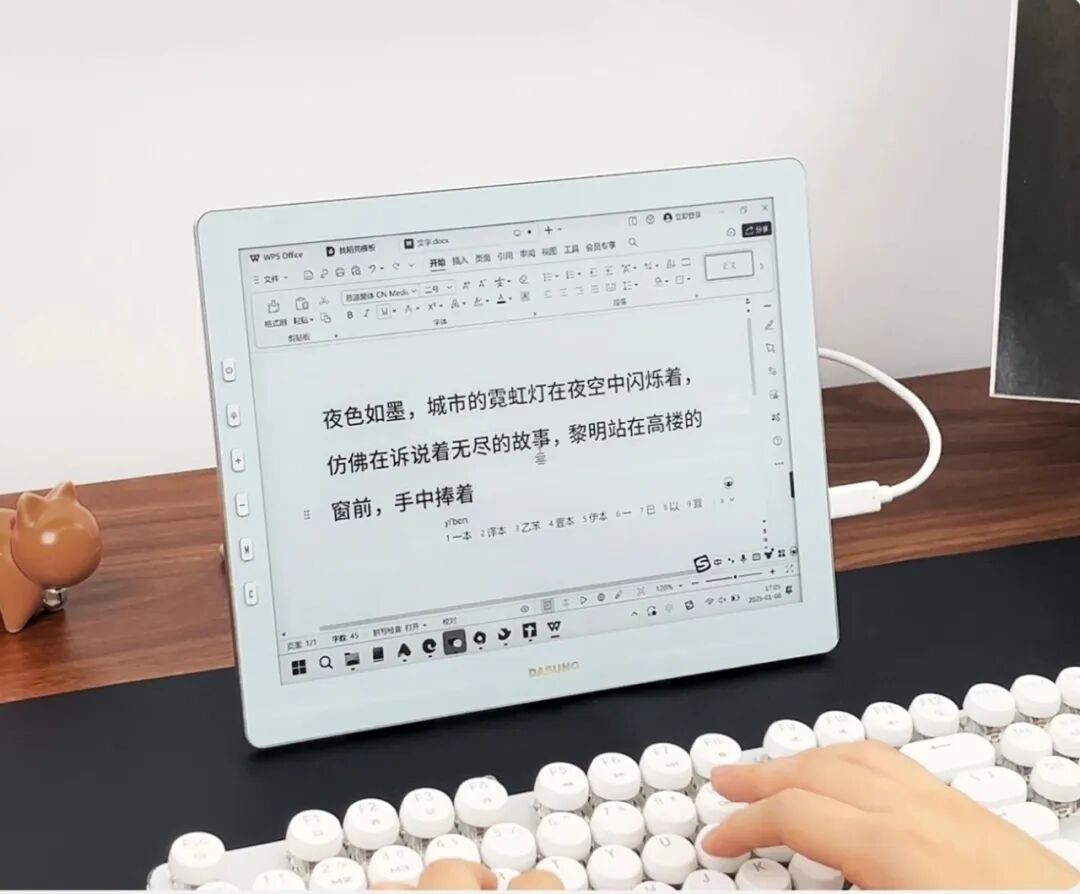
The world’s first 10.3-inch ultra-high refresh ink screen display, with a refresh rate of up to 60Hz
Regarding the critical indicator of refresh rate, Gong Dong, founder of Beijing Dashang Technology Co., emphasized that when the refresh rate of electronic paper screens reaches ultra-high levels, it will unleash more imagination. It is understood that Dashang Technology has improved the refresh rate of ink screen displays to 60Hz through patented technologies that optimize the movement path of electronic ink droplets and calculate the number of movements in cycles, “allowing ink screens to completely rival LCD screens.” He defines this as “LCD-level refresh” and believes it is key for electronic paper to upgrade from a niche display technology to a mainstream display technology, clearing obstacles for electronic paper to enter high-frequency interactive scenarios such as office and creative work.
However, the challenges of brightness loss, increased costs, and screen lifespan and ghosting control under high refresh rates brought by colorization remain technical hurdles.
Industry insiders point out that the technological routes will continue to compete and integrate, with material innovation being core; high refresh rates will become standard for high-performance terminals; and deep integration with flexible and touch technologies will be key to differentiated competition.
Market Wave: From Niche to Diversity
The maturity of technology has directly catalyzed market recognition. So, has the electronic paper market reached a critical point of explosion? Experts indicate that the rising domestic production rate of core modules has led to cost reductions, emerging channels are aiding market education, and global “dual carbon” policies are creating a window for green alternatives.
Market data is the most intuitive. Wang Yuhong, Chief Operating Officer of Runto Technology, pointed out that electronic paper technology has entered a period of rapid growth. In terms of application terminal status, the global market size for typical electronic paper application terminals is expected to exceed $14.2 billion, with application terminals transitioning from “static replacement” to “dynamic interaction,” becoming an important carrier for green displays and AIoT integration. In the segmented market, according to research data from Runto Technology, electronic price tags are currently the ballast, with shipments expected to exceed 480 million pieces by 2025, a year-on-year increase of 53.7%, while electronic paper tablets, as the main force on the consumer side, are expected to exceed 18.8 million pieces by 2025. She particularly emphasized: “The domestic production rate of electronic paper modules is 96%”, which lays a solid foundation for cost control and self-sufficiency across the entire industry chain.

Electronic paper smart frames
The market explosion is also reflected in channel transformations. Kang Meiling, head of the e-book industry at Douyin E-commerce, revealed that the e-book category on the Douyin platform has grown by 29% in the past two years, tripling from 2023 to 2025. She pointed out that platforms like Douyin, which combine “goods finding people” and “people finding goods,” are very suitable for new categories like electronic paper that require deep promotion.
Terminal brands are also growing rapidly. “E-books are expected to become the third mainstream terminal after mobile phones and computers,” said Xu Shizhong, Director of the Strategic Ecology Department at Hanwang Technology. We expect global annual shipments of e-books to reach 100 million units by 2035, increasing to 1 billion units by 2045, achieving a market value of $100 billion. He further envisions, “The electronic paper industry will export like new energy vehicles.”
Overall, the current prices of electronic paper terminal products are still higher than traditional LCDs, and the market penetration rate needs to be improved, for example, the penetration rate of electronic paper readers is less than 3%, indicating significant potential. Additionally, consumer awareness still requires ongoing education.
Experts point out that the cost of electronic paper will continue to decline with the scale effect and the advancement of domestic production, while diversified channels and content-driven marketing will be key for brands to break through. At the same time, the green attributes will become an important market competitiveness for electronic paper.
Application Wave: From “Instant Noodles Gadget” to “Universal Display Carrier”
The maturity of technology and the resonance of market demand are driving electronic paper beyond traditional boundaries, empowering various industries.
Wang Yuhong stated that the application of electronic paper is showing a trend of “horizontal field expansion and vertical product deepening.” Beyond typical retail, office, and education sectors, commercial fields are also exploring horizontal scenario applications.

BMW cars clad in electronic paper
Firstly, smart commercial displays and digital signage have become the most promising new growth points for electronic paper. Liu Senhua pointed out that E Ink Technology is focusing on commercial displays, highlighting the convenience of electronic paper boards and their energy-saving advantages in the context of the European energy crisis. He revealed that in the automotive display field, electronic paper has also been applied to “the exterior of BMW cars.”
Secondly, smart office and education sectors embody the core value of electronic paper. For instance, electronic paper readers are expected to become the third mainstream terminal after mobile phones and computers, with multiple brands working to launch eye-protecting learning electronic paper products. Meanwhile, electronic paper displays precisely meet the eye protection needs of long-term screen users, such as writers and programmers.
Additionally, in smart cities and green buildings, electronic paper is also appearing in applications such as building curtain walls and bus stop signs, with the vision of “reflecting the characteristics of paper posters with no light pollution and low power consumption, while integrating color video functions.”
Looking to the future, challenges also exist: how to provide stable, low-cost, and customized solutions for fragmented vertical industry demands? How to efficiently integrate with existing smart IoT systems?
In the future, application scenarios will continue to become fragmented and refined, from electronic price tags and table signs to name badges, everything can be “electronic paper-ized”; “green and low-carbon” will become the core topic for electronic paper to penetrate B-end and G-end markets.As Wang Yuhong calculated, “If electronic paper replaces 70% of LCD products, the carbon reduction could fill one-third of the Taklamakan Desert by reducing the number of trees cut down,” which is the most powerful calling card for electronic paper.
Dong Min, Secretary-General of the China Electronic Video Industry Association, emphasized the need to actively explore new scenarios and models to drive industrial structure upgrades and technological iterations through applications.
Today, the electronic paper industry is navigating the aforementioned paths, riding the waves of technology, market, and application. As the entire industry chain collaborates, this “oasis” of display technology is bound to occupy a more significant position in the global display industry landscape, truly realizing the vision of “display like paper, empowering everything.”
Further Reading:How Sensor Technology Empowers Aircraft?丨Guo Yuansheng Discusses SensorsChangsha: Intelligent Manufacturing, Reliable as “Xiang”丨The Spirit of the Fourth Plenary Session at the Grassroots LevelAuthor丨Yang PengyueEditor丨Zhao ChenArt Editor丨MariaSupervisor丨Lian Xiaodong
 Tap “Looking” to Stay Connected