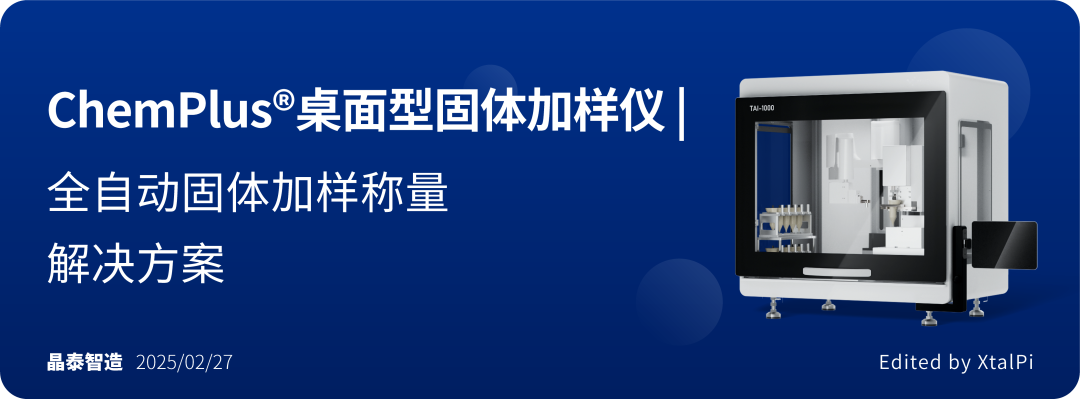
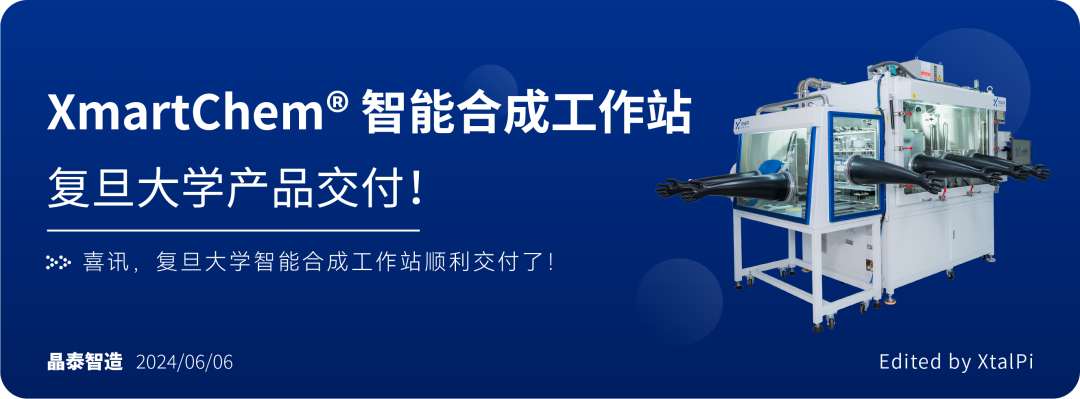
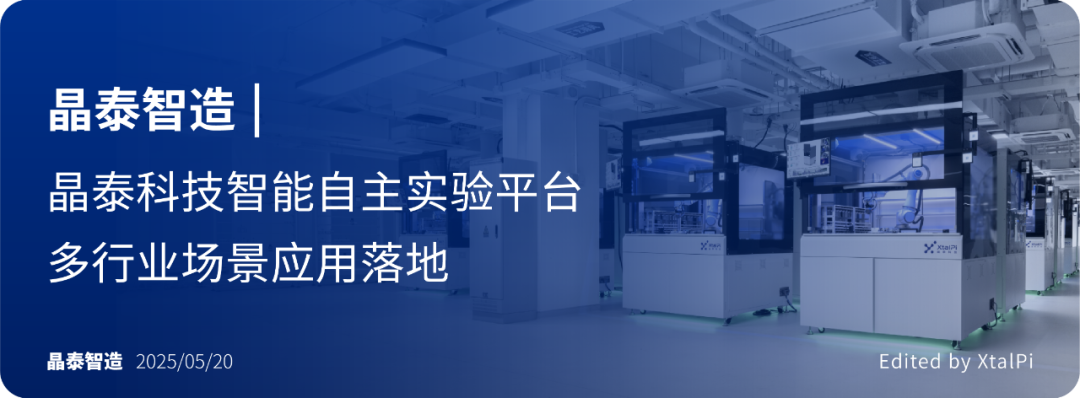
The discovery of new materials follows the iterative process of “Design-Manufacture-Test-Analyze” (DMTA). Artificial intelligence has achieved intelligent design of molecular structures in the field of material discovery, akin to conducting an experiment in the digital world, which we refer to as “dry experiments.” However, to bring these digital designs to fruition and continuously optimize them, physical world experiments and validations are necessary, which we call “wet experiments.” Real-world experiments can also generate effective data that feeds back into digital world models, optimizing model predictions, judgments, and designs. Yet, in terms of experiment execution and data collection, traditional manual experiments are gradually becoming a bottleneck in efficiency. Low experimental throughput, cumulative errors, and unavoidable subjectivity are common issues. Robotic chemistry, based on precision hardware and automation technology, can operate 24/7, completing thousands of experiments daily and reducing operational errors to below 5%, significantly enhancing experimental efficiency and data reliability.
In today’s forefront of technological innovation, the integration of artificial intelligence and automation technology is leading a profound transformation in the paradigm of material discovery research and development. CrystalTech, with its intelligent autonomous experimental platform, seamlessly integrates data-driven AI predictive models with automated robotic technology, constructing an efficient, self-driven material discovery system. This innovative system not only accelerates the exploration of chemical space but also provides a new infrastructure for research and development in industries such as pharmaceuticals and new materials, redefining the boundaries of speed and efficiency in material discovery.
 Data-Driven AI Application Paradigm
In AI industry applications, data serves as a fundamental element, forming the cornerstone of the entire intelligent system. Its core logic follows the positive cycle of “Data → Model → Application → Solution”: high-quality data generates intelligent autonomous capabilities through training AI models, model capabilities are transformed into specific industry application scenarios, ultimately resulting in reusable solutions. This closed-loop system ensures that AI technology can continuously learn, optimize, and create value from data.
CrystalTech’s intelligent autonomous experimental platform focuses on the full lifecycle management of data assets, from collection and governance to application, constructing a complete data asset management system. By combining AI models and automated robotic experimental workstations, it achieves intelligent experimental execution and efficient data governance at unprecedented speeds, realizing an iterative closed loop of algorithm-based AI molecular design, reaction prediction, and automated robotic synthesis experiments, rapidly exploring vast chemical spaces.
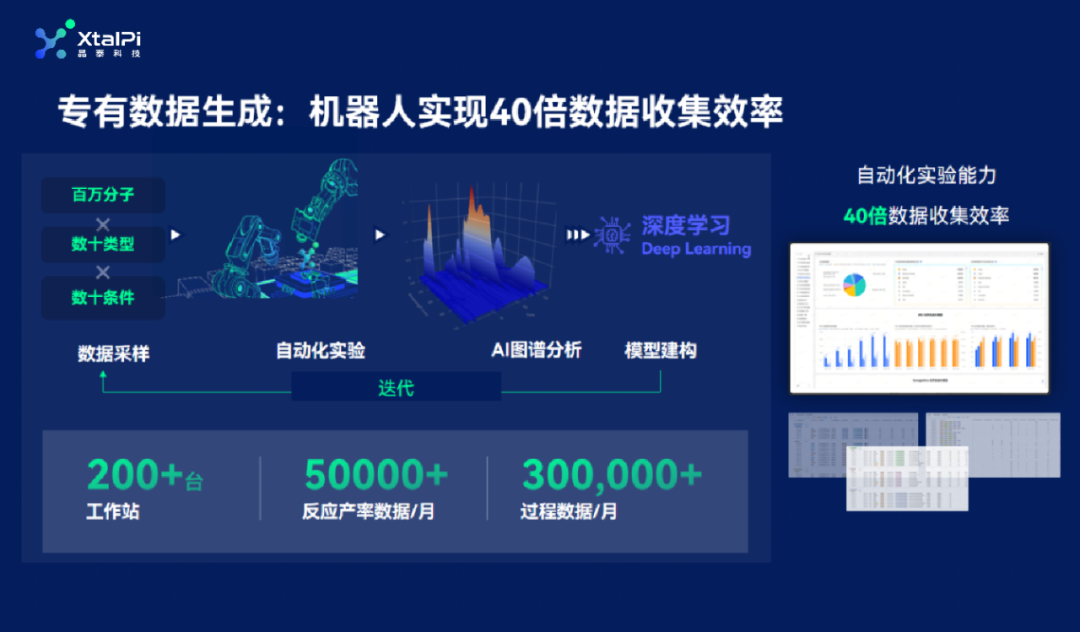
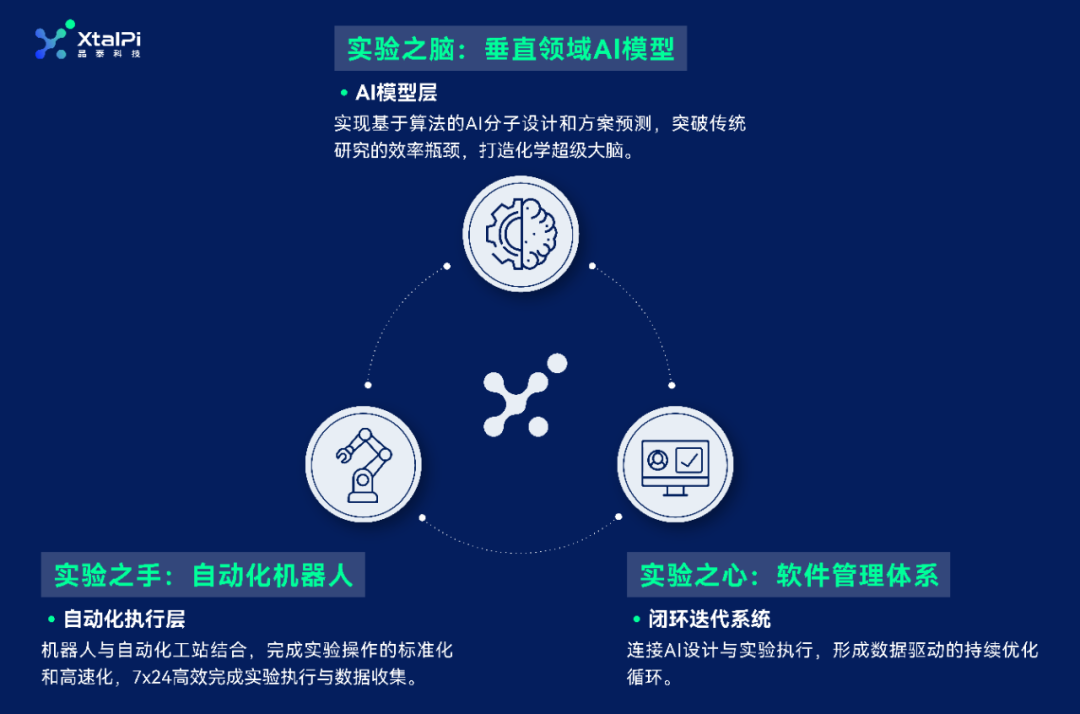
 Dry and Wet Experiment Closed Loop Technical Path
CrystalTech has built a leading intelligent autonomous experimental platform through three core technology components, forming a complete closed loop of “Algorithm Design → Robotic Experiment → Data Feedback → Model Iteration.” This innovative architecture breaks through the efficiency bottleneck of traditional chemical research, propelling the material discovery process at an unprecedented speed. Through this technical architecture, the platform achieves an iterative closed loop of AI molecular design, scheme prediction, and automated robotic experiments.
 Application Case:CrystalTech Electrolyte Formula Optimization Platform
The CrystalTech Electrolyte Formula Optimization Platform consists of three major modules: general artificial intelligence, proprietary large models, and autonomous laboratories.
The general artificial intelligence module primarily implements the collection of public data such as literature and patents, and the construction of a knowledge base, providing a raw material library and initial formulas for project development; the proprietary large model module implements functions such as molecular design, property prediction, formula optimization, and machine interpretation, recommending new formulas; the autonomous laboratory module achieves automated precise preparation and characterization of formulas, validating algorithm-recommended formulas and generating new experimental data to support the optimization of algorithm models. The organic combination of these three modules can efficiently achieve the expected indicators of electrolyte formulas.
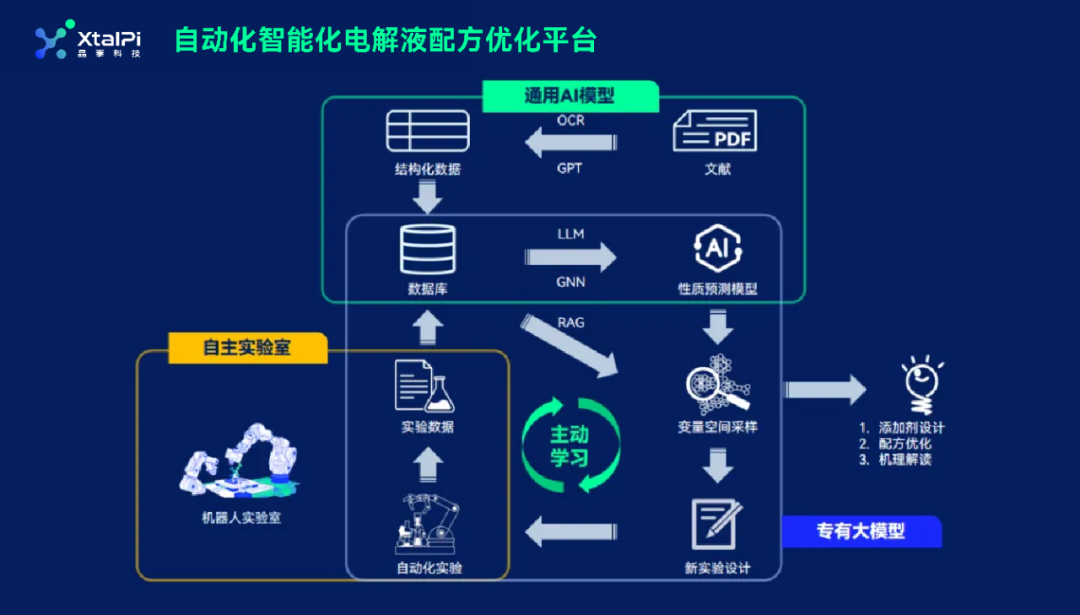 ● Electrolyte Formula Optimization Platform Workflow
The workflow of CrystalTech’s Electrolyte Formula Optimization Platform is divided into six steps: determining the application scenario, generating the initial formula, constructing the property prediction model, using the model to recommend new formulas, automated formula preparation and characterization, and directed molecular design and synthesis, where steps 3 to 6 are iterative to obtain the desired electrolyte formula.
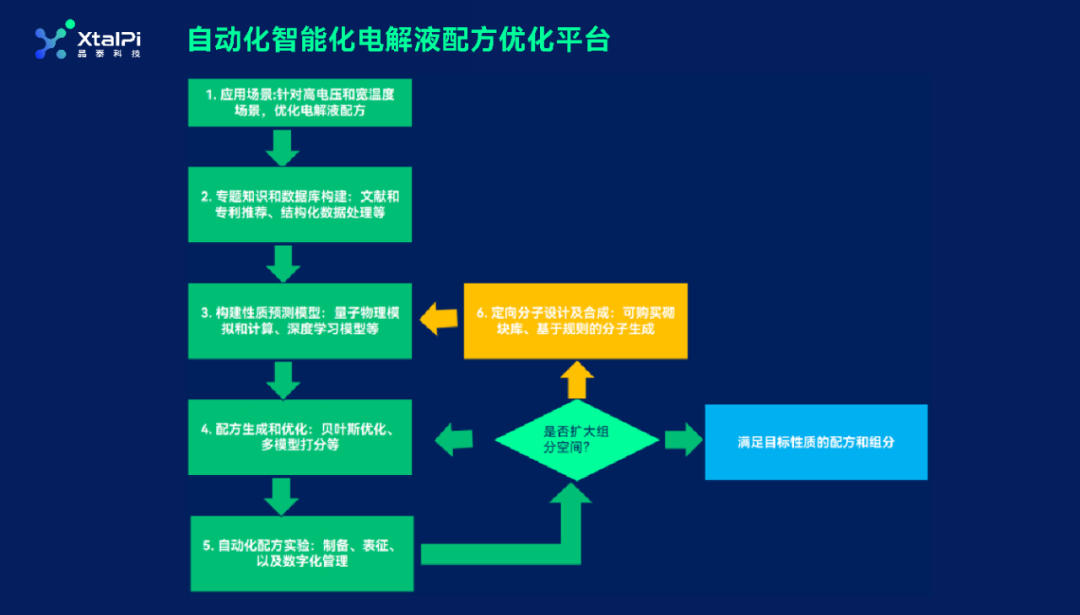
• Step 1, the project team scientists determine the application scenario, for example, optimizing a new electrolyte formula for high voltage and wide temperature scenarios;
• Step 2, construct a specialized knowledge base and structured data processing related to the project. First, customize a search template through prompt words, use large language model scoring to filter highly relevant literature and patents, and build a specialized knowledge base; secondly, use LLM, OCR, and other multimodal AI models to collect project-related data from literature and patents;
• Step 3, using quantum physics simulation calculations and deep learning models, not only can predict relevant properties but also generate structures based on expected properties for the design of new additive molecules;
• Step 4, based on the material system we choose, use multi-objective Bayesian optimization and other methods to generate new formula combinations and ratios for experimental preparation and testing;
• Step 5, automated formula experiments, relying on CrystalTech’s self-developed automated and digital electrolyte formula optimization platform, achieve precise configuration of formulas, digital recording, and characterization testing, thereby validating the effectiveness of algorithm-recommended formulas and generating new experimental data to further optimize the algorithm model;
• Step 6, if a satisfactory formula cannot be obtained from the existing compound component space through different ratios, it is necessary to expand the compound selection space to a new chemical space, achieved through directed molecular design and synthesis modules. For example, using CrystalTech’s XMolGen software, generate new molecules through R group substitutions that comply with chemical reaction rules using a commercial building block library. After the task is completed, operations such as viewing, editing, saving, exporting, and sorting can be easily performed. The generated molecules possess both novelty and synthesize-ability and can be quickly synthesized through the automated platform.
With the dual drive of accelerated global energy transition and performance upgrades in power batteries, electrolytes, as an important part of battery development, have become a core bottleneck for breakthroughs in key indicators such as high energy density, long cycle life, and wide temperature adaptability. Traditional R&D models, due to reliance on experiential trial and error, low data utilization rates, and high experimental costs, struggle to meet the industry’s urgent demands for R&D efficiency and precision. In this context, the construction of the electrolyte formula optimization platform has become an inevitable trend—it achieves structured analysis of literature and patent data, molecular design and property prediction through artificial intelligence technology, and relies on automated robotic workstations to complete high-precision preparation and characterization of formulas, forming a closed-loop iteration of “AI prediction – robotic validation,” effectively addressing pain points such as long R&D cycles, fragmented data, and poor experimental reproducibility. This “AI + Robotics” technology empowerment model not only shortens the R&D cycle of electrolytes but also promotes the industry’s transition from “experience-driven” to “data-driven” and “intelligence-driven,” becoming a key infrastructure for new energy and new material enterprises to build core competitiveness.
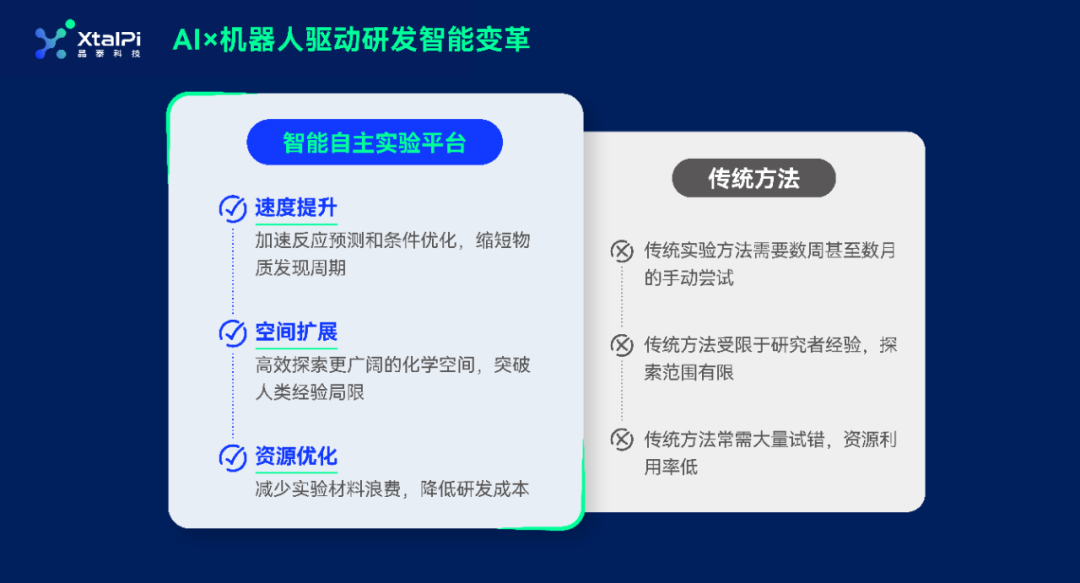
 AI and Robotics Drive Intelligent Transformation in R&D
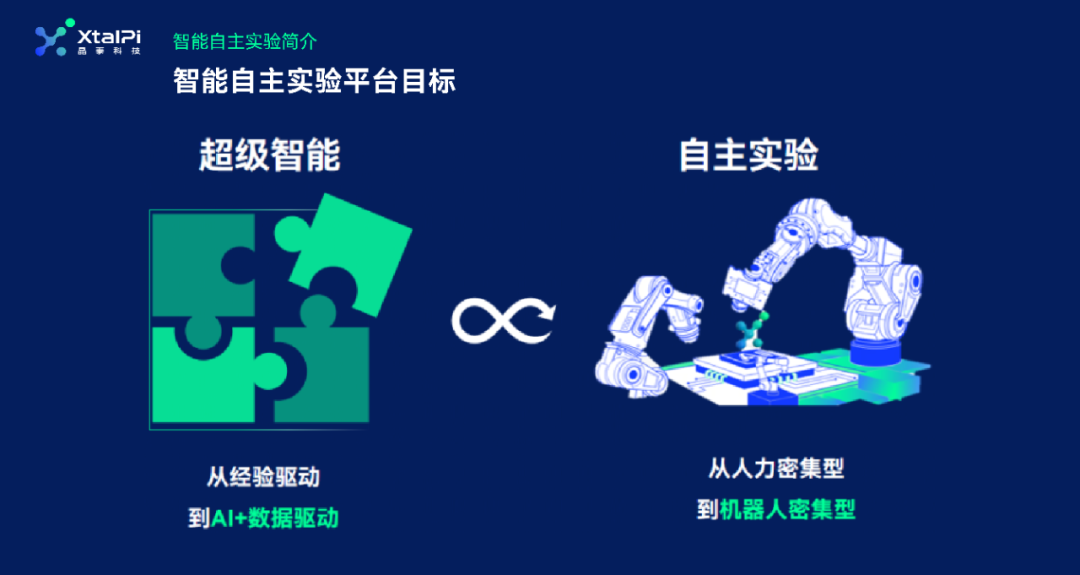
CrystalTech’s intelligent autonomous experimental platform integrates over 200 vertical field AI models to create a chemical super brain, guiding material structure and experimental design; with laboratory automation robots efficiently completing high-throughput precise chemical execution and data governance; the real scene structured data collected by robots feeds back to train AI models, making predictions more accurate and designs more optimal. CrystalTech’s intelligent autonomous experimental platform achieves a transition from “experience-driven” to “data-driven” research paradigms through the collaboration of AI and robotics, bringing dual breakthrough value to the field of material discovery.
• Technology Integrator
Break through core technical challenges, integrating AI algorithms, automation control, data analysis, and other multi-domain technologies
• Scenario Adapter
Provide intelligent laboratory solutions across functions, industries, and fields to meet diverse needs
• Paradigm Innovator
Build a new paradigm of material discovery with “AI × Robotics,” creating new infrastructure for industry R&D
CrystalTech currently has a 5000 square meter self-owned intelligent autonomous laboratory, fully empowering internal business R&D scenarios and accumulating technical application experience. At the same time, the industrialization results of the intelligent autonomous experimental platform have expanded to fields such as biomedicine, new energy, new materials, petrochemicals, modernization of traditional Chinese medicine, and chemical automation, with the platform widely applied in synthetic chemical research scenarios covering organic synthesis, formula optimization, catalyst R&D, and electrolyte engineering.
 CrystalTech Intelligent Autonomous Experimental Platform