
Follow us for more exciting content
SIC
Sepsis-Induced Cardiomyopathy (SIC) is an acute heart dysfunction that occurs in sepsis patients and is not related to ischemic injury, but lacks a unified diagnostic standard. Some biological markers can reflect the degree of heart damage and have certain auxiliary value for the early diagnosis of sepsis-induced cardiomyopathy.
Related Concepts of Sepsis-Induced Cardiomyopathy
SIC is not an independent disease but a complication of sepsis. When sepsis reaches a certain level and stage and persists for a period, it can affect some organs in the body; if it involves the heart, it is termed sepsis-induced cardiomyopathy, also known as septic cardiomyopathy, sepsis myocardial suppression, or sepsis heart dysfunction (SIMD).Epidemiological SituationSIC was first reported in 1977, and in 1984, Parker et al. published an article in ANN INTERN MED reporting a group of 20 cases of severe sepsis. Despite all cases having increased cardiac output, 10 cases had an ejection fraction (EF) <0.40 (mean 0.32 ± 0.04), which gradually recovered after 10 days, while none of the 7 deceased cases had EF <0.40. The authors believe that a decrease in EF during sepsis is very common but does not seem to have a direct relationship with mortality.
Diagnostic Methods for Sepsis-Induced Cardiomyopathy
In sepsis patients, the incidence of SIC may exceed 50%. The occurrence of SIC is neither due to a large number of myocardial cell deaths in a specific coronary territory leading to left ventricular contraction and/or relaxation uncoordination, nor due to acute exacerbation of chronic myocardial fatigue. It does not exist before the onset of sepsis but appears with the occurrence of critical illness and recovers with the resolution of the critical illness, representing a reversible change.Sepsis-induced cardiomyopathy is a part of the Sepsis/MODS process and shares similar mechanisms with the dysfunction of other organs in Sepsis/MODS. The heart, as one of the target organs in Sepsis/MODS, is directly damaged by the inflammatory response and also suffers from dysfunction through the impact on mitochondrial function of cardiomyocytes, adrenergic receptors in the heart, calcium ion transport in cardiomyocytes, apoptosis of cardiomyocytes, and cardiac microcirculation. Clinical Manifestations
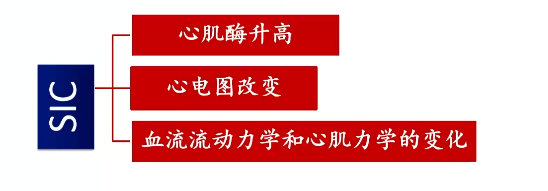
Most SIC patients lack typical clinical manifestations, resulting in a very low recognition rate and easy oversight. Critically ill patients can develop SIC very early in sepsis, often accompanied by hypotension, heart failure, and arrhythmias.
The Value of Biomarkers in Diagnosis
Biomarkers include cardiac troponin (cTn), B-type natriuretic peptide (BNP), creatine kinase-MB (CK-MB), myoglobin (MYO), and heart-type fatty acid-binding protein (HFABP), with the two main biomarkers being cTn and BNP.cTn: Cardiac troponin, which regulates myocardial striated muscle contraction, can be divided into troponin C, troponin T, and troponin I. Troponin cannot penetrate the intact myocardial cell membrane, thus troponin T and troponin I are nearly undetectable in healthy individuals’ blood. When myocardial cells are damaged, troponin can increase within 5 to 8 hours, peak at 12 to 24 hours, and has a sufficiently long diagnostic window (troponin I can last 7 to 10 days, troponin T can last 10 to 14 days). Troponin has high sensitivity and specificity. The serum concentration is positively correlated with the extent of myocardial damage, earning it the title of “the gold standard for diagnosing myocardial injury“.During sepsis, the elevation of troponin may reflect increased permeability or even necrotic changes in myocardial cells due to vascular injury. High-sensitivity cardiac troponin (hsTnT) increases with the severity of sepsis, but its prognostic impact remains unclear. Rosio et al. reported elevated hsTnT in non-survivors, but it had no independent relationship with mortality; Masson et al. found that hsTnT elevation on day 7 and an increase of >20% from day 1 to day 2 were associated with higher mortality.BNP: BNP is a biologically active natural hormone synthesized by myocardial cells, primarily expressed in the ventricles, and also present in brain tissue. The main mechanism for BNP release in sepsis patients is acute ventricular dilation due to excessive ventricular pressure overload and volume overload or ventricular wall dilation. Other factors that can increase BNP levels include lipopolysaccharides and cytokines (such as TNFα, IL1β, etc., stimulating high expression of BNP mRNA), decreased activity of neutral peptide chain endopeptidase, and renal dysfunction.BNP levels rise significantly on the 5th day of myocardial injury, and patients with reduced left ventricular ejection fraction (LVEF) have a more pronounced increase compared to those with normal LVEF. The amino-terminal pro-BNP (NT-proBNP) may increase during sepsis, especially as the severity of the disease increases, and is more likely to be elevated in non-survivors than in survivors. Research has found that NT-proBNP >1163 pg/ml is a cutoff point for diagnosing myocardial suppression, with a sensitivity of 76% and specificity of 74%.

A study on BNP predicting the prognosis of sepsis indicates that systolic myocardial dysfunction occurs in approximately 44% of patients with severe sepsis and septic shock, which may be accompanied by transient hypotension. BNP is an effective marker for early detection of myocardial dysfunction, and myocardial dysfunction is associated with poor prognosis; persistently high BNP significantly increases the risk of death.Currently, research on myocardial injury markers is mostly focused on the severity of cardiomyopathy and prognosis.The mortality rate of critically ill patients with SIC is comparable to that of patients with myocardial infarction (40% vs 42%), both of which are higher than those with normal TnI (15%). Compared to critically ill patients with normal TnI, those with SIC have a significantly higher rate of hypotension (75% vs 50%), need for mechanical ventilation (66% vs 27%), and longer average ICU stay (5.3 vs 3.1 days).Patients with sepsis-induced cardiomyopathy often have elevated TnI, and mild cases may not show significant clinical symptoms other than elevated TnI, nor changes in electrocardiograms, other myocardial enzyme levels, or echocardiography. Some literature refers to this as occult myocardial injury. Some patients may exhibit ECG changes such as ST-T segment depression, elevation, T-wave inversion, etc., and even arrhythmias such as various tachycardias, conduction blocks, or even sudden death.hsTnT: Used to evaluate the severity and prognosis of sepsis patients rather than cardiomyopathy, it is a recently developed marker. Severe sepsis or septic shock patients can have it measured early and throughout, which helps in judging the outcome of sepsis, but it cannot be used as an independent predictive factor.A study comparing Pro-BNP and the Medical Emergency Diagnosis Score (MEDS) in predicting prognosis during sepsis showed that both Pro-BNP and MEDS scoring have good diagnostic accuracy in predicting 1-month mortality in sepsis patients. However, considering Pro-BNP’s high sensitivity, accessibility, and ease of calculation, it seems to be a suitable tool for screening (emergency) patients at high risk of mortality after sepsis.
Summary
Sepsis-induced cardiomyopathy mainly manifests as reversible dilation of the left and right ventricles and decreased myocardial diastolic/systolic function, being one of the causes of death in sepsis patients. The diagnosis of sepsis-induced cardiomyopathy relies on a comprehensive assessment of cardiac function through medical history, bedside echocardiography, and biological markers. Biomarkers significantly increase during sepsis, reflecting impaired cardiac function or myocardial cell injury, but are limited by confounding factors, do not equate to a diagnosis of SIC, and cannot provide definitive prognostic information.Currently, sepsis-related cardiomyopathy has not been defined, and only supportive treatment is feasible, with no specific drugs to reverse this cardiomyopathy.Surgical removal of the focus and antibiotic use are important treatment methods, while fluid resuscitation and the use of vasoactive drugs are the main therapeutic approaches. Additionally, continuous renal replacement therapy (CRRT) can be used to assist in the removal of inflammatory mediators.
Author: Zhu Duming Sun Yat-sen Hospital, Fudan University
Written by: Qiu Junxin
Edited by: Liu Jiafu


Click below “Read the original text” to view exciting content!