Source: High-end Manufacturing and Intelligent Enhancement
Abstract:Since the advent of computer technology and digital technology, they have pointed out the development direction of various industries, leading the entire world into a new channel. As one of the important achievements of AI intelligent technology, it has proven its advantages in many fields through practical applications, especially in industrial automation control systems. AI intelligent detection technology has gradually become one of the important core technologies, but it still faces some issues that affect the application effectiveness of the technology. Therefore, it is necessary to optimize and innovate the application methods of the technology in conjunction with practice to promote the overall optimization of the system.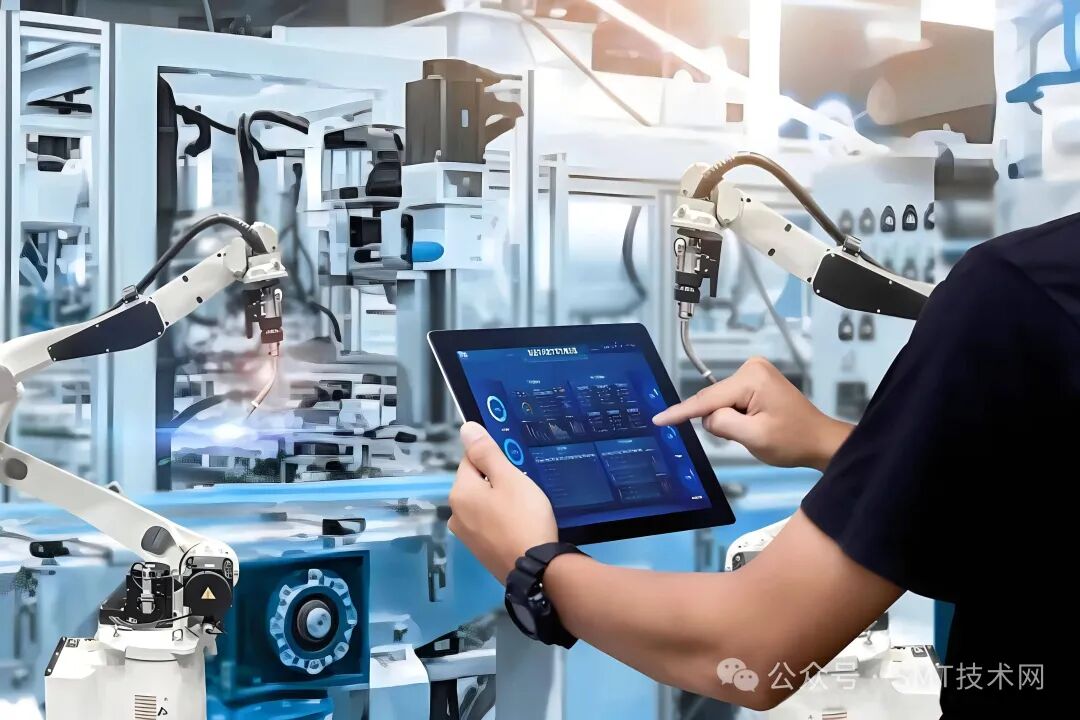
 Keywords: Industry; Algorithm; Detection.01AI Visual Detection Technology in Industrial Control Systems
The development of artificial intelligence technology has enabled many projects that were originally completed by manual operation to achieve mechanized replacement transformation. Traditional manual inspection and judgment have also seen the emergence of mechanical replacement technology, which is the machine vision detection system. This system consists of lenses, cameras, industrial computers, actuators, image processing systems, detection targets, and light sources. The specific operation involves using a camera to capture a clear image of the detection target, which is then transmitted to the image processing system. The detection algorithm identifies the detection target and extracts its main features, ultimately outputting the results, which are used to complete subsequent operations.
The application range of machine vision detection is very broad, especially the market prospects for industrial applications are very good. The application range includes target detection, recognition, positioning, and measurement.
Target detection involves checking the inventory and appearance defects of product components, target recognition refers to identifying the color or text of the detection target, target positioning includes labeling and PCB processing positioning, and target measurement includes measuring component dimensions, angles, and lengths of pointer instruments, etc. The traditional method of machine vision detection is manual operation, which is very targeted but lacks strong system robustness.Common methods for processing machine vision detection include arithmetic and binarization of images, image grayscale processing, Hough transform, and filtering algorithms.The popularization of artificial intelligence technology has led to the increasing application of deep learning technology in machine vision, with neural networks being a typical representative.Deep learning refers to the realistic simulation of human thinking behavior by machines, allowing them to understand and recognize complex patterns or scenes, widely applied in image segmentation, classification, and target detection.
Compared to traditional machine vision, deep learning can achieve self-learning of relevant attributes through specialized training without the need for feature engineering, achieving high-precision flexible recognition.This technology also has limitations; it requires the system to have extremely high computing capabilities and hardware memory, leading to very high costs in hardware configuration. Moreover, its development and application are based on the massive collection of sample data and require repeated model training to achieve model accuracy that meets technical standards.Thus, while the technical advantages of deep learning are significant, practical applications still require a combination of traditional visual detection methods and deep learning models to achieve operational goals.
Using 5G technology to conduct relevant technological pilot research, there are currently many visual detection defects in the domestic industrial field, with four main manifestations:① Some enterprises still use traditional human eye recognition for visual detection, which is not only inefficient but often leads to missed detections;② Some enterprises complete visual detection through intelligent integrated cameras, but the defect is that they cannot be applied to large-scale detection, and single-point devices are costly and difficult to manage;③ Some enterprises’ visual detection systems are built on cloud infrastructure, which cannot guarantee data security and cannot respond quickly;④ Many enterprises lack professional AI detection personnel, making it impossible to build a professional visual detection system.In summary, visual detection in the industrial field will inevitably develop towards platform-based, highly adaptable machine vision detection systems.With the rapid advancement of internet technology, the manufacturing industry is also vigorously promoting transformation and upgrading. With the support of big data technology, AI, and 5G technology, the machine vision detection technology in the industrial field will surely achieve greater development.
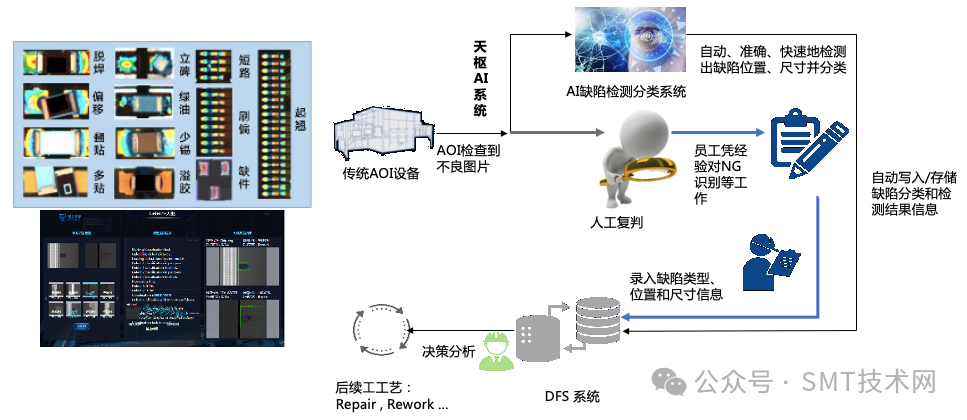 02Solutions for Industrial AI Visual Detection Systems under 5G Technology Conditions In the industrial field, the construction of visual detection systems using 5G technology is characterized by platformization, supporting synchronous detection of numerous detection points. By utilizing MEC and 5G technology, an internal local area network for enterprises is constructed, interacting with on-site client terminals, creating an overall system for enterprise visual detection, enabling synchronous detection across multiple points and scenes, and achieving intelligent management of related tasks.Inputting algorithms and computing power into the platform accelerates data analysis and processing efficiency.AI visual detection can be completed with a small number of on-site devices, including ordinary cameras, significantly reducing single-point detection costs and allowing for more flexible deployment methods.At the same time, the system platform also supports the configuration of detection point capabilities, allowing for quick adaptation to new detection scenes with slight adjustments to individual detection points, achieving rapid adaptability for diverse industrial products.The industrial AI visual detection system under 5G technology conditions consists of an intelligent monitoring platform and on-site devices.
2.1 On-Site Device End
The behavior of all on-site devices is coordinated with the enterprise production line, triggering the system and providing timely feedback on results. It is responsible for capturing images and transmitting them to the server, then obtaining the final processing results. The on-site device end consists of three components: ① Industrial camera system. This system consists of industrial cameras, light sources, and lenses, tasked with capturing on-site images and selecting models and adapting detection points according to detection requirements. ② On-site industrial control terminal. The industrial computer is the main device, responsible for controlling on-site devices and camera systems, transmitting images, issuing control commands, and driving the operation of on-site client terminals. ③ On-site devices. Comprising emergency stop switches, displays, sensors, barcode guns, and three-color lights, their task is to detect signals and display results while also triggering the system and controlling operations.
2.2 Intelligent Detection Platform Architecture
The key core of the visual detection system is the intelligent detection platform, which can be deployed on cloud servers and data centers. Its task is to process the entire visual detection process, including management of business, scenes, and algorithms, orchestrating detection content, analyzing detection results, and training algorithm models. This platform is equipped with interfaces responsible for unified management and status queries, capable of adapting to various detection scenes. The platform connects detection points through 5G networks, meeting the need for one platform to correspond to multiple functions in application and detection management. This platform is suitable for the diverse visual detection needs of industrial enterprises, serving upper-level applications. ① Basic capability layer. Utilizing the uniformity of interfaces to meet upper-level basic detection needs. ② Orchestrator layer. Utilizing the orchestrator to combine and coordinate basic capabilities, encapsulating lower-level basic detection capabilities. If visual detection has special needs, the encapsulated basic detection can provide solutions, thus constructing a powerful and targeted basic detection capability library. ③ Orchestration process library layer. This layer orchestrates basic capabilities based on various types of visual detection to meet detection requirements. ④ Application layer. In the process orchestration library, basic detection capabilities are scheduled for use, ensuring the smooth progress of various detections, utilizing input and output interfaces to serve the detection tasks of operators and related devices. ⑤ Cloud computing platform. Combining detection needs with specialized applicable technologies to complete the construction and deployment of upper-level application platforms. ⑥ Infrastructure layer. It includes various computing resources, such as GPU and CPU servers and GPU inference single-board computers. ⑦ Input and output adapters. Utilizing plug-in support for industrial bus protocols and mainstream industrial camera communication protocols, facilitating rapid integration into tooling environments.
2.3 Key Technologies
2.3.1 System Design Platformization
Currently, enterprises conducting visual detection mostly utilize intelligent cameras combined with traditional methods. The visual detection single-point systems in traditional methods include cameras, light sources, and image acquisition and processing units, which are very dispersed in their on-site arrangement. Their development and application are often customized and highly targeted, corresponding to very singular detection scenes, making the entire system complex and oversized, with daily maintenance and upgrades being very difficult.Intelligent cameras are compact but highly integrated, achieving integrated image acquisition, processing, and communication in visual detection systems. Compared to traditional visual detection systems, intelligent cameras allow for flexible, varied, and convenient on-site deployment.The drawback is that their small size limits their processing capabilities, supporting only simple algorithms, and the cost of purchasing cameras is relatively high.Introducing AI systems under 5G technology conditions into the industrial visual detection field, its structural design is based on a C/S model, belonging to a PaaS platform. Its backend platform centralizes most of the intelligent processing capabilities, with on-site terminals capturing images of detection points and transmitting them to the intelligent detection platform, allowing for real-time access to detection results.The platform is equipped with various algorithm capabilities, including emerging deep learning model algorithms and traditional machine vision algorithms.This platform design provides multi-scene synchronous detection services for visual detection and restores the use of algorithm capabilities.
2.3.2 Deep Learning Visual Capability Platform
The biggest challenge in building an AI visual detection platform for enterprises is the severe shortage of specialized talent. When constructing the visual detection platform, a deep learning-based visual detection platform was specifically introduced, capable of executing the entire model training process, including model training, model deployment, management, sample labeling, and data collection management. Deep learning extends traditional machine learning methods, achieving extensive use in target detection and image recognition. Types of deep learning models include Convolutional Neural Networks (CNN), Stacked Autoencoders (SAE), and Deep Belief Networks (DBN). CNN is a type of feedforward neural network that incorporates convolutional computation and deep structure, automatically learning hierarchical features of images through pooling and convolution; DBN is a generative model that trains the mutual weights of neurons, enabling the neural network to generate training data based on maximum probability; SAE is similar to DBN, with the main difference being that the structural units of SAE belong to autoencoding models. In image recognition, CNN has the widest application range, and many typical algorithms have been generated based on CNN visual detection, including target detection algorithms such as RCNN, YOLO, FastRCNN, SSD, and image classification algorithms such as LeNet, VGG, AlexNet, and GoogLeNet. Among these various visual detection algorithms, SSD, RetinaNet, and FastRCNN have already been deployed on deep learning platforms, with their application range limited to target detection scenarios. Additionally, the platform provides users with model self-training support and standardizes the execution of platform processes, reducing the difficulty of developing and applying visual detection across diverse scenes, allowing even non-professionals to deploy, verify, and train models quickly, thus expediting the launch of new visual detection modes.
2.3.3 Algorithm Capability Integration
Industrial visual detection encompasses a wide variety of complex scene applications, with a vast range of technical difficulties. Size detection is the simplest task, while the most challenging is the rapid identification of numerous complex detection targets. Therefore, the selection of algorithm capabilities must also be determined based on scene requirements, integrating deep learning in visual detection with traditional methods. At the same time, the platform has established a capability library for visual detection algorithms, which is open in nature and has the potential for further expansion. The platform also provides integration support for third-party algorithm capabilities, including visual detection capability libraries such as deep learning, Halcon, and OpenCV. Moreover, the platform offers users standardized interface capability units, allowing previously used visual detection algorithms to be migrated to the platform for continued use.
2.3.4 Capability Orchestration Engine
The key core capability of the visual detection system includes the capability orchestration engine. In response to the diverse needs of scenes, users can utilize the capability orchestration engine to achieve visual orchestration development, adapting the processes and algorithms for visual detection in new scenes to meet the requirements of visual detection in new scenarios.
2.3.5 Developing a Bearing Scheme Using 5G + MEC Networks
Enterprises require strict security protection for production data, limiting circulation within the park. To achieve this goal, it is necessary to construct an internal network supported by 5G and MEC. ① Connect relevant devices through the 5G network to ensure data transmission security; ② By reasonably utilizing the local diversion function of MEC, confidential data is diverted to the local visual detection platform and restricted within the factory area, enhancing security protection. Additionally, local diversion can avoid delays in end-to-end communication, achieving rapid system response.
2.4 Application Effects
Building an AI industrial visual detection system based on 5G networks perfectly integrates visual detection with MEC, 5G, and AI, enabling intelligent and platform-based visual detection with multi-scene synchronous detection capabilities. Compared to the expensive, difficult-to-manage, and functionally singular visual detection systems currently used by enterprises, the newly developed visual detection system is cost-effective, supports large-scale deployment, and can construct an integrated mainstream algorithm library with strong algorithmic and management capabilities. It supports big data technology for detection process and result analysis, and its operational processes are very standardized, lowering the entry barrier for non-professionals. This system applied to industrial visual detection greatly enhances the level of intelligence, increases enterprise operational efficiency, saves human resources, and accelerates the transition to intelligent digital transformation.
03Value Analysis
3.1 Product Value
(1) Cost Aspect. Compared to the currently used visual detection systems, the intelligent industrial camera and system platformization greatly saves on-site hardware configuration, and with strong computing power, enterprises can save a significant amount of cost investment during large-scale deployment, making the batch deployment of detection scenes faster.
(2) Algorithm Aspect. The platformization of the system supports high-intensity and high-complexity algorithm capabilities, making maintenance operations simple and easy, with significant expansion potential, greatly improving the accuracy and efficiency of detection and recognition.
(3) Usage Aspect. The system orchestration engine and model training reduce difficulty, allowing non-professionals to quickly complete scene deployment.
(4) Management Aspect. The platformization of the system allows for the simultaneous access of numerous detection scenes, achieving refined management goals for scenes, effectively avoiding the emergence of data silos, enabling enterprises to analyze and control data from an overall perspective, significantly improving production processes.
3.2 Industrial Application Value of the Product
Constructing an AI industrial visual detection system based on 5G networks allows enterprises to obtain end-to-end solutions for visual detection, accessing all visual detection scenes, building a regulatory system, and developing visual detection towards intelligent, efficient, and low-cost directions. Product quality and production efficiency steadily improve, and cost reductions lead to significant economic benefits. Moreover, the constructed internal network system combining 5G and NEC is responsible for processing enterprise data, ensuring coordinated development of the 5G network and enterprise production, allowing for business expansion and suitable for large-scale replication and promotion.
04Conclusion
Technology provides continuous impetus for industrial development. Under the catalysis of AI intelligent technology, various industries are ushering in new opportunities, but the new road is not always smooth. Currently, in the construction of automation control systems in China, AI intelligent detection technology has gradually been developed, but there is still a gap compared to advanced levels abroad. Relevant enterprises should increase investment in funds and talent, explore the deep integration of artificial intelligence and automation based on practice, and promote healthy industrial development.
——END——