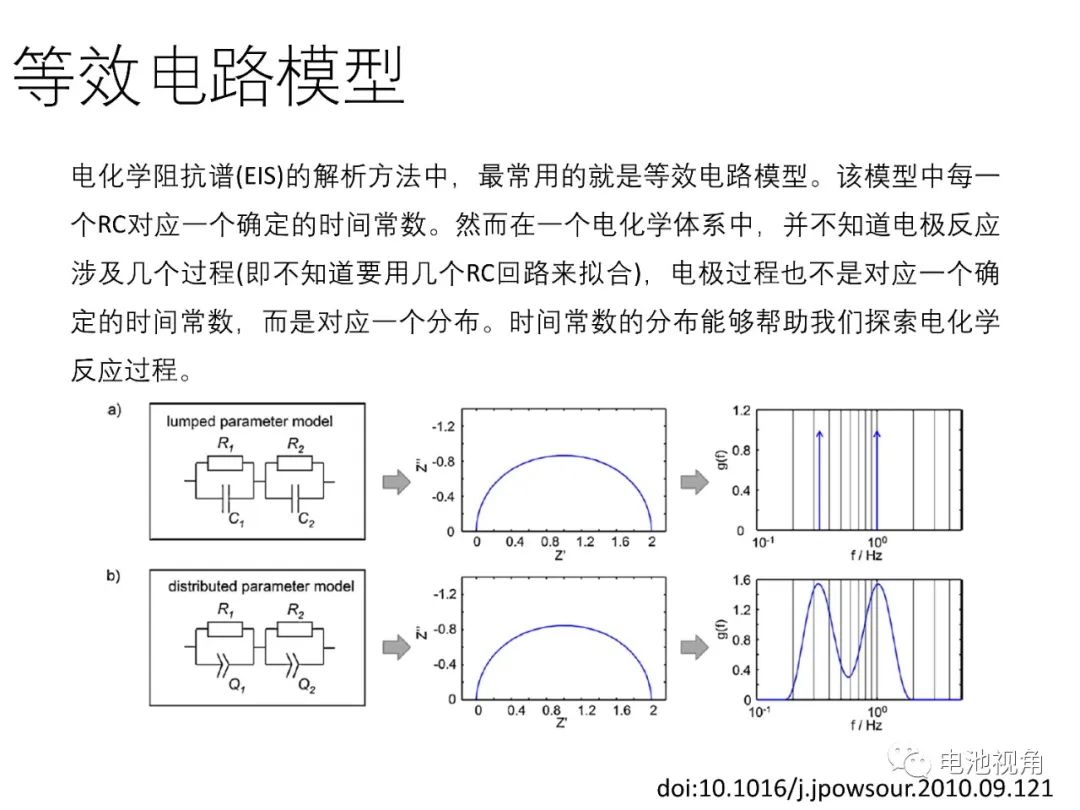
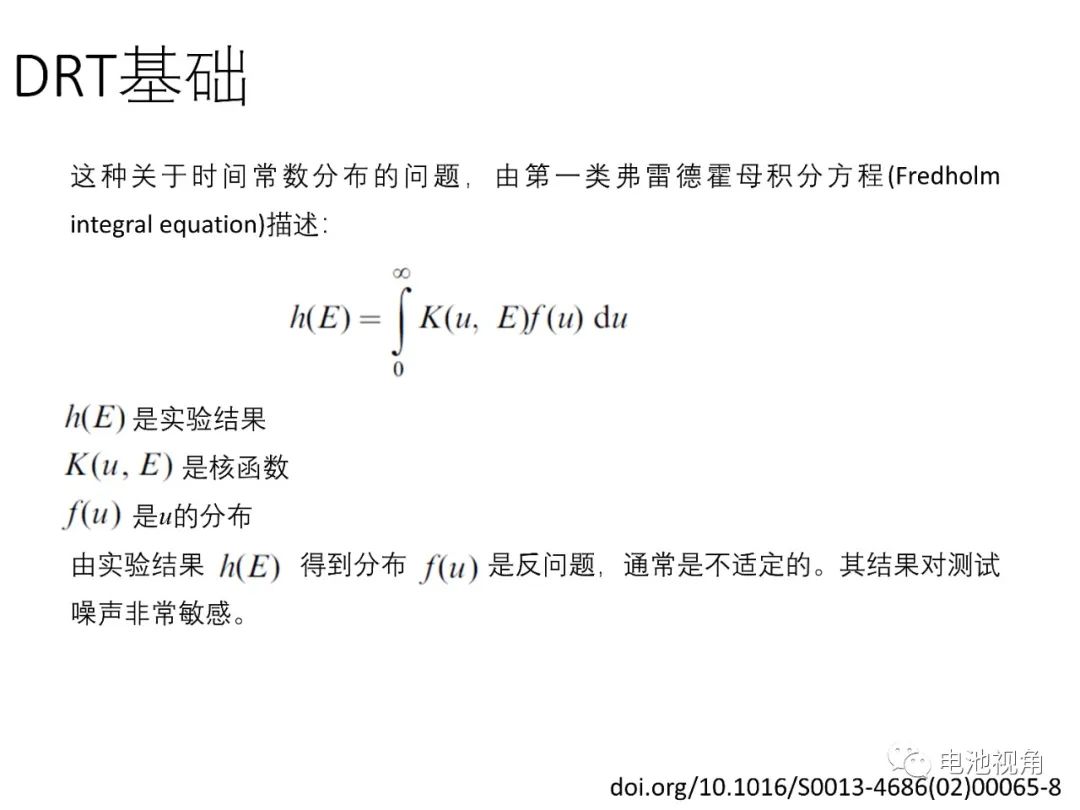
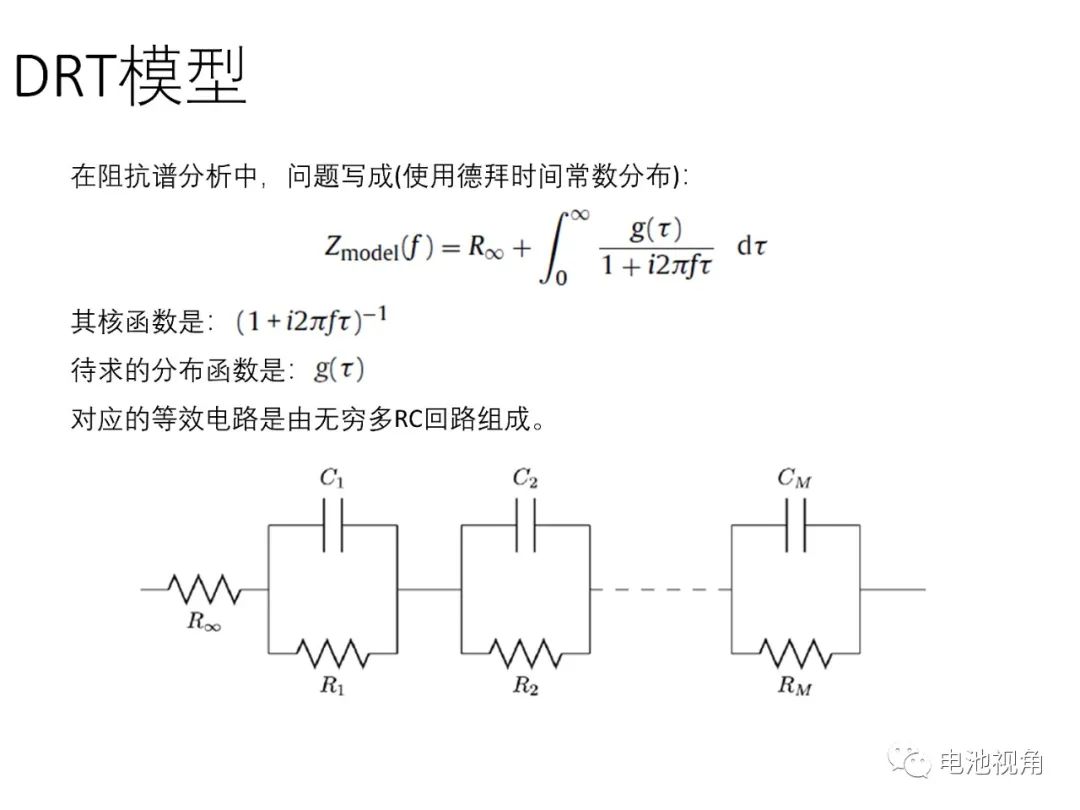
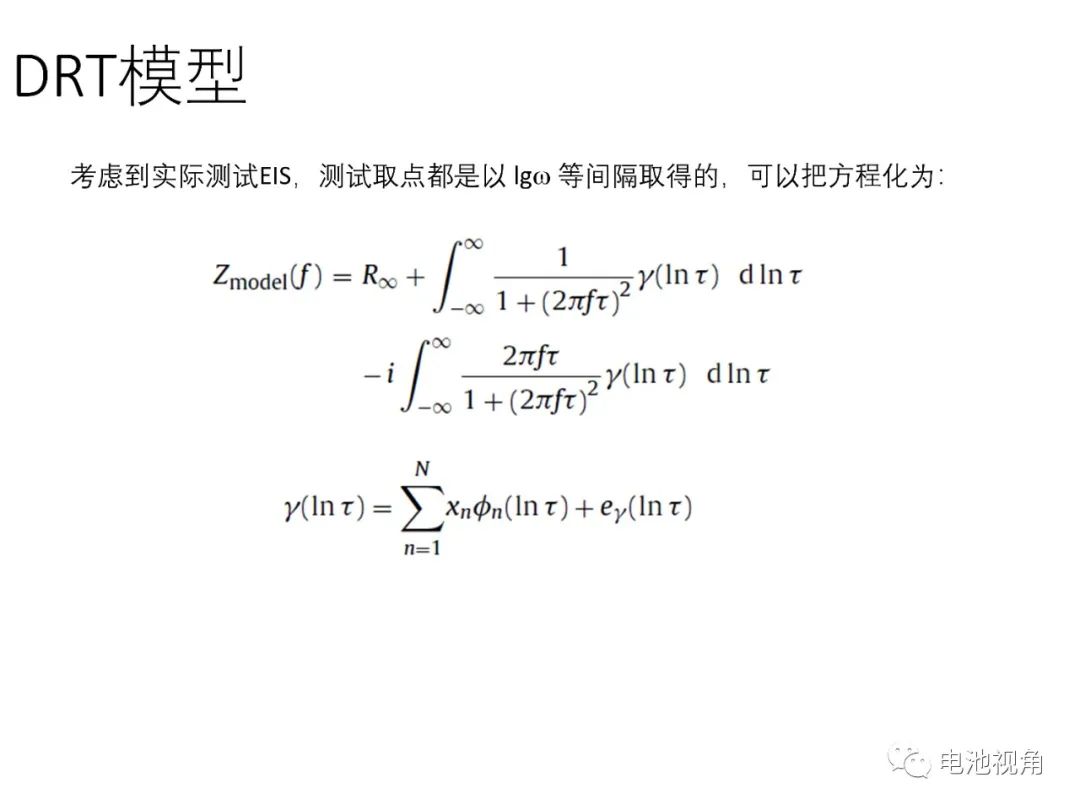
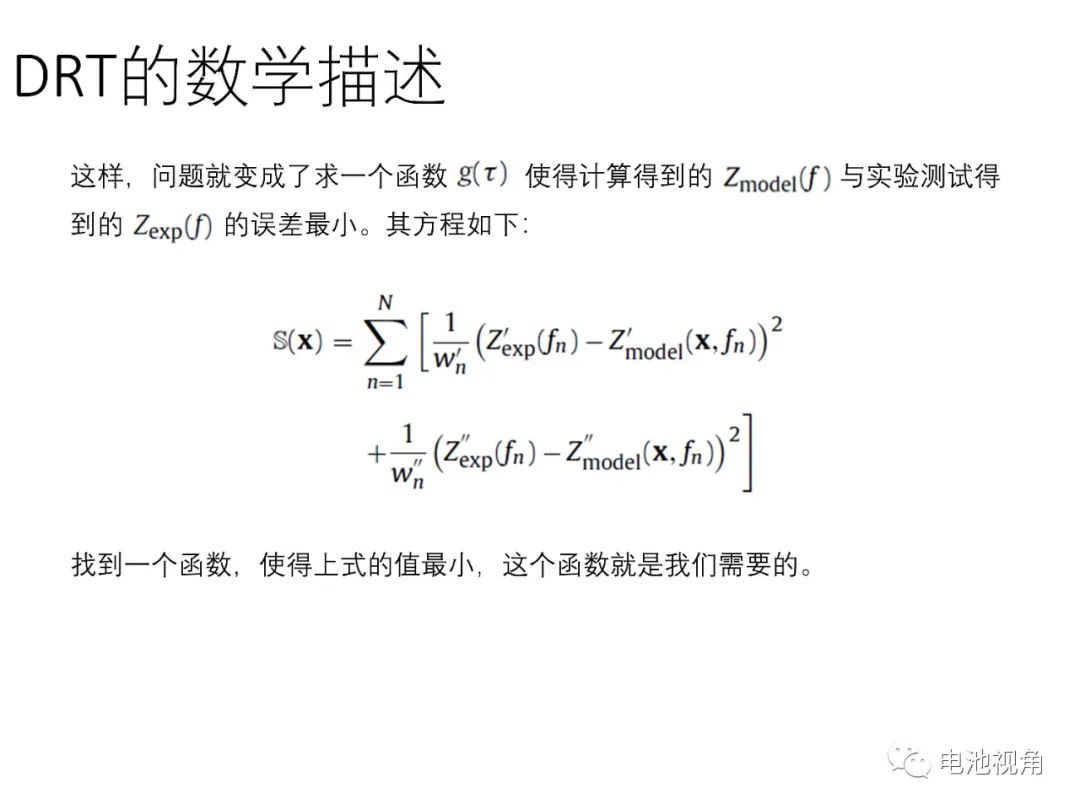
Electrochemical Impedance Spectroscopy (EIS) is a non-destructive, rapid, and efficient electrochemical testing method. It separates the processes involved in electrochemical reactions in the frequency domain based on the speed of the electrochemical system’s response to the excitation signal. The analysis of EIS is a complex task. A commonly used method is the equivalent circuit model, which is simple and widely adopted. However, the equivalent circuit model has drawbacks, including strong subjectivity and unclear physical significance of circuit elements (resistor R, capacitor C, and the RC circuits they form). The Distribution of Relaxation Times (DRT) technique is an effective analytical method. EIS separates the electrode processes through frequency, while DRT separates the various electrode processes based on the distribution of the corresponding time constants. DRT can be viewed as an equivalent circuit composed of infinitely many RC circuits. R and C have clear physical significance in the electrochemical system, and the infinite RC circuits can correspond to the topological structure of the electrodes, making DRT relatively clear in physical meaning. The disadvantage of DRT is that it involves many mathematical problems, making it quite challenging. This article first introduces the origin of DRT and the mathematical expressions derived from it, laying the foundation for subsequent solutions.