In the chip industry, there is a very famous principle known as Moore’s Law, proposed by Gordon Moore, co-founder of Intel.
The main idea of Moore’s Law is that, with constant prices, the number of transistors that can be accommodated on an integrated circuit doubles every 18-24 months, leading to a doubling of performance.
Over the past few decades, Moore’s Law has been hailed as the “metronome of Silicon Valley” because it represents the development pattern of the entire chip industry and serves as a guiding light for chip companies.
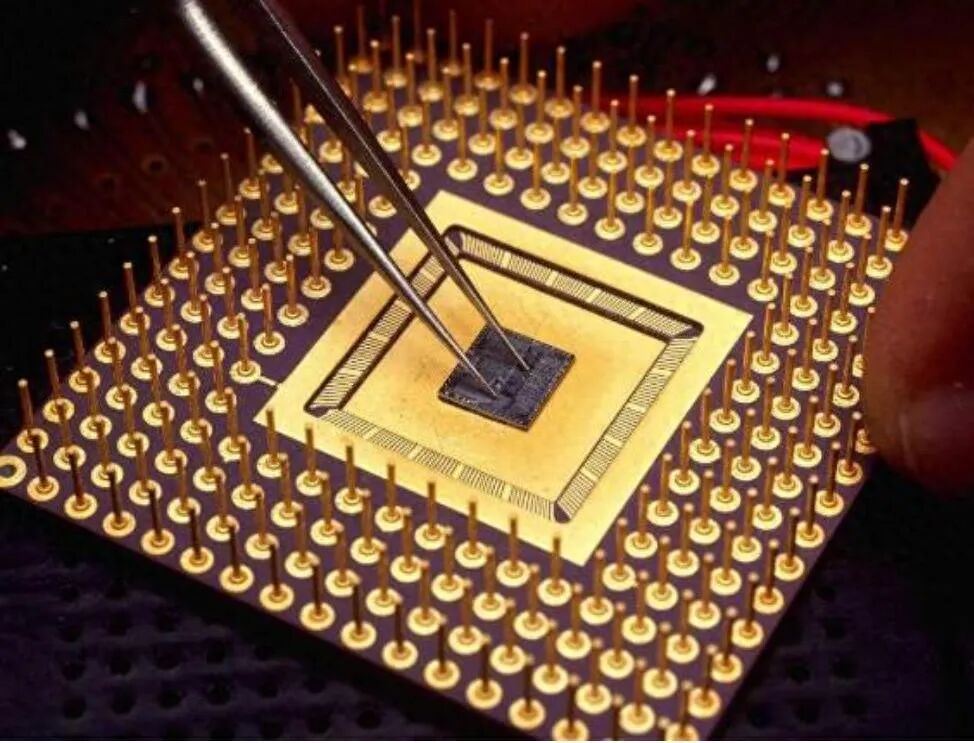
However, as chip processes continue to shrink and have reached 7nm, discussions about the “failure of Moore’s Law” and “the death of Moore’s Law” are becoming increasingly common, as chip companies can no longer double the transistor density within 18-24 months.
Specifically, looking at TSMC’s processes, the mass production times for 7nm, 5nm, 3nm, and 2nm are 2018, 2020, 2023, and 2025 respectively, averaging between 30-36 months.
Moreover, it is expected that transitioning from the 2nm era to the 1nm era will take at least another 5 years, which can no longer be explained by Moore’s Law.

This is certainly a problem for chip companies; if Moore’s Law is dead, then what is the driving force and basis for their breakthroughs? What will push technological progress and entice consumers to spend their money?
Therefore, TSMC has been working hard to keep Moore’s Law alive. Since chip processes cannot improve that quickly, they are finding various ways to innovate within the same process.
For example, the 3nm process is not just a 3nm process; TSMC has introduced N3, N3E, N3P, etc. Although they are all 3nm, different technologies allow for an increase in the number of transistors in each generation, thereby saving Moore’s Law.
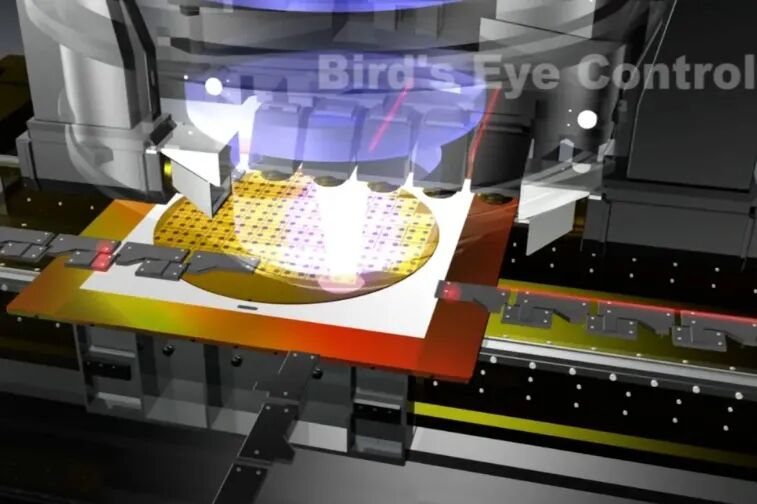
At the same time, TSMC is also using changes in packaging technology and materials technology to promote the advancement of transistor technology, such as CoWOS packaging, which uses better materials to ensure that every generation, or every two years, there will be a significant increase in transistor density, keeping Moore’s Law relevant.
However, everyone knows that shrinking transistors has nearly reached its limit; the path of miniaturization is unlikely to sustain long-term development. It is time to seek another path to initiate a new round of Moore’s Law.
But where is this path? Everyone is aware and exploring it; whoever figures it out first will lead the trend of the next generation of chip technology.