A Tesla car drives down the street, with the AI chip inside quietly operating. Behind this seemingly ordinary scene lies Elon Musk’s grand ambition to conquer the AI chip market.
“We expect the chips we ultimately build to exceed the total of all other AI chips combined. Please read that sentence again, I am not joking.” On November 23, 2025, Tesla CEO Elon Musk made a striking declaration on social media platform X, systematically revealing Tesla’s ambitious plans for its self-developed AI chips for the first time.
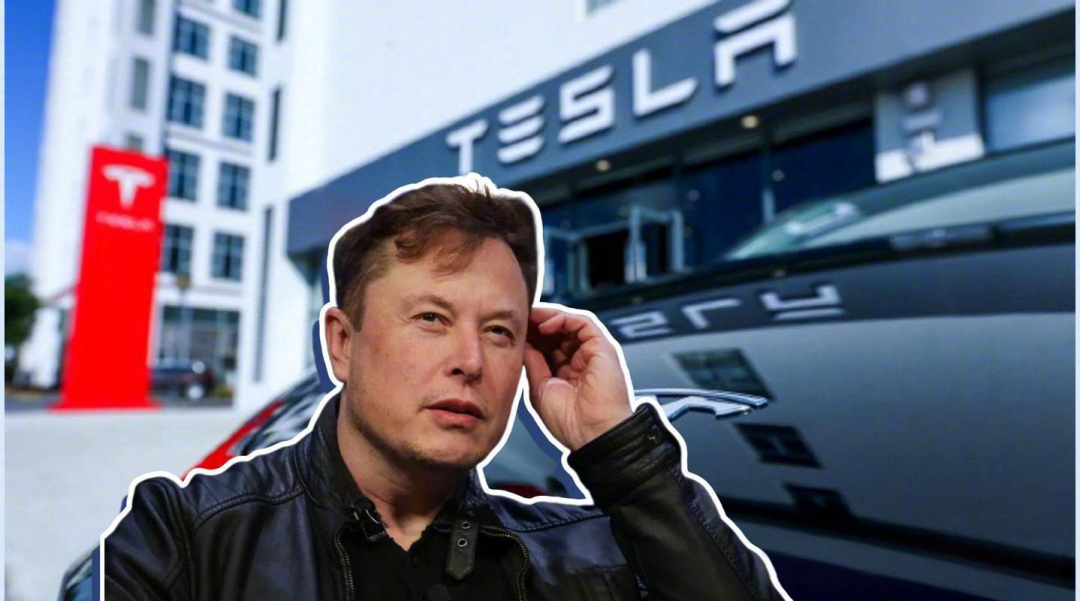
Musk revealed that Tesla hasdeployed millions of self-developed AI chips in vehicles and data centers, which have made Tesla a “leader in real-world AI.”
Chip Development: Rapid Iteration from AI4 to AI6
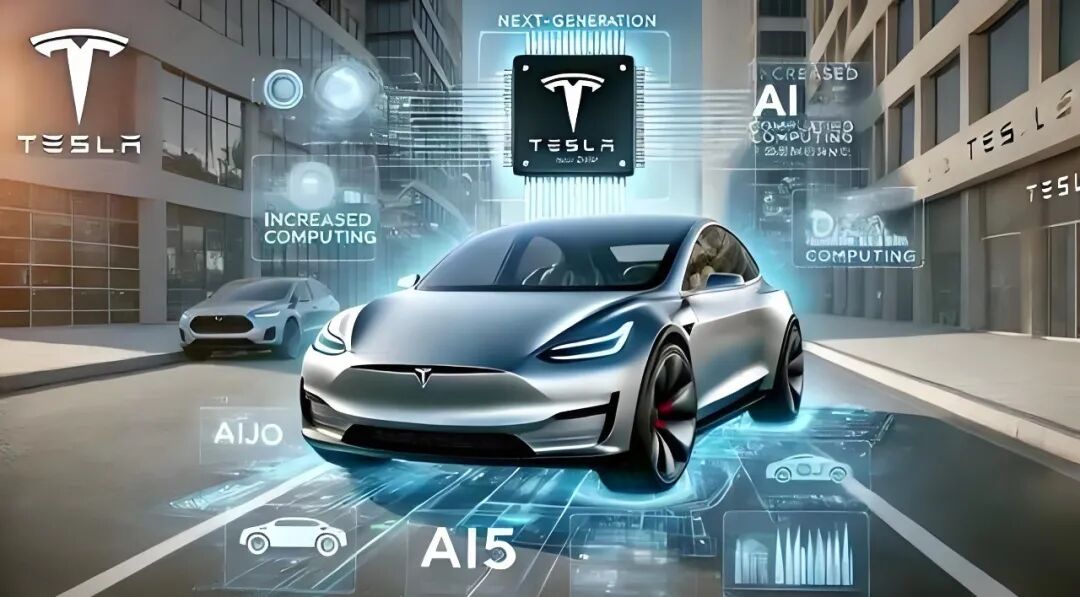
Musk clearly outlined Tesla’s AI chip development roadmap. Currently, the chip version used in Tesla vehicles isAI4, which is actually the internal code name for the chip previously known as HW4.
The next generationAI5 is nearing the tape-out stage, and the development of the subsequentAI6 chip has also begun.
Most surprisingly, Tesla has set an iteration speed where Musk has tasked the AI chip team withlaunching a new chip design and completing mass production every 12 months.
This pace is far faster than the traditional semiconductor industry’s18-24 month development cycle.
However, this aggressive roadmap also faces real challenges. According to media reports, the AI5 chip will not achieve mass production untilmid-2027, which may impact Tesla’s plans to launch the Cybercab robot taxi next year.
Strategic Ambition: Production Goals Exceeding All AI Chips Combined
Musk’s statement that “Tesla’s chip production will exceed the total of all other AI chips combined” may sound like a fantasy, but it reveals Tesla’s enormous demand for computing power.
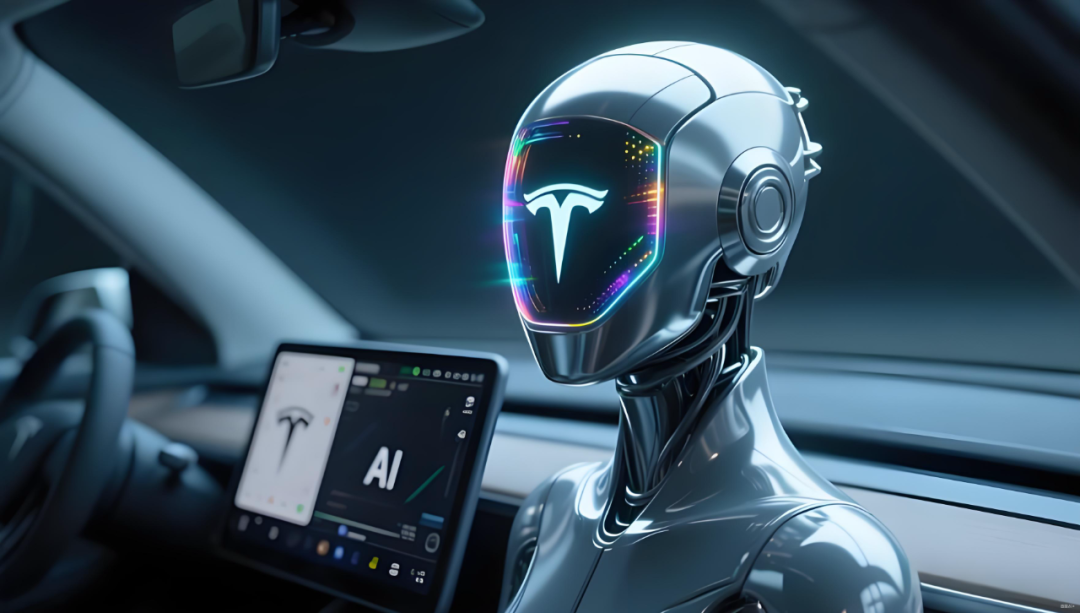
Behind this goal is Tesla’s extreme estimation of future computing power needs. Musk envisions that if data centers and vehicles share the same AI-optimized hardware, then Tesla could use itsentire parked fleet as a decentralized, distributed AI supercomputer.
To achieve this vision,every Tesla vehicle must be equipped with the AI5 chip, which itself constitutes a massive chip consumption.
From a global perspective, Tesla’s chip demand comes from multiple business segments: the growing electric vehicle fleet, the plannedmillions of Optimus robots, and data centers around the world.
These demands combined could indeed make Tesla one of the largest consumers of AI chips globally.
Application Scenarios: From Autonomous Driving to Humanoid Robots
The core application scenario for Tesla’s self-developed chips is primarily autonomous driving. Musk emphasized that these chips will provide the computational foundation for achieving a safer driving experience, potentially “saving millions of lives.”
Meanwhile,Optimus humanoid robots represent another key application area for Tesla’s chips.
Musk envisions that through Optimus’s medical applications, everyone will have access to “advanced medical services.”
Tesla’s chip strategy is closely linked to its overall AI layout. In terms of autonomous driving, Musk also revealed that the upcoming FSD software updateversion 14.3 will be “the last important piece of the puzzle,” significantly reducing the system’s reliance on driver supervision.
Manufacturing Challenges: The Long Road from Design to Production
The ambitious chip plan faces significant manufacturing challenges. Musk admitted thatAI5 will not reach sufficient production levels until mid-2027.
Currently, Tesla plans to produce AI5 chips at four factories operated by TSMC and Samsung in Taiwan, Arizona, South Korea, and Texas, but this still cannot meet Tesla’s enormous demand.
To thoroughly address the capacity bottleneck, Tesla is considering building its own chip factory, internally referred to as “TeraFab.”
This concept is similar to Tesla’s “machine that makes the machine” philosophy, which has previously been applied to battery production.
Even for Tesla, building a chip factory is a daunting task. As NVIDIA CEO Jensen Huang warned, “Building a fab from scratch is extremely difficult.”
Talent Acquisition: Musk’s “Three Points” Recruitment Method
With the expansion of the chip plan, Tesla is actively recruiting AI chip talent. Musk announced on X that Tesla is hiring chip-related personnel and requires applicants to possessexceptional abilities.
He proposed a unique recruitment requirement: applicants must send “three points that demonstrate their exceptional abilities” to the company’s dedicated chip recruitment email.
Musk also revealed that hemeets with the chip engineering team every Tuesday and Saturday, and expects that weekend meetings will decrease after the AI5 is completed.
This personal involvement and urgency reflect the central role of chip development in Tesla’s strategy.
Industry Impact: The Ultimate Form of Vertical Integration
Tesla’s initiative to develop its own AI chips represents a new height of vertical integration in the tech industry. By controlling the entire chain from chip design to software algorithms, Tesla aims to build an insurmountable competitive barrier.
Analysts point out that Tesla’s approach is akin to “the Apple of the automotive world,” strengthening ecological barriers through hardware-software integration and dedicated chips.
Unlike traditional automakers that rely on chip suppliers like NVIDIA or Qualcomm, Tesla has chosen a more autonomous but also more challenging path.
Musk has made it clear: “Companies that rely on supplier chips can never build truly reliable autonomous driving.”
Standing inside the Texas Gigafactory, Musk may already be envisioning a new chip factory rising from the ground. The “machine that makes the machine” philosophy he has practiced in the battery field is now extending to the more complex domain of AI chips.
“Tesla has long had an advanced AI chip and circuit board engineering team, and the outside world generally lacks understanding of the scale of its chip design investments,” Musk wrote on X.
As the AI5 chip tape-out approaches and AI6 development kicks off, Tesla’s chip ambitions are fully unfolding. The outcome of this gamble will determine whether Tesla becomes a new leader in the AI chip market or faces setbacks in its aggressive expansion.
📌Related Articles
Crushing OpenAI, DeepSeek-R1 Released! How to Implement DeepSeek Locally?
Zero-cost local deployment! Experience OpenAI’s $20,000/month PhD-level intelligence agent.
Level up! Run the hottest DeepSeek-R1 on your local machine with just 2GB of resources!
Take it a step further, run DeepSeek-R1 locally on a 16GB RAM, no GPU Windows laptop!
Reach new heights! A single command allows the local large model to learn DeepSeek’s deep thinking!
👇 Clickto read the original article, get the open-source address 🚀 Help us light up a star 🌟, may your development journey be bright.