The Android operating system supported by Google currently mainly includes ARM and x86 instruction set architectures (ISA). Most smartphones, tablets, smart TVs, and other devices running Android are based on ARM architecture SoCs, as Intel has long abandoned its mobile CPU plans, and support for the MIPS architecture was officially dropped with the release of NDK version 17.
Although Google has not officially provided support for compiling the Android system on hardware based on the RISC-V instruction set architecture, some development teams are currently working to run AOSP (Android Open Source Project) on RISC-V hardware, including Alibaba’s T-Head Semiconductor Company.
T-Head Semiconductor Company, established on September 19, 2018, is the wholly-owned semiconductor chip business entity of Alibaba Group. “Life and death are taken lightly; if you are not convinced, just do it,” is T-Head’s motto. In just over three years of entering the chip field, T-Head has successively launched the Xuantie series processor IP, AI inference chip含光800, and Arm server chip倚天710, and successfully commercialized them.
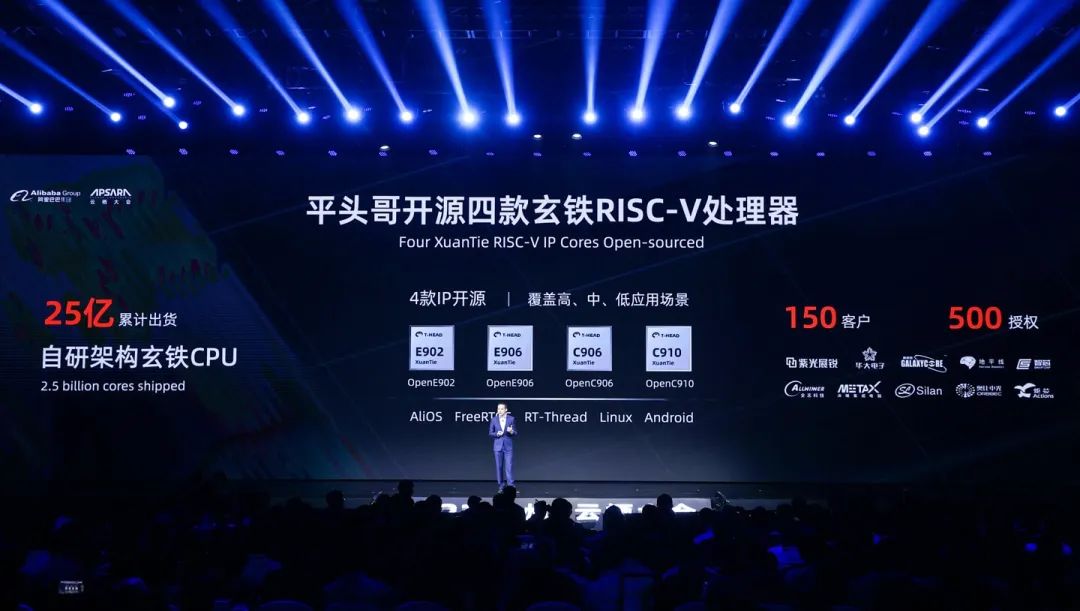
The Xuantie series processor IP product line is rich and actively embraces the open-source RISC-V instruction set architecture.
RISC-V (pronounced “risk-five”) is an open-source instruction set architecture (ISA) based on the principles of Reduced Instruction Set Computing (RISC), simply explained as a form of “open-source hardware” corresponding to the open-source software movement. The RISC-V instruction set can be freely used for any purpose, allowing anyone to design, manufacture, and sell RISC-V chips and software without paying patent fees to any company.
Thanks to advantages such as open-source, flexibility, and low cost, RISC-V has gained widespread attention from companies and research institutions both domestically and internationally, with tech giants like Google, NVIDIA, and Qualcomm embracing the technology.
However, like any emerging CPU architecture, RISC-V also faces numerous challenges and concerns. Firstly, new CPU architectures lack software support available in the existing market, which means that existing software must be recompiled to port to the new platform without operating system support. Conversely, if there is support at the operating system level, a rich software ecosystem under that operating system is immediately available. For RISC-V to become mainstream, it needs to run modern operating systems, have out-of-the-box compilers, and be compatible with mainstream applications.
Recognizing the unlimited potential of RISC-V, T-Head has made significant efforts to port the popular Android operating system to RISC-V. Currently, Android officially only supports the ARM architecture instruction set, which limits smartphone manufacturers to the ARM ecosystem, along with licensing and patent fees that increase manufacturing costs. Additionally, for reasons you understand, domestic chip manufacturers may be unable to obtain licenses for ARM processors and may also be prohibited from using Android and its related software.
Here, I want to clarify that the prohibition on using Android and its related software refers to Google’s GMS (Google Mobile Services). GMS is the driving force behind the development of the Android system and the foundation for Google applications to run.
GMS provides services such as Google Play, Search, Search by Voice, Gmail, Contact Sync, Calendar Sync, Talk, Maps, Street View, YouTube, and Android Market, supporting Google’s series of applications on Android. For Android, it is a service for configuring Android devices.
Overseas applications of Android heavily rely on GMS, and using the Google Store requires the use of the three Google services (Google Services Framework, Google Play Store, and Google Play Services), all of which run based on GMS.
Domestic applications, however, do not rely on Google’s GMS; phone manufacturers will launch their own service frameworks, and we do not use Google Play for software downloads but various application markets instead, and apps do not need to go through Google’s software review.
The underlying architecture of Android, that is, AOSP, is licensed under the Apache License 2.0, and AOSP is a general open-source project that follows open-source licensing agreements.
T-Head has successfully ported Android 10 to its own RISC-V chips, and the Gitee open-source repository address for T-Head’s aosp-riscv is:
https://gitee.com/mirrors/aosp-riscv
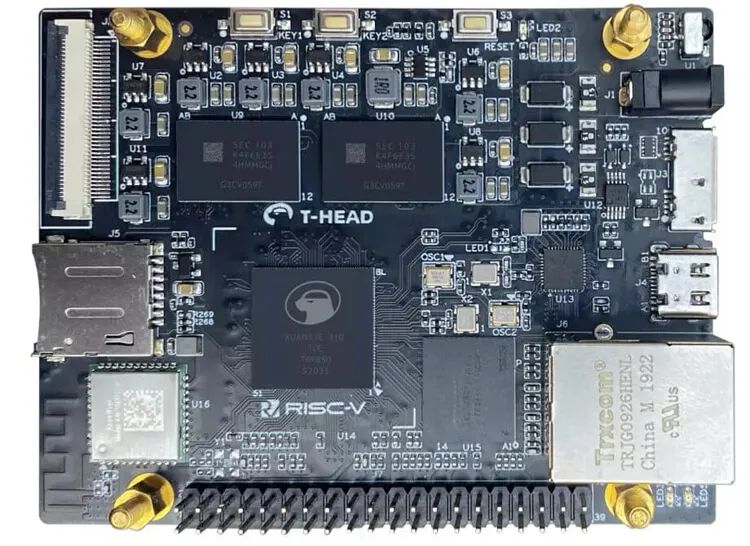
The aosp-riscv open-source project can run in an emulator and on the Xuantie 910 development board
On October 4, 2021, the officially released Android 12 version saw significant progress in T-Head’s porting efforts. Android 12.0 introduced a new Bazel architecture, new Rust language features, and new functionality in Studio, with its Art and Bionic modules achieving architectural evolution. This presents new challenges for RISC-V compatibility with the Android system.
Building on the success of Android 10, T-Head has made many porting efforts and systematically optimized support for RISC-V in Android 12.0, successfully running TensorFlow Lite models on RISC-V architecture through Android Studio, opening up support for artificial intelligence on RISC-V in the Android platform.
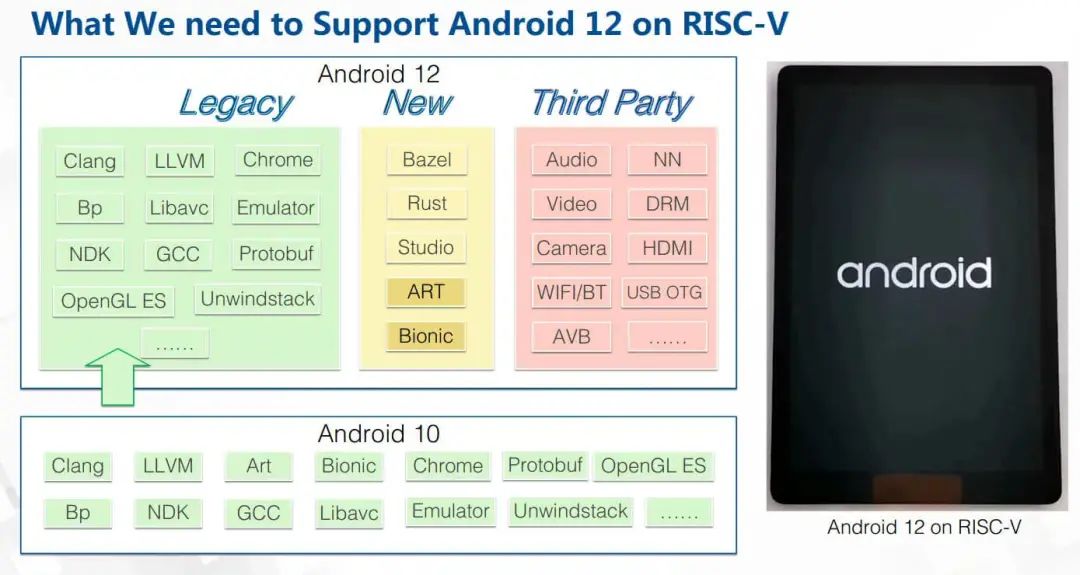
To address the challenges faced by RISC-V third-party component development, including lack of support, system incompatibility, and low certification levels, T-Head has integrated and validated key functions such as audio playback, video playback, WiFi, and camera on Android 12.0 for the first time: this proves the feasibility of RISC-V compatibility with the latest version of Android 12.0 and will greatly lower the threshold for RISC-V vendors to develop and integrate related components.
By the end of 2023, it is expected that commercially available RISC-V Android devices based on Android 14 will be launched.
Will RISC-V become the main architecture of the future?
Currently, the open-source instruction set architecture RISC-V is gaining more and more supporters, becoming an important variable that profoundly influences the chip industry in the post-Moore’s Law era.
As software supporting RISC-V continues to enrich, the market share of RISC-V will further increase. Currently, the applications of RISC-V are very limited, and there are not many devices using RISC-V processors around us, but with the porting of Android 12, more commercially available RISC-V Android devices are expected to appear by the end of 2023 with the Android 14 version, and the RISC-V ecosystem will usher in explosive growth.
If you want to learn more about RISC-V, I share a “RISC-V Open Source Instruction Set Guide”
This book is a valuable reference for anyone using RISC-V ISA. To facilitate quick reference, the operation codes are presented in several useful formats, making it easier to write and interpret assembly code. Additionally, the explanations and examples of how to use this ISA also make programmers’ work easier. The comparison with other ISAs is very interesting, explaining the reasons behind the design decisions made by RISC-V designers. — Megan Wachs, PhD, SiFive Engineer
How to Download the RISC-V Open Source Instruction Set Guide
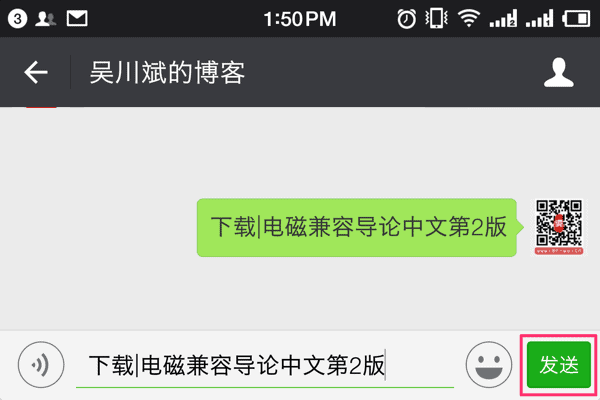
Follow the official account of Lao Wu’s blog, and send the corresponding download keyword in the public account to get the download link

Follow Wu Chuanbin’s blog public account
Send Lao Wu a message in the public account:
Download | RISC-V Open Source Instruction Set Guide
or
Download | 6297
It is recommended to copy and paste to avoid typos, O(∩_∩)O~