 Image source: J. Am. Chem. Soc.Introduction:
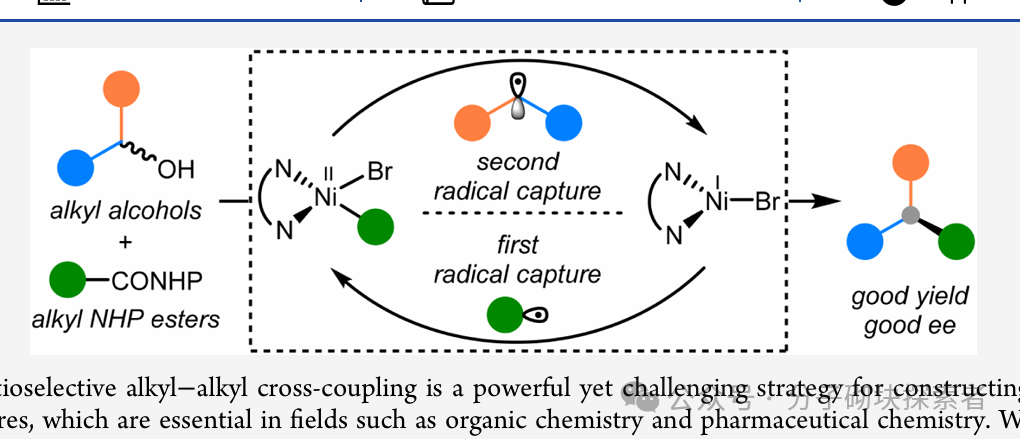
The enantioselective alkyl-alkyl cross-coupling is a powerful and challenging strategy for constructing three-dimensional molecular structures, which hold significant value in organic chemistry and medicinal chemistry. Although radical-radical cross-coupling provides a feasible pathway to achieve this goal, controlling the cross-selectivity and enantioselectivity between two different alkyl radicals remains a significant challenge due to the transient nature of alkyl radicals.
This article develops a practical platform that combines photoredox and chiral nickel catalysis, enabling precise control of transient primary and secondary alkyl radicals under mild conditions. A single-vessel reaction mode was also developed, achieving efficient one-step synthesis of chiral-enriched products from commercially available carboxylic acids and readily available alcohols via in situ generation of N-hydroxyphthalimide (NHP) esters. The practicality of this method was validated through diverse transformations of various important scaffolds and bioactive molecules, and the involvement mechanism of the Ni(I)/Ni(II) cycle was clarified through comprehensive mechanistic studies.
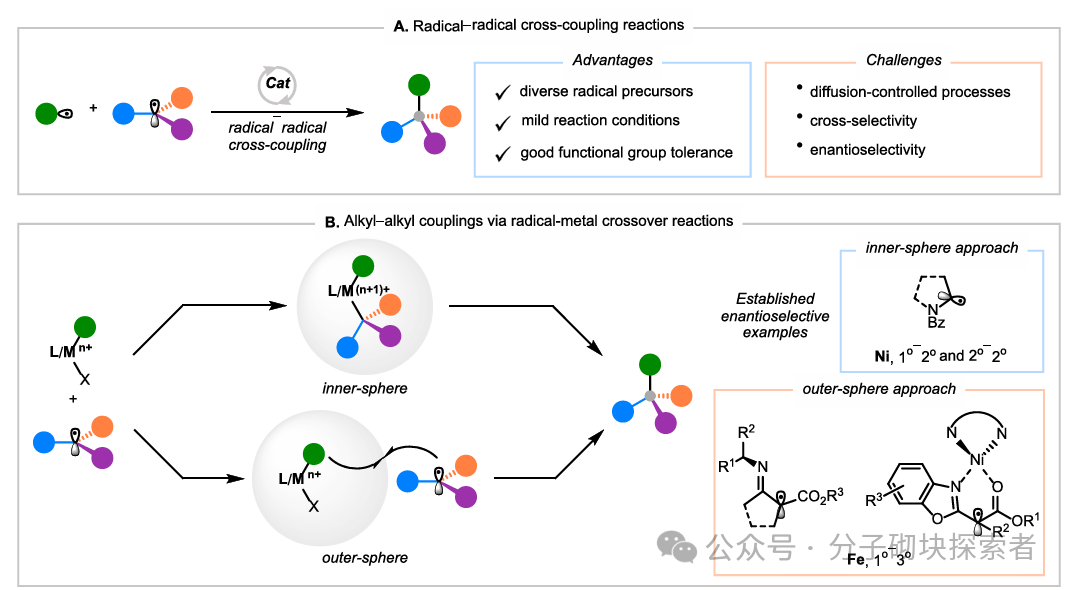
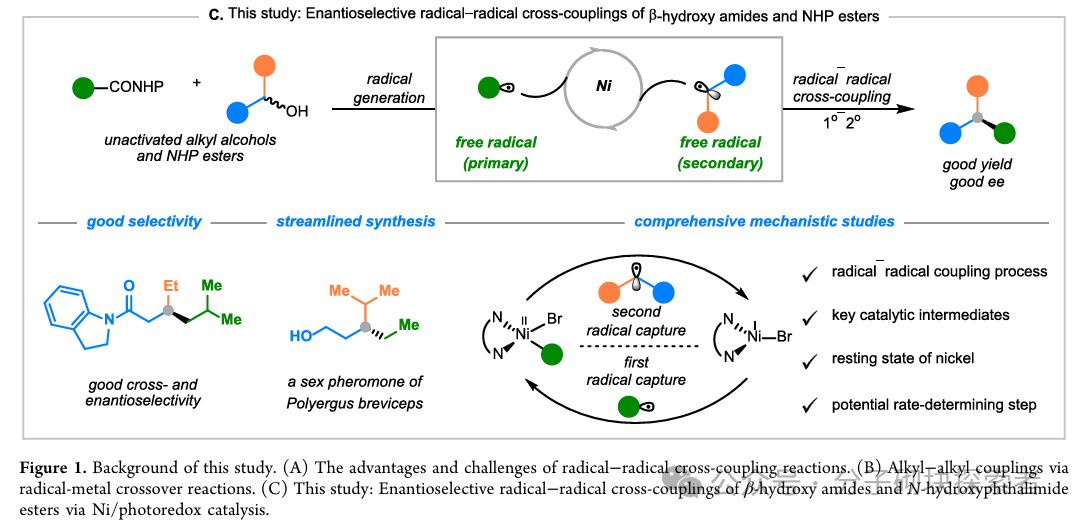 Image source: J. Am. Chem. Soc.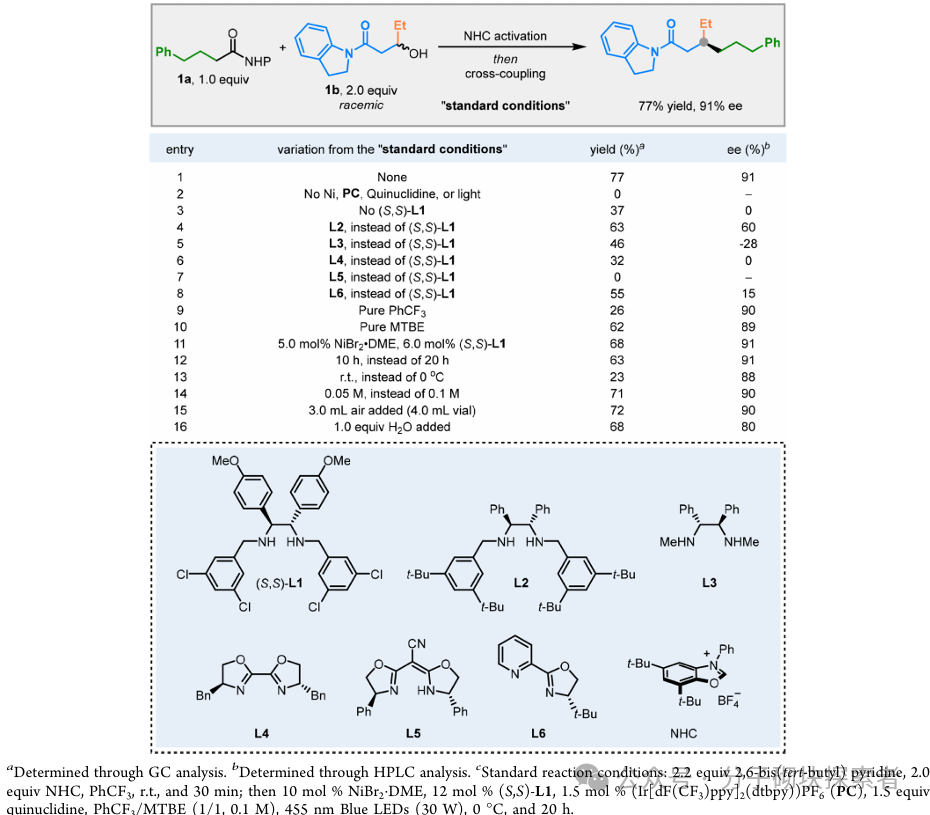
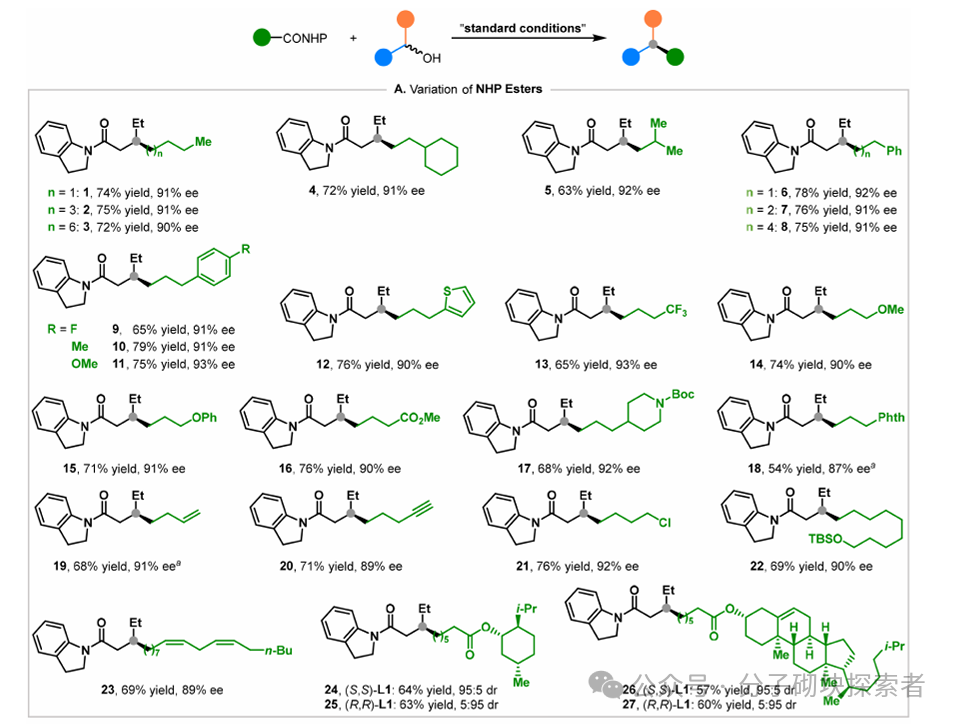
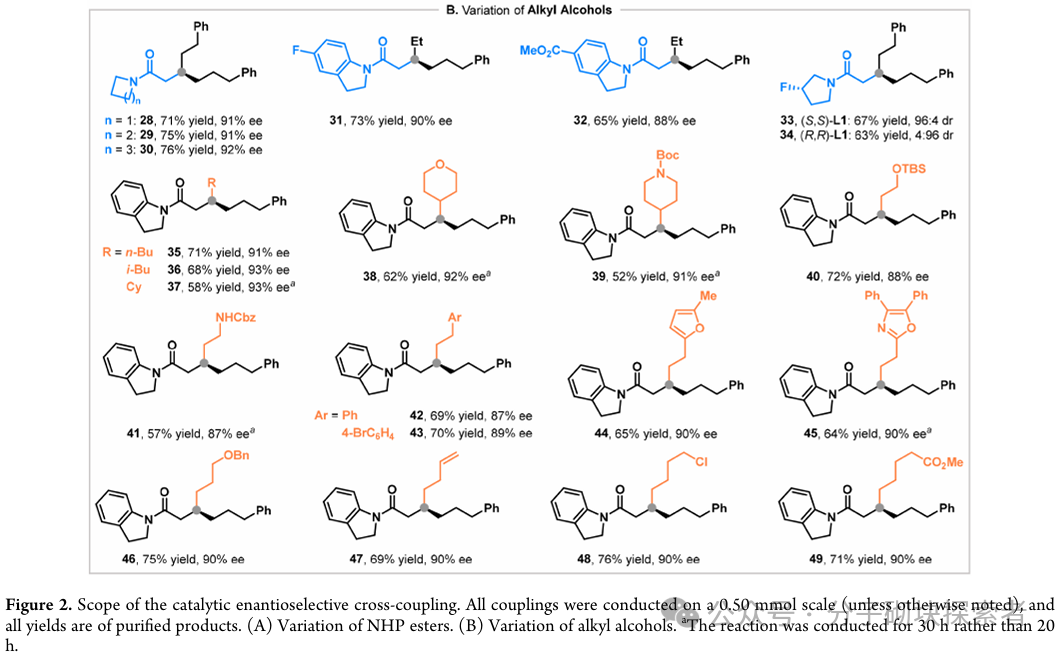
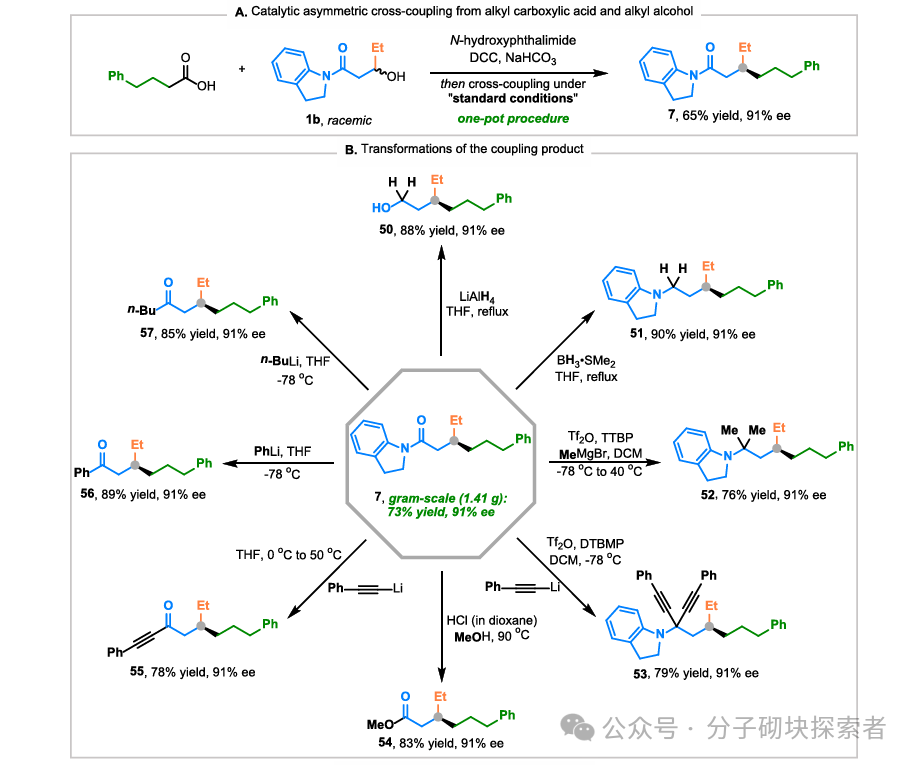
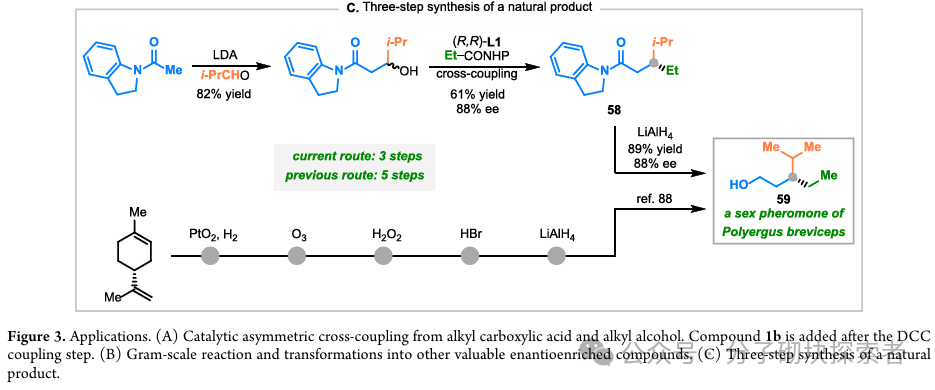
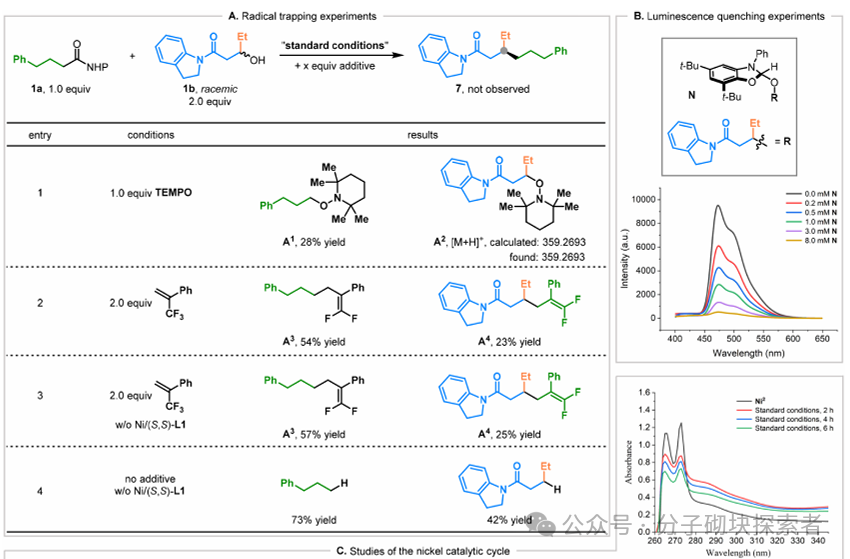
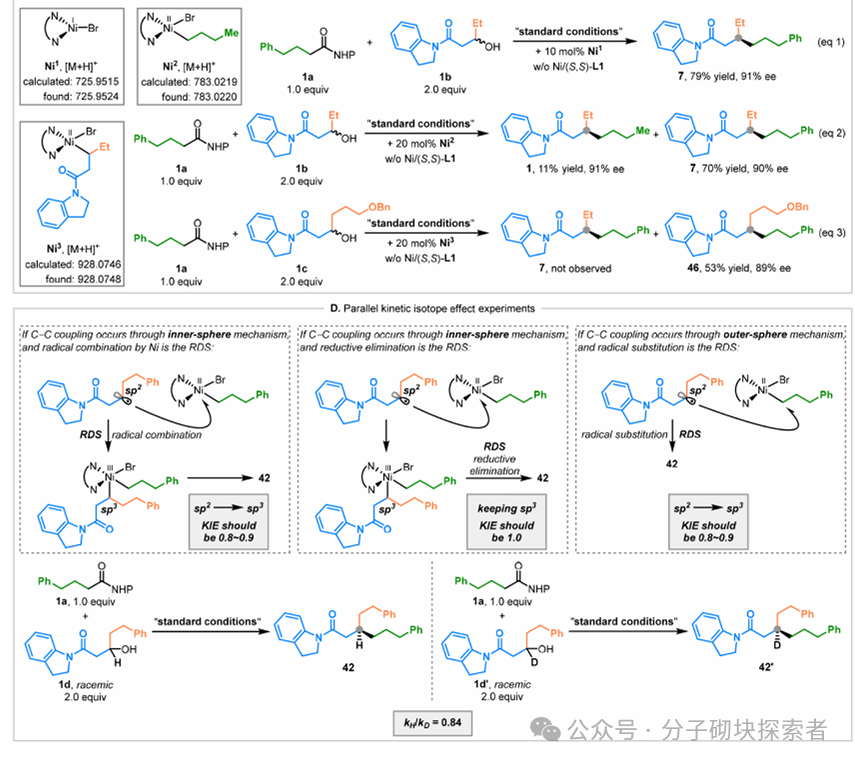

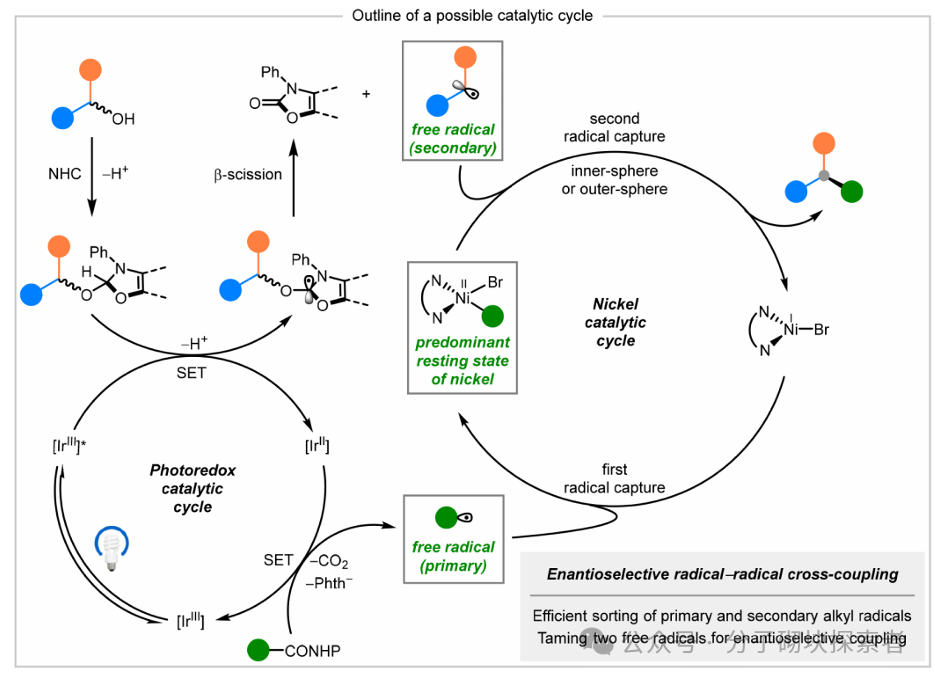 Image source: J. Am. Chem. Soc.
Conclusion:
Successfully achieved enantioselective radical-radical cross-coupling reactions between β-hydroxy amides and N-hydroxyphthalimide esters via a Ni/photoredox dual catalytic system. This transformation is characterized by the generation of two different free alkyl radicals through the photoredox process, which are then selectively captured by the nickel catalyst coordinated with chiral diamine ligands, resulting in good cross-selectivity and enantioselectivity. The reaction proceeds under mild conditions, exhibiting excellent functional group compatibility and scalability. The single-vessel operation provides a straightforward strategy for the direct synthesis of complex molecules from commercially available carboxylic acids and readily available alkyl alcohols. The resulting chiral-enriched coupling products can serve as multifunctional synthetic building blocks, easily enabling diverse transformations to obtain important scaffolds and bioactive molecules. Through comprehensive mechanistic studies, we successfully revealed the catalytic cycle process and identified the main resting state of the nickel catalyst, providing important guidance for the future development of asymmetric radical-radical cross-coupling reactions.
References:
Enantioselective Radical–Radical Cross-Couplings of β-Hydroxy Amides and N-Hydroxyphthalimide Esters via Ni/Photoredox Catalysis
J. Am. Chem. Soc. 2025,
https://pubs.acs.org/doi/10.1021/jacs.5c10963