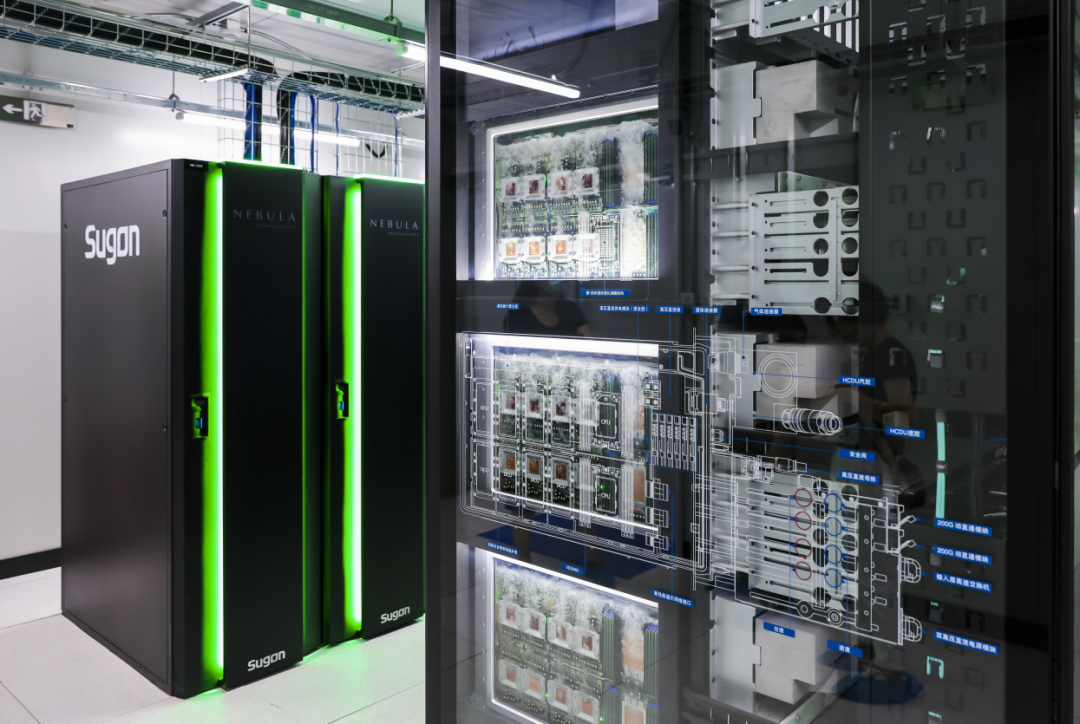
(Above image) Ningbo Artificial Intelligence Supercomputing Center supercomputing cabinet. Yang Liang | Photo
Currently, global artificial intelligence and robotics technologies are experiencing revolutionary breakthroughs, with their deep integration bringing new market opportunities to industrial manufacturing, logistics, consumer services, and healthcare. Major cities in China have accelerated the layout of the artificial intelligence and robotics industry, with local governments and related institutions promoting the establishment of embodied intelligent robotics innovation centers to drive collaborative breakthroughs in “resources – technology – scenarios.” By the end of 2024, Ningbo’s core artificial intelligence industry scale is expected to exceed 30 billion yuan, forming advantages in humanoid robot hardware.
Looking to the future, Ningbo should leverage its manufacturing foundation and port hub advantages, aiming to build an innovation development hub for the artificial intelligence and robotics industry. This involves constructing a full-stack artificial intelligence industry system centered around the industrial end, innovation end, operational end, and ecological end, with a focus on “basic foundation – core products – scenario applications,” accelerating the formation of a trillion-yuan industrial cluster, and establishing a benchmark for innovation development in the artificial intelligence and robotics industry that radiates the Yangtze River Delta and connects globally, providing a Ningbo solution for the intelligent upgrade of China’s manufacturing industry.
Industrial End:Strengthen the Competitiveness of Key Industrial Links
Systematically solidify the basic foundation. Strengthen the supply and application of high-quality data resources, constructing a full-chain data ecology of “collection – governance – circulation – application.” Formulate data collection standards and deploy intelligent sensors in automotive manufacturing, port logistics, and other fields. Develop an integrated data governance platform, building industry corpora and high-quality datasets. Promote data circulation, support leading enterprises in building industry data platforms, pilot the construction of trusted data spaces, and create industry-level and enterprise-level data training grounds. Optimize diverse computing power supply and scheduling, forming a “center + edge” multi-collaborative architecture. Upgrade the Ningbo Artificial Intelligence Supercomputing Center, increasing the proportion of domestic chips; accelerate the layout of edge computing nodes covering key parks and enterprises. Establish a city-wide computing resource pool and unified scheduling platform, supporting enterprises in calling upon central and edge computing power as needed. Cultivate large models in vertical fields, relying on leading enterprises and research institutes to co-build an industrial large model innovation center, adopting a “company proposes + school tackles + scenario verification” model to develop a “general large model + industry knowledge graph” dual-engine architecture. Establish a model transformation support system, setting up model verification areas in leading enterprise production bases, core port operation areas, and tertiary hospitals.
Accelerate breakthroughs in core products. Create a technology breakthrough list in key component areas such as high-end chips, power batteries, high-performance materials, connectors, and standard components. Support chip companies in conducting special R&D for edge computing, industrial control, and other scenarios, forming joint testing groups to optimize product indicators. Upgrade intelligent sensor technology, promote the integration of multimodal technologies, and enhance application adaptability in industrial manufacturing, port operations, and other scenarios. Establish a shared trial production platform for core components to accelerate sample verification and iteration. Build an intelligent software ecosystem, supporting humanoid robot companies to lead the development of real-time operating systems, establish an industrial algorithm open-source platform, and promote industrial software adaptation to domestic hardware. Promote full-chain collaboration in humanoid robots, supporting complete machine manufacturers and component companies in joint development, prioritizing the procurement of local components. Advance the soft and hard integration of intelligent connected vehicles, formulating a domestic replacement list. Strengthen the scene adaptation capabilities of special equipment, developing explosion-proof port operation robots, high-temperature resistant industrial robotic arms, and other special equipment to enhance adaptability in high-risk environments. Innovate AI consumer terminals, focusing on smart home, healthcare devices, audiovisual terminals, and wearable devices, promoting technology integration and product upgrades.
Continuously expand scenario applications. Deepen the full-chain integration of the manufacturing industry, promoting the deep integration of artificial intelligence in R&D, production, and supply chain processes. Formulate a smart equipment upgrade list, promoting mature solutions such as industrial large model process optimization to accelerate technology dissemination and iteration. Expand city-level intelligent scenarios, promoting the intelligent upgrade of port logistics, and building a smart port robot application demonstration area. Construct a comprehensive perception network, achieving dynamic monitoring of traffic, emergencies, and the environment through large model integration of IoT devices. Improve the precision coverage system for people’s livelihood services, promoting applications such as medical robots and smart elderly care monitoring systems. Advance AI applications in key areas of the service industry, deepening technology integration in port navigation, trade, finance, and cultural tourism, promoting the implementation of intelligent customs declaration, risk warning, immersive VR tours, and other applications. Strengthen the guarantee for scenario implementation, constructing a “mechanism – platform – policy” trinity system for scenario implementation, publishing a high-value scenario list, building a testing and verification platform, and implementing policies such as “open bidding” and first purchase to accelerate the formation of a closed loop from technology to industry.
Innovation End:Strengthen the Collaborative Power of Open Innovation Ecosystems
Strengthen the cultivation of enterprise主体. Implement a tiered cultivation approach for quality enterprises, focusing on attracting and cultivating three types of enterprises: AI-native enterprises, scenario-deepening enterprises, and ecosystem-building enterprises. Attract and cultivate innovative enterprises, supporting complete machines and integrators in cross-industry cooperation, attracting domestic and foreign scientists and academic teams to establish enterprises in Ningbo, and encouraging the cultivation of new industry主体 through internal entrepreneurship and investment incubation. Strengthen collaborative development across chains, building characteristic industrial clusters, promoting city-district collaborative cultivation, centering on the Yongjiang Science and Technology Innovation Zone, and creating a high-viscosity industrial software incubator and a landmark for the artificial intelligence industry in the city. Promote regional differentiated development in the humanoid robot field, forming a closed loop of “complete machine traction + component support.”
Strengthen technological open innovation. Deploy breakthrough tasks around perception decision-making, motion control, hardware-software collaboration, embodied corpora, and autonomous operating systems, building a digital twin training ground, and encouraging enterprises and research institutes to participate in the formulation of international, national, and industry standards. Support enterprises, universities, research institutes, and industry associations in jointly building open-source communities, open-source ecological centers, and related public service platforms for the artificial intelligence and robotics fields, providing services such as technical exchange, computing power scheduling, and testing verification. Unblock the pilot transformation chain between industry, academia, and research, supporting innovative主体 in joint breakthroughs, forming industrial innovation alliances, co-building laboratories and pilot bases, and focusing on building an embodied intelligence pilot platform.
Strengthen platform support capabilities. Build open-source R&D training platforms and heterogeneous training grounds, creating a comprehensive heterogeneous humanoid robot training base, integrating multi-brand and multi-form robot collaborative training, and driving the evolution of embodied intelligence through large-scale data collection. Establish a cross-vendor data sharing mechanism, constructing a general embodied intelligence large model foundation, supporting enterprises in calling upon open-source algorithm libraries and training datasets to reduce R&D costs. Build rapid manufacturing development and testing evaluation verification platforms, providing rapid prototyping and process optimization services for core components, and establishing a testing and evaluation system covering functional safety, environmental adaptability, and human-machine interaction. Create scenario-based training grounds and industrial collaboration platforms, using scenario-based training grounds as a link to unblock the closed loop from technology to application. Build a digital twin training ground to simulate industrial scenarios; co-build open-source communities, opening simulation toolchains and datasets; and establish insurance funds and leasing subsidies to lower the access threshold for small and medium-sized enterprises.
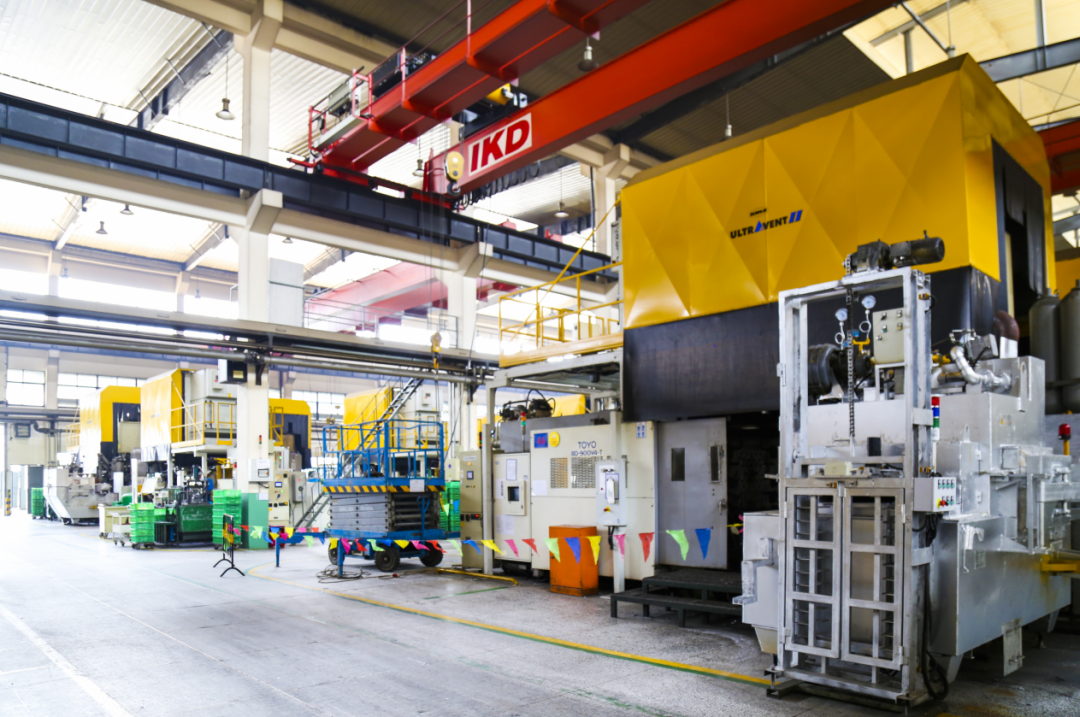
(Above image) Aikedi 5G fully connected factory. Chen Bingqu | Photo
Operational End:Strengthen the Aggregation Power of Full-Stack Industrial Collaboration
Create specialized robot industrial parks. Relying on the Yongjiang Science and Technology Innovation Zone and the manufacturing bases in Haishu District and Yuyao City, build humanoid robots and other characteristic industrial parks. Relying on Jiangbei District, Ningbo High-tech Zone, and Yinzhou District’s sensor technology resources and software computing power resources, construct industrial parks for core robot components and intelligent systems. Encourage state-owned wholly-owned platform companies, third-party professional operating institutions, and leading enterprises to act as professional operating主体, responsible for park investment attraction and operation, building a comprehensive industrial carrier integrating R&D, production, and verification.
Strengthen scenario-based standards and international rule output. Relying on Zhejiang Province’s standard internationalization special action, promote local standards to be upgraded to national and international standards, establish promotion funds, and publish multilingual technical white papers. Provide special subsidies to enterprises leading international standards, encouraging enterprises to participate in international standard formulation, enhancing Ningbo’s voice in global robot rule-making. Complement the construction of a cross-border mutual recognition pool for standards, prioritizing cooperation with Central and Eastern European countries on joint research projects, shortening mutual recognition cycles, and relying on Ningbo High-tech Zone’s open laboratories to provide “CNAS + SGS” dual-standard certification services, strengthening the support of institutional open tools.
Create a number of high-end industry exchange platforms. Organize enterprises to actively participate in global events such as the World Artificial Intelligence Conference, World Robot Conference, Global Developer Pioneer Conference, and National Robot Challenge, building global cooperation platforms and collaborative networks. Explore the development of nationally branded activities on artificial intelligence and robotics with Ningbo characteristics, enhancing the visibility and influence of the artificial intelligence and robotics industry ecosystem. Jointly open “Technology Open Days” with local leading enterprises to showcase core technologies such as precision machining of reducers and multi-sensor fusion to the public, strengthening the “Ningbo Intelligent Manufacturing” technology label. Actively carry out upstream and downstream docking activities to promote win-win cooperation among enterprises in the industrial chain.
Ecological End:Strengthen the Support Power of High-End Factor Resources
Attract and cultivate a group of artificial intelligence service providers. Leverage Ningbo’s advantage of gathering digital service providers, compile and publish the “Ningbo Artificial Intelligence and Robotics Service Provider Development Map,” focusing on attracting and cultivating a batch of model service providers, data service providers, and industry AI application solution enterprises, guiding existing service providers towards specialization and differentiation. Establish a tiered cultivation system for service providers, jointly forming an AI service provider application alliance with leading enterprises, promoting service providers to embed into humanoid robots, intelligent connected vehicles, and other scenarios, accelerating the cultivation of a batch of provincial-level “specialized, refined, unique, and new” service providers. Form a Ningbo artificial intelligence and robotics expert service team, supporting leading enterprises in jointly building AI service empowerment centers, enhancing the selection, display, and promotion of AI scenario cases.
Attract and cultivate a composite talent team in the industry. Supporting enterprises in attracting and cultivating a group of innovative leading talents with outstanding technological innovation capabilities and the ability to solve complex engineering technical problems, focusing on the development needs of the artificial intelligence and robotics industry. Support local universities in exploring the establishment of interdisciplinary programs related to embodied intelligence, accelerating the formation of a batch of composite talents with capabilities in artificial intelligence, mechanical engineering, automation, and other disciplines. Support school-enterprise cooperation in offering training courses, conducting scenario practice exchanges and specialized training, cultivating a group of professional talents with scenario innovation awareness and capabilities. Iteratively implement the “Yongjiang Talent Project,” innovating talent evaluation standards to attract high-end technical talents and composite management talents, filling the talent gap in the humanoid robot and AI fields.
Build a financial innovation platform. Establish an investment fund for the artificial intelligence and robotics industry, empowering technological innovation and commercialization, focusing on deepening cooperation with top domestic and foreign funds, and specifically supporting seed and startup projects in areas such as AI large models and core components of humanoid robots. Establish a patient capital cultivation mechanism covering the entire cycle of “technology R&D – pilot verification – scenario implementation” and a tiered exit channel, creating a characteristic fund ecosystem of “early investment, small investment, long-term investment, and new investment.” Smooth credit financing channels, linking banks, insurance, and other financial institutions to innovate and establish special products that adapt to industry characteristics. Optimize risk compensation mechanisms, establishing a first set of equipment insurance fund pool, complemented by intellectual property pledge risk compensation, reducing the cost of innovation and trial and error.
Text | Economic Committee of Ningbo Municipal Committee
Editor: Zhang Yilong