As global agriculture faces challenges, British Columbia is launching an agricultural technology revolution supported by artificial intelligence and innovation. The authorities, through the BC Agricultural Technology Innovation Center (BCCAI), announced an investment of over CAD 15.5 million aimed at promoting 19 agricultural technology projects and 9 skill training programs to enhance food security and regional economic vitality.
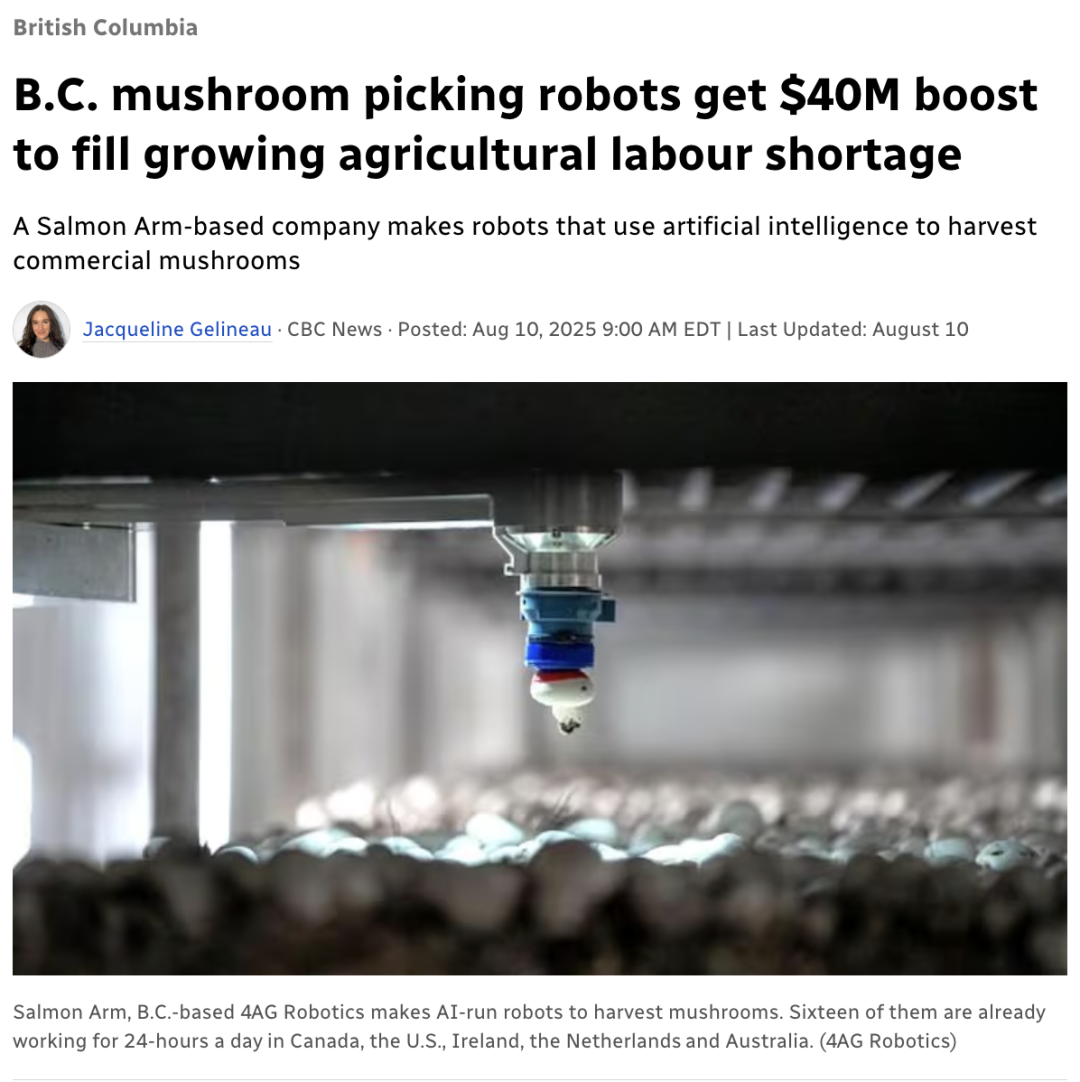
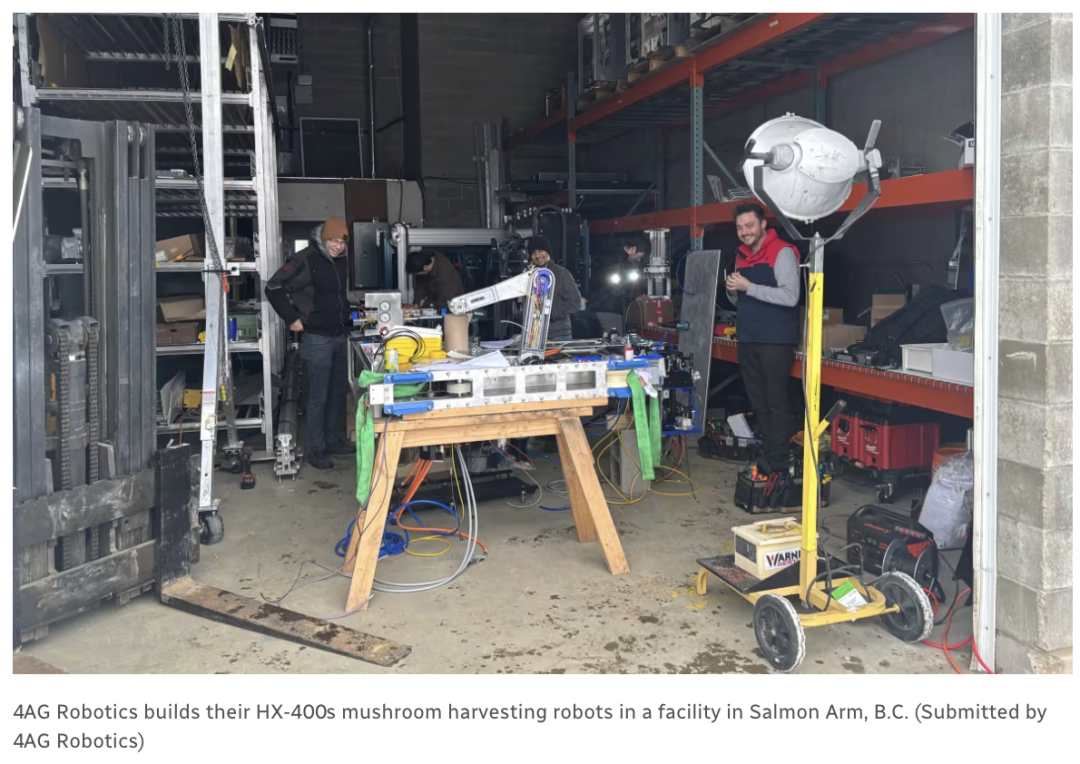
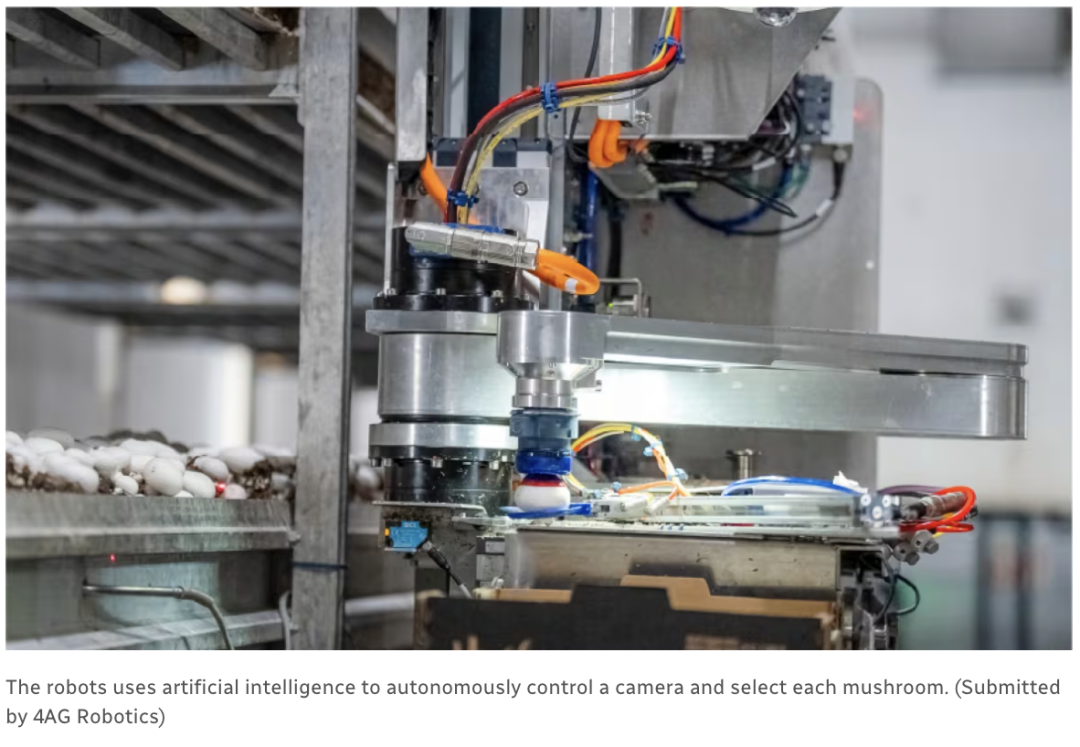
This initiative covers multiple areas, from smart greenhouses and AI robots to Internet of Things (IoT) systems, seaweed extraction, data security, and even Indigenous food sovereignty, touching nearly every aspect of the food production and supply chain. Among them, the AI mushroom picking robot project, a collaboration between 4AG Robotics from Salmon Arm and Champ’s Mushroom Farms, received approximately CAD 1.47 million in funding, aiming to increase yield by 15% through full automation and cut production costs in half.
Another notable case is Foxy Produce, which received about CAD 1.2 million to pilot a proactive air-insulated greenhouse technology, expected to reduce energy costs by half while creating 60 new jobs and approximately 30% revenue growth potential.
IoT and vertical farming also play a role in this initiative. AgriForest Bio-Technologies in Kelowna will receive about CAD 678,000 to implement an efficient IoT vertical cultivation system in greenhouses to promote seedling production and local supply. Surrey’s Argus Controls System will receive CAD 6.2 million to create a data-driven platform in controlled environment agriculture facilities to enhance crop yield and resource use efficiency. BeriTech will invest approximately CAD 708,000 to develop non-seasonal berry cultivation in a precisely controlled temperature environment year-round. Cascadia Seaweed in Sidney plans to invest about CAD 131,000 to study the application of seaweed extracts in greenhouse crops to support regenerative agriculture development.
Additionally, ChamberTrust received about CAD 395,000 to develop a high-security data system, including intellectual property protection and automated notarization, serving the agricultural technology industry.
The investments behind these projects are not only business opportunities but also a “talent reserve.” BCCAI stated that since its launch in 2022, it has created 76 jobs, promoted 32 projects, and trained 1,119 professionals; this new round of plans will add nearly 200 jobs and provide advanced skills training for over 800 individuals, covering horticulture, regenerative agriculture, data management, and agricultural business management.
Meanwhile, the “On-Farm Technology Adoption Program” jointly launched by the Canadian Ministry of Agriculture and British Columbia is also running concurrently. This program supports farmers in adopting technologies such as automation, robotics, and sensors to improve efficiency, address labor shortages, and enhance food safety. For example, Van Eekelen Farm in the Fraser Valley has introduced a machine learning-driven weeding robot, “Robot One,” significantly reducing reliance on labor and fertilizers; Sandhar Farms in Kelowna uses a platform fruit picker to improve safety and fruit integrity; and Camirlaney Farms has reduced losses of tuber crops through smart temperature-controlled storage equipment. This program is part of the federal and provincial government’s “Sustainable Canadian Agriculture Partnership” framework, aimed at accelerating the deployment of mature technologies in Canada through funding support.
This series of actions demonstrates British Columbia’s comprehensive layout in “smart agriculture”: from top-level policies (BCCAI) to grassroots technologies (farm applications), from AI and big data to traditional planting management; from supporting startups to assisting farmers with practical training, everything is in place. The government collaborates with universities and businesses, along with external experts, such as Wageningen University in the Netherlands, to promote technology exchange and cooperation, jointly researching precision agriculture and greenhouse technology in British Columbia.
As the uncertainty brought by climate change intensifies, the path towards intelligent and green agriculture becomes more urgent. At this critical moment, British Columbia leverages innovative technology to create scalable agricultural practice demonstrations. This not only means a more stable and environmentally friendly local food supply but also paves the way for future urban agriculture, Indigenous food sovereignty, and the cross-border integration of marine and land cultivation.
In this agricultural transformation driven by AI, robotics, and IoT, British Columbia is striving to become a global leader in agricultural technology—behind the prosperity lies a hopeful picture painted by the collision of technology and land.
Reference link:
https://www.cbc.ca/news/canada/british-columbia/ai-agriculture-b-c-1.7600813