The global fields of artificial intelligence and robotics are experiencing three waves of excitement: Beijing’s Yizhuang has become the focus of the world as the 2025 World Robot Conference opens, coinciding with the launch of the world’s first robot 4S store and themed restaurant; the Chinese Academy of Sciences has unveiled the world’s first intelligent breeding robot “Jier” capable of automatic hybrid pollination, pushing “AI + biological breeding” to the brink of industrialization; meanwhile, the EU’s “Artificial Intelligence Act” officially took effect on August 2, with the US and China simultaneously ramping up security reviews, marking a new landscape in global AI governance. These three main lines converge, outlining a hot August of “technology – application – governance” in resonance.
1. Yizhuang Heat Wave: The Debut of the World Robot Conference and the “Robot 4S Store”
From August 8 to 12, the 2025 World Robot Conference was held at the Beijing Yichuang International Exhibition Center, with an exhibition area exceeding 50,000 square meters for the first time, featuring over 200 domestic and international companies showcasing more than a hundred globally debuting new products. Unlike previous years, the conference for the first time brought “robot application scenarios” to the streets—the world’s first robot 4S store and themed restaurant opened simultaneously outside the venue, allowing consumers to purchase “maintenance packages” for home service robots just like buying a car, and experience hamburgers made by robot chefs in the restaurant.
The official main forum revealed that 2025 is referred to as the “Year of Embodied Intelligent Robot Models.” Wang Xingxing, CEO of Yushu Technology, bluntly stated that the field is still in the “1-3 years before the birth of ChatGPT,” with unified architecture, end-to-end training, and low-cost large-scale computing power being the three major focus areas for the next 2-5 years. Ni Guangnan, an academician of the Chinese Academy of Engineering, called for the establishment of an “AI + robotics” ecosystem, emphasizing that the synergy of “brain – eye – action” is essential for robots to truly “see and understand the world.” On the policy front, the Yizhuang Management Committee announced the establishment of a 10 billion yuan “Embodied Intelligence Industry Fund,” providing subsidies of up to 50 million yuan for key components, operating systems, and scenario demonstrations, with Beijing aiming to create a “global robotics industry highland.”
2. Field Revolution: The “Jier” Robot Redefines Biological Breeding
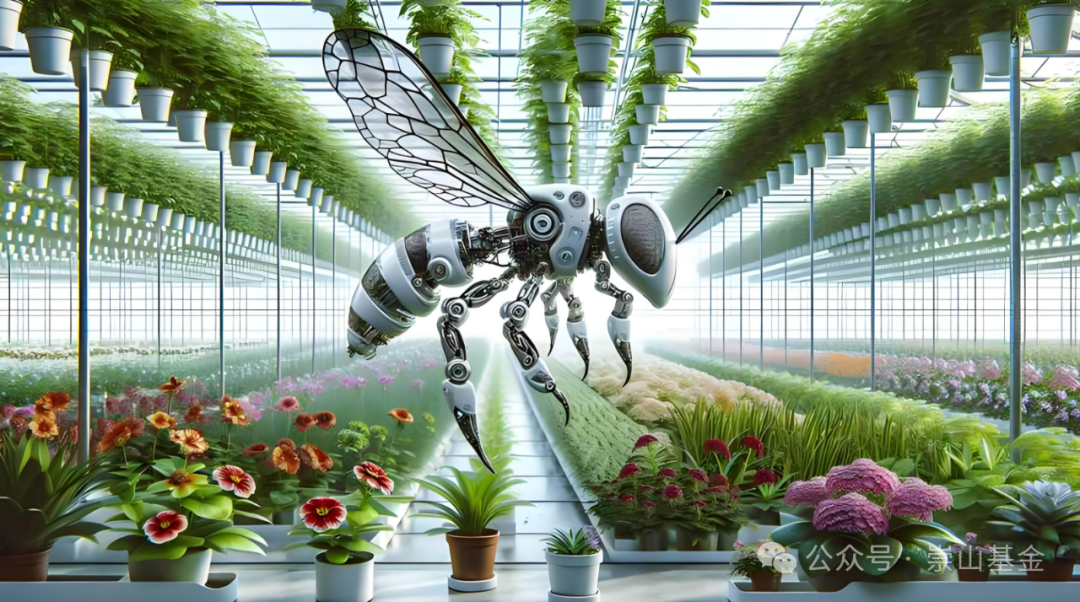
On August 11, the journal “Cell” published a milestone achievement from the Chinese Academy of Sciences team: the world’s first intelligent breeding robot “Jier” (GEAIR), capable of automatic cruising hybrid pollination, was officially unveiled. The research team used gene editing to transform the flower structure of crops such as tomatoes and soybeans into a “robot-friendly” style with exposed stigmas, combined with deep learning visual algorithms, allowing “Jier” to autonomously navigate in the field, identify floral organs, and perform precise pollination, reducing the labor cost of hybrid seed production for tomatoes by 25% and shortening the cycle by 30%.
The core of “Jier” is the concept of a “dual approach” of BT (biotechnology) + AI: crops are modified for robot compatibility, and robots accelerate crop breeding. This model is seen as a “dimensionality reduction attack” on traditional breeding giants like Monsanto, and is expected to address the long-standing reliance on manual de-pollination and high costs in hybrid rice, vegetables, and oilseed crops. The Institute of Genetics and Developmental Biology of the Chinese Academy of Sciences has partnered with Syngenta and Longping High-Tech to launch the “Ten Thousand Acres of Good Fields” plan, aiming to establish 100,000 acres of “unmanned breeding demonstration fields” in Hainan, Hubei, and Hebei by 2026, with an expected 40% reduction in domestic vegetable seed costs within three years, providing a powerful tool for China’s “seed industry turnaround.”
3. Rule Restructuring: The EU AI Act Takes Effect and Global Regulatory Race
If Beijing showcases “technological muscle,” Brussels simultaneously strikes with “regulatory heavy blows.” On August 2, the EU’s “Artificial Intelligence Act” officially took effect, becoming the world’s first comprehensive law regulating AI. The act categorizes AI systems by risk level into four categories: “minimal, limited, high-risk, and unacceptable,” with high-risk applications required to fulfill obligations of transparency, data governance, and human oversight, with violators facing fines of up to 7% of global annual revenue or 35 million euros.
Google and OpenAI have signed the “General Principles for Artificial Intelligence Practice,” committing to retain model training logs for 10 years for review. Meanwhile, the Cyberspace Administration of China announced a security review of the “remote shutdown backdoor” vulnerability in Nvidia’s H20 chip, requiring domestic cloud providers to complete the filing of domestic GPU alternatives within 30 days; the US Department of Commerce is also planning to expand export restrictions on AI chips to China, with implementation as early as September. UN Secretary-General Guterres highly praised the “World Artificial Intelligence Cooperation Organization” initiated by China, which has already seen 28 countries confirm their participation, with its headquarters set to be located in Shanghai. As technology races ahead, global AI governance is shifting from “self-governance” to “multipolar consultation.”
Conclusion: Three Waves Converge, Defining the Next Decade
The mechanical arms in Yizhuang, the “Jier” in laboratories, and the legislative texts in Brussels together outline three major keywords for the artificial intelligence and robotics industry—”embodied intelligence,” “biological integration,” and “rule reconstruction.” As robots step out of factories and into restaurants and fields, as AI begins to rewrite the fate of a seed, and as sovereign nations set legal boundaries for algorithms, we stand at a transformative singularity more profound than the steam engine or the internet. In the next decade, those who possess scenarios, data, and governance discourse power will hold the authority to define the future.