
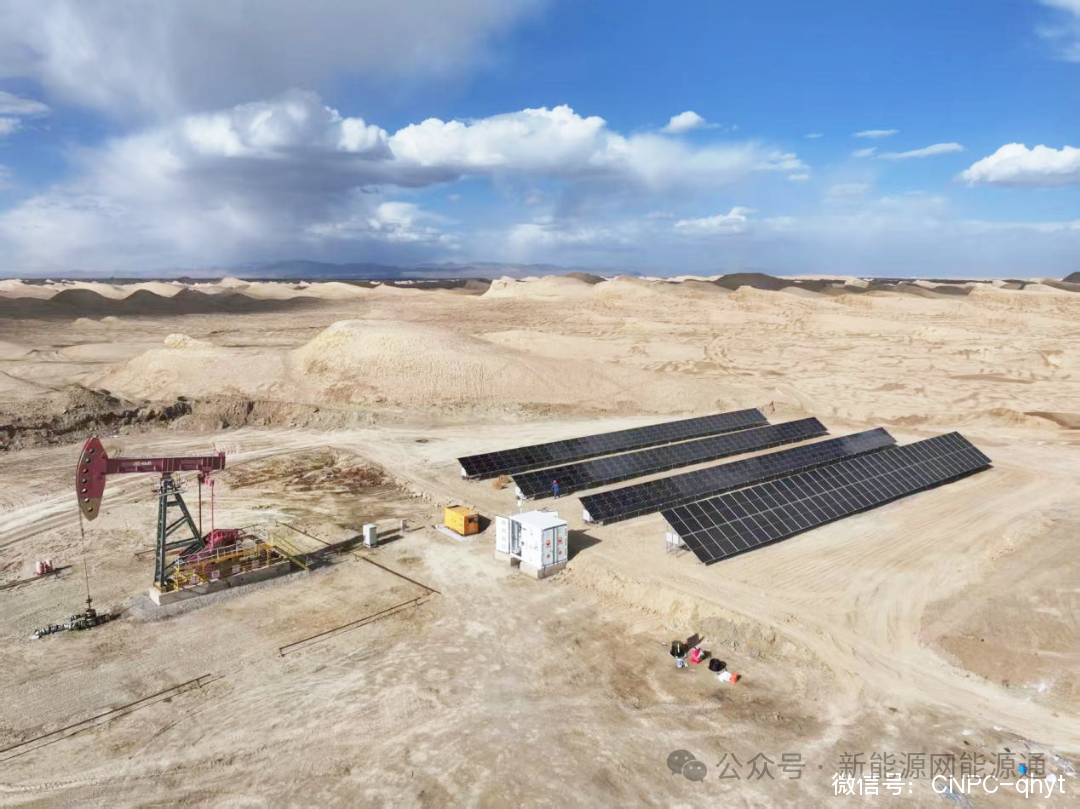
Recently, the first perovskite component network microgrid at Qinghai Oilfield was successfully implemented at the Xian Dong 8 well of the Gas Production Plant No. 2. This zero-carbon demonstration project is led by the Oil and Gas Process Research Institute, constructed by Gas Production Plant No. 2, and supported by the Shenzhen New Energy Research Institute for key technologies and equipment. The total installed capacity of photovoltaic systems reaches 101.8 kWp, marking another technological breakthrough for Qinghai Oilfield in the field of green low-carbon transformation.
Technician Shan Wei from the Oil and Gas Process Research Institute stated that this microgrid project achieves stability and low carbon energy supply through a multi-energy complementary model of “photovoltaics + energy storage + backup power generation”:
- Photovoltaic Component Configuration integrates 72 monocrystalline silicon photovoltaic components (installed capacity 51.4 kW) and 480 perovskite photovoltaic components (installed capacity 50.4 kW), with the two types of components working in coordination to maximize the utilization of plateau sunlight resources;
- Energy Storage and Backup Assurance combines lithium iron phosphate energy storage batteries with diesel generator equipment to construct a DC microgrid system — the energy storage batteries can store excess power during the day, while the diesel equipment serves as an emergency backup under extreme conditions, ensuring uninterrupted power supply;
- Intelligent Control Core achieves seamless switching between photovoltaics, energy storage, and backup power through intelligent control devices, solving the energy “time-space mismatch” problem and providing 24-hour stable power for core production equipment such as oil pumps.
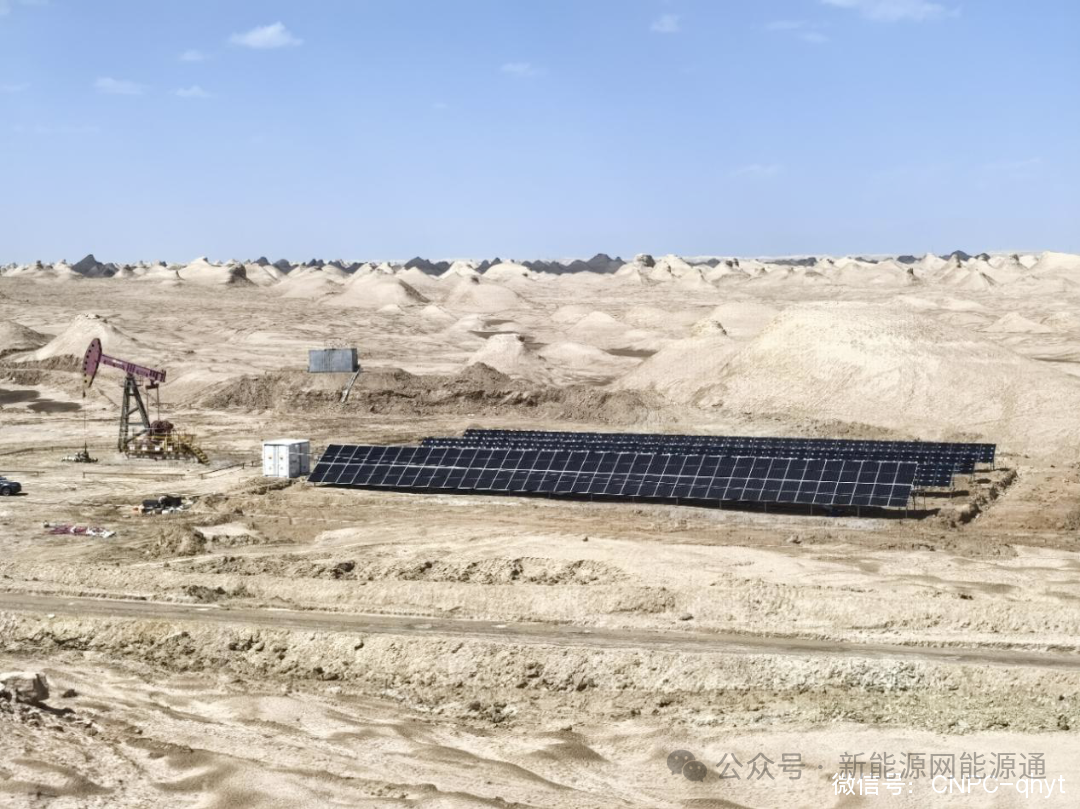
As the core innovation of the project, the technical characteristics of perovskite photovoltaic components have become key to breaking through traditional power supply bottlenecks, with advantages particularly prominent in the complex lighting environment of the plateau:
- High Conversion Efficiency and Authoritative Certification The perovskite components have been certified by the National Photovoltaic Industry Measurement and Testing Center, with a laboratory steady-state photoelectric conversion efficiency of 27.32%, placing their power generation efficiency at an advanced level in the industry;
- Super Strong Low Light Response Capability The low light response speed is three times faster than that of traditional monocrystalline silicon components, and the spectral absorption range is broader — in weak light environments such as early mornings, evenings, and rainy days on the plateau, traditional monocrystalline silicon components experience a significant drop in power generation, while perovskite components can effectively fill this production gap, truly achieving “all-weather power supply” for the microgrid;
- Collaborative Complementarity Enhancing Efficiency The project forms a division of labor model where “monocrystalline silicon is responsible for efficient power generation in strong light, and perovskite complements weak light production capacity”. With the support of the energy storage system, the overall utilization efficiency of photovoltaic resources is significantly improved, laying a solid energy foundation for the continuous and stable operation of oil pumps.
After the project was put into operation, the energy supply structure at the well site underwent a fundamental transformation. “Now we rely on photovoltaics during the day, use energy storage at night, and the diesel generator only serves as an emergency backup, with renewable energy usage accounting for 90%. The operation of the well site is now more environmentally friendly and economical,” said Mei Xuefeng, head of the Equipment Infrastructure Center of Gas Production Plant No. 2. He calculated that based on a system lifespan of 25 years, the average annual power generation could reach 180,900 kWh, reducing diesel consumption by 36 tons and cutting carbon dioxide emissions by 113.22 tons each year, with significant economic and environmental benefits.


 For more information, please click below to follow our official account!