 Banner | Promotion
Ferroelectricity is a spontaneous polarization state exhibited by dielectrics, commonly found in materials with lower symmetry. Fluids or highly mobile soft materials typically exhibit high symmetry, thus conflicting with the requirements for ferroelectricity. Introducing strong polarity or ferroelectricity is a focus in the field of new liquid crystal materials, which is significant for the development of novel flexible optoelectronic devices, yet it has consistently posed challenges in liquid crystals and soft matter fluid materials. Compared to traditional liquid crystals and soft materials, ferroelectric nematic liquid crystals possess various revolutionary properties, including ultra-high dielectric constant, strong nonlinear optical response, low voltage drive, and high fluidity, providing new possibilities for developing advanced flexible optical and electrical devices.
Recently, the research group of Huang Mingjun and Satoshi Aya at the South China University of Technology published a review article titled “Research Progress on Ferroelectric Nematic Liquid Crystals” in the journal Liquid Crystals and Displays (ESCI, Scopus indexed, core Chinese journal), 2023, Issue 1. The article first introduces the historical development of ferroelectric nematic liquid crystals, then elaborates on the relationship between ferroelectric nematic liquid crystals and molecular structure, physical topological structure, and characteristic properties, and finally summarizes and looks forward to the future application prospects of ferroelectric nematic liquid crystals, especially their enormous potential in new storage devices, flexible high-end optoelectronic devices, and nonlinear optics.
Over a Century of Ferroelectric Nematic Liquid Crystals
As early as 1916, the renowned physicist Born proposed the possibility of ferroelectricity existing in nematic liquid crystals, suggesting that the dipole moment μ of individual liquid crystal molecules should be sufficiently strong for their dipole-dipole interactions to withstand thermal fluctuations:
V is the molecular volume, kB is the Boltzmann constant, T is the temperature. For a typical liquid crystal system (V=1 nm<sup>3</sup>, ε=10), it is calculated that when μ>6D, ferroelectric order can be stable at room temperature.However, the ferroelectric nematic order proposed by Born (as shown in Figure 1 (b)) is distinct from the general mechanism by which nematic liquid crystals form, and it was not accepted at the time. Experimentally, this special ferroelectric polar state has not been observed. Although rod-like liquid crystal molecules have longitudinal or transverse dipoles, their head-tail equivalence and free rotation around the molecular long axis can respectively prevent longitudinal and transverse polarization, resulting in liquid crystals generally exhibiting non-polar characteristics (as shown in Figure 1 (a)).
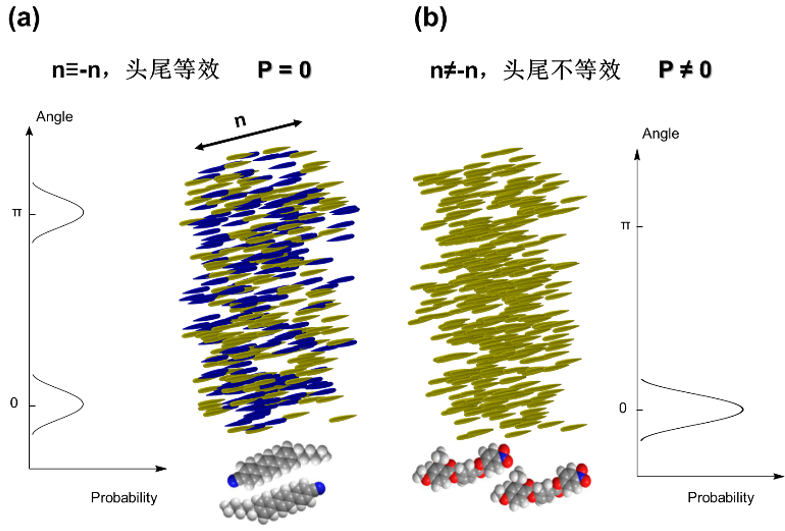
Figure 1: (a) Molecular arrangement in traditional nematic phase; (b) Molecular arrangement in ferroelectric nematic phaseFigure source: Liquid Crystals and Displays, 2023, 38(1):77-94. Fig.1
It wasn’t until 1974 that ferroelectricity was first discovered in liquid crystal materials, specifically in chiral smectic liquid crystal materials. Over the next 30 years, various series of ferroelectric smectic liquid crystal materials were established and developed, accumulating a wealth of important foundational theories in condensed matter physics and application development technologies for ferroelectric liquid crystals. Meanwhile, further thoughts along Born’s line of reasoning led to the belief that in polar polymers, the dipole moments of individual monomers are highly correlated and aligned along the polymer chain, possessing extremely high dipole moment values, making them one of the most promising materials for achieving polar ordering. On the other hand, many scholars have constructed simple models to theoretically analyze dipole interactions using mean field theory. In 1998, Japanese scientists Watanabe et al. observed ferroelectricity in cholesteric phases of the PBLMG-BA solution system.
In 2017, researchers Nishikawa from Kyushu University and Mandle from York University in the UK reported a strongly polar nematic liquid crystal DIO and RM734 (molecular structures shown in Figure 2 (a)), which exhibited an extremely high dielectric constant (up to 104 under 103 Hz, Figure 2 (b)), overturning the basic understanding of liquid crystals at that time. The DIO and RM734 molecules displayed similar textures, as shown in Figure 2 (c), exhibiting traditional nematic Schelieren textures at high temperatures and a novel sandy texture at low temperatures. In 2020, the Clark team at the University of Colorado first demonstrated through electro-optical experiments that the low-temperature nematic phase formed by RM734 is precisely the ferroelectric nematic liquid crystal predicted by Born.
NF phase is a three-dimensional uniaxial nematic phase with spontaneous, reorientable local polarization characteristics, with the polarization direction parallel to the director vector.
Its polarization density can reach 6μC/cm2, the largest ever measured in fluid or glass materials.
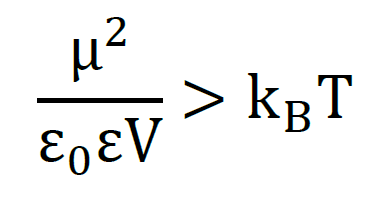
Figure 2: (a) Molecular structures of DIO and RM734; (b) Dielectric spectrum of DIO; (c) Polarized light micrograph of DIO; (d) Freedericksz twist transition in ferroelectric domains of RM734 with opposite polarity orientationFigure source: (a)(b)(c) Advanced Materials, 2017, 29(43): 1702354. Fig.1, Fig.2, Fig.3; (a)(d) Proceedings of the National Academy of Sciences of the United States of America, 2020, 117(25): 14021-31. Fig.1, Fig.2What Molecular Structures Favor the Formation of NF Phase?
In 2017, Mandle et al. preliminarily explored the relationship between molecular structure and NF phase: short terminal chains (ethoxy or methoxy) favor the formation of NF phase; terminal nitro groups are essential for the NF phase; fluorine groups can enhance the thermal stability of liquid crystals; using other terminal polar groups (nitrile, perfluorinated sulfonyl) or removing/reversing carboxyl esters (reducing dipole moment) is unfavorable for the formation of NF phase; lateral “bulky” groups are needed to exhibit NF phase. In 2021, Mandle et al. further synthesized several liquid crystal molecules structurally similar to RM734 and found that the NF phase is extremely sensitive to structural changes. To explore a more universal relationship between the formation of NF liquid crystals and molecular structure, we designed and synthesized nearly 50 liquid crystal small molecules (see Figure 3 (a)), which differ significantly in chemical structure, with nearly half of the molecules exhibiting the NF liquid crystal state. Using density functional theory (DFT) and machine learning, we revealed for the first time the universal molecular features for the formation of the NF phase (as shown in Figure 3 (b)~(h)): rod-like molecular dipole moment μ needs to reach 9D, the direction of the dipole moment needs to deviate from the main molecular axis by a certain angle (10°~30°), and the aspect ratio of the molecule should be less than 2.5.
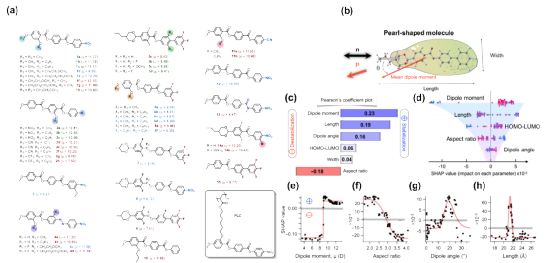
Figure 3: (a) Synthetic molecular library; (b)-(h) Machine learning-assisted analysis determining molecular parameters for NF phase formationFigure source: Science Advances, 2021, 7(17): eabf5047. Fig. 1, Fig.2NF Liquid Crystal Physical Topological Structure
Revealing the topological structure of NF phase is crucial for understanding the relationship between structure and properties. Defect structures not present in the N phase have been observed in the NF phase, indicating that the symmetry of the NF phase is lower than that of ordinary N phase. Mertelj et al. proposed that the structural feature of the NF phase is a periodic expansion modulation of the director vector as shown in Figure 4, however, this has not been experimentally verified and has not been widely accepted by other scholars. We believe that this structural model may exist in some intermediate states of NF phase formation, rather than in the fully developed NF phase structure.
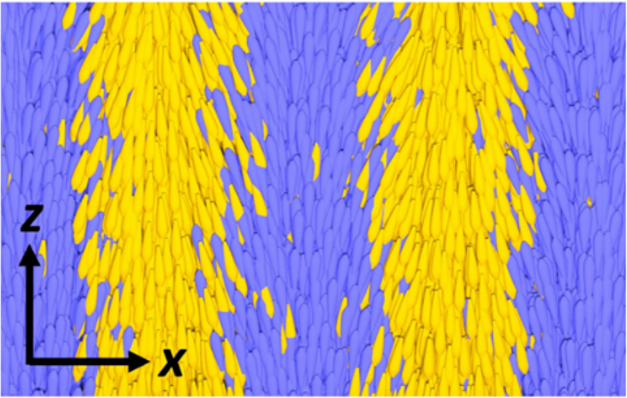
Figure 4: Schematic diagram of expanded nematic phaseFigure source: Physical Review X, 2018, 8(4): 041025. Fig.11
So far, the detailed structure of the NF phase remains unclear, and there is still debate on how this structure evolves from a high-temperature non-polar N phase with a uniform director field. We comprehensively considered several possible director field models for the NF phase: two wall defect types; Bloch type; and two Néel types (Figure 5 (a)). Further combined with simulations (see Figure 5 (b)), it was found that other models, including Bloch type defects, also differ significantly from the textures observed by POM, and only the Néel I type model can well reproduce the textures observed by POM under various conditions. Overall, the Néel I type model is close to the “true” structure of the NF phase.
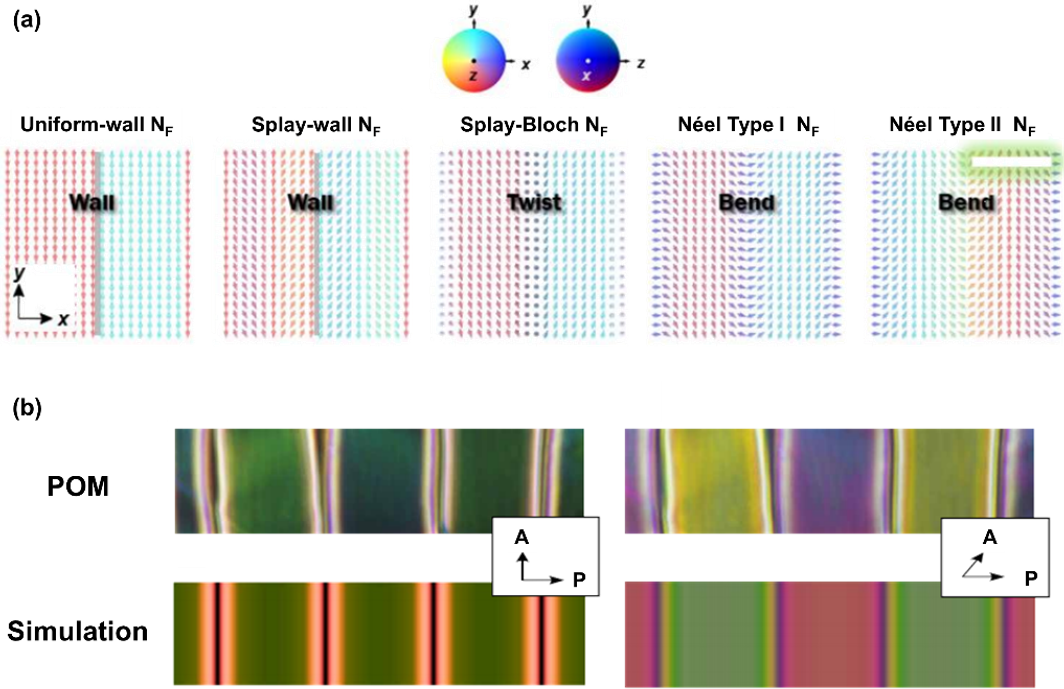
Figure 5: (a) 3D model structures of N phase and NF phase; (b) POM and simulation images of NF phase stripe texturesFigure source: Science Advances, 2021, 7(17): eabf5047. Fig.4NF Liquid Crystal Characteristic Properties
1. Huge Dielectric Constant
Due to polar ordering, the response of NF phase to electric fields is much higher than that of N phase. The two new NF phases, RM734 and DIO, exhibit enormous dielectric constants, an order of magnitude higher than those of traditional crystalline materials. The NF phase liquid crystal materials in our molecular library also have ultra-high dielectric constants at 1 kHz, making them the highest dielectric materials observed in soft matter, comparable to inorganic ferroelectrics or two-dimensional materials.
2. Anomalous Viscoelasticity
To understand the intrinsic reasons driving the N~NF phase transition, Mertelj et al. measured the fluctuations of the director vector in the orientation direction near the N~NF phase transition using dynamic light scattering. Figure 6 (a) shows that the value of the expanded elastic constant K1 near the N~NF phase transition is abnormally low. The twist elastic constant K2 and bend elastic constant K3 slowly increase as the temperature decreases. Furthermore, the rotational viscosity γ1 sharply increases near the phase transition (Figure 6 (b)). Mandle et al. measured the elastic constants of RM734-CN, which does not have the NF phase, and compared them with RM734. As shown in Figure 6 (c): at high temperatures, the expanded elastic constants K1 of both materials are comparable, and the expanded elastic constant K1 of RM734-CN remains nearly constant throughout the N phase temperature range; however, RM734 experiences a dramatic decrease in the expanded elastic constant K1 as it approaches the N~NF phase transition. Figure 6 (d) shows that the expanded viscosity of RM734 sharply increases before the N~NF phase transition, indicating that the polarity in the NF phase begins to significantly increase from a transitional state before the phase transition; while RM734-CN exhibits a classic Arrhenius trend.
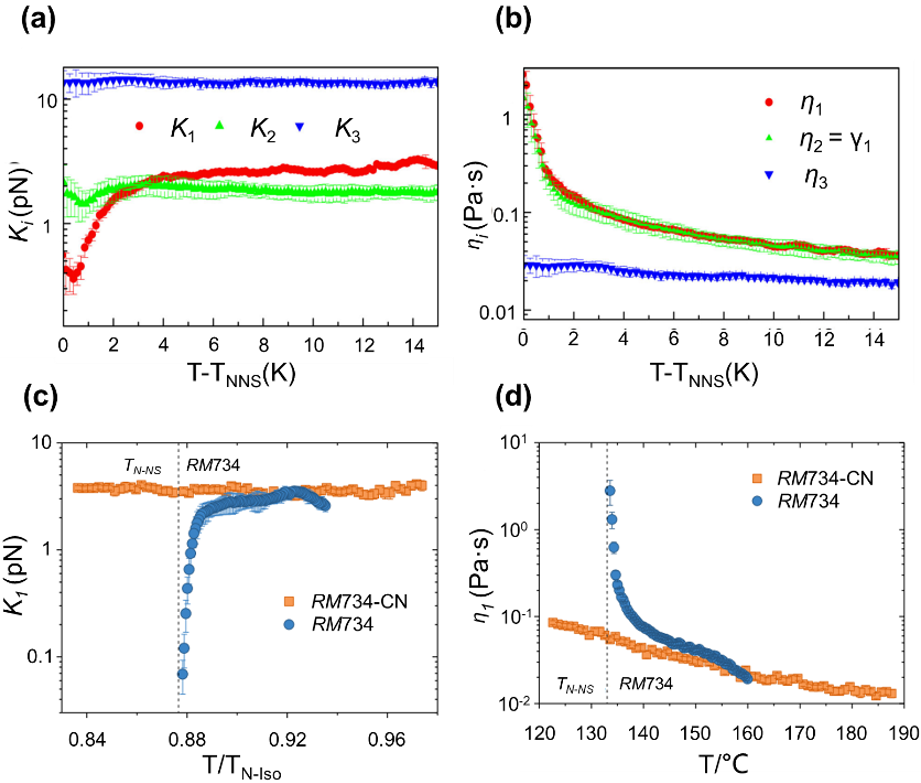
Figure 6: Temperature dependence of the elastic constant Ki and viscosity ηi of RM734 near the N-NF phase transition; (c) Elastic constants of RM734 and RM734-CN; (d) Expanded viscosity of RM734Figure source: (a)(b) Physical Review X, 2018, 8(4): 041025. Fig.7; (c)(d) Nature communications, 2021, 12(1): 1-12. Fig.3
3. Typical Ferroelectric P-E Hysteresis Loop
The electric hysteresis loop is one of the important characteristics of ferroelectric materials and is a crucial basis for determining whether a material possesses ferroelectricity. To compare the polarization reversal responses of DIO and RM734, Nishikawa et al. tested the P-E hysteresis loops of DIO and RM734 under the same conditions. Both exhibited the typical parallelogram-shaped P-E hysteresis loop of ferroelectric materials.
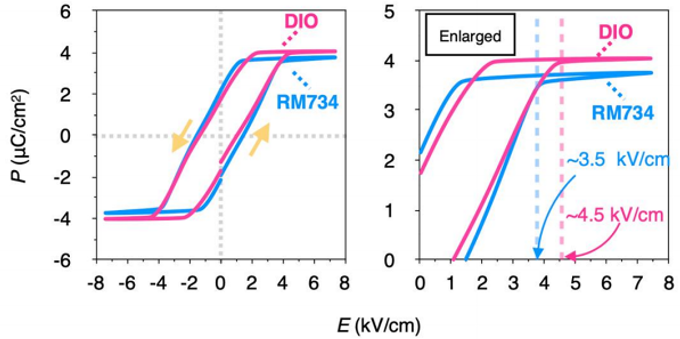
Figure 7: P-E hysteresis loops of DIO and RM734Figure source: Advanced Materials, 2021, 33(35): e2101305. Fig.S10
4. High Nonlinear Optical Response
Second harmonic generation (SHG) can only be observed in structures without inversion symmetry, particularly in polar structures, hence SHG can be used to distinguish between N and NF liquid crystals. Figure 8 (a) shows the trend of SHG of the N~NF phase with temperature, where no SHG signal was detected in the N phase, while the SHG signal sharply increases as the temperature decreases to the NF phase. Figure 8 (b) is a schematic diagram of the nonlinear coefficients of NF phase liquid crystal molecules in our synthetic molecular library versus dielectric constants, with these NF liquid crystal molecules exhibiting high nonlinear coefficients. Since SHG is a coherent optical interaction, it can be detected by interfering the second harmonic of the sample with that of the reference sample. Second harmonic interference (SHG-I) is the only technique capable of detecting polar characteristics in loose fluids and is sensitive to polar direction. To monitor the polarization process and visualize the polar structure, Figure 9 (a) is a schematic diagram of the optical path of our constructed SHG-I microscopic system, and Figure 9 (b) is the polarization structure of NF liquid crystal detected using this optical path system, where the two adjacent regions have opposite phases, indicating that adjacent regions possess opposite spontaneous polarizations.
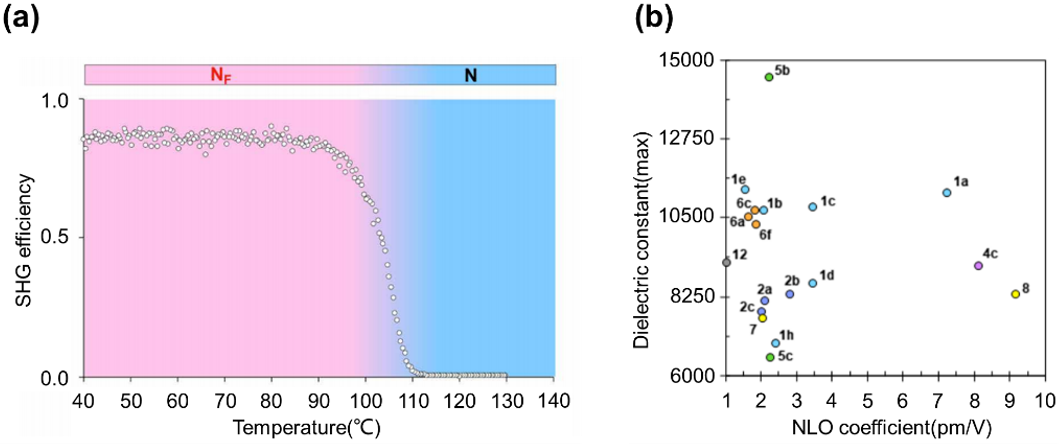
Figure 8: (a) SHG curves of N and NF phases; (b) Schematic diagram of dielectric constants and nonlinear coefficients of NF phase in the synthetic molecular libraryFigure source: Science Advances, 2021, 7(17): eabf5047. Fig.5, Fig.S9
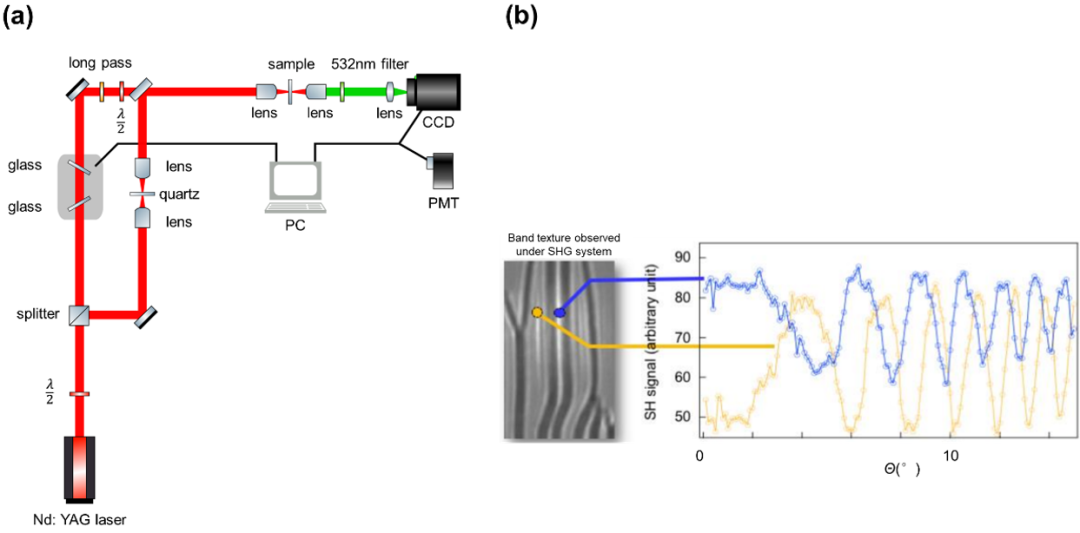
Figure 9: SHG-I microscopic system, (a) Schematic diagram of the optical path; (b) SHG microscopic image and interference curveFigure source: (a) Journal of the American Chemical Society, 2021, 143(42): 17857-61. Fig.S23; (b) Science Advances, 2021, 7(17): eabf5047. Fig.S8, Fig.7
5. Rapidly Switchable Electric Field Response
In 2020, the Clark team observed the electro-optical behavior of RM734 using polarized light microscopy and developed an electro-optical method to determine ferroelectricity in nematic phases. The experiment consisted of two parts: the first was to align the polarization parallel or antiparallel to the direction of the DC electric field, observing polarization reversal when polarization is antiparallel to the DC electric field; the second was to observe the state of polarization switching maintained due to ferroelectricity. We utilized the electro-optical method developed by the Clark team to detect the ferroelectricity of our synthesized liquid crystal molecules. As confirmed by the Clark team in the NF liquid crystal RM734, we also observed the nucleation process of reverse domains, as shown in Figure 10. Meanwhile, we observed similar nucleation processes in the NF liquid crystal materials we synthesized.
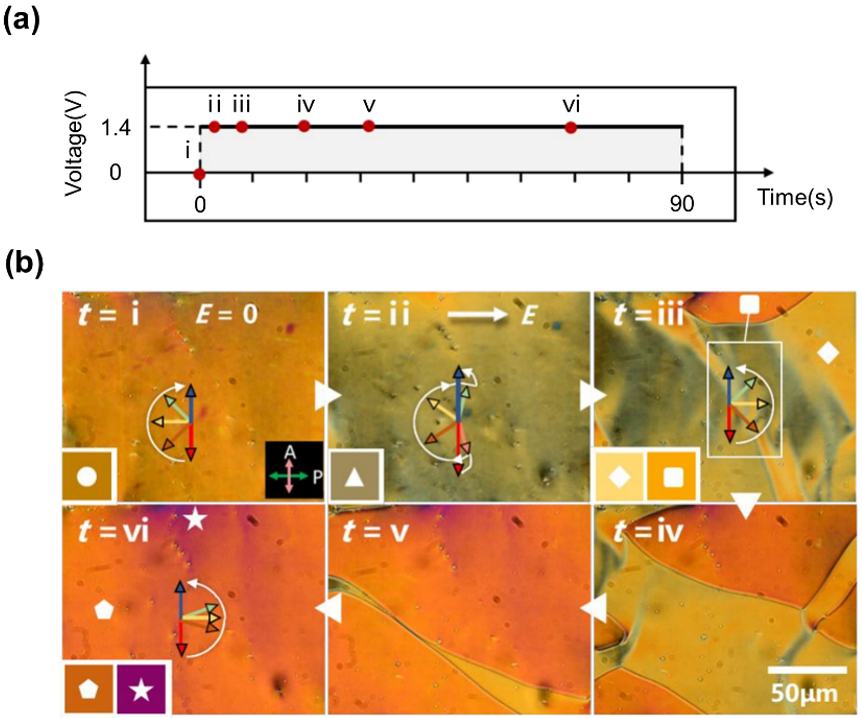
Figure 10: Electro-optical evidence of ferroelectricity in RM734 observed in POMFigure source: Journal of the American Chemical Society, 2021, 143(42): 17857-61. Fig.S10Summary and Outlook
From 1916 to 2017, the journey of ferroelectric nematic liquid crystals spans over a century from conception to discovery, opening a new chapter in condensed matter science and technology. A unique member has been added to the broad family of solid ferroelectrics, featuring high fluidity, high dielectric response, and high nonlinear optical response. There are broad application prospects in new storage devices, flexible high-end optoelectronic devices, and nonlinear optics. So far, research on ferroelectric nematic liquid crystals is still in its infancy, and many key issues remain to be overcome. The structure and properties of such liquid crystal materials are very special and differ significantly from traditional liquid crystal materials, overturning people’s understanding of traditional liquid crystal materials, and our understanding of the physical properties of such liquid crystal materials is extremely limited. The origin of polarity, its structure, and phase formation mechanisms remain unclear and are still debated, and the relationship between their structural evolution paths and traditional nematic liquid crystals needs further exploration. Ferroelectric nematic liquid crystals offer a wide range of physical effects to explore, from the behavior of topological defects to surface anchoring, responses to electromagnetic and flow fields, interactions between bound and free charges, field-controlled fluid dynamics, field-order coupling, and interactions between polarity and chirality. Mixed materials involving ferroelectric nematic liquid crystals, such as polymer stabilization, polymer dispersion, and liquid crystal elastomers, will also be key areas of research. Ferroelectric nematic liquid crystals are poised to be one of the most promising and valuable new materials in the future.
Paper Information
Zhao Xiuhu, Huang Mingjun, Satoshi AYA. Research Progress on Ferroelectric Nematic Liquid Crystals [J]. Liquid Crystals and Displays, 2023, 38(1):77-94.
https://cjlcd.lightpublishing.cn/thesisDetails#10.37188/CJLCD.2022-0130Corresponding Author Introduction
Huang Mingjun, Distinguished Researcher and PhD Supervisor at the South China University of Technology, Institute of Advanced Soft Matter Science and Technology, School of Frontier Soft Matter. He obtained his bachelor’s degree from Peking University in 2010, his PhD from the University of Akron in 2015, and conducted postdoctoral research at MIT from 2016 to 2019. He is currently focused on the synthesis design, physical structure, and performance characterization of soft matter flexible displays, optics, electronics, and energy storage materials, concentrating on liquid crystals, polyimides, and polymer electrolyte materials. He has published over 80 SCI papers, with his work published as the first or corresponding author in journals such as Science, Nat. Chem., Proc. Natl. Acad. Sci. U.S.A., Sci. Adv., J. Am. Chem. Soc., Energy Environ. Sci., Angew Chem. Int. Ed.
E-mail: [email protected]

Satoshi Aya (谢晓晨), Distinguished Researcher and PhD Supervisor at the South China University of Technology, Institute of Advanced Soft Matter Science and Technology, School of Frontier Soft Matter. He obtained his PhD from Tokyo Institute of Technology in 2014; from April 2014 to August 2015, he worked as a research engineer at Hitachi High-Technologies Corporation; from September 2015 to March 2017, he was a special researcher at RIKEN CEMS; from April 2017 to March 2019, he was a basic science special researcher at RIKEN CEMS. His main research focuses on the fundamental physics of soft matters such as liquid crystals and colloids, ordered control, and functional application development. He has rich experience in liquid state physics, surface physics, viscoelastic physics, optical experimental physics, characterization of interfacial microstructures, and theoretical calculations of structural energy, as well as artificial design, preparation, and characterization of colloidal particles and topological defects. His research results have been published in internationally renowned journals such as Phys. Rev. Lett., Sci. Adv., Nat. Commun., Adv. Mater., Proc. Natl. Acad. Sci. USA., Adv. Mater. Interfaces, J. Am. Chem. Soc., Appl. Phys. Lett. with over 60 SCI journal papers, including nearly 40 papers as corresponding author/first author.E-mail: [email protected]
Welcome to submit promotional articles to our research group
Please scan the code to contact the duty editor

 Banner PromotionSupervised by: Zhang Ying, Zhao YangEditor: Zhao Wei
Click Here 👇 Follow Me
Click[Looking], to receive our content updates in a timely manner