Intelligent Wireless, Internet of Everything
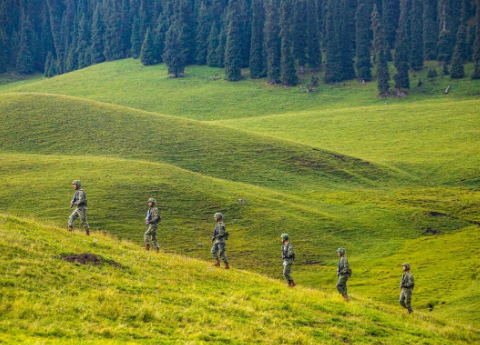
The terrain in border areas is complex,
with mountains, canyons, jungles, and deserts interwoven.
Traditional communication often falls into the
“weak signal, slow transmission, and inability to connect” dilemma:
Personnel on duty in remote locations face “information isolation”,
with feedback on emergencies delayed by over 30 minutes;
data is not interoperable between camps, making resource sharing difficult;
monitoring images are choppy, and transmission rates are low,
leading to untimely situational awareness.
Wireless self-organizing network technology, with its
“full coverage, high-speed interconnection, and intelligent collaboration” core advantages,
is driving the information system in border areas from
“dispersed isolation” to “interconnected communication”,
establishing a new pattern of “digital, integrated, and intelligent” border defense.

Three Core Pain Points in Border Information Construction
For a long time, terrain and traditional communication limitations have constrained the effectiveness of border management:
1. Many “communication blind spots”:With a long border line and complex terrain, mountains obstruct signal coverage from traditional base stations, leaving about 30% of duty points in communication blind spots. A patrol team once could not report an emergency border crossing due to lack of signal in a canyon;
2. Information transmission is “slow”:Data systems in various camps and duty points operate independently, requiring manual aggregation and transmission of information. Personnel duty data and material support information are shared with delays, with an average response time of 40 minutes from discovery to command center response;
3. On-site monitoring is “unclear”:Monitoring in remote locations relies on narrowband transmission, resulting in low resolution and severe lag. In nighttime or adverse weather conditions, it becomes “unclear and indistinguishable”, making it difficult to accurately assess the situation on-site.

Self-organizing networks empower border information
with four major breakthroughs
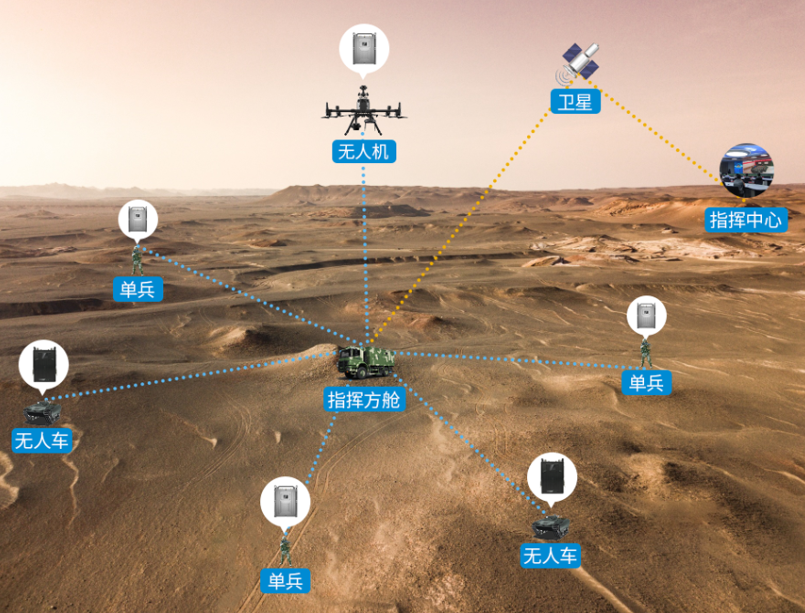
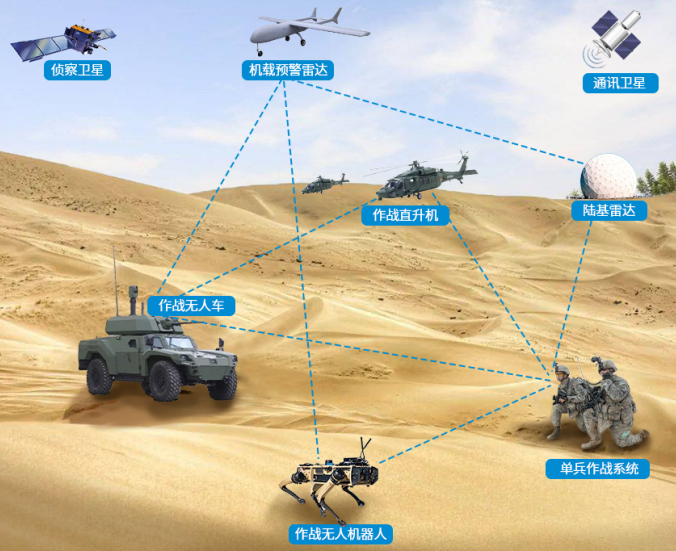
Wireless self-organizing networks are tailored to the characteristics of border scenarios, establishing a “space-ground-person” three-dimensional communication network to precisely address the three major pain points:
Multi-hop relay for full coverage, eliminating communication blind spots
Utilizing a “fixed base station + portable relay + drone relay” three-tier networking model: deploying high-power self-organizing base stations at border high points (with a coverage radius of 5km, supporting multi-hop cascading) to build a backbone communication network; personnel on duty carry portable terminals (weight ≤ 1.5kg, battery life ≥ 12 hours) that automatically form mobile nodes while patrolling; for remote canyons and deserts, drone relay platforms (elevating 200 meters, coverage radius 8km) fill the blind spots. A certain border defense unit reduced communication blind spots from 30% to below 5% using this model, allowing patrol teams to transmit their location and on-site images in real-time from any point.
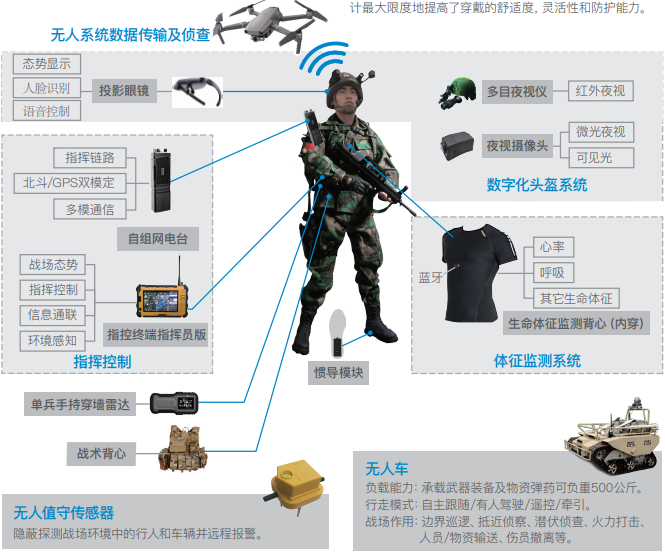
Focusing on wireless communication, connecting the world
Data interconnection and sharing, breaking down information islands
Deploying multi-protocol fusion gateways to connect the duty management systems, material support systems, and monitoring systems of various camps, achieving “one-time data collection and full-domain sharing”. Patrol logs and abnormal situations reported by personnel through portable terminals are automatically synchronized to the command center display and relevant camps; inventory and equipment status information in the camps are updated in real-time, reducing the response time for demand applications and allocations from 2 hours to 15 minutes. After introducing this system, a certain border camp improved cross-unit collaboration efficiency by 70% and reduced redundant statistical work by 60%.
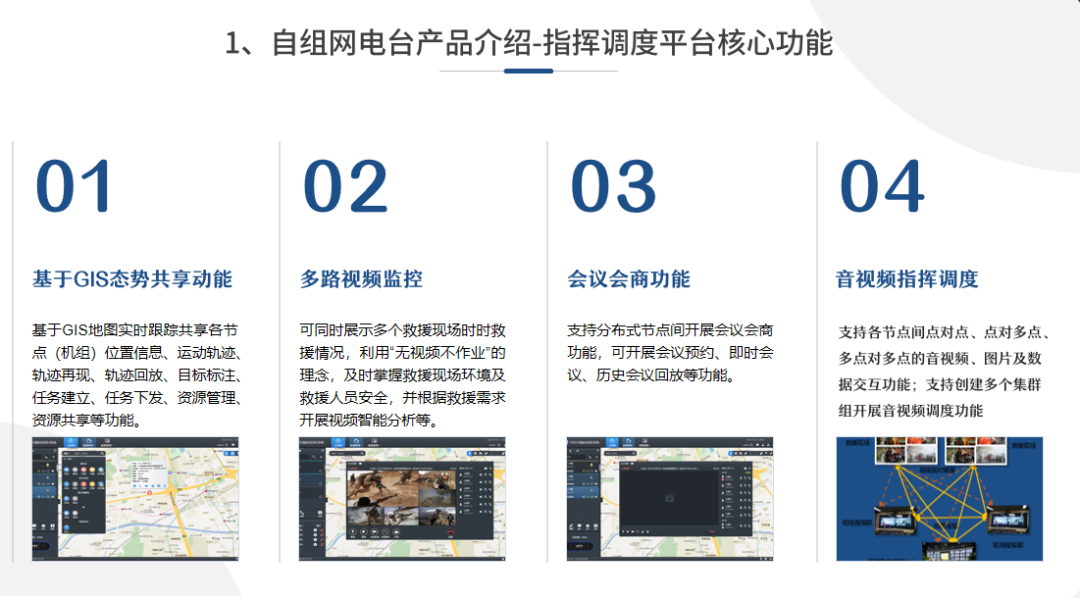
High-definition real-time monitoring, accurately grasping the situation
Relying on self-organizing networks with 50Mbps high-speed bandwidth, supporting real-time transmission of 4K high-definition video. Deploying intelligent monitoring cameras (with infrared night vision and motion detection capabilities) at key border points, images are smoothly transmitted back to the command center via self-organizing network links; the law enforcement recorders worn by personnel can also upload videos in real-time, achieving a dual image fusion of “ground monitoring + personnel perspective”. Even in sandstorms, rain, and snow, the video transmission packet loss rate remains ≤3%, allowing the command center to clearly grasp the on-site dynamics and provide accurate decision-making support.
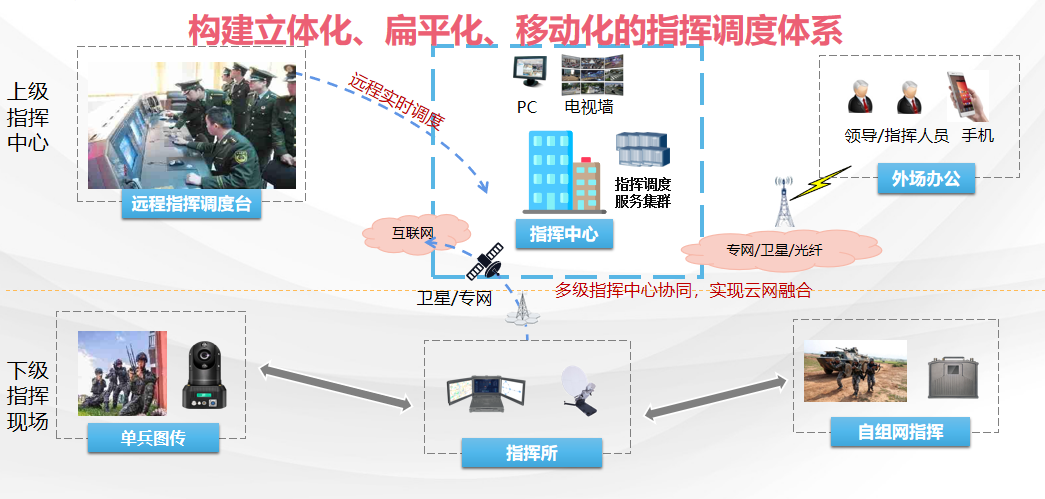
Rapid response and coordination, enhancing handling efficiency
Establishing a closed-loop response mechanism of “discovery – reporting – decision-making – handling”: when personnel discover an emergency, they can report it with one click through the portable terminal (including location, images, and videos), and the command center receives the information within 10 seconds; the system automatically matches nearby duty forces and support resources, generating handling plans and issuing commands; each handling unit collaborates in real-time through the self-organizing network, forming a “multi-point linkage, rapid encirclement” handling situation. In a certain border emergency, the time from discovery to resolution was only 25 minutes, speeding up the process by 60% compared to traditional methods.
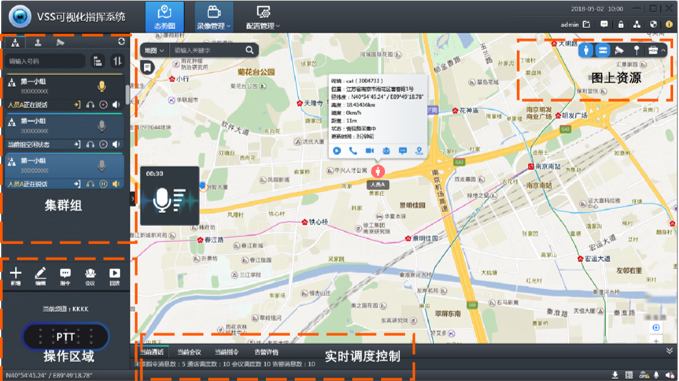
Construction of the Border Information System
Three Core Achievements
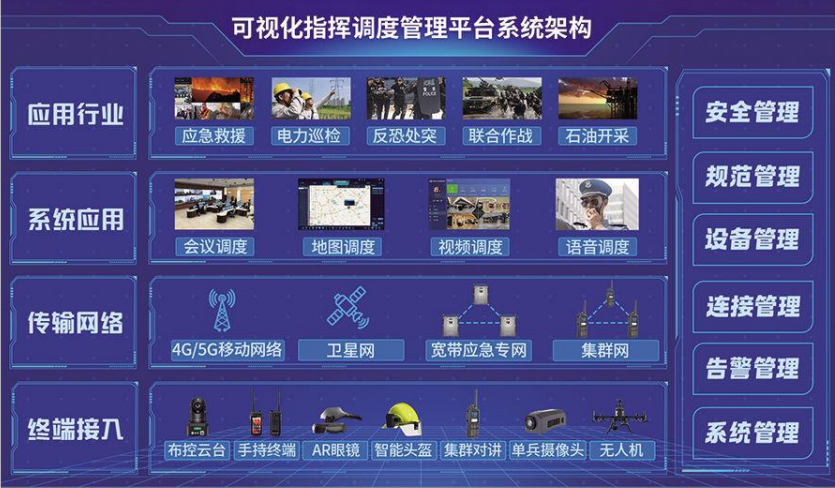
Empowered by self-organizing network technology, the border information system has achieved a qualitative leap:
1. Digital management:All processes of personnel duty, material support, and equipment status are digitally recorded, with data being traceable and analyzable, providing data support for border management;
2. Integrated operation:Breaking down barriers between camps, points, and systems, forming an integrated operation model of “one platform managing the entire domain, one process coordinating collaboration”;
3. Intelligent decision-making:Combining big data analysis to predict and warn about key border areas and high-frequency incidents, shifting command decision-making from “passive response” to “proactive prevention”.
Core Value of Construction: Strengthening the Smart Border Defense Line
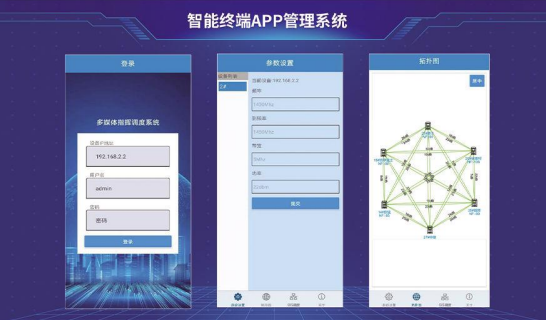
Leadership focuses on the practical effectiveness of self-organizing networks in empowering border information, concentrating on three points:
1
Enhanced border defense effectiveness: comprehensive communication coverage, fast information transmission, and accurate response, significantly strengthening border control capabilities, with a 50% increase in emergency handling success rate;
2
Optimized management costs: reducing redundant work such as manual statistics and repeated construction, lowering human and material costs by 35%, maximizing resource utilization efficiency;
3
Strengthened duty support: ensuring communication for personnel on duty, enabling information interchange, improving working conditions while significantly enhancing safety.
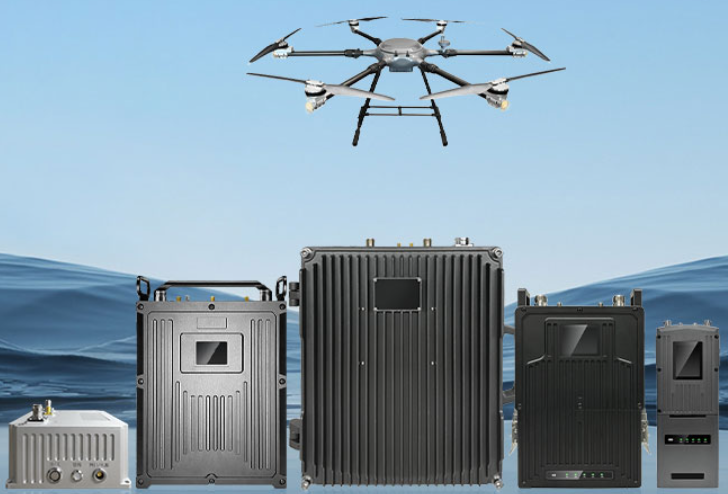
The core of border information construction is “smooth communication, comprehensive connections, and intelligent management”. Wireless self-organizing networks, with their infrastructure independence, full coverage, and high-speed interconnection characteristics, not only solve communication challenges posed by terrain constraints but also drive the transformation of border management from “traditional manpower defense” to “smart technology defense”. When every duty point is integrated into the information network, and every handling process achieves efficient collaboration, the border defense line will become more robust, and the effectiveness of border defense will continue to rise — this is the core significance of self-organizing networks empowering border information construction and a key support for building a new pattern of “smart border defense”.

Contact Number丨15735979040
Beijing Hanxun Technology丨Self-organizing network equipment manufacturer