
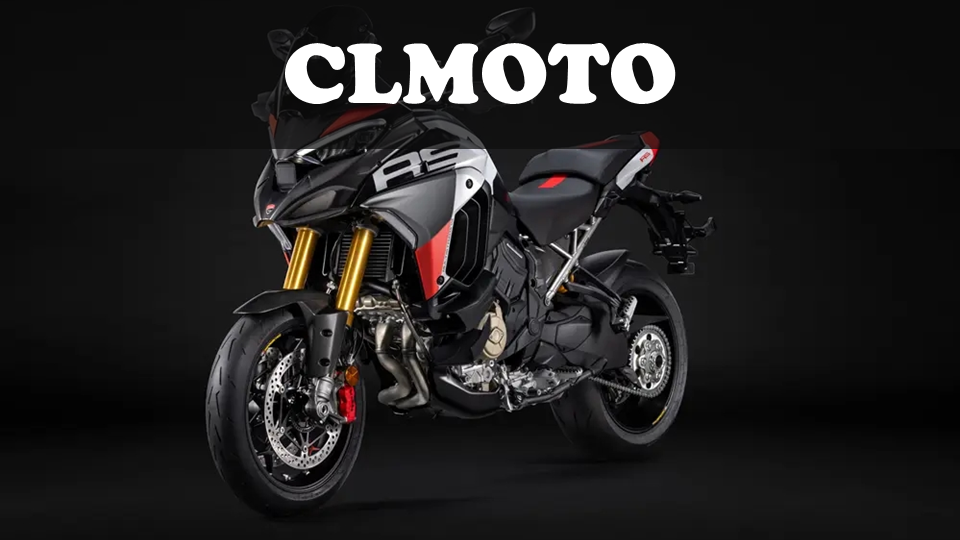
Ducati has truly mastered the “RS” label this year, having just released the Diavel V4 RS, and before everyone could catch their breath, they launched the Multistrada V4 RS. The official slogan boldly states: “This is the most exciting Multistrada ever.” Sounds like marketing jargon? But looking closely at the specifications, it really is different.
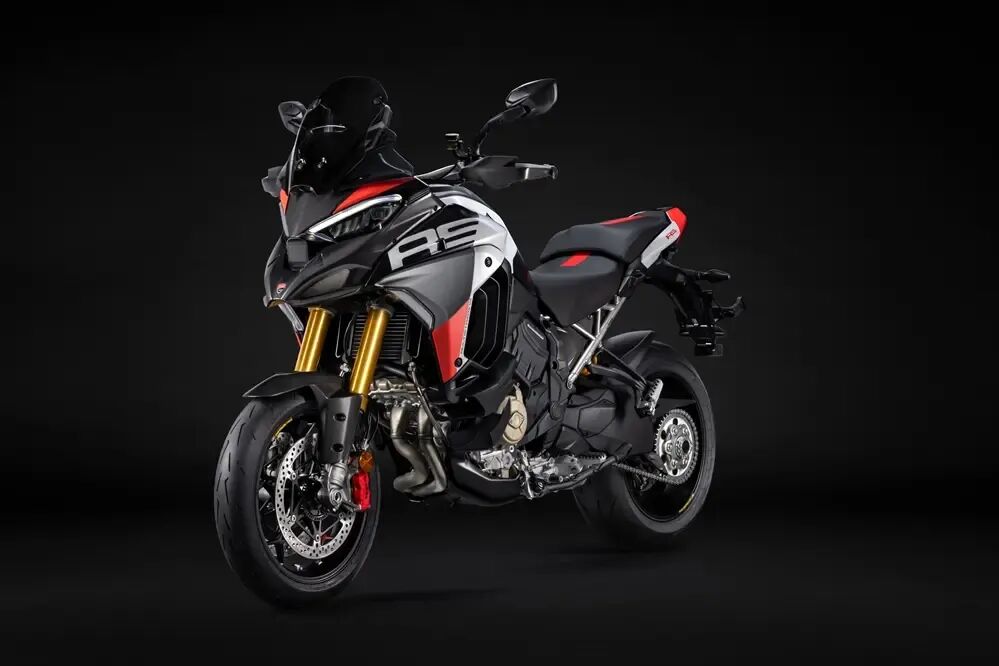
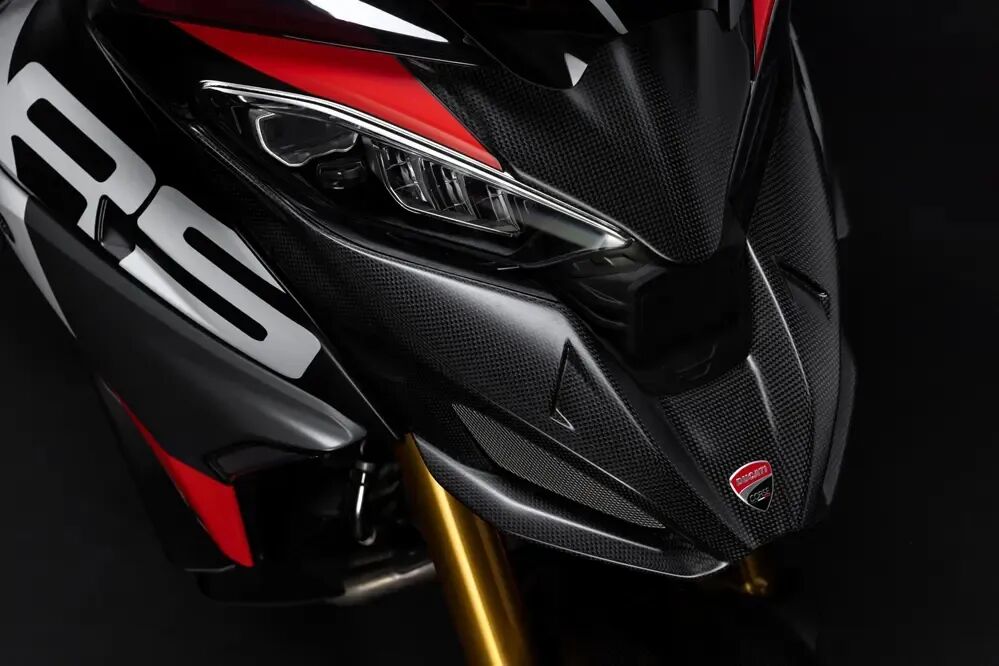
Let’s talk about the core: it continues to use the 1103cc Desmosedici Stradale engine from the Panigale V4, retaining the counter-rotating crankshaft, with a redline of 13,500 RPM and a maximum power output of 177.5 horsepower, even more aggressive than the Pikes Peak version.
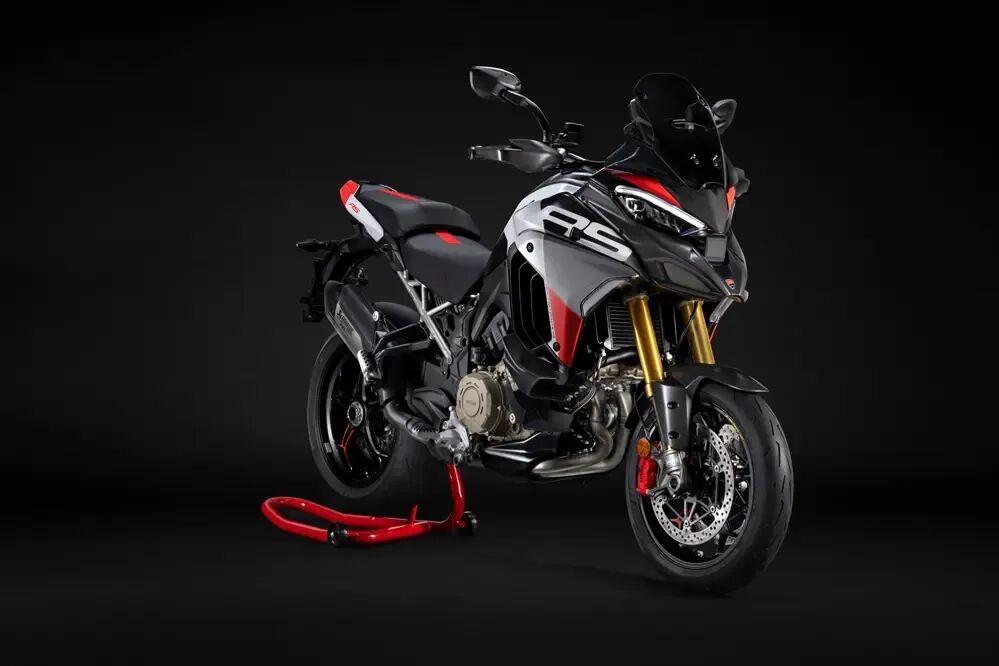
The short gear ratio final drive makes it even more aggressive in acceleration, theoretically providing “the horsepower of a touring bike with the explosiveness of a sport bike,” and Ducati has specifically added an STM EVO dry clutch and an Akrapovič exhaust; just the sound of the clutch is enough to make the owner smile from ear to ear.
In terms of weight, the official figure is 211 kg, which is 3 kg lighter than the Pikes Peak.
Don’t underestimate this small difference; on an ADV bike that can carry three luggage cases and a bunch of electronic devices, these few kilograms mean that the frame, subframe, and battery all use lightweight materials.
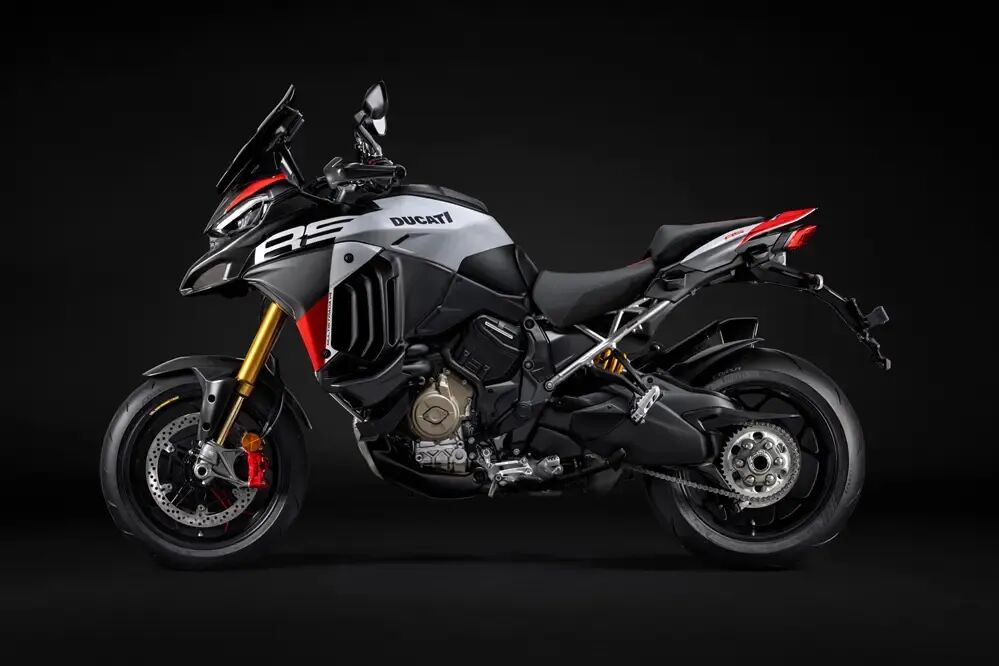
The subframe has been replaced with titanium, which is 2.5 kg lighter than steel, while still being able to support the weight of a top case, meaning you can fully load it with three cases for a long trip. The official statement says: “In one second, it transforms from a sports bike to a GT touring bike.” While this may sound exaggerated, the logic is sound.
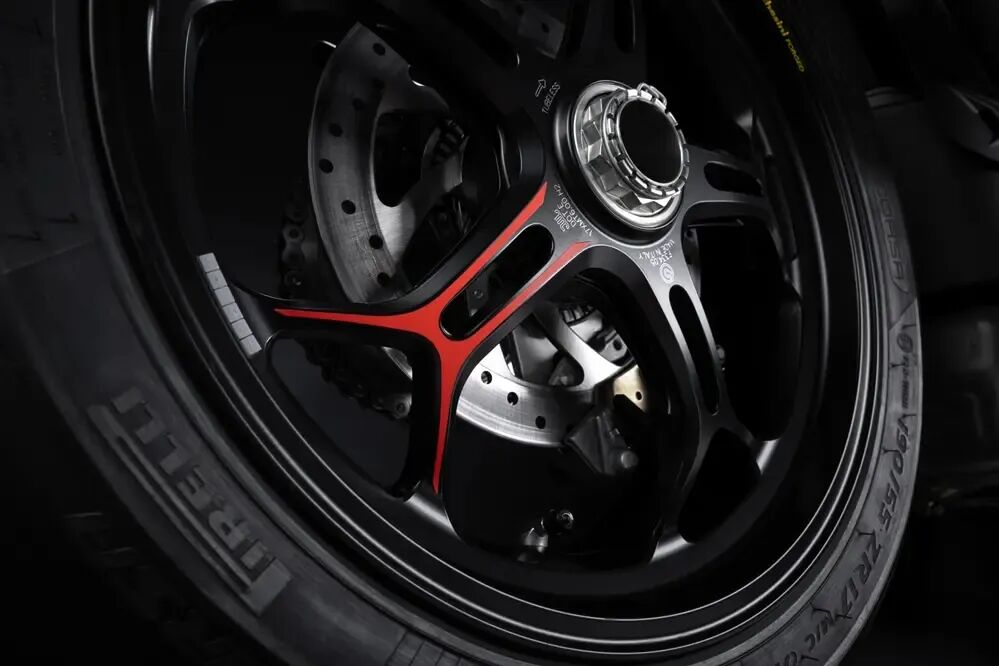
For the chassis, the Multistrada V4 RS uses a single-sided swingarm and a monocoque frame, equipped with Marchesini forged 17-inch wheels, and tires are Pirelli Diablo Rosso IV Corsa, with 120/70 in the front and 190/55 in the rear, which is a complete sport street tire setup.
The suspension is even more aggressive: it directly borrows the Öhlins Smart EC 2.0 semi-active electronic suspension from the Panigale V4, still the event-driven version, adjusting damping in real-time based on road conditions and rider inputs. In theory, if you ride it from the track to winding mountain roads, the computer can think faster than you about how to compress.
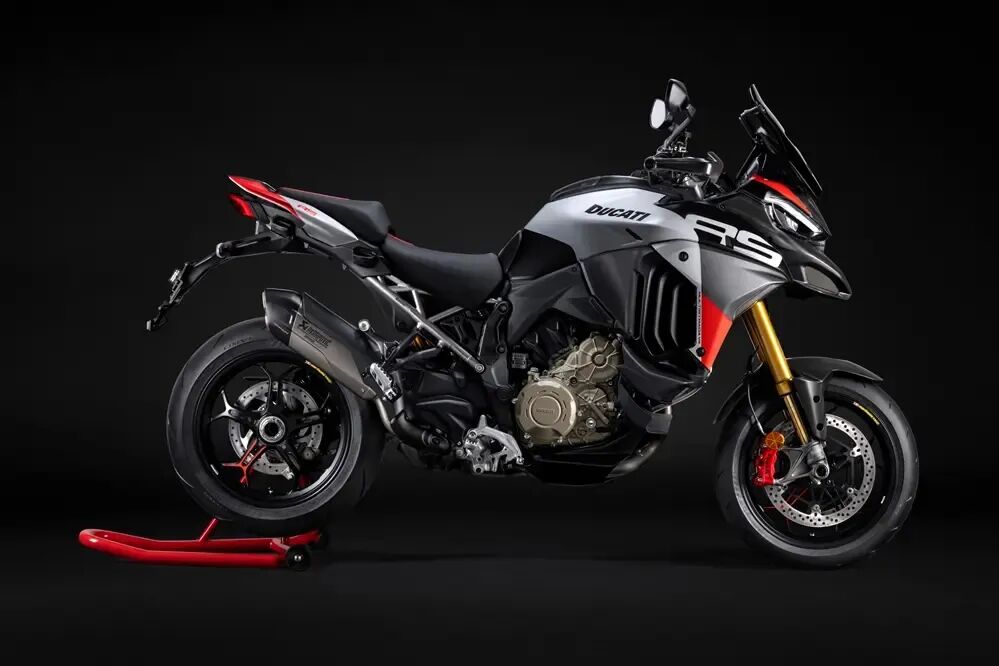
The braking system is also top-notch: front 330mm dual discs with Brembo Stylema calipers, brake pads compatible with the Panigale, and equipped with Bosch-Brembo cornering ABS. Ducati is smart; since they borrowed the engine from the Panigale, they might as well bring over the brakes and suspension, making the whole bike feel like a Panigale with longer legs and a taller upper body.
The electronic systems have received a major upgrade this generation, in addition to the usual traction control, wheelie control, and cornering ABS, it also features Ducati’s new technology: DVO (Vehicle Observer).
It sounds a bit mystical, but it’s actually a predictive algorithm that can anticipate the need for electronic intervention based on the rider’s actions and road conditions. In other words, it doesn’t wait for a slip to pull you back; it anticipates the mistakes you might make.
It’s like having a “future teammate” who helps you brake or roll off the throttle in advance.
There are five riding modes: Race, Sport, Touring, Urban, and Wet. The exclusive point for the RS is that it has a Full Power mode, allowing all gears to unleash 180 horsepower, with a more aggressive throttle map. The suspension modes also include four options: Track, Dynamic, Touring, and Low Grip, covering everything from track to mountain roads, long-distance to rough terrain. Additionally, with ACC adaptive cruise control, blind spot monitoring, and front collision warning, Ducati has packed all the electronics a touring bike can offer, even aligning safety features with those of cars.
In terms of appearance, the RS version is not hard to distinguish.
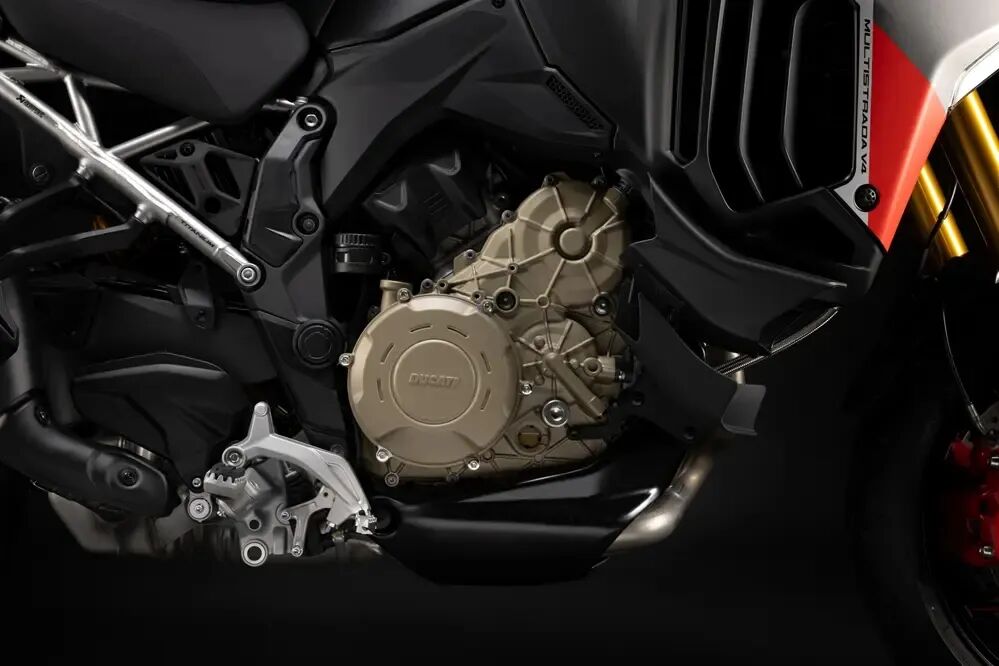
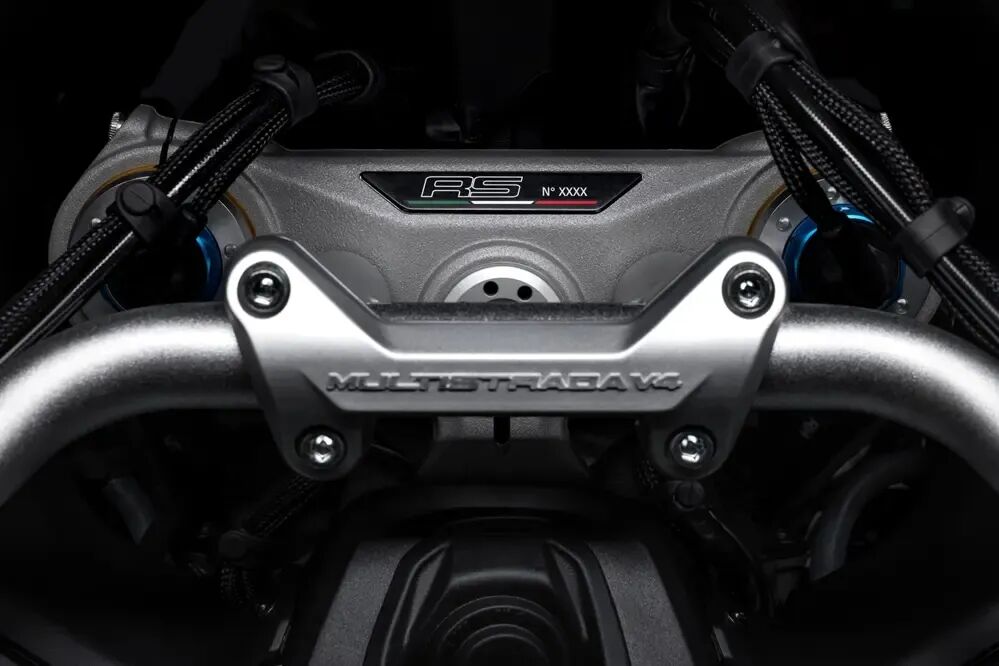
The front beak, fenders, hand guards, and exhaust shield have all been replaced with carbon fiber, with RS logos in the details. Each bike will also have a black anodized aluminum nameplate mounted on the triangle stand, printed with a unique number, allowing owners to easily distinguish whether they are riding a “regular Multi” or the “RS top version.”
The riding position has also been adjusted: the footpegs are raised higher, the handlebars are lower and narrower, and they have been fixed in place, directly trading comfort for cornering lean angle and rigidity. Sitting on it is no longer that “sofa-like touring” feel, but a tighter sportbike riding position. In other words, this is not the Multi for a leisurely trip to Lhasa, but a Multi that allows you to corner faster on mountain roads.
In summary, the Multistrada V4 RS is Ducati’s shot of adrenaline for touring bikes. It retains the GT attributes of three cases, long-distance capability, and electronic assistance, but all core components lean towards the Panigale. In other words, this is a “Panigale with luggage capacity and a higher stance.”
Some may scoff: who needs a 180-horsepower touring bike?
But Ducati’s logic has always been simple: it’s not about what the market needs, but what they believe should be made. The existence of the RS itself is a challenge to the limits. For those who want a bike that can take the family out while also enjoying the thrill of mountain roads, the Multistrada V4 RS might just be the answer.
The bike is expected to be delivered in Europe in November, with the price yet to be announced, but it is certain to be the top configuration of the Multi series. At that time, you will see some people fully loaded with three cases, then with a twist of the throttle, achieving acceleration figures comparable to a sports bike—this is the romance of Ducati, and their persistent declaration: “What we make is not just motorcycles, but a statement.”
# CLMOTO酷乐摩托 ## Ducati ## Multistrada V4 RS #Author / 酷乐机车