AOV (Always On Video) is a fast-start standby technology based on ultra-low power memory, enabling 24/7 recording. It addresses the shortcomings of traditional low-power PIR solutions, such as false alarms and missed detections. AOV allows low-power IPCs to achieve all-day, all-view, and all-scene recording while utilizing AI technology to eliminate the need for PIR modules, thereby reducing costs and increasing efficiency. In the absence of event triggers, the prototype operates in low frame rate mode. When an event is triggered, the prototype switches back to normal frame rate mode, such as AI detection of people and vehicles, or WIFI/4G wake-up.
1. Sensor Operating Modes
The sensor has two operating modes: Power Down Mode and Standby Mode. During design, it is necessary to confirm with the module manufacturer whether the sensor model supports Standby Mode; if not, only Power Down Mode can be used.
In AOV scenarios, when the sensor enters Standby Mode, although power consumption slightly increases during standby, there is no need to reinitialize the sensor configuration sequence when the SOC wakes up, saving system working time and helping to reduce overall power consumption. The table below uses the previous generation RV1106G+SC200AI as an example, showing that compared to Power Down Mode, Standby Mode can reduce power consumption by approximately 10%.
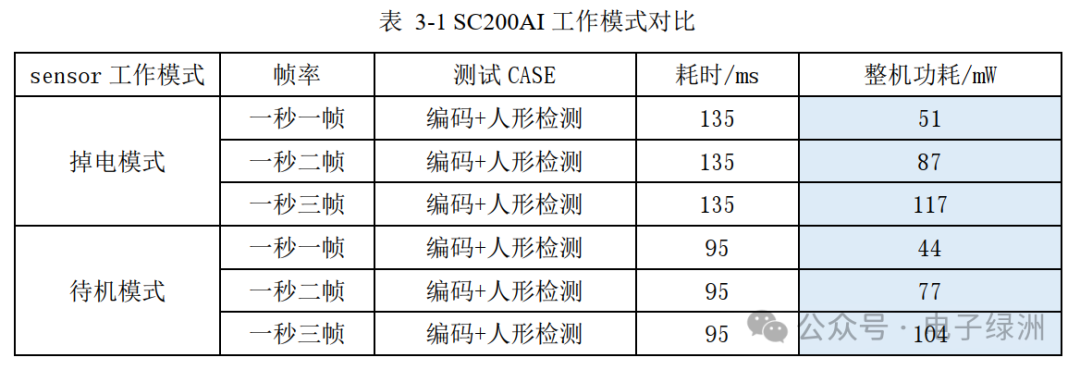
1.1 Power Down Mode
In SOC standby, the sensor is powered down, and the three power supplies AVDD/DOVDD/DVDD are all turned off.
1.2 Standby Mode
In SOC standby, the sensor enters Standby Mode, with the three power supplies AVDD/DOVDD/DVDD remaining powered, the PDN signal pulled low, and the RST signal held high.
1.3 Hardware Design
Taking SC200AI operating in Standby Mode as an example:
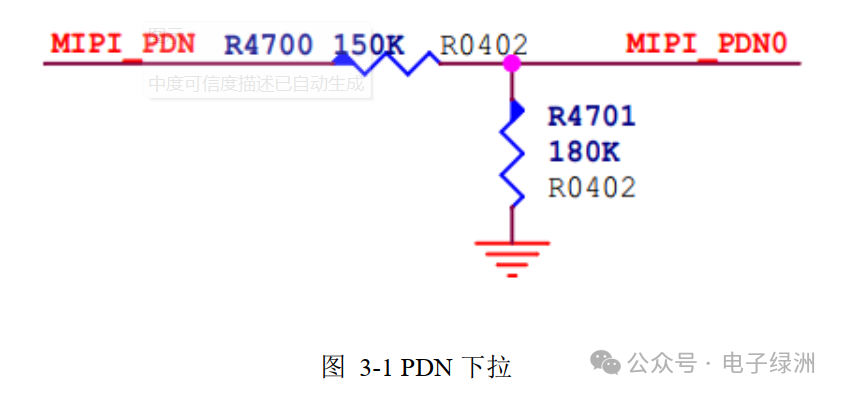
(1) The PDN signal is connected to a 100K discharge resistor to ground to prevent residual charge at the sensor end from leaking to the SOC end. In the reference design, a 3.3V IO is used to control the PDN signal, so a 150K/180K resistor is used for voltage division.
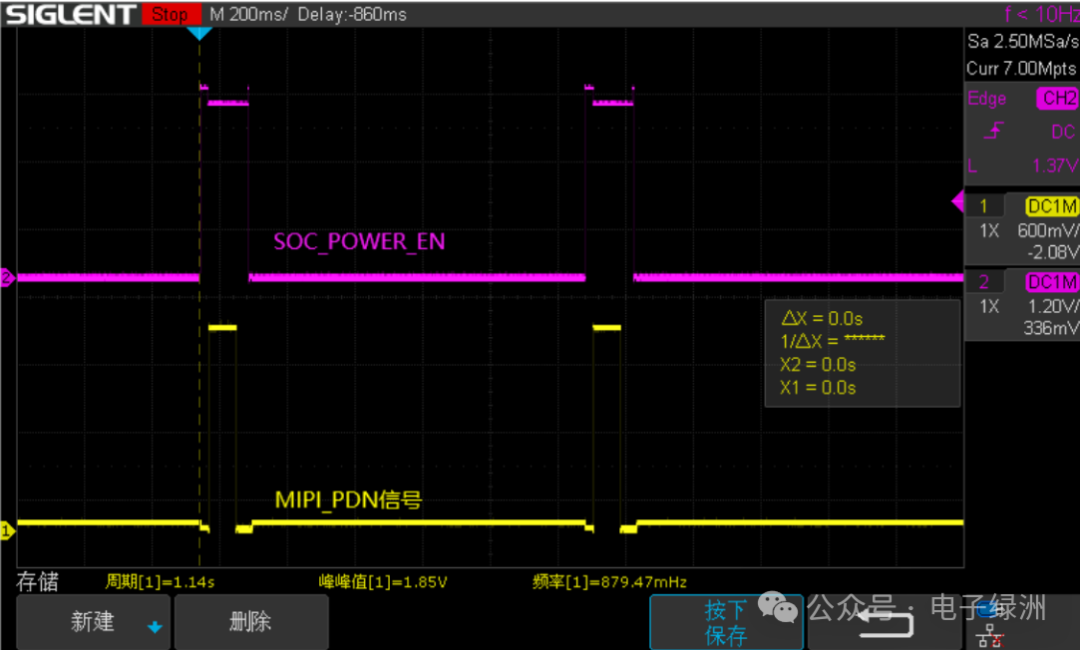
In AOV mode, the PDN test waveform is as follows:
When the SOC wakes up, GPIO controls the PDN to be high; during SOC standby, the PDN is controlled by a pull-down resistor, maintaining a low level.
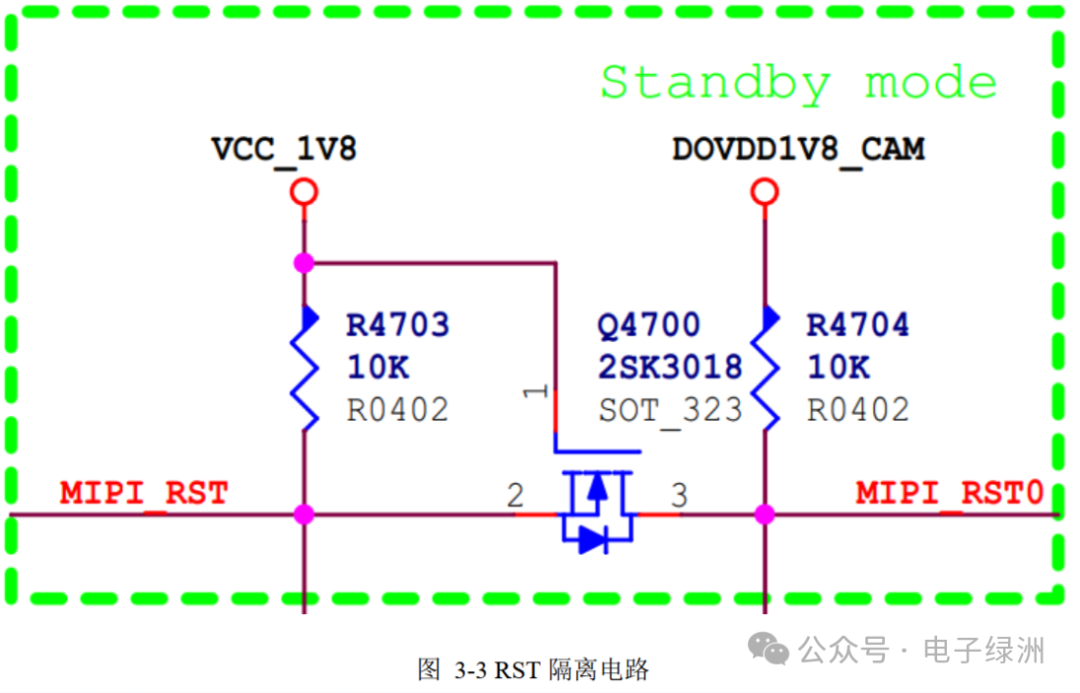
(2) The RST signal must remain high in Standby Mode, so it is isolated through a MOSFET to prevent high-level leakage from the sensor end to the SOC end. (The SOC’s MIPI_RST is off during standby, not the PMU part. The sensor MIPI_RST0 is at the sensor end, and the power is on during standby.)
In AOV mode, the RST test waveform is as follows: The sensor end RST can remain high, unaffected by the SOC power-off.
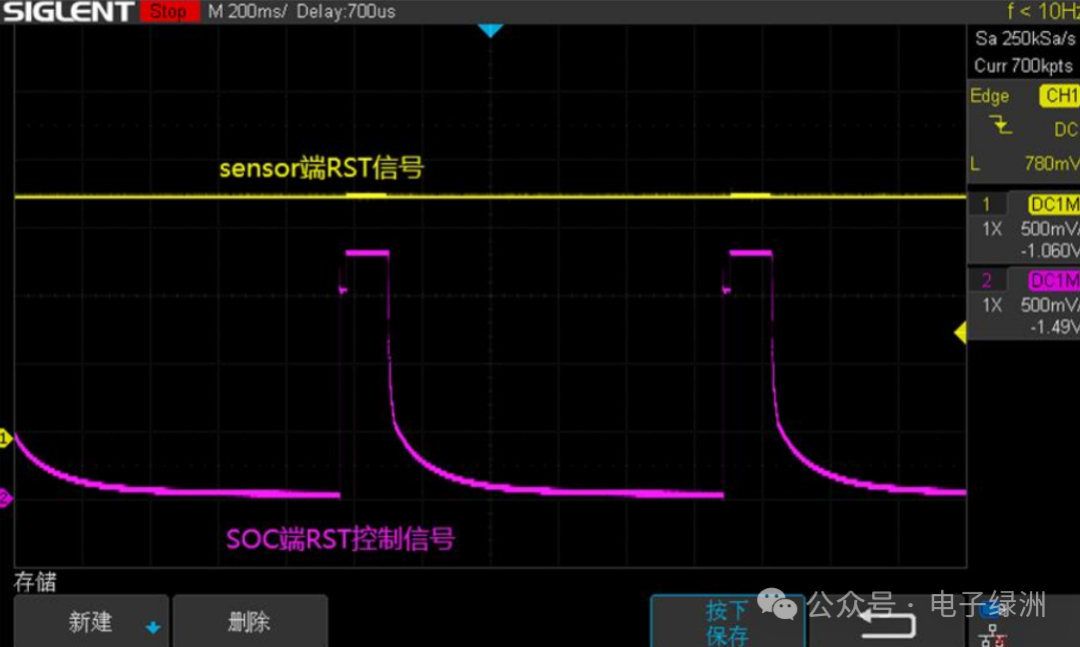
3. The three power supplies AVDD/DOVDD/DVDD of the sensor must remain powered.
The above content is from “RV1106B_AOV Brief Description”
——END——
The jungle society never believes in tears; no amount of complaints will help, and no one will pity you.
Recommended Reading
Antenna Efficiency, Antenna Gain, EIRP
First Principles
Diode Reverse Leakage Current: The Overlooked Invisible Power Loss and Reliability Killer
Don’t Get Confused! The Essential Differences Between Thin Film and Thick Film Resistors, This Article is Enough
Wireless Electronic Product Compliance: Core Points of SRRC Non-Commission Certification
Due to changes in the public account’s push rules, to prevent losing track of me, please like and star me. (Method: Go to the public account homepage, click the top right corner “…”, then click to add to favorites, thank you for your support!)
Like Share RevisitThank you for your “three consecutive” supportLimited time free QR code to join the group, exchange more technical and industry information