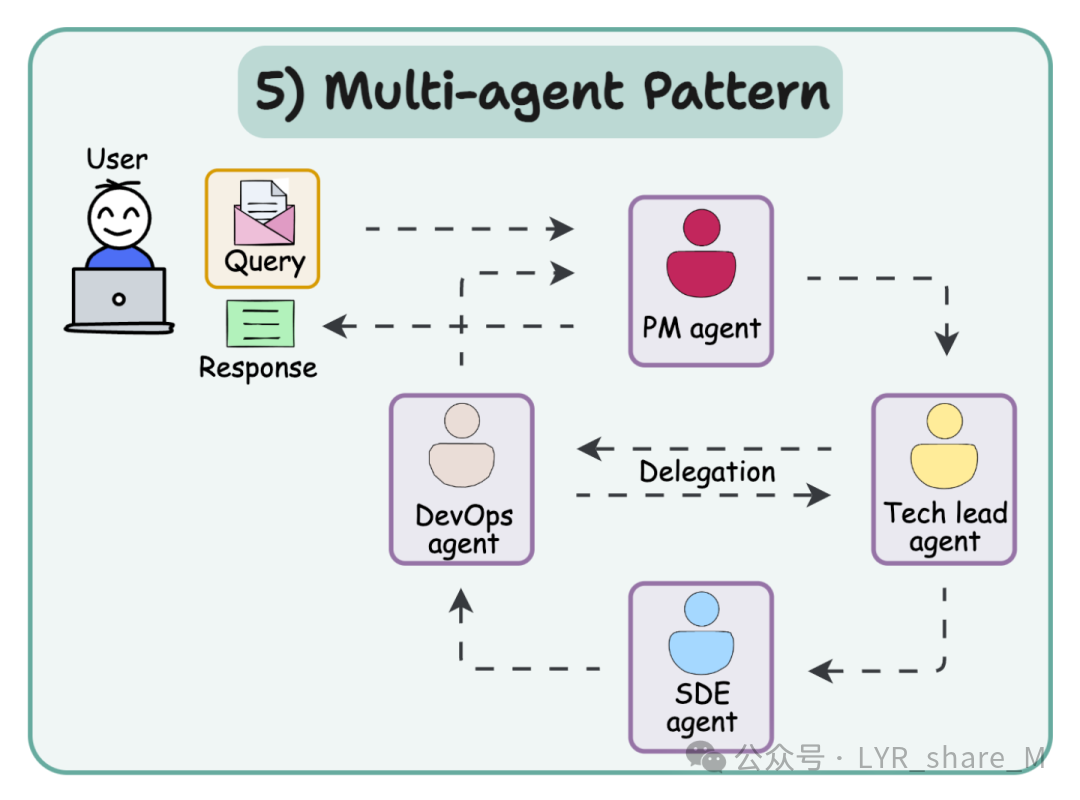
Why Use Multi-Agent SystemsSingle LLM (Large Language Model) agents are already very powerful, but their capabilities remain limited when handling tasks individually. For complex multi-step tasks, they appear less professional and the process is not sufficiently clear. Currently, multi-agent systems have become an effective solution for addressing complex workflows.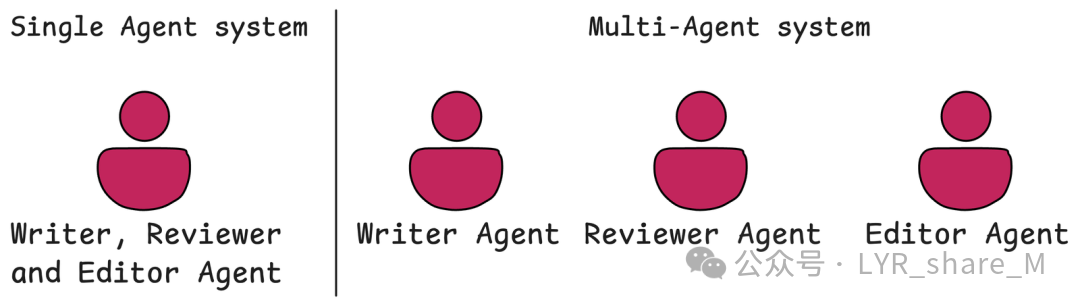 By breaking down complex problems into several tasks and assigning each part to dedicated agents, one can achieve more advantages and better results than with a single agent.1. Each agent focuses on a specific sub-task or role, making the entire system easier to develop and debug.
- Single Responsibility. Agents are independent within their scope of responsibility, so changes to the prompts and logic of one agent have minimal impact on the entire system.
- Separation of Concerns. This means that one agent can be replaced without causing unnecessary effects on other agents.
- Reduced Hallucination. A single agent trying to handle all tools and instructions in one prompt may become confused or hallucinate; multiple agents significantly reduce hallucination.
2. Multi-agent systems allow each agent to become an expert in a specific domain.
- Each agent has prompts and tools tailored to its expertise.
- Dedicated agents can adopt reasoning methods specific to their domain or use specialized tools most effectively.
- Multi-agent systems mean that complex tasks can be broken down into multiple simple tasks.
- Compared to a single general agent, multiple dedicated agents are more efficient in solving the entire problem together.
3. Having multiple agents essentially creates a clear structure, making the reasoning process of the system more transparent.
- Each agent generates a thought process through chain-of-thought prompts and produces intermediate results that can be checked by other agents or developers.
- Multi-agent systems often allow and even encourage agents to cross-verify each other’s outputs, identify errors, and provide evidence for decision-making.
- Multi-agent systems generate clues about the reasoning process, enhancing interpretability and allowing monitoring of each expert’s decision rationale.
 4. When issues arise in multi-agent tasks, it is easier to locate the problem.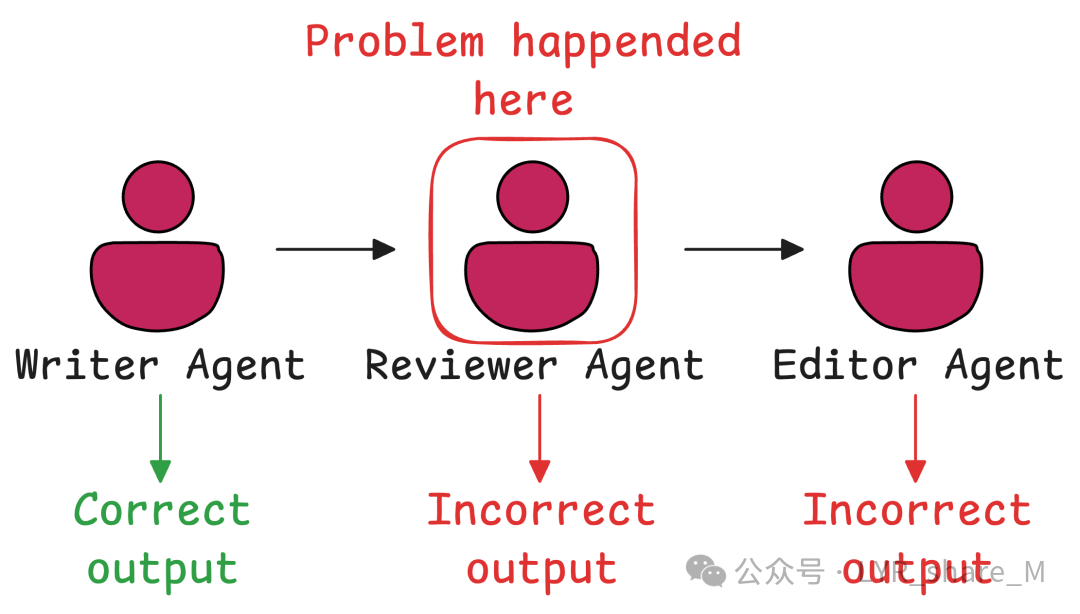
- Tasks are segmented, which not only improves quality but also makes it clear which agent has made an error; this is relatively difficult with a single agent.
- Developers can inspect intermediate outputs and determine where the problem occurred without thoroughly checking the entire process.
- For agents, like humans, one should not assign too many tasks at once and expect perfect results.
5. The multi-agent model reflects the way human teams operate, making the design of AI workflows more natural.
- Like humans, each agent has a clear task, and a coordinator ensures they work together.
- By mapping to a team, it conceptually becomes easier to design AI solutions for complex problems.
- Mapping to a team is not only intuitive but also better at handling complexity than a single general agent.
Internal Details of Multi-Agent SystemsEach agent in a multi-agent model still follows a reasoning + action loop internally. Agents receive some input, think about what to do, and then take action by producing output or calling tools, observing results, etc. The key is that each agent’s focus is limited to its assigned role, with a narrower focus, a smaller toolset, and a specific goal in the process.Main Components in Multi-Agent Systems:1. Agents
- An agent is an autonomous AI unit that can perceive inputs, reason, and perform actions to complete sub-tasks.
- Each agent is assigned a specific role and can only access the tools or information required for that role.
- Agents will cycle through thinking and acting until they produce results for their part of the work.
- Due to their focus, they can follow strict prompt formats or protocols to ensure their behavior is safe and task-oriented.
2. Tools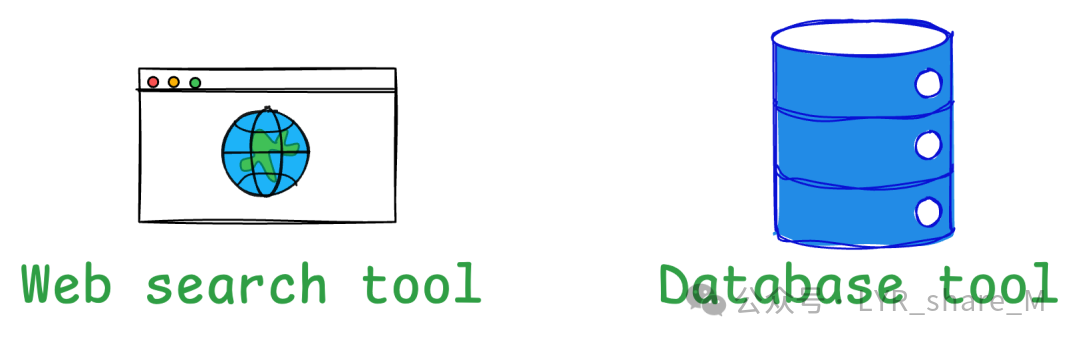
- Tools are any external functions that agents can call to help them take action in the world or obtain information. Tools can include web search APIs, calculators, database queries, sending emails, etc.
- In multi-agent systems, tools are specific operations available to agents. Each agent typically has a small number of tools related to its role.
- The ReAct cycle of an agent involves selecting a tool, providing it with input, and then reading the tool’s output to inform its next thought.
- By building tool usage in this way, it ensures that the reasoning and actions of agents are transparent and can be recorded.
- Frameworks like LangChain define class tool interfaces and enforce agents to adhere to formats to maintain the reliability of such interactions.
3. Coordinator
- The coordinator is essentially an agent responsible for delegating tasks to other specialized agents.
- The coordinator allows agents to function as a unified system rather than a collection of isolated agents.
In multi-agent systems, information typically flows from one agent to the next. Each agent only processes inputs relevant to its task without worrying about the overall task beyond its part. This sequential handoff is the essence of the multi-agent model: a design that links multiple narrowly defined agents together, where the output of each agent feeds into the input of the next agent until the goal is achieved.If you find this article helpful for understanding multi-agent systems and workflows, feel free to follow our public account for more exciting content; likes or donations are appreciated as encouragement!