Zhang Tong News Agency zhangtongshe.com
|Based in Zhangjiang, serving Shanghai, supporting technological innovation|
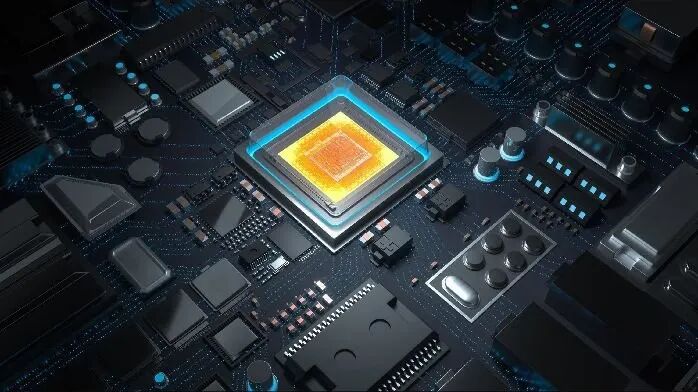
Over a decade of effort has produced a “Chinese chip”.
Produced by | Zhang Tong News Agency
First image | Internet
How long can you tolerate being offline? One hour of frustration? Half a day of work delay? A day affecting your life?
Delivery delays, black screens in meetings, game disconnections… After 24 hours without internet, modern people become “digital islands”.
Few know that the “nerve endings” maintaining this invisible network are hidden in a chip smaller than a soybean —the RF Front-End Module (FEM), which silently controls the life and death of every signal.
In Zhangjiang, Pudong, Grandcom Communication Technology (Shanghai) Co., Ltd. (hereinafter referred to as “Grandcom”) has spent over a decade developing a “Chinese chip”.
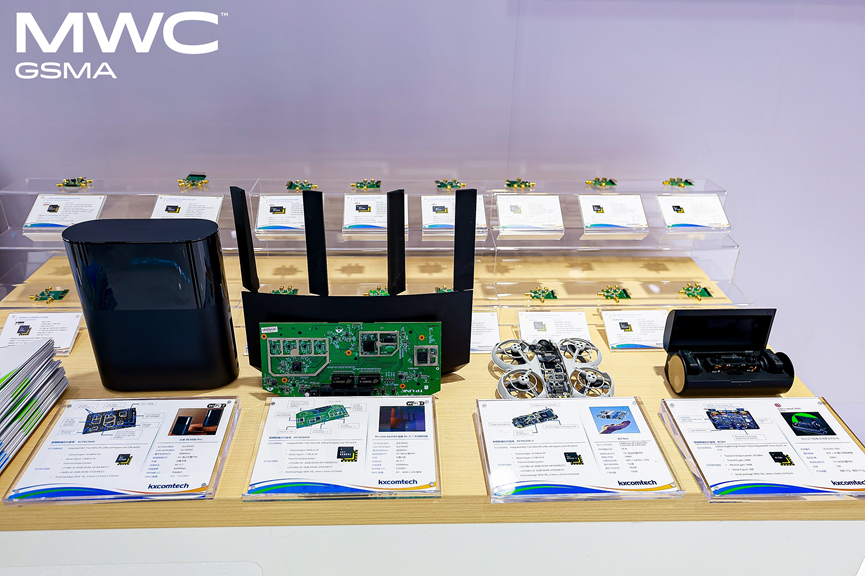
Grandcom
Previously, the Wi-Fi FEM market was firmly dominated by international manufacturers like Skyworks and Qorvo; however, as Grandcom continuously overcomes technical challenges and enhances product performance, the monopoly of foreign giants has gradually been broken.
Today,the Wi-Fi 6/7 chips designed by Grandcom support the operation of hundreds of millions of devices — the colorful lights flashing in your home router are the heartbeat of this invisible Chinese network.
From the return of overseas teams in 2014 to start a business, to becoming one of the first in the country to achieve mass production of Wi-Fi 6 FEM, and then to listing on the STAR Market in 2023, with plans to begin pre-research on Wi-Fi 8 products in 2025, Grandcom’s path of advancement is extending towards more cutting-edge layouts.
What is this continuously breaking “Chinese chip” currently planning?

Breaking Barriers in Ten Years
From “Blank” to “Listed”: The Breakthrough Path of Domestic Products
Grandcom’s entrepreneurial story began in 2014.
Founders Peng Ping and Zhao Huan abandoned lucrative jobs in the U.S. after years of deep engagement in RF chip R&D and returned to Zhangjiang, Shanghai to embark on their entrepreneurial journey.
They recognized the vast potential of the Wi-Fi communication market and aimed to develop high-efficiency, high-linearity, and high-reliability Wi-Fi FEM (RF front-end) chips and modules.
Thus, Grandcom officially started.
The RF front-end chip is known as the “crown jewel of analog chips”, but due to high capital investment, significant technical barriers, and long R&D cycles, China once relied almost entirely on imports, with global market share long monopolized by American and Japanese companies.
At that time, domestic understanding of Wi-Fi RF front-end chips was shallow, and the market application of domestic Wi-Fi RF front-end chips was nearly blank. Grandcom was exploring in this dark space.
A turning point quietly arrived. With the increase in communication demands, external FEMs became key elements for extending connection distances and improving communication speeds.
In February 2020, the Xiaomi 10 was released as the flagship model of the year, and its Wi-Fi 6 technology, with significant speed improvements and superior performance, quickly became a hot topic in the market, leading to widespread attention on Wi-Fi FEMs.
Meanwhile, Grandcom had been quietly working in the field for six years, building a solid foundation with deep technical accumulation and gaining a good reputation in the industry.When the industry windfall arrived as expected, the company, relying on its previously accumulated technical strength, decisively launched the first generation of Wi-Fi 6 FEM products in 2019, seizing the market opportunity and establishing its industry position.
Subsequently, Grandcom’s products successfully entered the supply chains of well-known communication equipment brands such as ZTE, TP-Link, and JD Cloud, as well as industry-renowned ODM manufacturers like Gongjin Co., Ltd. and Zhonglei Electronics, indirectly supplying many well-known overseas telecom operators in Europe and the U.S. through ODM manufacturers, showcasing strong capabilities.
On November 17, 2023, Grandcom officially listed on the STAR Market, with an initial price of 10.50 yuan/share, raising a total of 668.64 million yuan.

Grandcom’s listing
Since then, Grandcom has officially become a benchmark enterprise for domestic RF front-end chips.

Hardcore Technical Breakthroughs
Building a High-Profit Product Matrix
Grandcom’s confidence comes from its continuously iterating technical strength.
Since its establishment, the company has always focused on the core direction of “high efficiency, high linearity, high reliability” in technology R&D, using this as a key approach to break industry bottlenecks and enhance product competitiveness. On this basis, Grandcom has built a full product matrix covering Wi-Fi 5, Wi-Fi 6, Wi-Fi 6E, and Wi-Fi 7, while completing detailed layouts for different application scenarios.
Continuous increases in R&D investment support the explosive growth of technology. In 2024, while continuing to deepen its focus on Wi-Fi, Grandcom will develop products in the general IoT field such as C-V2X, low-altitude aircraft, and industrial IoT, with R&D investment reaching a record high of 108 million yuan (accounting for 20.59% of revenue), a year-on-year increase of 71%.
Improvements in technical strength directly lead to breakthroughs in customer resources.
The developedKCT85xxN chip has successively passed certifications from Qualcomm and MediaTek, and in June 2024, it reached a cooperation agreement with the well-known U.S. SOC chip manufacturer Broadcom, officially entering Broadcom’s Wi-Fi 7 platform reference design. This marks the capability of Chinese chips to deeply collaborate with international mainstream SOC manufacturers.
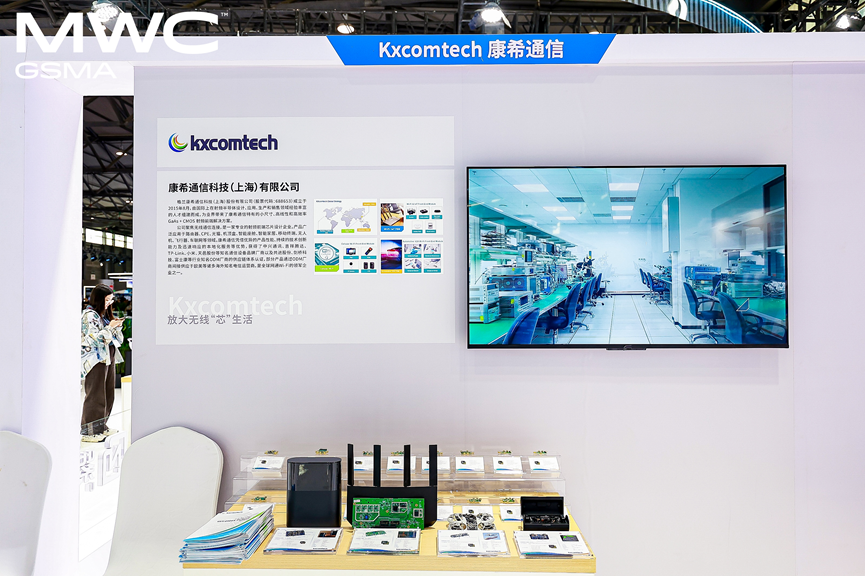
Grandcom at MWC Shanghai 2025
Currently, Grandcom’s business landscape shows multi-dimensional breakthroughs: In the first half of 2025, the order volume for Wi-Fi 7 RF front-end chips significantly increased year-on-year, with Wi-Fi 7 series products accounting for over 50% of the company’s revenue, becoming the core engine for growth in the first half of the year. At the same time, the FEM products for drones have secured bulk orders from leading customers, and industrial IoT-related products have also achieved bulk shipments.
In the second half of 2025, overseas business for Wi-Fi 7 is expected to become a profit growth point — orders from Europe and South Asia are expected to increase, likely returning to the levels of the first half of 2024, with related product gross margins higher than those in the domestic market. This positive cycle of “technical breakthroughs — customer expansion — revenue enhancement” continues to strengthen, driving steady increases in the company’s market share and revenue.
Dual performance in technology and market has earned it multiple authoritative recognitions.National-level specialized and innovative “little giant”, national high-tech enterprise, Shanghai enterprise technology center, national key little giant, and other honors have followed.
Strong development momentum is also reflected in revenue data. In the first half of 2025, Grandcom’s total revenue reached 328 million yuan, a year-on-year increase of 45.92%, confirming the efficient conversion of technical investment into market benefits.

State-Owned Capital Empowerment
Who is the force behind the “chip king”?
The RF front-end chip market is about to explode.
According to Yole’s data, from 2022 to 2028, the global RF front-end market size will grow at a compound annual growth rate of 5.8%. The overall global RF front-end market size is expected to increase from $19.2 billion in 2022 to $26.9 billion in 2028.
As a domestic leader,Grandcom is actively improving its ecosystem through diversified layouts while continuously consolidating its competitive advantages.
In May 2025, Grandcom acquired 35% of Chip Center’s shares for 135 million yuan, raising its stake to 37.77%.
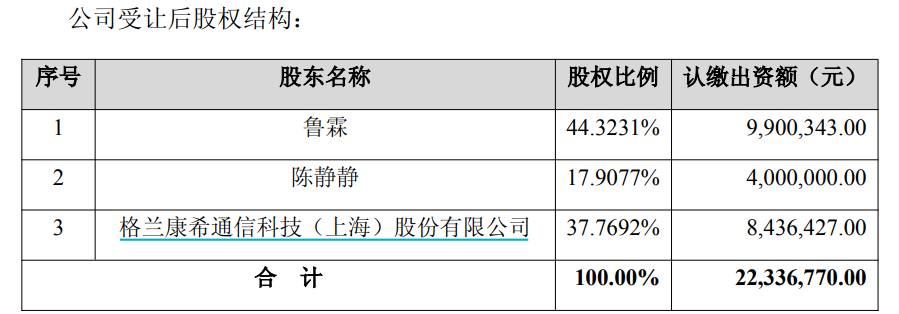
Chip Center’s shareholding structure
This move has become a key step in expanding into the IoT sector. Chip Center focuses on technologies such as IoT and wireless audio, offering smart control modules and solutions to brands like Midea, Haier, Hisense, LG, JVC, and Harman; Grandcom, leveraging its advantage in Wi-Fi RF front-end chips, upgrades from a “chip supplier” to a “full-chain service provider”, offering integrated support from core chips to end applications.
This layout precisely aligns with the explosive trend of IoT. According to the first global “World of Everything Intelligent Digital Economy White Paper”, the number of IoT connections in China is expected to exceed 3 billion by 2024. Grandcom’s deep integration is targeting this blue ocean, seizing the initiative in domestic substitution and IoT expansion.
And this strategic layout is always supported by capital. Among them,Pudong Science and Technology Group provides comprehensive support throughout the cycle.
In 2021, Grandcom settled in the Zhangjiang Innovation Park under Pudong Science and Technology Group, quickly connecting upstream and downstream resources through the layout advantages of Pudong Science and Technology Group’s full-chain industrial network, accelerating growth.
From initial incubation support to multiple rounds of capital injection during the growth phase, Pudong Science and Technology Group has accompanied the entire process, continuously injecting competitiveness into the enterprise.Its subsidiary, Haiwang Capital, invests through various channels such as intellectual property funds, aviation industry funds, and integrated circuit funds, providing solid support for the enterprise to cross cycles and focus on R&D and market expansion with precise industry insights and patient capital operations.
With the multi-level capital strength of Pudong Science and Technology Group, Grandcom not only ensures the continuity of R&D investment but also accelerates market expansion, gradually establishing its leading position in the RF front-end chip field.
Looking ahead, the Wi-Fi 8 technology standard is expected to be officially released in 2028. Grandcom has already begun pre-research on Wi-Fi 8 based on its forward-looking layout for the next generation of wireless communication standards.
The blue ocean is ahead, and the giants are still racing ahead.
Text | Yi Guo Editor | Liu Chengxing
/// Industry Communication ///

/// Cooperation Consultation ///
☟ ClickRead Original to enter the website and browse more content