
01 Research Background
The integration and computational speed of chips are rapidly increasing, leading to a sharp rise in energy consumption and heat generation density. Efficient heat dissipation technology has become a critical technological bottleneck restricting the development of high-performance chips.
Microchannel heat sinks, with their high integration and heat dissipation density, have emerged as a highly promising technology for efficient chip cooling. However, traditional microchannels face issues such as high flow resistance and uneven temperature distribution. The manifold microchannel exhibits significant advantages in reducing flow resistance through topological structure optimization.
The research on manifold microchannels focuses on optimizing the channel and manifold structures. The research team has conducted a series of simulation optimization studies on the dimensions of the manifold microchannel, fin structures, and manifold configurations, providing an optimized direction and theoretical foundation for high-performance chip cooling.
However, the thermal resistance between the chip and the packaging structure is a key barrier to chip cooling. Therefore, the research team proposed the chip embedded manifold microchannel heat sink, which shortens the heat transfer path and eliminates interface thermal resistance through near-node cooling, significantly enhancing the chip’s cooling capacity and structural integration.
Professor Cheng Wenlong’s team from the University of Science and Technology of China has conducted a series of experimental studies on the optimization of the channel structure of the chip embedded manifold microchannel heat sink. This article will focus on the research progress of the team in the experimental aspects of the embedded manifold microchannel heat sink.

02 Research Results
To address the issue of high interface thermal resistance in traditional chip separated heat sinks, the research team integrated the microchannel heat sink into the silicon channel of the chip and proposed an array distribution of microchannels within the heat sink and a layered flow of fluid, thereby shortening the heat transfer path and eliminating many interface thermal resistances. They designed and conducted experimental research on a prototype of the chip embedded manifold microchannel liquid cooling heat sink.
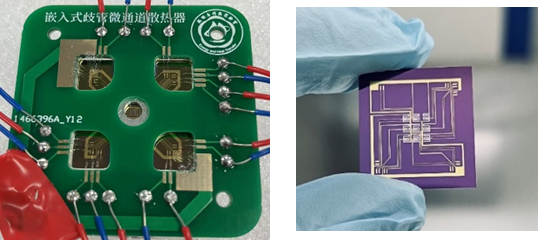
Figure 1. Prototype of the manifold microchannel heat sink
The research team has currently developed an embedded microchannel heat sink that integrates heating circuits, temperature sensors, different structural microchannels, and a manifold structure with layered fluid flow on the same silicon wafer, using water and HFE-7100 as working fluids, and has conducted flow and heat transfer experimental studies on the embedded manifold microchannel heat sink.
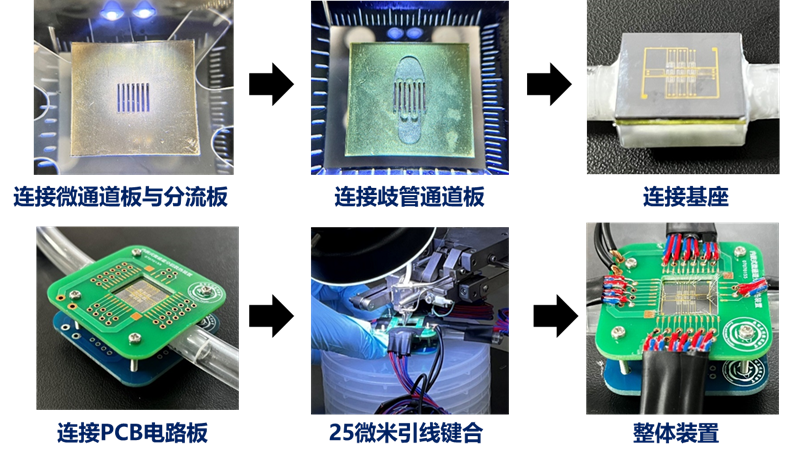
Figure 2. Preparation process of the manifold microchannel heat sink
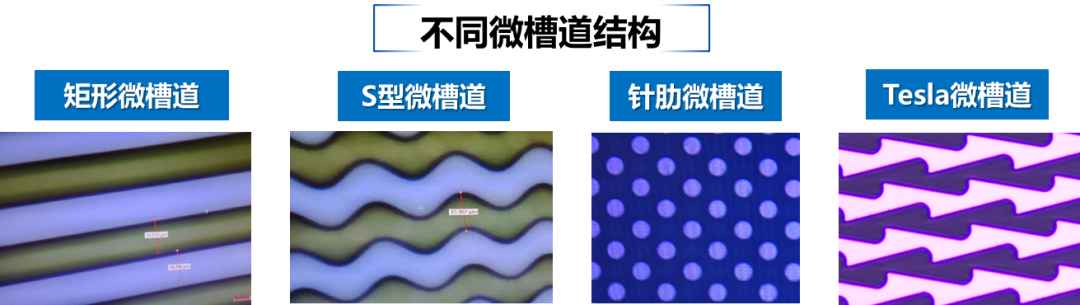
Figure 3. Different microchannel structures
Through experimental comparative analysis, the heat transfer flow characteristics of Tesla microchannels (EMTM), pin-fin microchannels (EMSPM), and rectangular microchannels (EMRE) under different working conditions were studied. The research indicates that the embedded S-shaped manifold microchannel heat sink can provide stronger flow field disturbance and a larger heat transfer area. Under conditions where the maximum local temperature of the heating surface is below 100 °C and the average temperature rise is less than 45 °C, the two-phase heat dissipation density reaches 625 W/cm², which is a 12% improvement compared to traditional manifold rectangular microchannel heat sinks. The Tesla-patterned microchannel structure enhances the heat transfer capability of the embedded manifold microchannel by increasing turbulence and suppressing vapor-liquid backflow. At a flow rate of 5 ml/s, using HFE7100 as the working fluid, the EMTM can achieve a heat flux density of 1000 W/cm² at an average temperature of 100 °C, while using water as the working fluid, the heat dissipation density reaches 1590 W/cm², which is a 74% increase compared to HFE7100. The EMTM improves the convective heat transfer coefficient by 55.3% to 88.3% compared to EMSPM and EMRE, reduces thermal resistance by 22% to 32.3%, and lowers the chip surface temperature rise by approximately 20 °C.
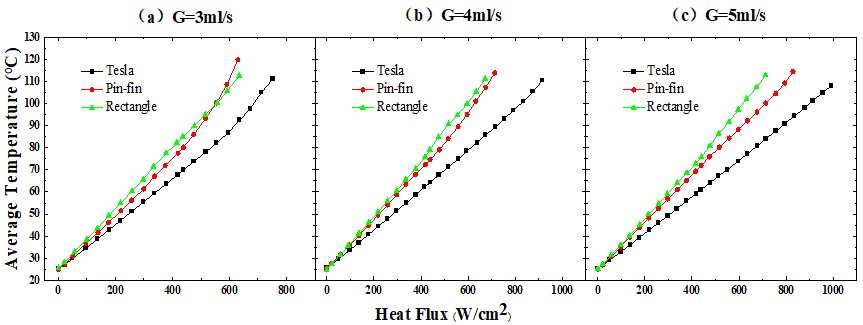
Figure 4. Heat transfer performance of different microchannel structures
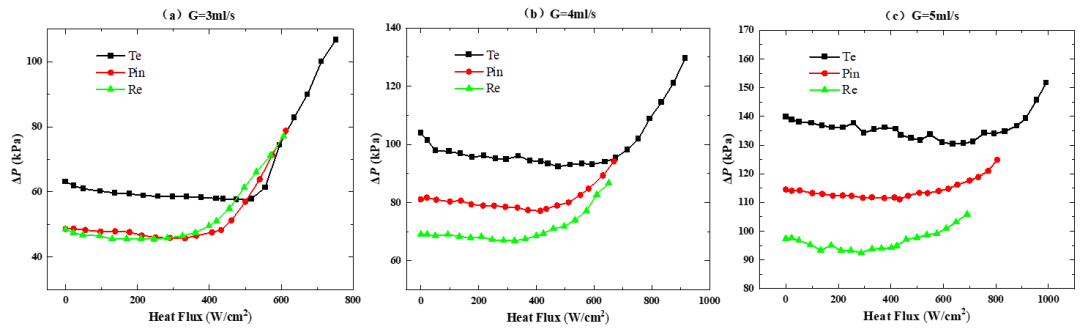
Figure 5. Flow resistance of different microchannel structures

03 Summary and Outlook
The research team has achieved a heat dissipation density of up to 1000 W/cm² using HFE7100 as the working fluid and up to 2000 W/cm² using water as the working fluid for the embedded manifold microchannel heat sink. The work on the preparation and experimental research of the embedded manifold microchannel heat sink provides an efficient solution for high-performance chip cooling. Future work will focus on the collaborative optimization design and analysis of flow and heat transfer in embedded manifold microchannels, providing an experimental basis for the engineering application of embedded manifold microchannels.

04 Paper Information
[1] Jiang Wentao, Zhao Rui, Cheng Wenlong. Experimental and Numerical Study of Embedded Microchannel Heat Sink. High Power Laser and Particle Beams, 2023, 35(09):158-168.
[2] Yi-Tao Shen, Yu-Hui Pan, Hua Chen, Wen-Long Cheng. Experimental study of embedded manifold staggered pin-fin microchannel heat sink. International Journal of Heat and Mass Transfer, 2024, 226:125488.
[3] Yi-Tao Shen, Yu-Hui Pan, Jian-Min Hao, Rui Zhou, Yin-Fa Yang, Hua Chen, Wen-Long Cheng. Self-driven manifold microchannel heat sink for cooling electronics. Applied Thermal Engineering, 2024, 249:123373.
[4] Yi-Tao Shen, Yu-Bin Dai, Jia-Xi Lu, Rui Zhou, Hua Chen, Wen-Long Cheng. Experiment on enhanced heat transfer of embedded manifold Tesla-patterned microchannel heat sink. International Communications in Heat and Mass Transfer, 2025, 165: 109050.