1 Engineering Overview
The Yanchunling landfill is located on the northwest slope of Yanchunling in Laocheng Town, Chengmai County, Hainan Province, China, approximately 33 km west of Haikou’s main urban area and 4.4 km from Chengmai Bay. The landfill covers a total area of about 803,068 m², making it the first sanitary landfill in Hainan Province constructed and operated according to national sanitary landfill technical specifications. As the main site for municipal solid waste disposal in Haikou and Chengmai County, the Yanchunling landfill plays a crucial role in environmental protection. A schematic of the site is shown in Figure 1.
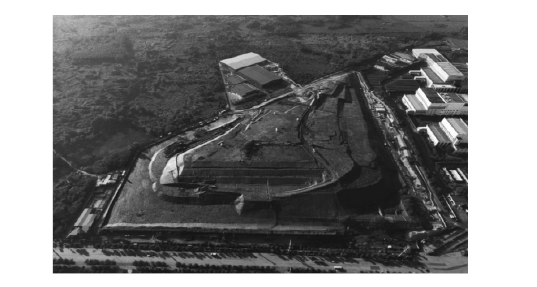
Figure 1 Schematic of the Landfill
This landfill has been in operation for nearly 20 years, contributing significantly to the sanitation efforts and urban development of Haikou and Chengmai County. However, due to long-term overloading, the landfill faces considerable environmental risks and safety hazards. As of November 2021, measurements indicated that the total capacity of the landfill had reached 4.5043 million m³, far exceeding its designed capacity. Therefore, remediation and restoration work at the landfill is imperative.
2 Key Challenges
As the landfill ages, a large amount of landfill gas is generated within the waste mass. Some of this gas is collected and treated through collection pipelines, while other gases accumulate due to the composition of surrounding waste. To ensure the stable progress of the excavation and remediation process, it is necessary to continuously optimize management strategies for monitoring and controlling harmful gases at the landfill. The following key challenges exist in this process:
(1) Odor Assessment: Accurate assessment and real-time adjustment of odor effects. Different areas may have variations in meteorological conditions and waste characteristics, leading to differences in odor composition. Therefore, scientifically reasonable assessment indicators should be established, and real-time monitoring methods should be employed for dynamic adjustments of control measures.
(2) Equipment Coordination: Different odor control methods involve multiple devices, such as mobile curtains, site curtains, and dust suppression vehicles. Thus, a reasonable collaborative working plan must be designed to achieve real-time information sharing and coordination among devices through IoT technology, ensuring that all odor control measures can work together effectively to enhance overall odor control efficiency.
(3) Personnel Health: Odor control operations involve harmful gases and high-temperature conditions, posing risks to environmental safety and worker health. Necessary safety measures are crucial, such as requiring workers to wear protective gear, conducting regular safety training, and establishing emergency response mechanisms to ensure environmental safety and the health of workers during operations.
(4) Large Workload: The large volume of waste exceeding capacity requires significant excavation and transportation, with tight project timelines necessitating multiple work fronts, which increases the difficulty of gas control due to increased gas emissions.
3 Application of BIM + IoT Technology in Landfill Excavation Processes
3.1 BIM + IoT Technology
The background of BIM + IoT technology stems from the increasingly complex demands of building and infrastructure management and the rapid development of information technology. BIM is a digital building design and management method based on three-dimensional modeling, aimed at integrating information across various project stages to enhance project collaboration and efficiency. IoT, on the other hand, is a technology that connects and exchanges data through the internet, enabling various devices and sensors to monitor, collect, and share information in real-time.
The combination of these two technologies brings new possibilities to the fields of construction and infrastructure. By deploying IoT sensors within buildings and infrastructure, real-time data collection can be achieved, covering various aspects of information from temperature and humidity to energy consumption and equipment status.
This real-time data can be integrated with BIM models to provide more comprehensive information support for design, construction, operation, and maintenance. This integration allows participants at all project stages to collaborate more effectively, make informed decisions, and achieve more efficient and sustainable management of buildings and infrastructure. Therefore, the application of BIM + IoT technology not only improves work efficiency but also enhances the management of the entire lifecycle of buildings and infrastructure.
In today’s digital age, BIM and IoT technologies, as two advanced technologies, provide new solutions for monitoring landfill excavation. The application of BIM + IoT technology encompasses three-dimensional model construction and visualization, collaborative design and planning, real-time monitoring and data collection, safety supervision, and early warning systems, aiming to provide comprehensive and real-time monitoring and management of landfill conditions, ensuring smooth excavation of landfill waste and healthy environmental management.
3.2 Model Construction and On-Site Monitoring
First, a three-dimensional model of the landfill is constructed using BIM technology. This includes digital modeling of elements such as terrain, waste distribution, and impermeable layers, accurately reflecting the actual conditions of the landfill in the digital model, visually presenting important information such as the structure and topography of the landfill, and providing a visual foundation for subsequent monitoring and management. The on-site three-dimensional model is shown in Figure 2.
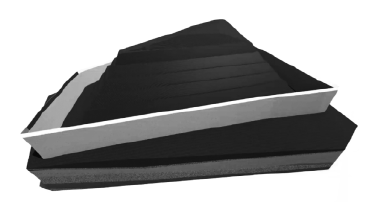
Figure 2 On-Site Three-Dimensional Model
Next, various sensors, including gas sensors and temperature and humidity sensors, are deployed within the landfill using IoT technology to achieve real-time monitoring of environmental parameters, odor concentration, waste mass volume, and equipment operating status during the excavation process.
Real-time data collected by the sensors is transmitted to a cloud platform through IoT technology. On the cloud platform, monitoring data is integrated with the three-dimensional model, ensuring that the landfill’s three-dimensional model remains synchronized and updated with actual scene data, such as waste accumulation and gas emissions, thereby providing more realistic and accurate information for monitoring. Fixed and mobile monitoring devices on-site are shown in Figure 3.
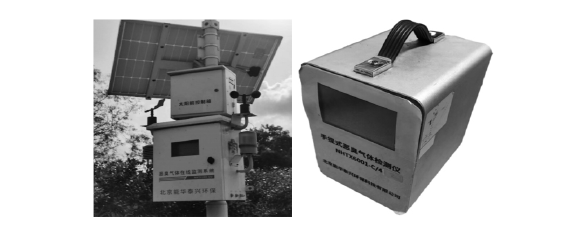
Figure 3 Odor Monitoring Equipment
The integration of BIM + IoT technology consolidates the on-site model and monitoring data into a unified cloud platform, providing an integrated tool for managing the landfill remediation process. Designers, planners, and engineers from different departments can collaborate on the same platform, sharing and updating project information to ensure integrated design and planning, thereby improving the quality and efficiency of remediation.
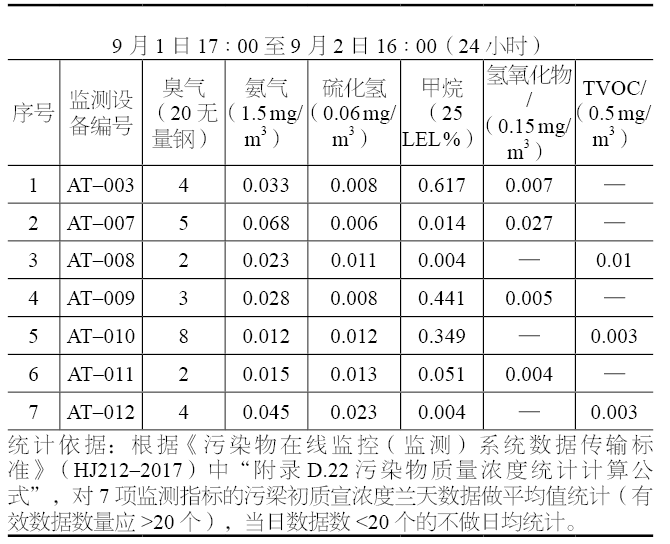
Members from different departments can jointly participate in the decision-making process through the cloud platform. The excavation of landfill waste involves distributed teams or professionals working across multiple geographic locations, and the remote collaborative decision-making model supported by BIM + IoT technology enhances overall collaboration and efficiency, facilitating better management and monitoring of the excavation process. Detailed monitoring data is shown in Table 1.
Table 1 Daily Average Values of Gas Monitoring Around the Site Boundary
3.3 Safety Supervision
The application of BIM + IoT technology in safety supervision and early warning systems during landfill excavation emphasizes the safety management of workers and equipment. By deploying sensors within the landfill to monitor key parameters such as gas concentration, temperature, and equipment operating status, real-time monitoring of the safety conditions of workers and equipment is achieved. This data is connected to the cloud platform via IoT, presented in the form of a three-dimensional model, helping the management team gain a more comprehensive understanding of the landfill’s safety status.
The IoT system, combined with real-time monitoring and the BIM model, can quickly and accurately identify potential hazards within the landfill. Big data technology plays a key role in this process, as it can identify potential hazards through in-depth analysis of historical and real-time data, as well as predict possible safety issues, enabling early awareness of potential risks. Additionally, big data technology supports advanced analysis of monitoring data, identifying correlations between different data points, further enhancing the accuracy and sensitivity of the early warning system.
When the system detects anomalies, the IoT system can automatically trigger alarms, quickly notifying relevant personnel through various notification methods such as SMS, email, and sound alarms, enabling rapid emergency response and timely implementation of necessary measures. Furthermore, the cloud platform can provide detailed geographic information and real-time data, accurately locating potential risk areas through the three-dimensional model. This allows the team to quickly formulate effective safety measures during emergency responses.
The system combining BIM + IoT technology with big data forms a complete and efficient solution for safety supervision and early warning during landfill excavation. It not only achieves real-time safety monitoring but also improves the identification and handling efficiency of potential hazards through intelligent prediction systems. Through real-time safety monitoring, early warning systems, and rapid emergency response mechanisms, this system enables landfill management teams to gain a more comprehensive understanding of the safety status of workers and equipment, effectively reducing potential safety risks and providing more reliable safety assurance for the landfill excavation process.
4 Gas Control Methods During Excavation
In line with the characteristics of the Yanchunling municipal solid waste landfill project and to meet the surrounding atmospheric pollution control requirements, this study adopts an intelligent multi-dimensional odor control scheme that integrates BIM + IoT technology. This scheme includes five components: odor removal from the waste mass, odor removal from the work face, mobile curtains in the excavation area, site odor removal curtains, and high-pressure mobile dust suppression vehicles for odor removal. Through intelligent technology, the goal of effectively isolating odor diffusion is achieved, minimizing the pressure of surrounding atmospheric pollution.
4.1 On-Site Gas Control
During the waste excavation operations, odor removal measures for the waste mass are precisely arranged using BIM technology. At each excavation point in the waste mass work area, odor removal fog cannons are installed, enabling real-time monitoring and remote control through IoT technology. As excavation progresses, three-dimensional real-time monitoring of the waste mass is conducted using the BIM model and sensors, and the data feedback from the sensors dynamically adjusts the spraying parameters of the fog cannons to ensure optimal odor removal effects while minimizing resource waste.
Additionally, BIM technology can virtually simulate the surface of the waste, providing a more intelligent solution for odor control. Combined with the IoT programming system, an automated spraying plan can be developed based on the virtual simulation results of the model, accurately determining the spraying paths and frequencies for each work point. This ensures comprehensive coverage of the waste mass, making odor control more efficient and providing more precise solutions for environmental protection and resource conservation.
Monitoring results of air quality and harmful gas concentrations at the excavation site are transmitted to the cloud platform in real-time, enabling real-time monitoring and analysis of harmful gases. Under the influence of BIM + IoT technology, the cloud platform can quickly make decisions based on real-time data. When harmful gas concentrations are predicted to exceed safety standards, the system will automatically trigger the spraying operation of the excavation odor removal fog cannons. BIM + IoT technology, through on-site three-dimensional models and air flow simulations, selects the best spraying locations, ensuring that the odor removal agents from the fog cannons can efficiently cover the target areas and quickly control harmful gases. This intelligent control system achieves real-time and precise control of harmful gases, avoiding human misjudgment and delays.
4.2 Off-Site Gas Control
To cut off the diffusion of odors, mobile odor removal curtains are set up around the excavation area, with precise simulation of the curtain layout using BIM technology. Combined with real-time monitoring through IoT technology, time-based control can be implemented at different time periods, flexibly adjusting the position and spray intensity of the curtains. Each odor removal curtain will be equipped with an IoT remote monitoring system to achieve real-time status monitoring, alarm processing, and remote control of the curtains. Supported by BIM + IoT technology, mobile odor removal curtains can handle odor pollution more intelligently and efficiently.
Odor removal curtains are arranged along the site boundary, with a total installation distance of approximately 2,000 m around the entire landfill, installing about 2,000 dedicated atomizing nozzles for odor removal, and deploying 9 sets of spraying odor removal systems. Based on the orientation and range of the excavation area on-site, combined with daily wind speed and direction, the cloud platform controls the spraying frequency and intensity of the odor removal curtains along the boundary.
Finally, mobile high-pressure dust suppression vehicles are deployed around the work area as remote suppression equipment. The driving paths of the vehicles are planned using BIM technology, and combined with real-time monitoring of vehicle status through IoT technology, the positions and spray directions of the dust suppression vehicles are flexibly adjusted based on different wind directions and pollution source distributions, ensuring efficient coverage of dust suppression operations. Each dust suppression vehicle is equipped with an IoT remote monitoring system for real-time remote monitoring and control of the vehicles.
The comprehensive application of BIM + IoT technology enables the landfill to efficiently control harmful gases while excavating waste. Through real-time monitoring and flexible adjustments, these odor control and dust suppression measures can quickly adapt to environmental changes during the excavation process, ensuring that the landfill operates with optimal environmental protection effects.
5 Conclusion
The application of BIM + IoT technology provides a new digital solution for managing the landfill excavation process, promoting the digital transformation of landfill management. Through the organic integration of BIM and IoT technologies, the monitoring process of landfill waste excavation becomes more intelligent, precise, and visualized, allowing managers to gain a more comprehensive understanding of the actual conditions at the excavation site, thereby achieving precise monitoring and control of harmful gases, effectively reducing human errors and improving monitoring efficiency. The comprehensive application of BIM and IoT technologies in the landfill waste excavation process leads to the following conclusions:
(1) Through three-dimensional modeling with BIM technology, key information such as the landfill’s terrain and waste distribution is accurately presented, providing a visual foundation for excavation operations.
(2) The real-time monitoring system of IoT technology further enhances the ability to perceive environmental factors and the diffusion of harmful gases, providing reliable data support for intelligent control.
(3) During the excavation process, BIM + IoT technology enables more effective collaboration among participants through data sharing and collaborative design.
(4) Through the intelligent early warning system, the system can respond promptly when environmental anomalies are detected, improving the safety of the excavation process.
In summary, the application of BIM + IoT technology in landfill waste excavation introduces a new intelligent management model for environmental management. Through three-dimensional modeling, real-time data collection, remote monitoring, and collaborative design, this technology not only improves work efficiency but also strengthens the lifecycle management of the landfill, ensuring that the excavation process is conducted efficiently while minimizing negative impacts on the surrounding environment. This technology provides strong empirical evidence for management in the construction and infrastructure fields, demonstrating the forward-looking and innovative applications of BIM and IoT technologies in the field of environmental engineering. Future research efforts may focus on improving data transmission efficiency, analysis speed, and accuracy to provide more timely and precise results for improving and refining on-site plans.
Excerpt from “Building Technology” October 2024, Liu Haining, Zhang Zehua, Qi Le, Liu Zhansheng, Zhong Jianfeng
◎ All original articles published by this WeChat account are copyrighted by the Building Technology Magazine. Any media reproduction or excerpt must indicate the original source.