
During the end of term or review stages, teachers often need to select questions from different papers and integrate them into thematic papers based on knowledge points. However, manual selection is time-consuming and labor-intensive, making it difficult to balance the refinement of knowledge point levels and coverage. Now, the paper compilation feature is specifically designed to address this pain point!

The core value of the paper compilation lies in reconstructing the review paper production process through “intelligent integration + flexible customization”.
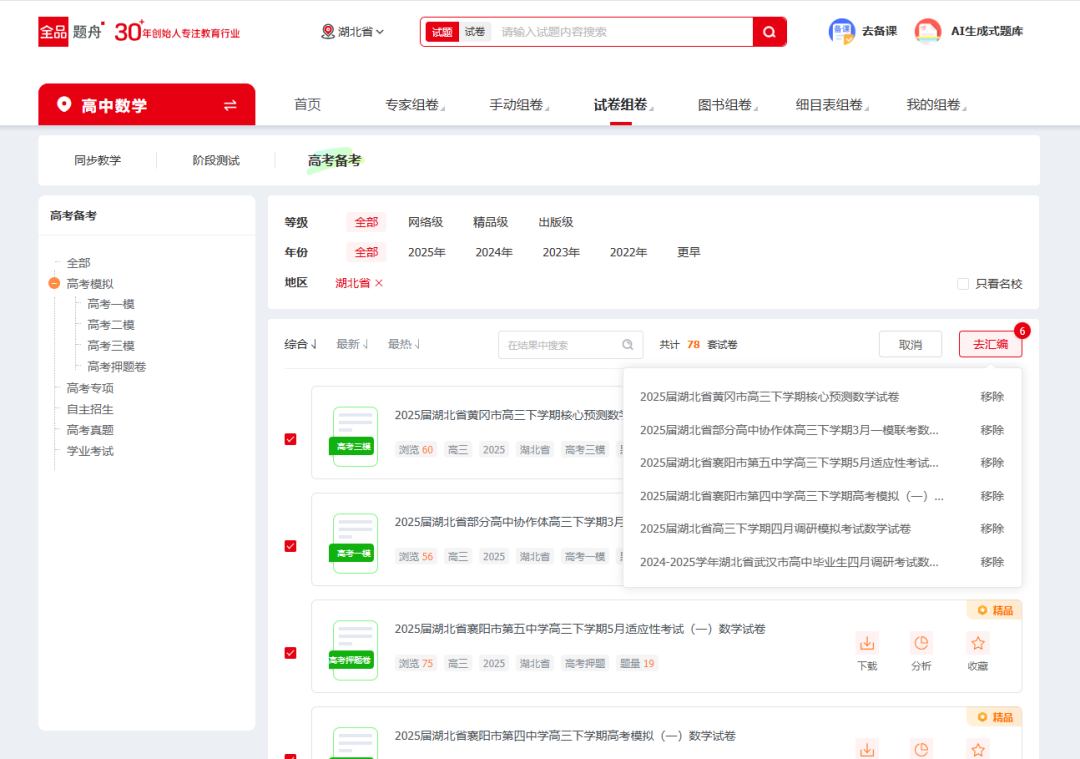
Teachers only need to select multiple sets of papers, and the system will automatically decompose the knowledge points, reorganizing scattered questions into a review collection by topic;

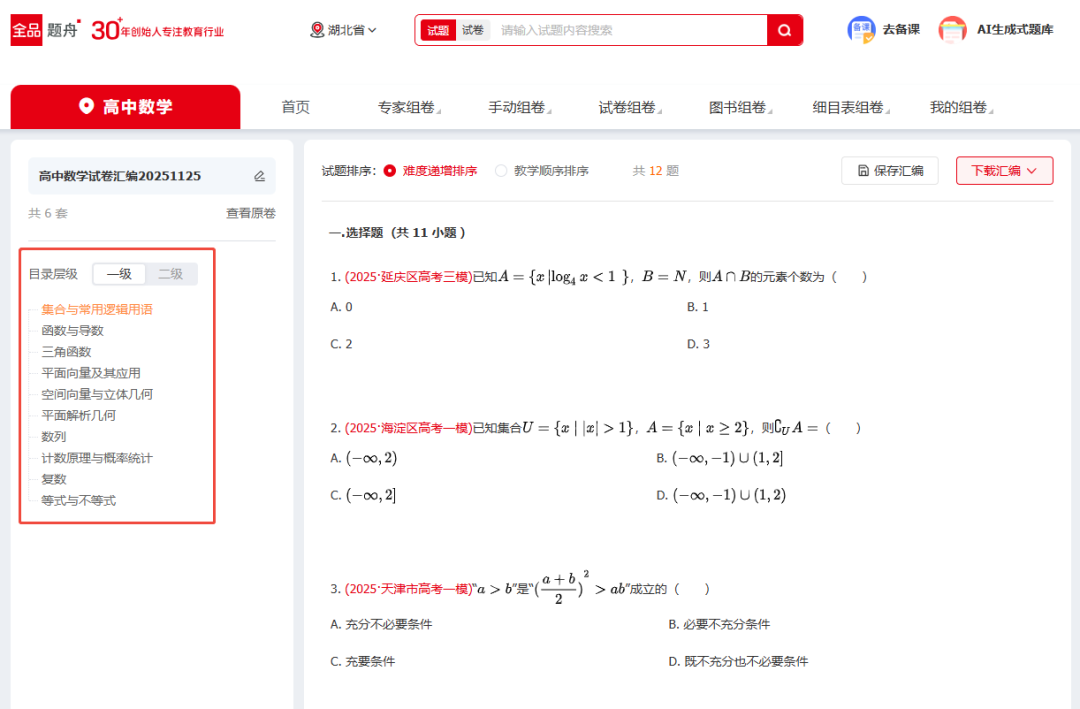
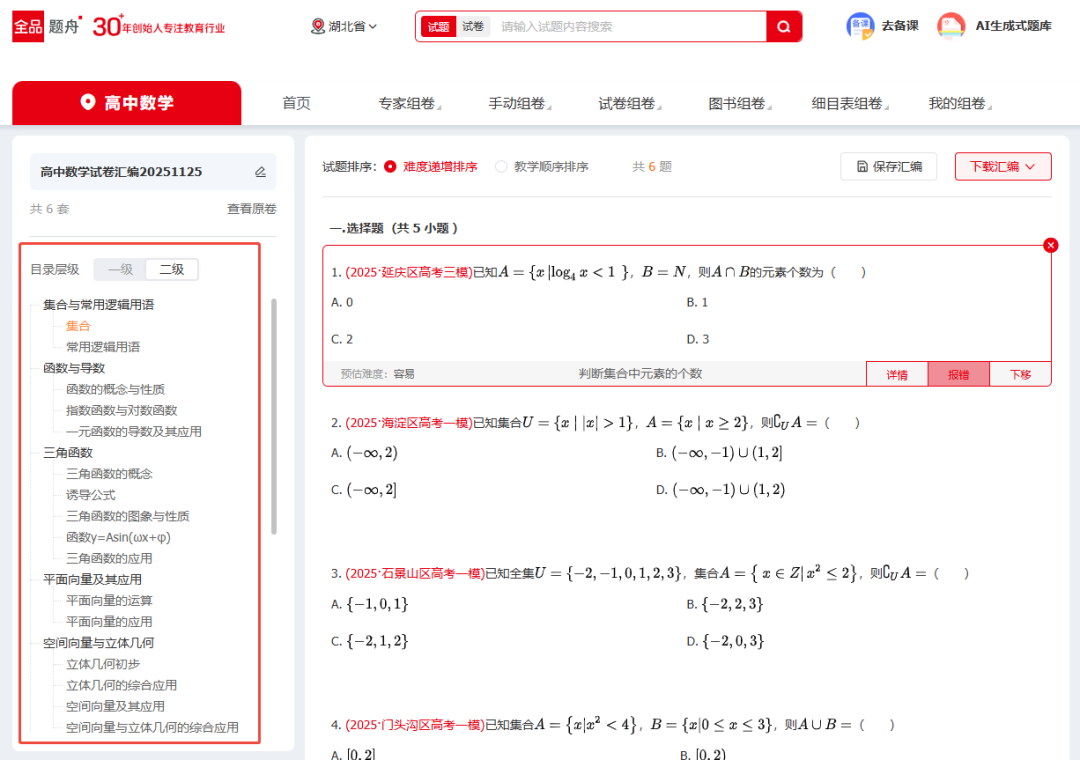


It also supports filtering questions by the hierarchy of knowledge points, quickly generating targeted sub-papers, allowing reviews to accurately anchor the structure of knowledge levels;
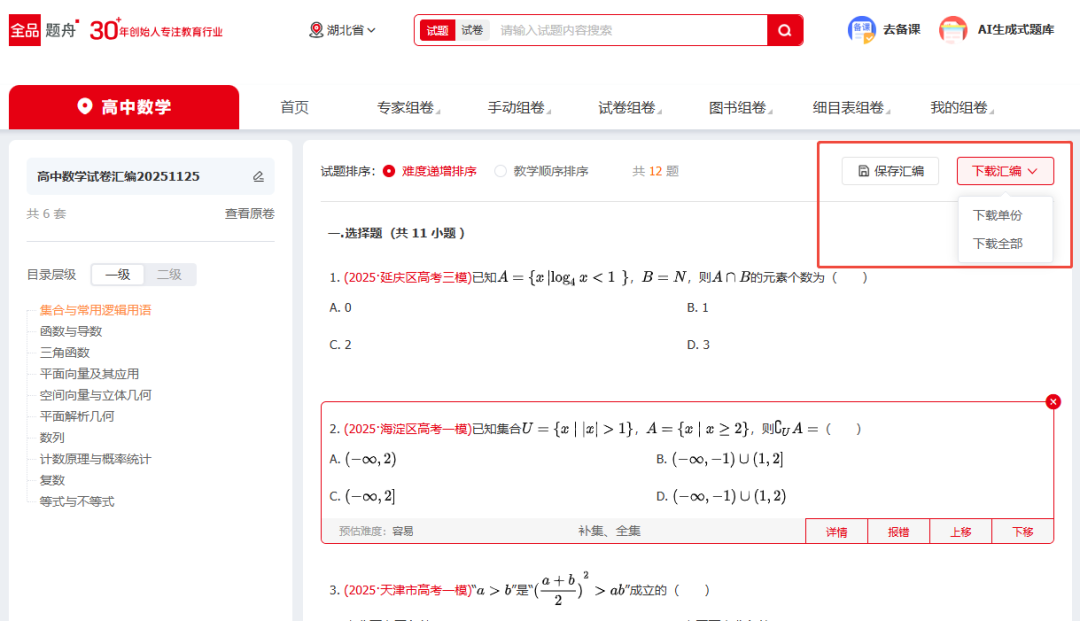
If more precise adjustments are needed, manual filtering and integration can be performed again, retaining the autonomy of control;
The final results can be saved to a personal paper library for repeated use or directly downloaded for local printing, completely saying goodbye to the inefficient model of “pasting together”.


The paper compilation function breaks the limitations of traditional review resources being “isolated”, constructing a cross-paper and cross-region knowledge network. In the past, when teachers conducted thematic reviews, they often had to rely on a limited number of old papers at hand, leading to a narrow coverage of knowledge points; now, by selecting papers from different periods and sources, the system can automatically gather questions on the same knowledge points scattered across various papers, forming a complete question bank that allows for both “vertical connections” (from basic concepts in the first year to comprehensive applications in the third year) and “horizontal comparisons” (the same test point under different testing methods), enabling thematic reviews to both “review old material” and “learn new material”.


At the same time, the design of secondary manual editing of paper compilation retains the professional judgment of teachers—the system recommends the “data optimal solution”, while teachers can flexibly remove out-of-scope questions and add frequently missed points based on recent mock exam mistakes and student feedback, making the thematic paper truly a “customized review tool for students”. This model of “intelligent foundation + manual calibration” avoids the blindness of purely manual paper compilation and the mechanical feel of purely machine recommendations, allowing technology to truly serve the educational principle of “teaching according to students’ needs”.
Whether for new teachers to quickly build a review framework, experienced teachers to refine high-quality thematic papers, or interdisciplinary teachers to share quality resources, this feature is redefining the value of “review papers”. They are no longer just a cold pile of questions, but a knowledge map based on data insights and teaching experience, serving as an efficient bridge connecting “teaching” and “learning”.
 This is not just an upgrade of tools, but an optimization of teaching logic.
For teachers, it compresses the repetitive labor of “finding questions – categorizing – compiling papers” into a simple operation of “selecting papers – confirming”, freeing up more energy to focus on teaching design;

For students, thematic sub-papers can closely follow the knowledge structure to strengthen weak points, and hierarchical topic selection is more aligned with individual differences, enhancing both review efficiency and targeting;

For teaching management, the accumulation of personal paper libraries allows quality resources to be reused and traced, promoting the efficient inheritance of teaching experience.
From “mechanical paper compilation” to “intelligent assembly”, this feature is returning the production of review papers to the essence of “serving teaching”—less complexity, more focus on learning and teaching.

Click the blue text above to follow for more exciting content.