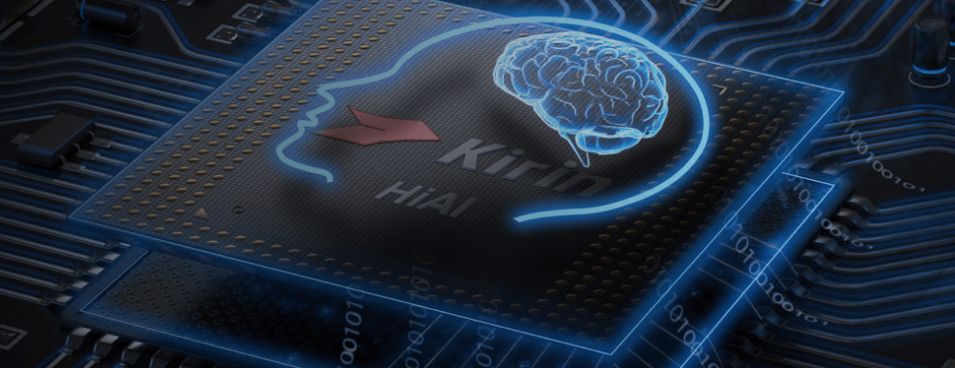
The global technology landscape is undergoing a profound transformation. Intelligence is driving a technological revolution; the great power competition under the trend of de-globalization; the heavy iron curtain imposed by the United States on Chinese technology, and the forced breakthrough of Chinese technology… If all of this were to be showcased on the smallest possible stage, that stage would undoubtedly be called the Kirin chip.
On November 25, the Huawei Mate 80 series launch event was held in Shenzhen. While I will skip the product details for now, I saw a familiar yet strange term on the setup screen after powering on: the SoC processor model of this phone is called Kirin 9030.
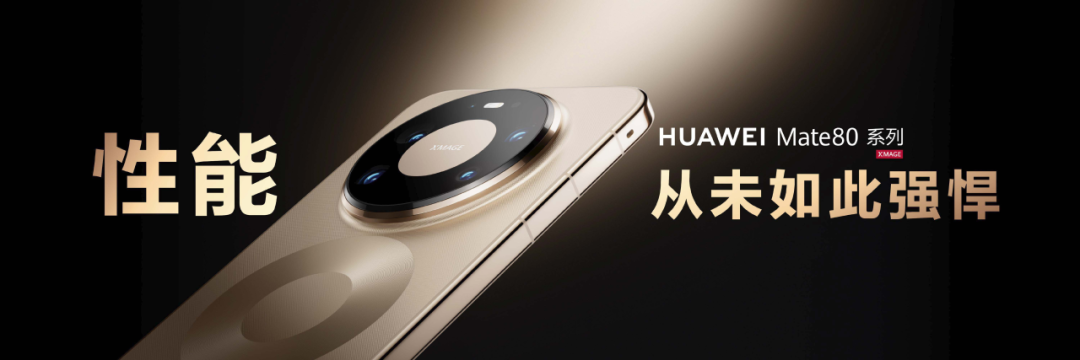
Although related news had already circulated, seeing this scene in person was still an indescribable shock. The Kirin chip was once a key driver for Huawei to become the global smartphone sales champion, and it was also the most severely damaged part of the Chinese technology system after the U.S. launched a technological blockade. Later, the return of Kirin helped the Mate series make a comeback, allowing Huawei to re-enter the smartphone market. However, it seemed that no one believed that the Kirin chip could truly break through the blockade and return to an annual iteration development frequency. But if the chip hidden in the Huawei Mate 80 series is called Kirin 9030, it indicates that those “impossibilities” have indeed been shattered.
Although the official announcement did not specify the processor model used in the Mate 80 series, the specific progress and experiences of the Kirin chip remain shrouded in a silent yet tragic fog. However, today we may reflect on this story. This should be an unprecedented page in the history of Chinese technology: the Kirin chip is like an oasis we planted in a blizzard.
At the launch event on the 25th, the opening song was “Chapter” sung by Wang Heye. Friends familiar with our content know that Huawei has placed great importance on the music during its launch events in recent years. Because at this stage, many emotions that want to be expressed but cannot be articulated are entrusted to the selection of this music. The lyrics of “Chapter” resonate with the experiences of the Kirin chip:
“Every time I have been sad
And drenched by the rain
Flowers bloom in the mud
Let them grow”
This seems to be the symphony of the fate of the Kirin chip, but the notes struck are not just for Kirin. The fate of China’s semiconductor and smart terminal industry, and even the overall fate of Chinese technology, seems to echo in the lyrics.
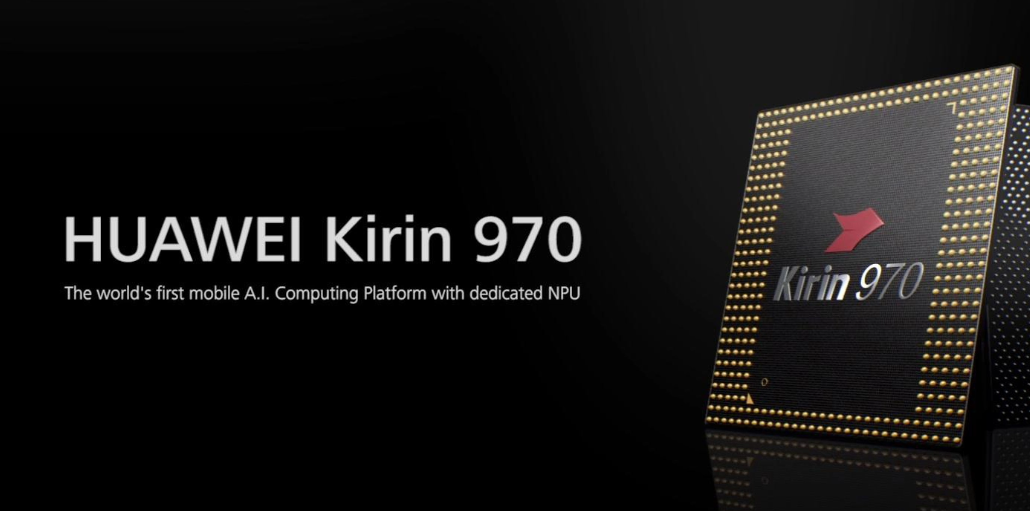
Let us rewind time to many years ago, when the Kirin chip represented China’s semiconductors and smart terminals, and was Huawei’s “magic weapon” in the smartphone market. In 2017, the Kirin 970 debuted with an AI task processing unit, and its pioneering mobile AI hardware architecture continues to influence today. In 2020, the Kirin 9000 was the first in the industry to debut 5G communication capabilities, outperforming Apple’s A14 processor released in the same year in several aspects.
The Kirin chip, which has continuously iterated and achieved key breakthroughs, has made Huawei HiSilicon the number one semiconductor company in Asia and helped Huawei surpass Apple and Samsung to become the world’s number one smartphone seller.
But malice always spreads when one is at the peak of success. In 2019, the U.S. placed Huawei on the Entity List, and subsequently launched a systematic siege around the Kirin, the “most advanced chip in China.” To completely strangle Kirin, the U.S. formed the “Quad Chip Alliance” with its allies, implementing comprehensive supply chain controls on the Kirin chip, blocking its access to EDA tools, wafer foundries, photolithography machines, and many raw materials. Following TSMC’s complete cessation of supply for the Kirin chip after September 15, 2020, the Kirin 9000 became a “limited edition”.
Although historically, the U.S. has repeatedly used long-arm jurisdiction and technological iron curtains as competitive strategies, this time, the global technological and supply chain severance targeting Huawei and China’s high-end chips is the most systematic and precise one in history. This blockade accurately struck at the weakest link in Chinese technology, for the first time weaponizing the global technology supply chain through legal means, widely regarded as the most severe technological sanctions in history.
After the sanctions were imposed, public opinion both domestically and internationally lamented. Historically, no country, industry, or enterprise has been able to withstand similar technological sanctions, let alone a small Kirin chip. Even more frightening is that once it is proven that the U.S.’s systematic and precise technological blockade is effective, more blockades will follow. If the hole of the Kirin chip cannot be plugged, it will lead to a dam break in Chinese technology.
So, when will it be proven that the issues surrounding the Kirin chip have indeed been resolved? Five years have passed, and the answer has arrived.
Fast forward to 2025, during the launch of the Mate 80 series, Huawei has been emphasizing a concept called “opening a new chapter.” This new chapter certainly encompasses products, technologies, and other aspects, but attentive netizens have also noticed that “new chapter” is a homophone for “chip.” The true return of the Kirin chip to maturity and stability is the most critical information released by the Huawei Mate 80 series in terms of technological ecology and industrial significance.
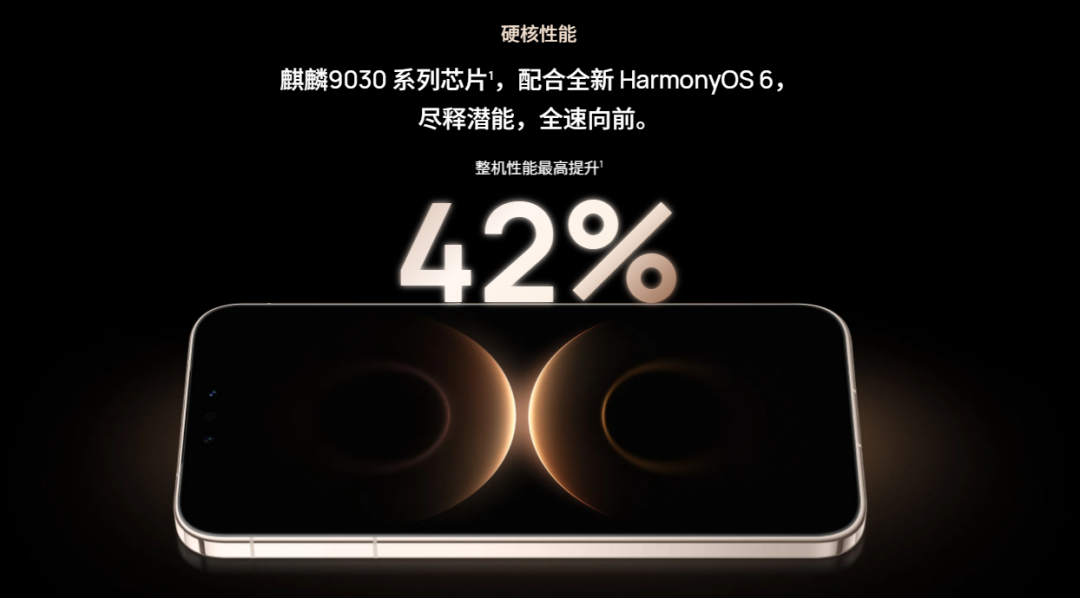
The best proof of this information is that the emergence of the Kirin 9030 and Kirin 9030 Pro signifies that the Kirin series has returned to a continuous iteration process of annual updates. The familiar “Kirin style,” which balances rapid evolution and capability breakthroughs, has finally returned after many years.
In the semiconductor industry, the significance of sustainable iteration is extraordinary. The success of companies like Intel, NVIDIA, and Qualcomm is based on the annual iteration of mainstream chip products. In contrast, the decline of Soviet chips began with a closed innovation system, leading to stagnation in chip iteration; the decline of Japanese semiconductors also started when companies like NEC and Hitachi slowed down product iterations.
Although the Chinese have long been aware of the return of Kirin, the return of the Huawei Mate series was once referred to as the “spirit machine.” However, various sectors have always been unable to determine whether the Kirin chip could return to a stable iteration frequency, naturally leading to doubts about the industrial resilience and ecological stability of the Kirin chip. However, in reality, from the Kirin 9000s to the Kirin 9010, Kirin 9020, and now the Kirin 9030 series, the Kirin chip has returned to a trajectory of steady progress and continuous iteration. This proves that the industrial chain surrounding the Kirin chip has begun to mature. The new chapter of the chip has indeed arrived.
Furthermore, the emergence of the Kirin 9030 and the formation of the Kirin chip’s continuous iteration have far-reaching implications.
It impacts products, as the Huawei Mate 80 has achieved breakthroughs in imaging, communication, performance, and AI.It is well known that the integrated software and hardware architecture is Huawei’s forte, and the maturity and iterability of the Kirin chip are the foundation of product innovation. Only with a Kirin chip that fully integrates AI computing, energy-efficient architecture, and communication can the overall innovative experience of the Huawei Mate 80 series be supported.
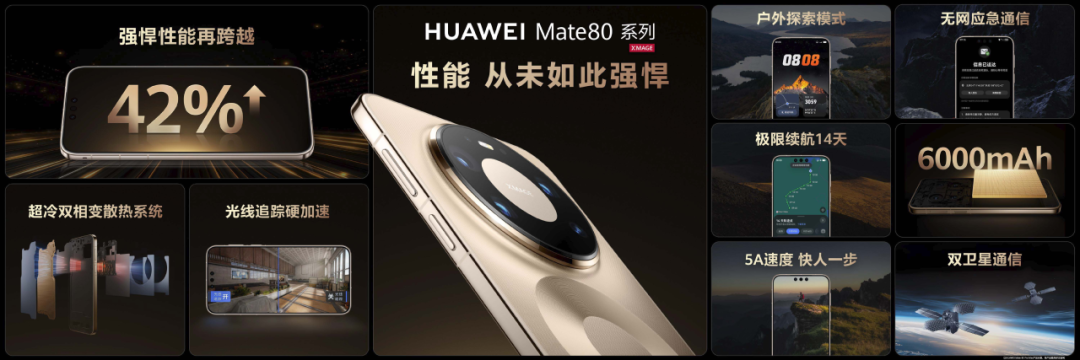
Moreover, the Huawei Mate 80 series also bears the task of promoting the iteration of HarmonyOS 6.The Kirin chip is the hardware cornerstone of HarmonyOS. It enables tighter collaboration between the system, hardware, and applications, pushing Huawei from a “hardware-driven” to a “soft and hard symbiosis” new stage, laying the foundation for the long-term healthy development of the mobile computing ecosystem. This strategy of achieving breakthroughs in foundational software ecology through hardware has become a clear and visible strategy.
From the perspective of market supply and demand, the biggest problem in the years following the return of Huawei’s high-end smartphones has been insufficient production capacity, making them hard to come by. The key constraint here is chip production capacity.Sustainable iteration means that the production capacity and yield rate of the Kirin chip have stabilized, which will directly bring a stable supply of Huawei’s high-end phones to the market.
For the semiconductor industry chain, the stable iteration of the Kirin chip means it can drive the continuous upgrade of supporting industries such as equipment, materials, and design tools, thus achieving a positive cycle in the domestic semiconductor industry.
Most importantly, the Kirin chip brings confidence.Users will know that what they are buying is not a product that could become obsolete at any moment; supporters of Huawei will know that years of waiting and trust have their echoes, and everyone will know that Chinese technology is resilient and unyielding.
The Kirin 9030 is the beacon of these changes. Former Intel CEO Andy Grove said, “Only the paranoid survive in the semiconductor industry.” Continuous iteration is the greatest obsession of a chip, and Kirin has become an oasis in the blizzard—a thriving oasis.
“Burning a small dream
Not afraid of running barefoot against the wind
Just after being brave
There will be a clear sky for thousands of miles”
So, how did the Kirin chip achieve this? Clearly, there are many touching stories hidden within, which we still do not know today. But from the small information of the Kirin 9030, we can infer that the Kirin chip has completed the seemingly impossible task of a comprehensive migration of the industrial chain over the past few years.
Before the sanctions, the Kirin chip could be said to be a masterpiece of globalized semiconductor division of labor, achieving collaboration and coordination among the world’s top equipment, foundries, designs, and more. However, this flower of human industry was extinguished by the blizzard of unilateralism. Reluctantly, Huawei had to migrate the Kirin chip entirely onto the domestic semiconductor industry chain, building the industrial foundation for high-end chips from scratch. The difficulties and pains of this process are unimaginable.
However, one thing is clear: this migration cannot be accomplished by Huawei alone. It requires the concerted efforts of countless Chinese enterprises and the re-establishment and close cooperation of the entire industrial chain.
Under the oasis of the Kirin chip, the rivers and lakes of China converge. Countless rivers deliver nutrients and energy here, allowing us to plant trees and flowers in the blizzard.
What Huawei refers to as embarking on a new chapter may truly mean embarking on a journey with chips, a silent gratitude to every partner on the road to Kirin’s return.At this moment, their names must still be protected, but their achievements have rewritten history. This large and silent unnamed army has completed its triumph.
The rebirth of the Kirin chip is a feat achieved by leveraging all resources, capabilities, and collaborative relationships based on the realities of China’s semiconductor industry. The success of this endeavor is also another form of proof: mobile SoC chips are the crown jewels of the semiconductor industry, recognized as the highest standard and most demanding industrial requirements. Being able to support Kirin means that the realities of China’s semiconductor conditions can now produce various Huawei and non-Huawei chips. After this collective breakthrough, the path ahead is clear.
“We can grow Kirin, and we can grow thousands of trees and flowers, allowing the world of technology to return to the green mountains and waters we desire.”
Recently, authoritative international media such as FT and Reuters reported on an internal conversation by NVIDIA CEO Jensen Huang, who bluntly pointed out that “the U.S. chip restrictions on China are the dumbest policy in history,” and this policy “has given them the best national mobilization task in 50 years.”
It must be said that this insight is piercing. The experience of the Kirin chip may be a microcosm of the fate of Chinese technology in this era. In the current situation, we are facing a brutal and real global technological competition and great power rivalry. The once beautiful and brilliant global technological collaboration is fading away without our will. In this case, nostalgia for the past will only breed illusions. Abandoning all possibilities, forgetting all retreat routes, and starting from scratch to build core technologies may be the only way out.
Chips are like this, operating systems are like this, foundational software and development tools, AI large models, etc., are all like this. The Kirin chip is the best proof of this necessity and possibility, and also the vanguard of a turning point in the era. The sustainable evolution of the Kirin chip combines Huawei’s strong technical capabilities and resource coordination functions, gathering comprehensive support from technology research and development to industrial chain integration, and gaining profound support from consumers and social public opinion. Ultimately, it is the collective strength of society that has achieved this task, which was once thought to be impossible. With the unique collectivism and patriotism of the Chinese people and society, we have overcome the seemingly insurmountable technological gap.
The story of the Kirin chip does not feature a miraculous stroke of genius, nor the thrill of overtaking on a curve; it is about facing the gap, accumulating strength, building resilience, and achieving strategic goals through long-term technological accumulation and systematic innovation projects. In the face of an avalanche-like technological iron curtain, we need to be even more calm and patient, using core technologies as breakthrough points, industrial chain division of labor as the basic plan, and the social atmosphere and talent cultivation system as fundamental supports. Mobilizing all available forces to ultimately achieve technological self-reliance and break external blockades.
More critically, the Kirin chip has achieved a possibility. Tasks we once thought impossible are now found to be achievable. So perhaps we can ask further: Can we lead a technological revolution? Can we make China choose to become the best technological route globally? Can we achieve foundational innovation from 0 to 1?
If Kirin can do it, then more people will believe that united together, everything is possible.
The industrial logic and social trust proven by the Kirin chip align with China’s current technological choices.Or it can be said that the many breakthrough methods similar to the Kirin chip have constructed the overall breakthrough plan for Chinese technology. The 14th Five-Year Plan systematically deploys technological innovation, emphasizing the need to strengthen original innovation and tackle key core technologies. By improving the new type of national system, extraordinary measures are taken to promote decisive breakthroughs in key areas such as integrated circuits.
The Kirin chip is undoubtedly an innovation in integrated circuits achieved through extraordinary measures and a full-chain push. It is the best example of the new type of national system in the field of technological innovation. The fate of Chinese technology lies in how to achieve similar breakthroughs to the Kirin chip in many fields and to promote the “Kirin experience” widely.
In 2020, the Brain Extreme Team completed the writing of “Chip Wars: History and Today’s Semiconductor Breakthroughs.” In the chapter about the Kirin chip, I concluded by writing: “The talented youth of the motherland will return again.” Now, we have finally waited for this day.
At some moment, a sudden blizzard destroyed the village
The oil lamp at night records the hurried and awkward footsteps
After that, everyone learned to face the blizzard
Trying to use body heat to protect a bud
After that, everyone planted trees in the snow
The heavy snow remains, but the oasis called Kirin has already turned green
We unite as one, we stand as a nation, we have no way to retreat
All efforts are only to demonstrate one thing: from now on, we will not take a step back
 ··
··