Robots Learn to “Perceive Texture”! Dexterous Hand Touch Recognition Accuracy Exceeds 98%, Approaching Human Fingertips
Dexterous Hand
Robot




Introduction
In a laboratory at Johns Hopkins University, an innovative bionic prosthetic hand is quietly changing the future. By simulating the four main mechanoreceptors in human skin and combining multi-layer neuromorphic tactile sensing, it has achieved an astonishing 98.38% accuracy in texture recognition tests, nearly matching the sensory capabilities of human fingertips.
Meanwhile, in China, Yimu Technology recently released the world’s thinnest bionic visual-tactile sensor, which is only half the thickness of similar products in the industry, equipping robots with “skin” that approaches human fingertip levels.
Tactile Perception: A Breakthrough in the “Last Mile” for Robots

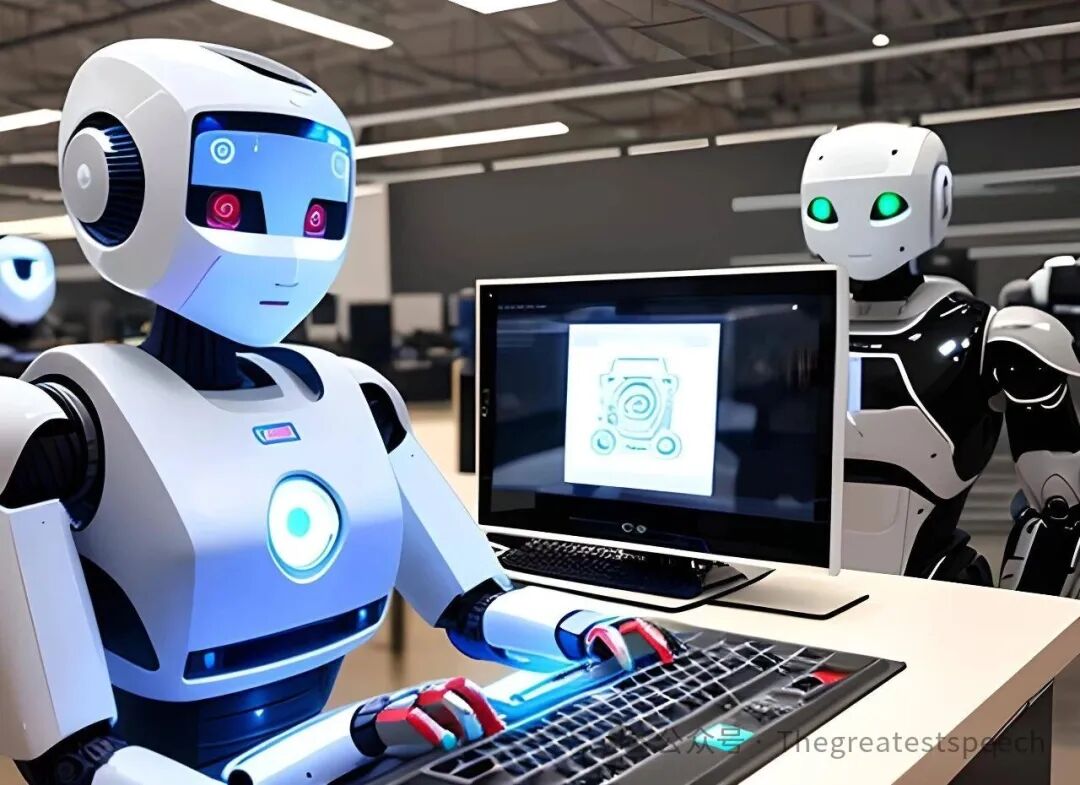
With the rapid development of humanoid robots, industrial automation, and smart home devices, “perceptual ability” has become a core indicator of measuring the intelligence level of robots.
Currently, perception technologies such as vision and hearing are relatively mature, but tactile perception, as the “last mile” for robots to interact with the physical world, has long been constrained by technical bottlenecks. Traditional visual-tactile solutions generally suffer from issues such as large size, significant temperature drift, perceptual blind spots, and reliance on imported materials, making it difficult to meet the application needs for fine operations and complex working conditions.
The significant breakthrough in tactile perception comes from biomimicry of humans. Human skin contains four main mechanoreceptors that perceive pressure, low-frequency vibrations, skin stretch, and high-frequency vibrations. These receptors work together, allowing us to instantly distinguish the smoothness of silk, the roughness of sandpaper, and even the fine textures on paper.
Now, scientists have successfully applied this principle to the dexterous hands of robots.

Three Major Technical Pathways: Competing for the Throne of Tactile Perception
Biomimetic Visual-Tactile Sensing Pathway
The groundbreaking product from Yimu Technology—the world’s thinnest bionic visual-tactile sensor—features a contact surface mimicking the shape of human fingertip, with dimensions and thickness approaching that of human fingertips. Its core technology lies in capturing subtle deformations of elastic materials when in contact with objects using an embedded camera, obtaining high-definition sequences of “tactile photos” and calculating rich tactile signals through AI.
This sensor boasts micron-level deformation calculation accuracy, 0.005N force resolution, and a maximum output frame rate of 120fps. With this performance combination, robots can detect extremely slight pressure changes and output data in real-time at high speeds, providing timely and accurate tactile feedback for fine operations.
Multi-layer Neuromorphic Tactile Sensing Pathway
The bionic prosthetic hand developed by researchers at Johns Hopkins University innovatively combines a hybrid rigid-flexible structure with multi-layer neuromorphic tactile sensing.
This bionic sensing system uses three layers of sensors to perceive pressure, low-frequency vibrations, skin stretch, and high-frequency vibrations. This multi-level perception capability has enabled the prosthetic hand to achieve an astonishing 98.38% accuracy in texture recognition tests.
Pacinian corpuscles are excellent vibration sensors located deep in the dermis of human skin, detecting tiny vibrations transmitted through the skin. These receptors are highly sensitive to stimuli around 200 Hz and have high-pass filtering characteristics. Researchers were inspired by this to develop artificial vibration sensors with similar characteristics.
3D Structural Sensing Pathway
Professor Gu Hongying’s team at Shanghai Jiao Tong University has taken a different approach, proposing a 3D lattice ionic electronic tactile sensor, encapsulated in a framework inspired by origami.
“3D manufacturing technology is fundamental,” Professor Gu reported, “Hydrogels are soft like jelly and difficult to construct structures, while our low-temperature printing technology ensures size enhancement design and on-demand construction.”
This sensor exhibits a wide range of linearity in electrical response and compressive mechanics (0-220 kPa), achieving precise detection under extreme dynamic loads.

Human-level Resolution: A New Era of Tactile Perception
In the field of tactile perception, a groundbreaking technology comes from a research team at Northwestern University. They developed a device called VoxeLite, which achieves “human-level resolution” tactile perception for the first time.
“Touch is the last major sense without a true digital interface,” said Sylvia Tan from Northwestern University. “We already have technology that makes things look and sound real. Now, we want textures and tactile sensations to feel real too.”
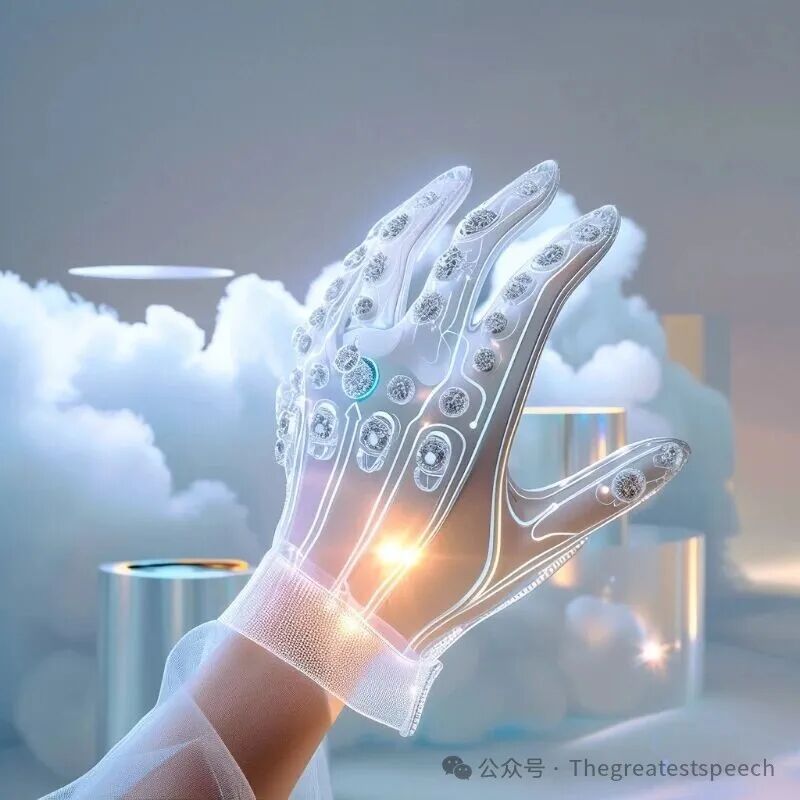
VoxeLite weighs less than 1 gram, with a node spacing of just 1 millimeter, nearly matching the sensitivity of human skin. The device features a micro-controllable node array embedded in an ultra-thin stretchable latex layer, with these soft nodes functioning like tactile pixels, each capable of rapidly pressing into the skin in precise patterns.
In user tests, participants wearing VoxeLite achieved an accuracy of 87% in recognizing directions and 81% in identifying real fabrics.

Technical Challenges and Breakthroughs: From Laboratory to Commercialization
The development of tactile perception technology has not been smooth sailing. Li Zhiqiang, founder of Yimu Technology, pointed out two core challenges: first, visual-tactile technology involves interdisciplinary integration, requiring capabilities from materials, optics, chips, and other fields; second, previous technical solutions were immature, leading to unactivated market demand and insufficient customer awareness of the application value of “tactile perception.”
Breakthroughs in materials science are key to addressing these challenges. Yimu Technology has assembled a professional team to develop flexible electronic skin materials, which not only break the “bottleneck” risk but also achieve stable performance under a million presses and tens of thousands of lateral shear forces, significantly enhancing sensitivity and consistency.
In terms of engineering reliability, by optimizing wear-resistant soft elastomers and Marker marking point processes, Yimu Technology has pushed the limits of materials science, ensuring that product mechanical performance passes long-term durability tests. This means that the sensors can not only operate stably in laboratory environments but also withstand rigorous tests in various complex real-world application scenarios.

Application Prospects: From Medical Rehabilitation to Industrial Manufacturing
The breakthroughs in tactile perception technology have brought revolutionary changes to multiple fields.
In the field of medical rehabilitation, bionic hands with high-precision touch can greatly improve the quality of life for amputees. The bionic prosthetic hand developed by Johns Hopkins University has already demonstrated near-human-level tactile perception capabilities.
In industrial manufacturing, dexterous hands equipped with tactile perception can perform precision assembly tasks. Yimu Technology’s sensors have gained favor from Tesla, leading domestic robot companies, and core suppliers, signing cooperation contracts and currently entering the commercialization phase.
In human-computer interaction, technologies like VoxeLite are expected to fundamentally change the way we interact with digital devices. Future tactile devices could pair with smartphones and tablets, transforming flat, smooth screens into textured interfaces, providing tactile maps for visually impaired individuals, or creating more immersive experiences for gamers.
Future Outlook: The Infinite Possibilities of Touch Intelligence
With the continuous development of tactile perception technology, the future prospects are exciting.
Yimu Technology plans to release an improved VTLA model integrated with tactile alignment algorithms by 2026, filling the current gap in large models in the field of tactile perception. At the same time, it will promote the iteration of the next generation of visual-tactile sensors, aiming to achieve “cliff-like leading” indicators such as 2 milliseconds response time and thickness below 2 millimeters.
In the next 3-5 years, Yimu Technology will advance along two lines: “the upper limit of embodied intelligent technology in touch” and “perfecting industrial implementation,” pursuing a multiplicative enhancement of sensor performance on one hand, and reducing costs through full-stack self-research, automated production, and bulk procurement on the other, achieving large-scale implementation.
Professor Gu Hongying from Shanghai Jiao Tong University is confident about the future of 3D structural sensors: “Unlike 2D structural sensors, our 3D architecture fundamentally enhances the perception dimension. Further structural designs are expected to convert multi-axis deformations into decoupled multimodal signals. This is a new way of thinking about tactile perception, which can equip soft robots with sensory capabilities.”
When robot fingertips can perceive micron-level deformations and distinguish textures of different materials, we are witnessing a historic transformation in robotic tactile perception.
From factories to operating rooms, from homes to space, breakthroughs in dexterous hand tactile technology are breaking the perceptual boundaries of robots in the physical world.
One day in the future, when your robot colleague hands you a cup of coffee and can precisely control the force, don’t be surprised—it is simply proving that technology ultimately serves the essence of humanity.
This response is AI-generated, for reference only.