Imagine a “micro medical team” that is a thousand times thinner than a hair, capable of infiltrating the most delicate area of our body—the brain—to perform precise repairs on malfunctioning parts. This is no longer science fiction, but the cutting-edge exploration in the field of Parkinson’s treatment: nanobots.Introduction: Our Brain Awaits a “Minimally Invasive Revolution”Our brain is the most protected “central command” of the human body, guarded by a sturdy skull and a tight “blood-brain barrier”. While this barrier blocks harmful substances, it also makes it difficult for most medications to enter, posing the greatest challenge in treating brain diseases like Parkinson’s.Traditional oral medications act like “flood irrigation”, with only a small amount reaching the target and causing systemic side effects. It is time to deploy a precise “special forces”—the nanobots.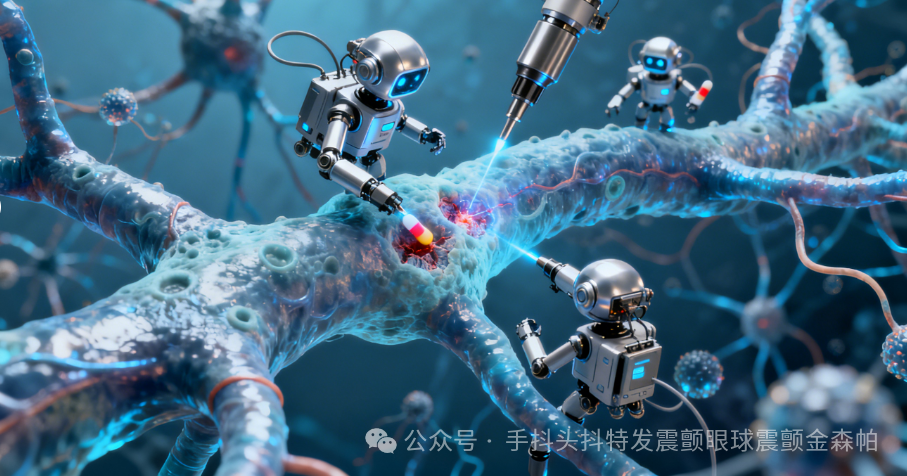 First Stop: Assembly and Camouflage—How to Break Through the “Brain Security Check”?Sending a robot directly into the brain? Of course not. The “nanobots” here are not the familiar wheeled or robotic arms, but rather molecular-level intelligent structures made of DNA, proteins, or biocompatible materials. .Their primary task is to break through the most challenging barrier—the blood-brain barrier. Scientists have designed clever “camouflage” for them:Identity Camouflage: Modifying their surface to resemble nutrients required by the brain, “tricking” the guards on the barrier.External Navigation: Some nanobots are magnetic, allowing doctors to guide them precisely through the barrier’s gaps using an external magnetic field, like maneuvering a magnet.Thus, this invisible team quietly infiltrates the “command center”.
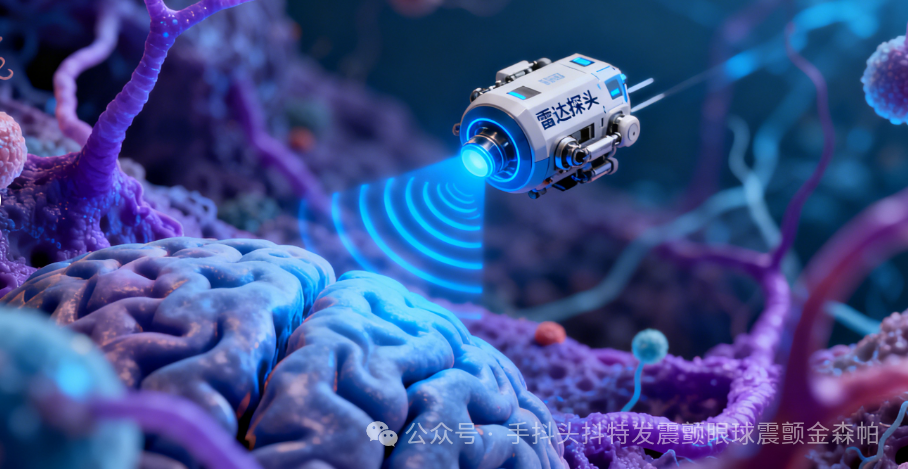
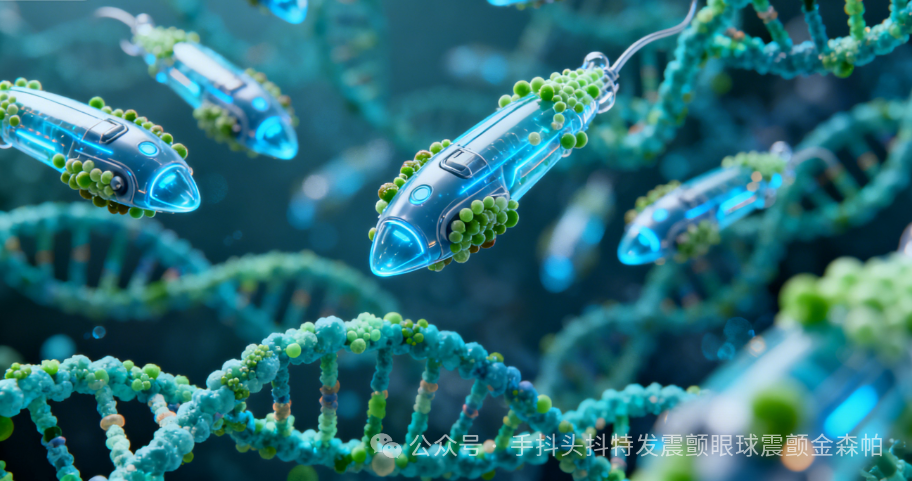 Second Stop: Target Locking—The Moment of “Precision Guidance” HuntingOnce inside the brain, the real mission begins. One of the hallmarks of Parkinson’s disease is the accumulation of a misfolded protein—”α-synuclein”—in specific areas of the brain.Our nanobots carry special “probes” that act like sensitive radars, responding only to this misfolded protein. They will navigate through the vast brain tissue,ignoring normal cells, and precisely find and firmly attach to the diseased target.At this moment, it is no longer just a simple particle, but a “sniper” that has locked onto the enemy.
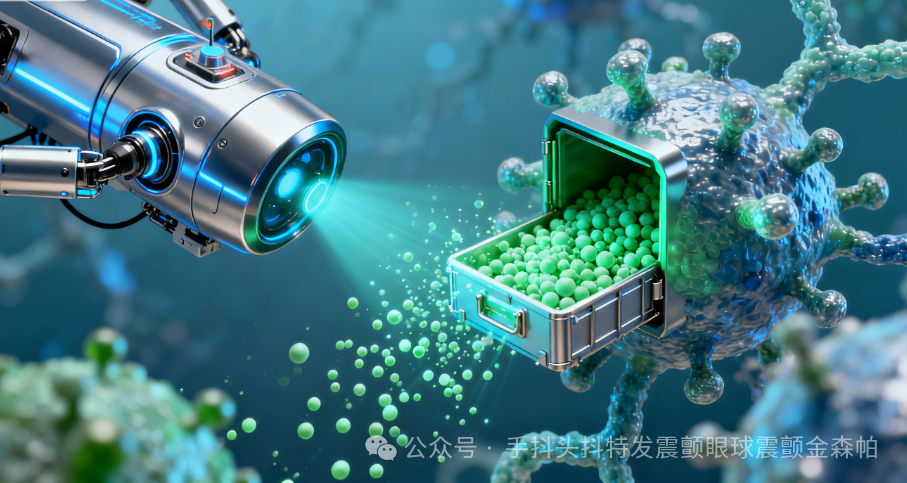
 Third Stop: Task Execution—The Multifunctional “Portable Toolbox”Once the target is locked, the repair task officially begins. Depending on the design, nanobots can execute various commands:1. Precision Delivery: This is its core function. The robot is loaded with therapeutic drugs (such as dopamine precursors or neurotrophic factors). Upon reaching the target, it can “open the cargo hold” under external instructions (like near-infrared light) or its own programmed control,releasing the drugs on-site and with precision. This is akin to airdropping a first aid kit directly into a disaster area, highly efficient and with minimal side effects.2. Physical Removal: Some nanobots are designed with “cutting” or “transporting” functions, capable of directly breaking down or prompting the brain’s cleaning cells (microglia) to engulf those misfolded protein clumps.3. Real-time Monitoring: They can even carry miniature sensors to relay real-time environmental information from within the brain (such as inflammation factor concentrations), providing the most direct “battlefield intelligence” for doctors to adjust treatment plans.
 Future and Outlook: Challenges from Science Fiction to RealityAlthough research on nanobots has achieved exciting results in animal experiments, it will still take time for widespread application in humans. Scientists are working hard to address challenges such aslong-term safety, immune response, and large-scale production.However, there is no doubt that it paints a hopeful future for us: the treatment of Parkinson’s will transition from a “broad scattering” coarse model to a new era of precision medicine characterized by “targeted elimination and on-demand repair”.When the “special forces” of the microscopic world are successfully deployed, our approach to conquering diseases will be completely rewritten.Friendly Reminder: If you or someone around you has Parkinson’s disease, it is recommended to seek professional medical help promptly to develop a scientifically sound treatment plan!!
 For more information, please scan the QR code or call the hotline: 15201165808