Introduction
Overview
From deep space exploration to intelligent driving, FPGAs are driving system transformation
When a satellite traverses layers of atmosphere and enters orbit, you may rarely think about the “programmable logic chip” hidden in its heart—FPGA.

In the aerospace field, FPGAs (Field-Programmable Gate Arrays) are widely used for:
▪ Onboard data processing: Real-time processing of data returned from sensors, cameras, and radars, ensuring high efficiency and low latency.
▪ Communication link control: Flexibly adapting to different frequency bands and protocols to achieve high-speed communication between ground and space.
▪ Radiation-resistant control: Enhancing system reliability in high-radiation environments in space through customized logic structures.
Compared to traditional ASIC chips, FPGAs can reconfigure logic circuits during tasks, akin to “flashing software” onto the chip, granting satellites powerful adaptability. This feature makes it a “secret weapon” for deep space probes, satellites, and rocket electronic systems.
In other fields, such as autonomous vehicles, 5G base stations, and AI data centers, there is a magical chip—FPGA.
▪ So, what exactly is an FPGA?
▪ What are its characteristics?
▪ In which fields does it play a crucial role?
▪ Why is testing an indispensable part of the FPGA industry chain? What is the basis for testing?
Next, we will take you into the world of FPGAs and unveil the mysteries of this “programmable chip”.
Core Concepts and Characteristics of FPGA
FPGA (Field-Programmable Gate Array) is a semi-customized application-specific integrated circuit. The core advantage of FPGA lies in its flexibility, allowing users to adjust its logic functions according to needs without redesigning the chip or replacing hardware, also known as “Transformers in hardware”.
Specifically, it is a chip that can define hardware logic through software programming, making it an ideal choice for rapid iteration and customized applications. The programming of FPGA typically uses Hardware Description Languages (HDL) (such as Verilog or VHDL), mapping the logic design onto the FPGA hardware through EDA tools (such as Vivado, Quartus).
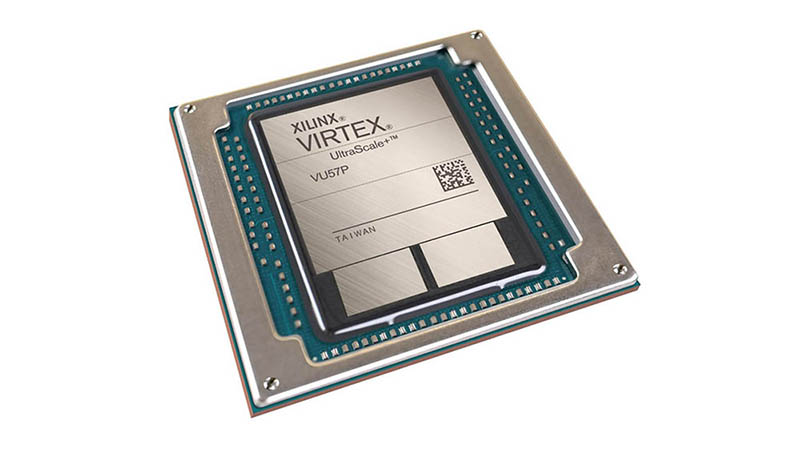
This unique hardware programmability feature gives FPGA a series of significant advantages in architecture, specifically manifested in the following characteristics of FPGA:
-
Reconfigurability: FPGAs can be reprogrammed at the circuit structure level to achieve different logic functions, adapting to various needs and rapidly iterating application scenarios, such as 5G communication and AI acceleration.
-
Strong parallel computing capability: FPGAs adopt a hardware parallel architecture, capable of executing multiple tasks simultaneously, suitable for high-throughput data processing (such as video encoding and signal processing).
-
Low latency: FPGA’s hardware logic directly executes calculations without going through instruction set parsing, suitable for scenarios with high real-time requirements (such as industrial control, autonomous driving, and high-frequency trading).
-
Short development cycle: Compared to ASICs, FPGAs have a shorter development cycle, allowing for rapid product launch.
-
High energy efficiency ratio: FPGAs can optimize hardware structures based on tasks, avoiding redundant calculations of GPUs/CPUs, achieving energy efficiency ratios of 3-5 times that of GPUs in AI inference and edge computing.
Applications of FPGA in Key Fields
Due to the outstanding advantages of FPGAs, they are widely used in various critical fields:
Communication and Networking
FPGAs are core devices for data stream processing and protocol conversion in the communication field, particularly suitable for high-speed, upgradeable network devices.
Ø Reasons for using FPGAs in this field:
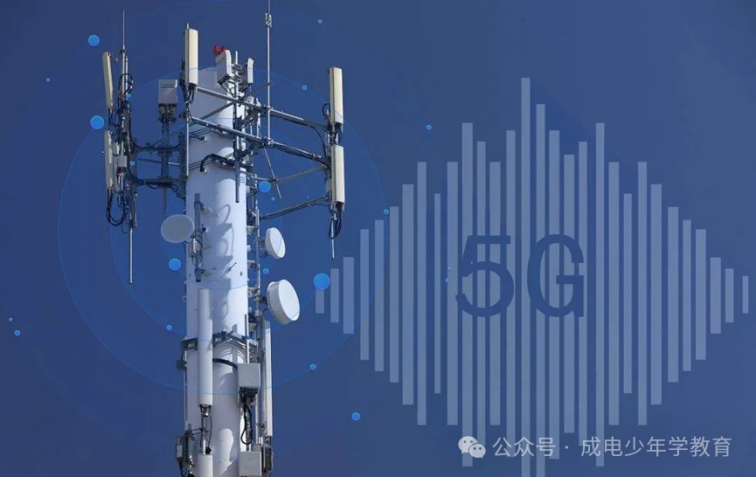
FPGAs can achieve high-speed parallel data processing and low-latency transmission, adapting to evolving communication protocols (such as 5G NR, OTN). When standards are updated (such as upgrading from 4G to 5G), they can quickly adapt through updating the bitstream without needing to redesign the chip.
Ø Application scenarios:
Communication protocol processing, signal processing, network security, high-speed data acquisition, etc.
Ø Cases:
1. Huawei’s base station uses a combination of “self-developed ASIC + Anlu Technology FPGA” to ensure the progress of 5G deployment.
2. Fudan Microelectronics launched a 5G-specific FPGA, supporting 3.5GHz band 64TR Massive MIMO, with performance matching that of Xilinx’s comparable products.
AI Acceleration and Data Centers
In the fields of artificial intelligence and big data, FPGAs are used as dedicated accelerator cards, optimized for specific AI models, providing high throughput and low power consumption hardware acceleration solutions.
Ø Reasons for using FPGAs in this field:
FPGAs can implement customized matrix multiplication units, optimizing convolution, Attention, and other operations. Compared to GPUs, FPGAs have lower latency and more controllable power consumption, suitable for edge AI or inference scenarios.
Ø Application scenarios:
1. Large model inference acceleration (such as GPT, BERT).
2. Video stream AI processing (real-time face recognition, object tracking).
Ø Cases:
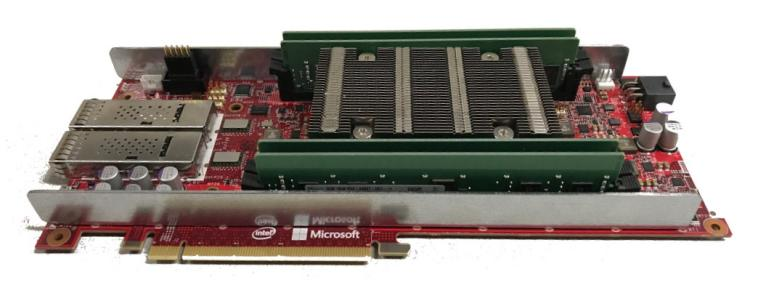
Microsoft Azure Data Center deploys Intel Stratix 10 FPGA as the Project Brainwave AI acceleration platform, supporting cloud AI services.
Industrial Automation
FPGAs are used in the industrial field for high-speed control and machine vision, enabling precise scheduling of complex processes and ultra-low latency responses.
Ø Reasons for using FPGAs in this field:
1. Achieving sub-microsecond real-time performance, processing sensor inputs and control outputs.
2. Simultaneously processing multiple data streams, suitable for high-performance multi-task parallel control.
Ø Application scenarios:
1. Machine vision: real-time defect detection, image preprocessing.
2. Servo control: high-precision motor drive and closed-loop control.
Ø Cases:
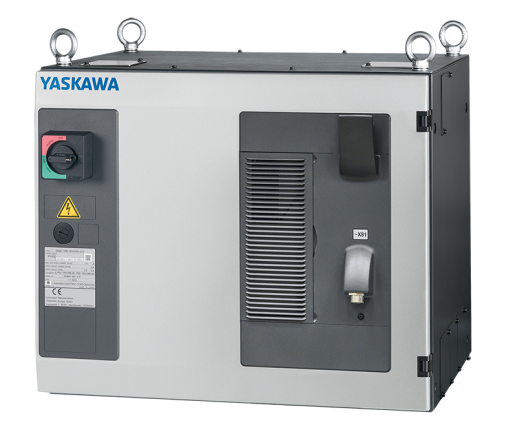
Yaskawa’s YRC1000 industrial robot controller uses Intel Cyclone 10/MAX 10 FPGA to achieve redundant monitoring and safety control of encoder signals, supporting real-time detection of motor position and speed anomalies, meeting IEC 61508 SIL2/SIL3 safety standards, effectively enhancing system reliability and functional safety while accelerating product certification and market launch cycles.
Automotive Electronics and Intelligent Driving
FPGAs support autonomous driving platforms and intelligent vehicles’ data fusion and decision support, serving as a critical link between sensors and main control chips.
Ø Reasons for using FPGAs in this field:
1. FPGAs can process high-bandwidth data from cameras, radars, and LiDAR in real-time.
2. They can flexibly adapt to different sensor interfaces, meeting complex in-vehicle bus requirements (CAN, FlexRay, Ethernet).
Ø Application scenarios:
1. ADAS (Advanced Driver Assistance Systems): lane keeping, automatic parking.
2. Sensor fusion: real-time preprocessing of multi-source data.
Ø Cases:
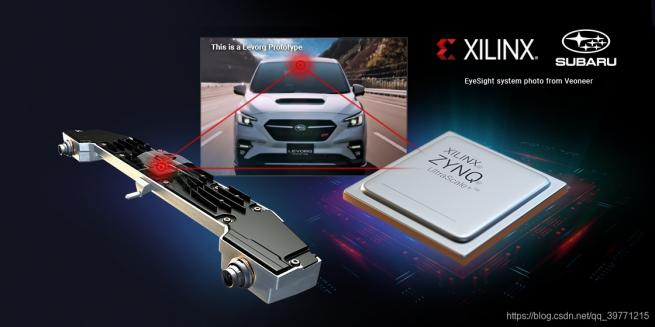
Subaru’s new Levorg vehicle-mounted ADAS system uses Xilinx Zynq UltraScale+ MPSoC (including FPGA programmable logic) to achieve real-time processing and fusion of stereo vision images for safety functions such as automatic braking, enhancing driving safety performance.
Aerospace and Defense
FPGAs undertake high-reliability computing and communication processing tasks in the aerospace field, being the mainstay of radiation-resistant electronic devices.
Ø Reasons for using FPGAs in this field:
1. The harsh aerospace environment requires radiation-resistant FPGAs to ensure long-term stable operation.
2. Flexibly responding to changing task requirements, such as on-orbit software-defined radio upgrades.
Ø Application scenarios:
1. Satellite communication: onboard processing, signal modulation/demodulation.
2. Radar/sonar: real-time beamforming, signal processing.
Ø Cases:
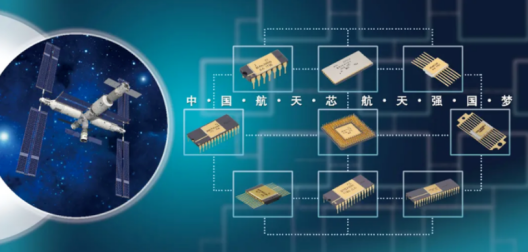
The China Aerospace Science and Technology Corporation developed a “billion-level radiation-resistant FPGA” with high frequency, high bandwidth, radiation resistance, and high integration characteristics.

FPGA Failure Cases:
From Design Flaws to System-Level Risks
Because FPGAs are widely used in critical fields, any oversight in the testing phase can lead to serious issues, as seen in the following failure cases:
Programming Errors
In a military communication device, a Xilinx Kintex FPGA was used to implement high-speed encrypted data stream processing, but the reset logic design in the HDL code was not standardized, causing the system to crash under extreme conditions. This required the device to be returned for FPGA code upgrades and reprogramming, delaying combat readiness deployment and involving contract breach compensation, with estimated losses of millions of dollars.

Physical Failures
From October 2004 to August 2011, a certain aerospace institute experienced multiple in-orbit failures caused by single-event upsets in FPGAs, leading to severe issues such as communication interruptions and abnormal signal acquisition.
Supply Chain Issues
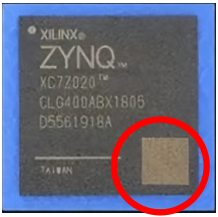
In 2011, the U.S. Navy inadvertently installed an untested Xilinx FPGA on a reconnaissance aircraft. During test flights, due to FPGA issues, the aircraft’s ice detection module failed, leading to mission failure.
Security Vulnerabilities
A new type of security vulnerability “Starbleed” was discovered in Xilinx FPGA chips, allowing attackers to extract and tamper with FPGA bitstreams to rewrite chips with malicious code, posing significant security risks.

Ensuring High Reliability of FPGA
Standardized Testing System
Because design flaws in FPGAs can lead to severe system failures and significant economic losses, thorough and comprehensive testing of FPGAs is crucial. As complex programmable logic devices, FPGA testing must cover not only functional verification but also timing, interfaces, power consumption, boundary conditions, and more, ensuring stability and reliability in various application scenarios. Especially in aerospace, military, and high-security industries, FPGA testing has become a key link in ensuring system safety.
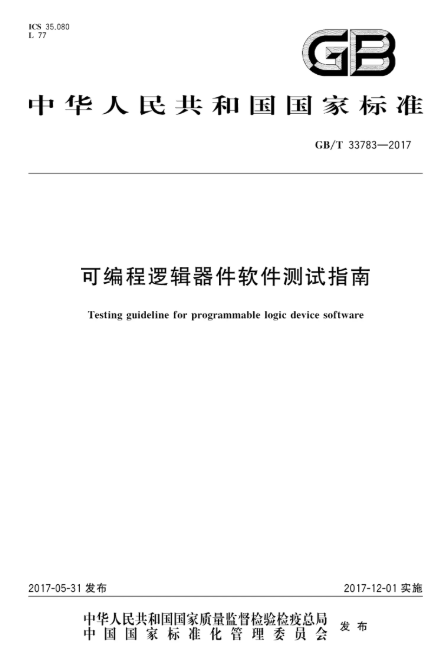
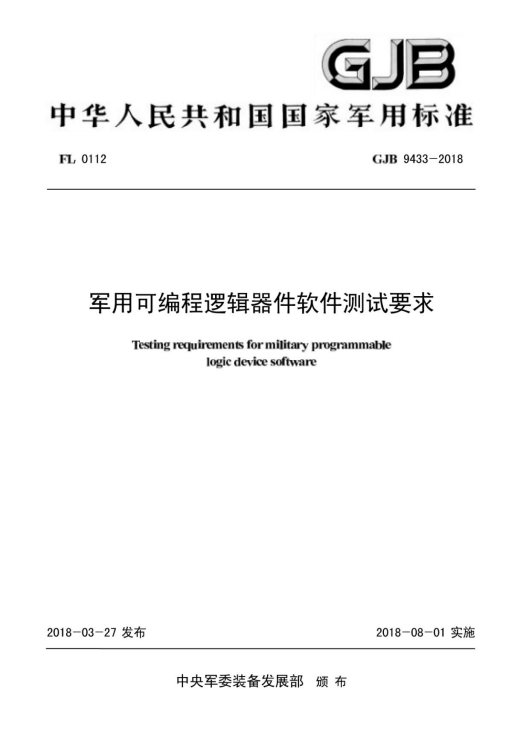
To this end, China has specifically formulated GJB 9433-2018 “Military Programmable Logic Device Software Testing Requirements” and GB/T 33783-2017 “Guidelines for Testing Software of Programmable Logic Devices” as guiding documents for FPGA testing, proposing systematic requirements for testing and establishing a standardized testing system to ensure the high-reliability application of FPGAs.
Conclusion
Using Professional Testing to Safeguard Every “Programmable Chip”
With its flexible, efficient, and reconfigurable architecture, FPGA has become an indispensable core device in fields such as aerospace, autonomous driving, and 5G communication. However, this powerful flexibility also means higher design complexity and verification challenges. Any oversight in testing can easily lead to system-level failures, resulting in significant economic and safety losses.
In the next issue, we will delve into two testing standards and the FPGA testing process, revealing how an FPGA chip undergoes rigorous testing before application.

END
About Us
The Shanghai Software Center is one of the most qualified institutions in the domestic software field for technical services. The Software Engineering Research Institute has recently focused on FPGA testing and has received full recognition of capabilities from CNAS. The FPGA testing team gathers highly educated technical talents from home and abroad, possessing aerospace-grade project experience, successfully developing a high-reliability simulation testing incentive library, and independently researching FPGA testing systems and methods based on RAG-enhanced large models.
Based on comprehensive testing qualifications, leading technological accumulation, and comprehensive capabilities, we provide customers with full-process FPGA testing services, helping systems become more stable, reliable, and intelligent.
Text | Gao Zhenquan
Editor | Li Chenxia