
Click the blue text above to follow us

📋📋📋 The contents of this article are as follows: 🎁🎁
Contents
💥1 Overview
📚2 Results
2.1 Literature Results
2.2 Reproduction Results
🎉3 References
🌈4 MATLAB Code, Data, and Article Explanation



1 Overview
Source of literature:


Abstract – We consider a joint optimization framework that simultaneously uses battery storage systems for peak shaving and frequency regulation, capturing battery degradation, operational constraints, and the uncertainty of customer loads and regulation signals. Under this framework, we use real data to show that users can reduce their electricity bills by 12%. Furthermore, we demonstrate that when batteries are used for two separate applications, the savings from joint optimization are often greater than the sum of the optimal savings from each application. A simple threshold real-time algorithm is proposed to achieve this superlinear gain. Compared to previous work that focused on using battery storage systems for a single application, our results indicate that if batteries jointly provide multiple services, they can achieve greater economic benefits than previously imagined. Keywords – Battery Management System, Data Center, Frequency Regulation Service, Power System Economics.


Battery storage systems are becoming increasingly important in the operation of power systems. With the increasing penetration of uncertain and intermittent renewable resources, storage systems are crucial for the robustness, resilience, and efficiency of energy systems. For example, studies indicate that by 2050, California will need 22 GW of storage, while the entire United States may require 152 GW of storage. Most of this capacity is expected to be achieved through distributed storage systems owned by individual consumers. Currently, the two most prominent types of consumers with significant storage capacity are information technology companies and operators of large buildings. Companies like Microsoft and Google extensively use battery storage in their data centers as a backup to on-site local generation. Today, despite the potential of these battery storage systems for grid services, they are not integrated with the power system. Whether batteries participate in grid services primarily depends on the economic benefits of these services. For instance, data centers typically replace batteries every four years. If batteries participate in the electricity market, they may degrade faster and require more frequent replacements. Do the revenues from the market justify the additional operational and capital costs? The question of how to operate batteries optimally to maximize their economic benefits is a core issue that has stimulated a significant amount of research. Issues include energy arbitrage, peak shaving, frequency regulation, demand response, etc. In recent years, it has been recognized that due to the high capital costs of batteries, serving a single application often fails to justify its investment. Moreover, selecting a single application does not consider the potential for multiple revenue streams, which may leave money on the table. Therefore, a recent series of studies have begun to analyze the joint optimization of battery energy arbitrage and regulation services. This paper is conceptually close to previous work, capturing the uncertainties of future markets and the time scale differences of multiple applications. However, compared to previous works, our study has two significant contributions: 1) We propose a joint optimization framework for batteries to perform peak shaving and provide frequency regulation services. This framework considers battery degradation, operational constraints, and the uncertainty of customer loads and regulation signals. To our knowledge, all previous works have not considered the operational costs of batteries in their optimization models, which could lead to aggressive charge/discharge responses and severely suboptimal operations. Since batteries cycle multiple times daily when used for frequency regulation and peak shaving, degradation effects play a crucial role in determining their operation. 2) We demonstrate the existence of a superlinear gain: the benefits of joint optimization exceed the sum of executing single applications. We quantify this benefit using real data from two large commercial users: Microsoft Data Center and the EE & CSE building at the University of Washington. Figure 2 provides examples of daily load profiles in both cases. The superlinear gain is fundamentally different from previous observations, which only compared the cooperative optimization benefits of single applications rather than the sum of applications. The results suggest that if batteries jointly provide multiple services by exploring the diversity of different applications, they can achieve greater economic benefits than previously imagined.



2 Results
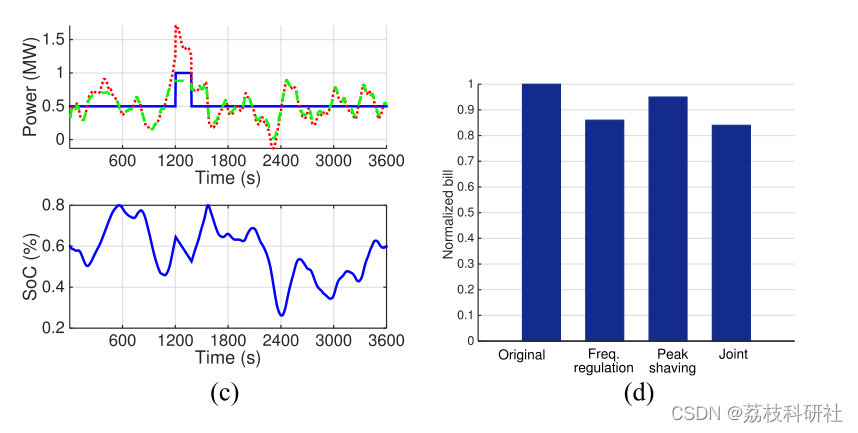
 2.1 Literature Results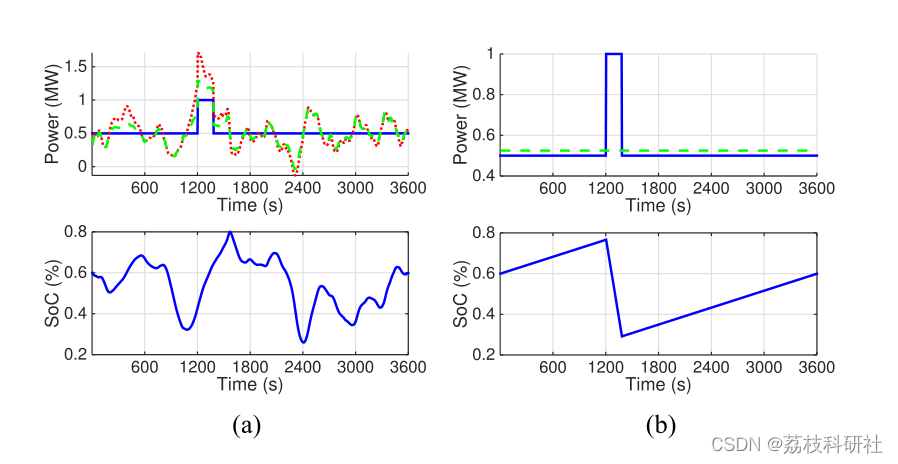
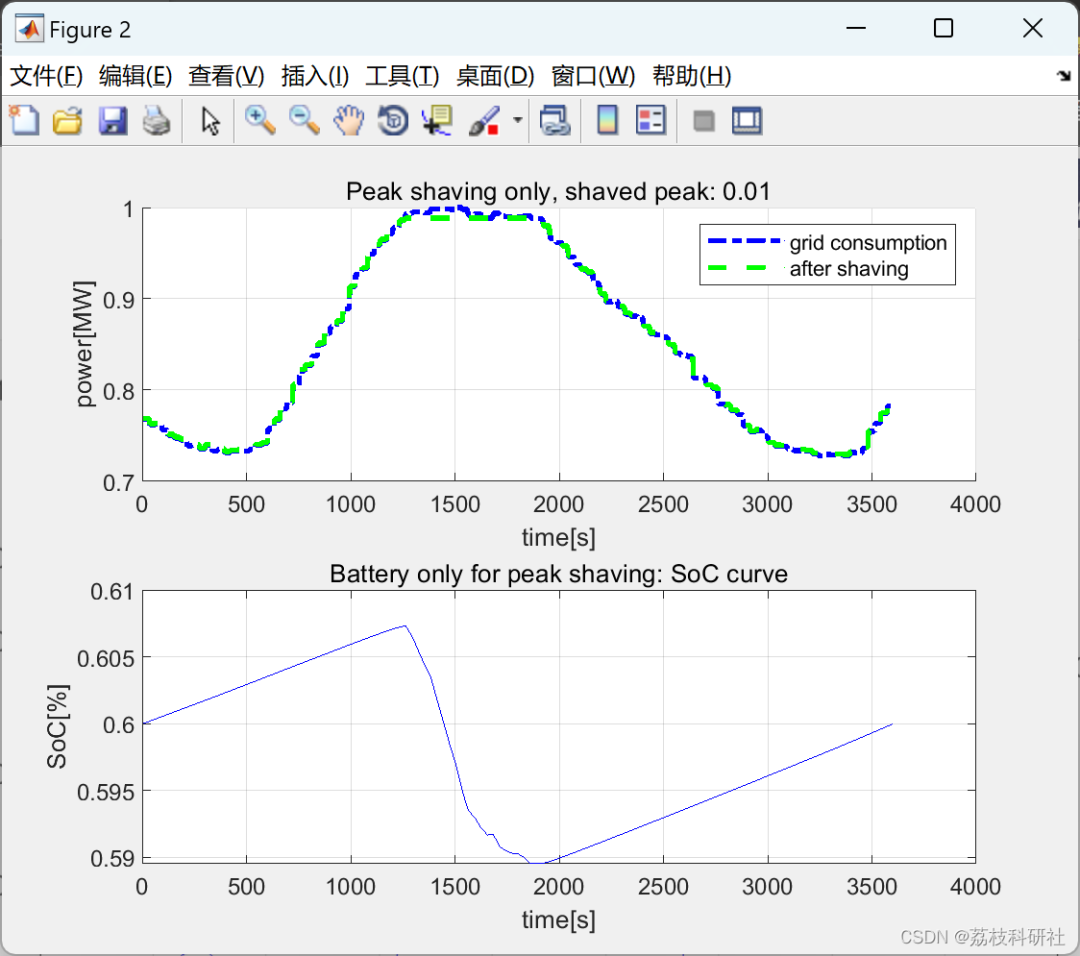
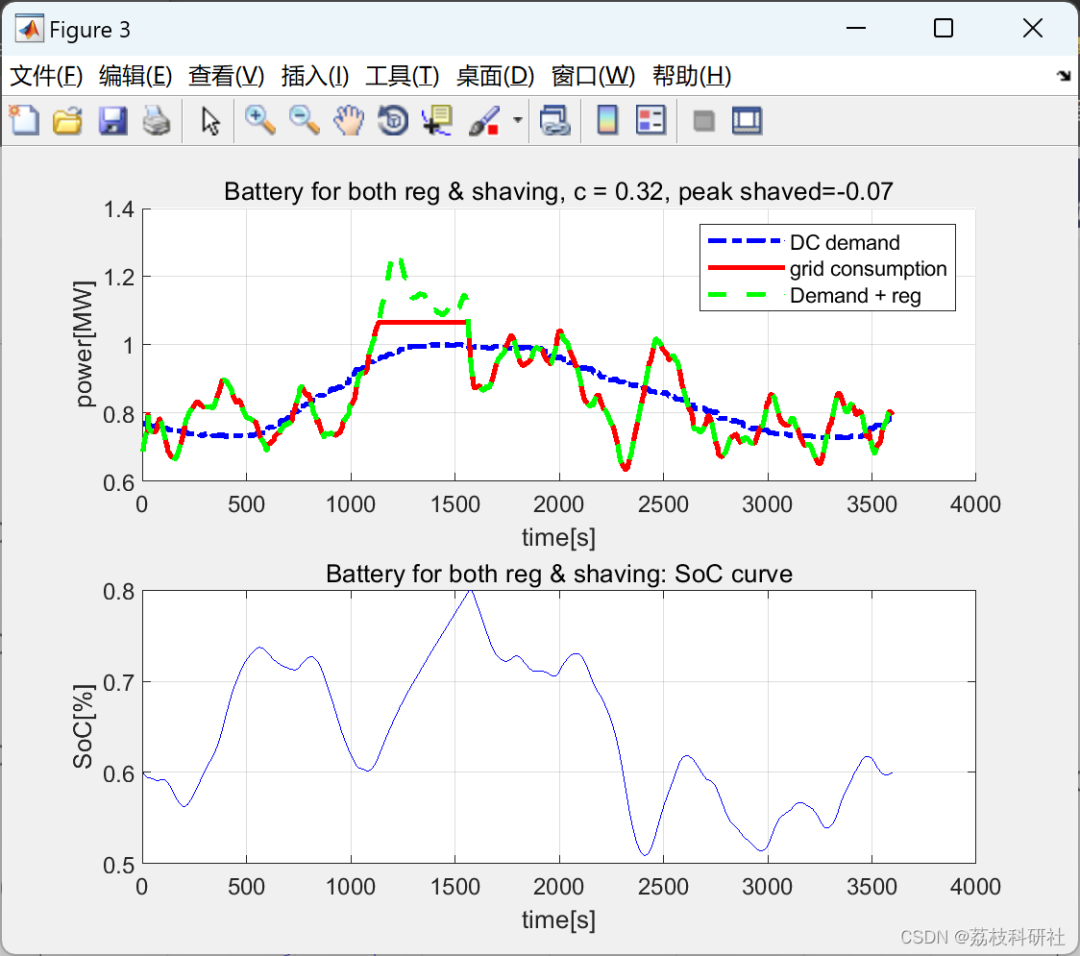
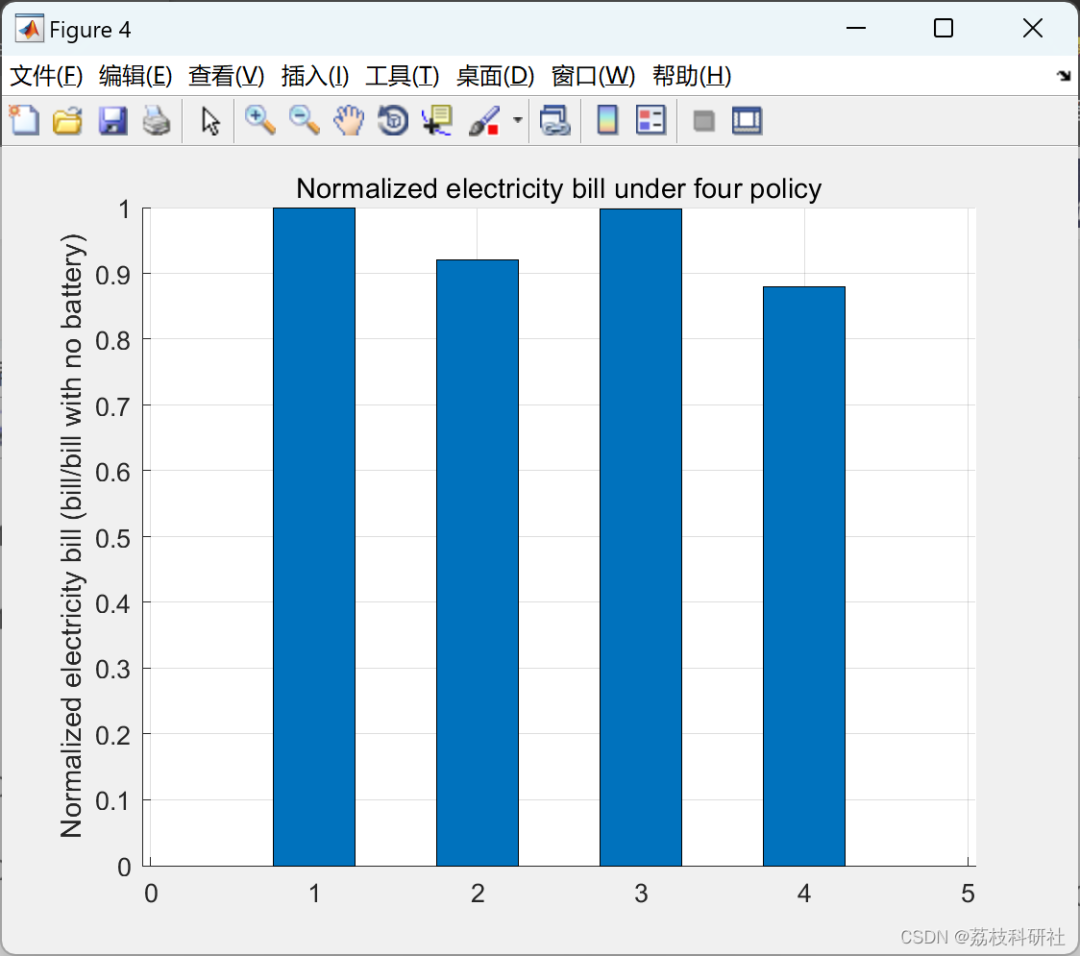
 2.2 Reproduction Results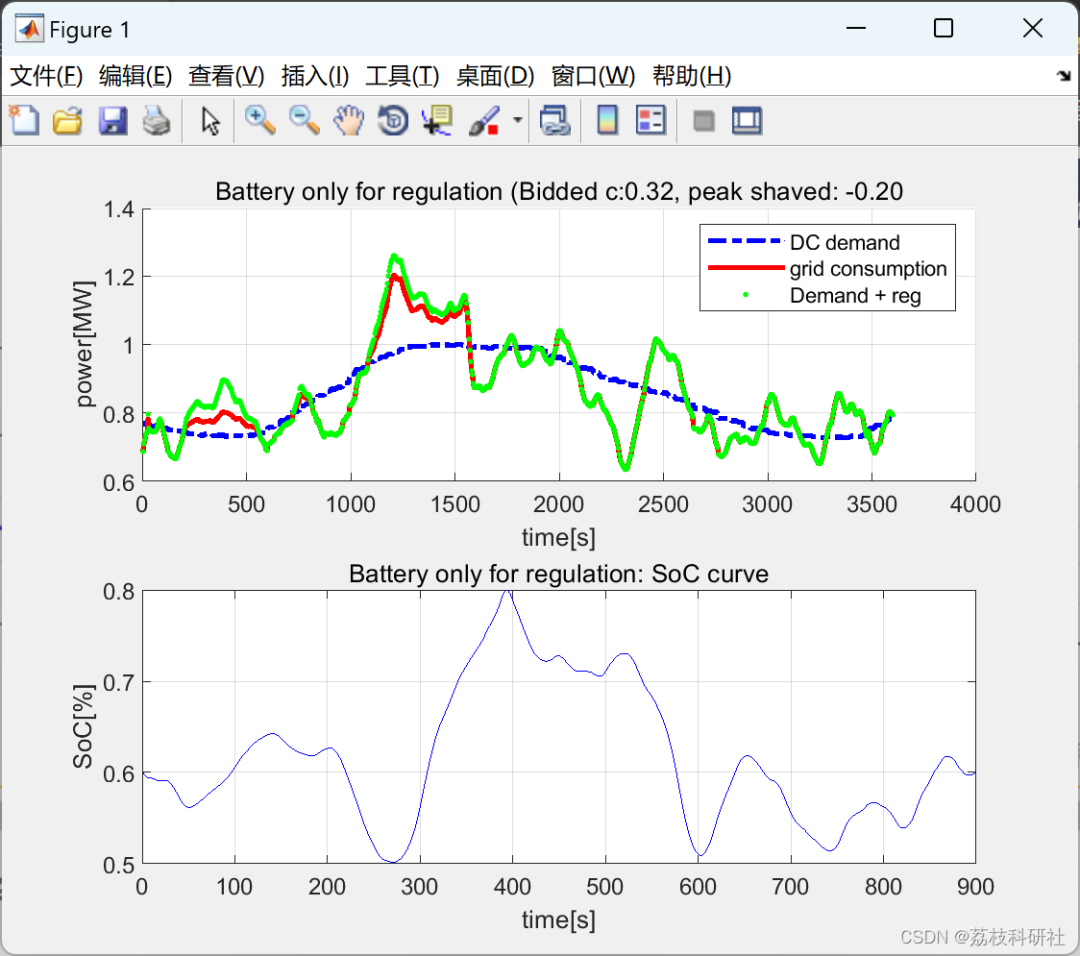


3References
Some theoretical sources are from the internet; please contact us for removal if there is any infringement.




4 MATLAB Code, Data, and Article Explanation
Previous Recommendations
Simulink | Reactive Power Control of a Small Wind Farm Connected to an Infinite Grid
MATLAB | Research on Positive Indefinite Proximal Item Regularization Based on Symmetric ADMM
MATLAB | Optimization Configuration of Electro-Hydrogen Hybrid Energy Storage Capacity to Smooth Wind Power Fluctuations
MATLAB | Parameter Analysis of Echo State Network Based on PSO for Time Series Prediction Research
MATLAB | Research on Reactive Power Optimization of Power Systems Based on Improved Genetic Algorithm [IEEE 30 Nodes]
MATLAB | Research on Wind Scenario Generation and Reduction in Power Systems Using Unsupervised Clustering Algorithms {m-ISODATA, kmean, HAC}
MATLAB | Research on Enhanced PID-Adaptive-Feedforward-Neural Network Control
MATLAB | Research on Optimal Scheduling of Microgrids with Wind, Solar, and Storage Combined Generation
MATLAB | Research on UAV Path Planning Based on Grey Wolf Optimization Algorithm
MATLAB | Load Forecasting Based on Variational Mode Decomposition and Sparrow Search LSSVM [VMD-SSA-LSSVM] [Multivariate]
MATLAB | State Estimation Based on Invariant Extended Kalman Filter for Sensor Fusion
MATLAB | Demand-Side Energy Sharing Distributed Trading Strategy Based on Value Recognition
MATLAB | Improved Particle Filter for UAV 3D Trajectory Prediction Method
MATLAB | Non-Cooperative Trading Method for Tripartite Market Entities Oriented to Integrated Energy Parks Based on Particle Swarm Optimization Algorithm
Robust Planning of Regional Integrated Energy Systems Considering Multi-Energy Load Uncertainty (Python Code Implementation)
MATLAB | Bi-Level Optimization Scheduling Strategy Considering Large-Scale Electric Vehicle Integration into the Grid [IEEE 33 Nodes]
MATLAB | Optimal Scheduling of DC Microgrids Based on Bi-Level Consensus Control
[Paper Reproduction] Research on Blockchain-Based Distributed Photovoltaic Local Consumption Trading Model (MATLAB Code Implementation)
[State Estimation] Research on Discharge Time Prediction and Usage Characteristics of Lithium-Ion Batteries Based on Particle Filter and Kalman Filter (MATLAB Code Implementation)
MATLAB | Optimization Planning of Integrated Energy Systems Based on Generalized Benders Decomposition Method
MATLAB | Research on Power Flow Calculation of Interconnected AC/DC Power Systems
[PSO-LSTM] Power Load Forecasting Based on PSO Optimized LSTM Network (Python Code Implementation)
MATLAB | Power System Load and Price Forecasting Optimization Model
Simulink | Single-Stage Grid-Connected Photovoltaic System
[Electric Vehicle] Research on Fuel Cell Hybrid Electric Vehicle Based on ADMM Bi-Level Convex Optimization (MATLAB Code Implementation)
MATLAB | Multi-Agent Distributed Optimal Scheduling of Microgrid Clusters Based on Target Cascade Method
MATLAB | Research on Partitioning Models of Resilient Distribution Networks [IEEE 33 Nodes]
[State Estimation] Modeling and Countermeasures for False Data Injection Attacks on Power System State Estimation (MATLAB Code Implementation)
[Three-Phase Grid-Connected Photovoltaic] Simulation of a Three-Phase Grid-Connected Photovoltaic System with a Rated Power of 33kW under Linear and Non-Linear Load Conditions (Simulink)
MATLAB | Research on Adjusting Discrete PID Controllers Based on Particle Swarm Optimization