l When Property Management Meets Smart Fire Safety: The IoT Enhances Community Safety“Visible and Manageable”
At three in the morning, a smoke detector in the underground garage of a community suddenly detects an abnormal smoke concentration, triggering an alarm automatically.—— The monitoring center’s large screen instantly displays precise location information, while simultaneously activating on-site sound and light alarms, initiating the elevator emergency descent system, and sending graded warning notifications to homeowners’ mobile phones. The smart fire extinguisher at the micro fire station also pushes the optimal route for access. This is not a scene from a science fiction movie, but a true reflection of the collaboration between smart fire safety and property management. With the deep penetration of IoT technology, traditional property fire management is undergoing a revolution from “passive response” to “active prevention”.
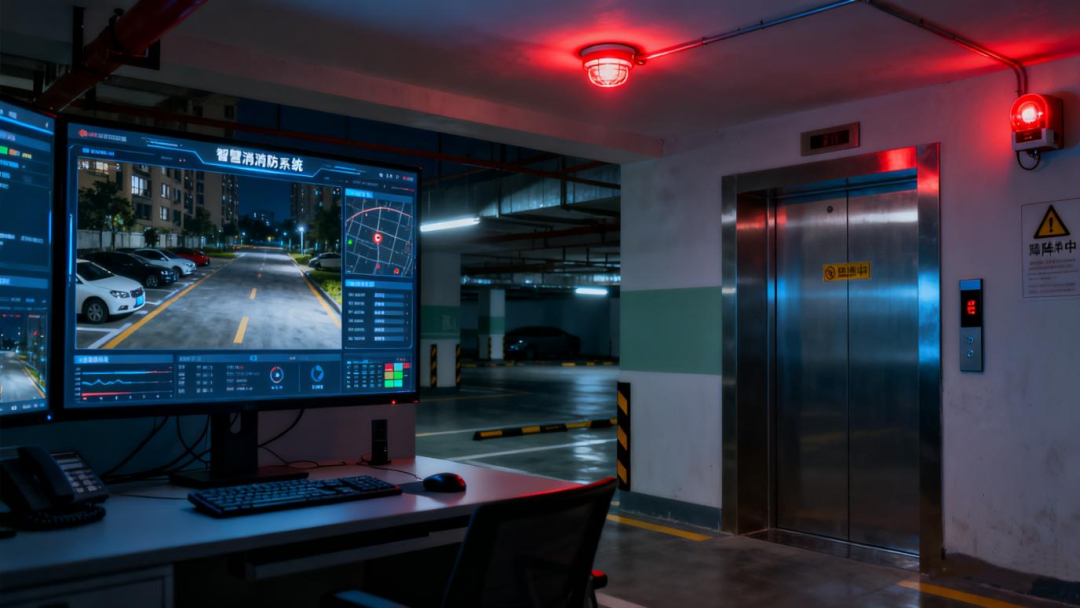
1.The Pain Points of Traditional Property Fire Safety, Solved by IoT
For a long time, property fire management has faced “three major difficulties”: the first is insufficient manpower and regulatory blind spots, with old community fire facilities being scattered and numerous, relying on manual inspections is not only time-consuming and labor-intensive but also prone to missed or incorrect inspections, making hidden safety hazards in concealed areas even harder to detect; the second is delayed emergency response, as fires often escalate from small to large disasters due to untimely detection and slow information transmission, with some homeowners even becoming desensitized to fire alarms “ignoring them”; the third is facility maintenance challenges, with issues like expired fire extinguishers, dry fire hydrants, and malfunctioning alarm systems being difficult to manage in real-time through regular inspections, becoming a “ticking time bomb” for community safety.
The emergence of IoT technology provides systematic solutions to these pain points. Smart fire safety installs sensors and IoT modules on fire facilities, establishing a “perception – transmission – analysis – response” full-chain management system, allowing property fire management to achieve “status visibility, hazard traceability, risk control, and emergency traceability”.
2.How Does Smart Fire Safety Empower Property Management? Four Major Application Scenarios + Real Cases Hitting the Core
1. 24/7 Intelligent Monitoring, Zero Missed Hazards
The smart fire safety system connects smoke detectors, temperature sensors, water pressure monitors, and electrical fire monitoring devices to the IoT platform, continuously collecting data 24 hours a day. Whether it is faint smoke in the underground garage, overloaded circuits in the distribution room, or insufficient water pressure in fire hydrants, the sensors can capture anomalies immediately and upload them to the property monitoring center via 5G and NB-IoT. The system can also automatically generate a hazard ledger, marking risk levels, allowing property management personnel to view the operational status of all fire facilities in real-time through a mobile APP or computer, achieving “fire management without leaving home”.

Typical Case: In response to the pain points of fire safety in high-rise buildings, such as “difficult inspections and slow responses”, a certain region implemented a “smart fire hydrant pressure monitoring system”, installing 166 monitoring points in 55 high-rise residential buildings and 37 public buildings, monitoring water pressure status in real-time 24 hours a day. Previously, property management had to “inspect daily and maintain monthly”, but now the system can detect water pressure anomalies in “seconds”, completely eliminating the missed inspection issues of traditional manual checks. A certain high-end community has integrated fire alarms, automatic sprinklers, and power voltage monitoring systems, allowing property management to visualize the fire safety status of the entire community from the monitoring center, ensuring the fire safety of over 1800 households at all times.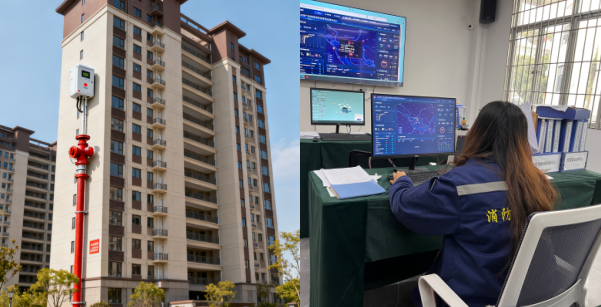
2. Graded Warnings + Rapid Response, Closing the Safety “Last Mile”
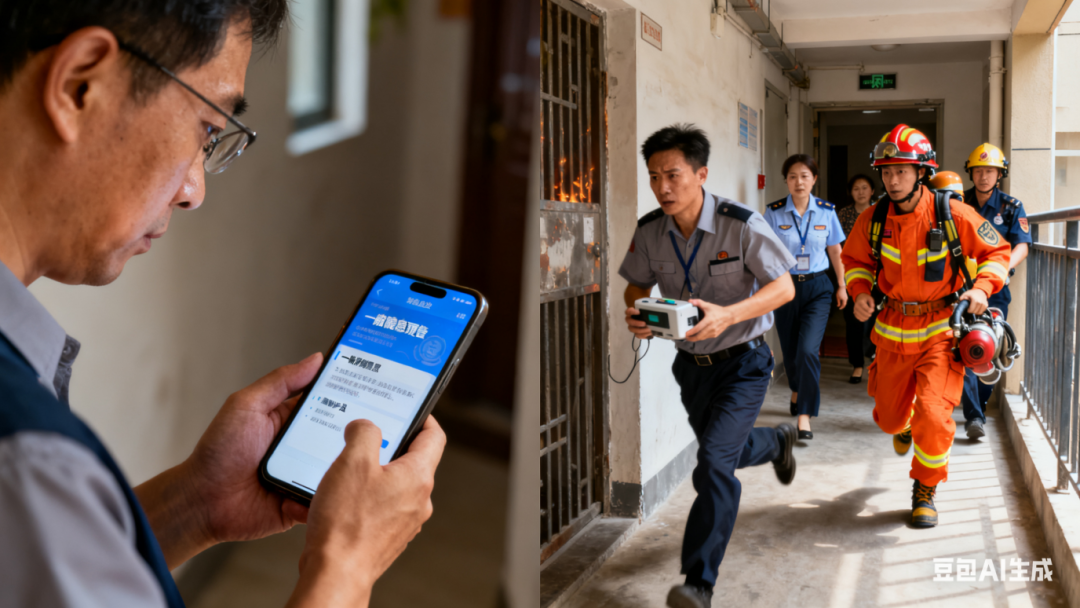
Traditional fire alarms often adopt a “one-size-fits-all” approach, which can easily cause panic among homeowners or be ignored. The smart fire safety system uses a graded warning mechanism, automatically pushing different levels of alarms based on the severity of the hazard: general hazards only notify property management personnel for timely handling; major hazards simultaneously alert homeowners, community committees, and fire rescue departments, forming a multi-party collaborative response.
Typical Case: A certain high-end community once experienced a special alarm — dust generated from a resident’s wall sanding during renovations triggered the smoke detector, and the property monitoring center immediately alerted the area patrol personnel, who arrived on-site within 5 minutes to handle the situation and reset the equipment. Similarly, a certain old community undergoing concentrated renovation used the smart fire safety platform to synchronize abnormal fire hydrant data to property management, the community, and fire departments, successfully addressing 3 instances of insufficient water pressure in fire hydrants this year, achieving “early detection and early handling”. This rapid response mechanism compresses the initial fire handling time from “hours” to “minutes”.
3. Full Lifecycle Management of Facilities, Reducing Property Operating Costs
Maintenance of fire facilities is a significant expense for property management. Smart fire safety achieves digital management of the full lifecycle of facilities through IoT technology. The system automatically generates maintenance reminders based on the service life and inspection data of fire facilities, avoiding safety risks and fines due to expired inspections; at the same time, it optimizes maintenance plans through big data analysis, reducing unnecessary manual inspections and replacements, thus lowering property operating costs.
Typical Case: A smart water pressure monitoring system in a certain region not only enhanced safety but also significantly reduced costs for property management — previously requiring a team of 3 people to complete high-rise fire hydrant inspections, now one person can manage it all through the platform, reducing labor costs by 60%, while also promptly identifying multiple hidden water leakage issues, preventing water resource waste and equipment damage. A renovation project in an old community incorporated smart fire safety as a standard feature, synchronizing construction with road repairs and pipeline updates to avoid redundant construction, reducing overall renovation costs by over 25%.
4. Precisely Addressing Specific Hazards, Strengthening Scene-Specific Safety Defenses
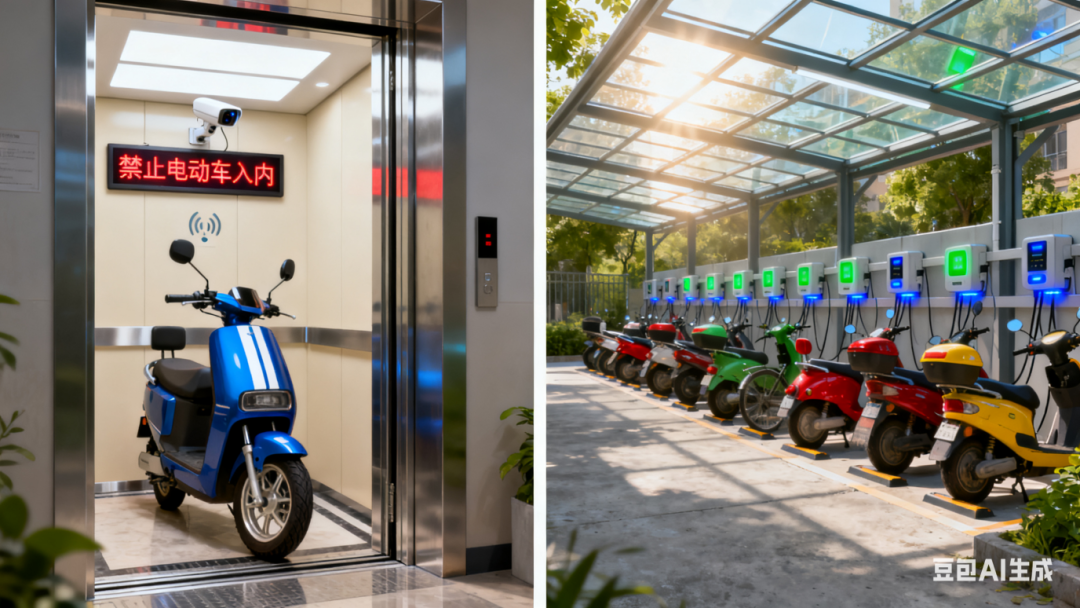
Smart fire safety also develops specialized solutions for high-frequency hazards such as electric bicycles being brought upstairs and insufficient water supply in high-rise buildings, making property management more targeted.
Typical Case: A certain medium-sized community with over 700 households has more than 900 electric bicycles, with significant hazards from charging them in the building. The property management installed smart “elevator control” systems on 16 elevators, which detect electric bicycles entering through AI cameras, immediately issuing voice warnings and preventing the elevator doors from closing, technically eliminating the hazard. At the same time, the community added 2 smart charging sheds and 100 charging ports, equipped with overload protection and automatic shut-off features, meeting residents’ needs while eliminating the risk of “flying wire charging”. A high-rise community in a certain area has also enabled the fire rescue department to access real-time water supply data through the smart water pressure system, significantly improving the success rate of fire extinguishing.
3.From Pilot to Popularization, Smart Fire Safety Becomes a New Trend in Property Upgrades
Today, smart fire safety has taken root in communities, office buildings, and industrial parks across multiple cities nationwide. After introducing a smart fire safety system, a certain high-end community saw an 80% increase in fire hazard inspection efficiency, with homeowner satisfaction rising from 82 to 96 points; a certain old community successfully resolved the challenges of fire inspections and numerous hazards in high-rise residential buildings by installing IoT fire equipment, becoming a model for fire safety renovation in old communities. A concentrated renovation area in an old community has also used 2 communities as pilot projects to promote smart fire safety experiences to 13 old communities, forming a replicable industry model.
With the advancement of the construction of “smart cities” and “safe communities”, smart fire safety is no longer just a “bonus item” for high-end properties, but has become a “must-have item” for the upgrade and transformation of the property industry. For property companies, introducing smart fire safety not only enhances fire safety management levels and reduces operating costs but also strengthens homeowner loyalty and enhances brand competitiveness; for homeowners, smart fire safety brings a safer and more convenient living environment, making “home security” a tangible reality.
In the future, with the deep integration of technologies such as artificial intelligence, big data, and blockchain with smart fire safety, property fire management will achieve more precise risk prediction, smarter emergency response, and more efficient multi-party collaboration. When property management meets smart fire safety, the IoT not only reconstructs the community safety network but also opens a new chapter of “technology guarding safety”. It is believed that in the near future, smart fire safety will enter thousands of households, making every community a safe, comfortable, and livable happy home.
 Statement | Content compiled from public sources, copyright belongs to the original author
If there is any infringement, please inform us to delete it
With craftsmanship guarding our original intention,let everyone share fire safety!