 China is the world’s largest producer and consumer of fruits, but the post-harvest loss rate for fruits is as high as 15%-25%, far exceeding the 5% level of developed countries. Losses mainly occur in the cold chain “breaks” such as untimely pre-cooling after picking, imprecise temperature control during transportation, and rough storage management. Traditional cold chains face three major pain points: “invisibility, uncontrollability, and lack of traceability,” which severely restrict the improvement of fruit quality and industry value.
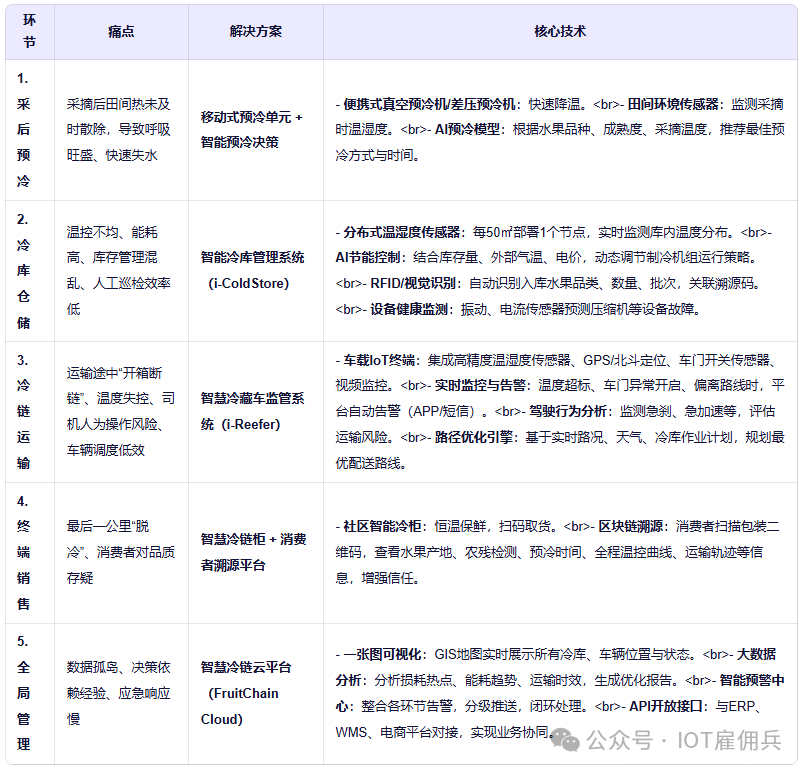
This article focuses on the fruit industry, integrating technologies such as the Internet of Things (IoT), artificial intelligence (AI), big data, and blockchain to create a comprehensive smart cold chain system covering post-harvest pre-cooling—cold chain storage—mainline transportation—urban distribution—terminal sales, achieving fruit preservation, loss reduction, quality assurance, full traceability, and efficient operation.
1. Importance of the Cold Chain Industry in Modern Agriculture
1. Ensuring the Quality and Safety of Agricultural Products:
Fruits, vegetables, meat, and seafood are perishable agricultural products, and their metabolism does not stop after picking/slaughtering. The cold chain effectively inhibits microbial growth and enzyme activity through continuous low-temperature control, delaying spoilage and maintaining freshness, taste, and nutritional value. It prevents food safety risks caused by temperature fluctuations (such as the growth of pathogenic bacteria).
2. Significantly Reducing Post-Harvest Losses:
Statistics show that the post-harvest loss rate of fruits and vegetables in China once reached 20-30%, far exceeding the 5% level of developed countries. A complete cold chain logistics system can reduce the loss rate to below 5%-10%, significantly increasing farmers’ income and resource utilization efficiency.
3. Extending Sales Cycles and Market Radius:
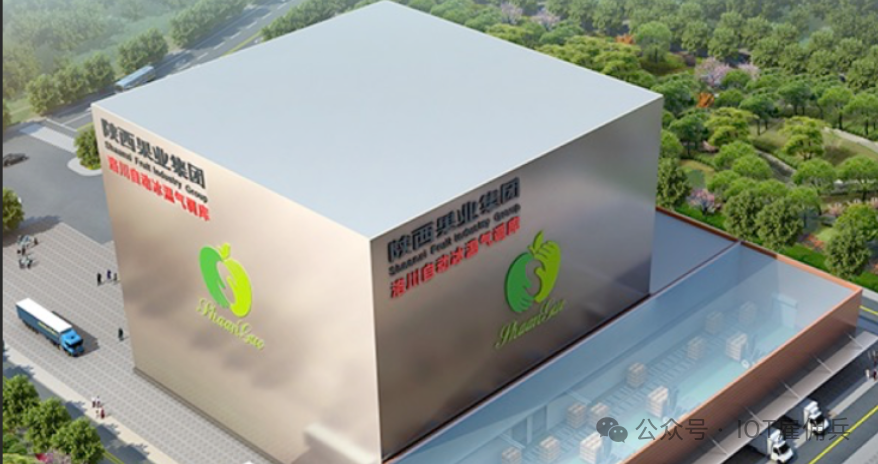
The cold chain makes off-season sales possible, adjusts market supply, and stabilizes prices. It breaks geographical limitations, allowing high-quality agricultural products from remote areas (such as apples and kiwis from Shaanxi, deep-sea seafood) to be sold nationwide and even globally, achieving efficient circulation from “field to table.”
4. Enhancing the Added Value of Agricultural Products:
Products like apples that undergo pre-cooling, grading, packaging, and enter the cold chain have a high degree of commercialization, good appearance, stable quality, and can be sold at higher prices, promoting the upgrade of the agricultural industry.
2. How IoT Technology Empowers the Development of the Cold Chain Industry
The Internet of Things technology injects intelligent genes into the traditional cold chain through the architecture of “perception layer, network layer, platform layer, and application layer,” achieving visualization, controllability, traceability, and intelligent management.
1. Real-time Monitoring and Early Warning of Temperature and Humidity (Perception + Control)
Technical Application: Deploy high-precision temperature and humidity sensors in cold storage, refrigerated trucks, and refrigerated containers to collect data in real-time.
Empowerment Effect: Real-time visual management allows personnel to check the temperature at each node anytime via a mobile app or computer backend.
Automatic Alarm: When the temperature exceeds the preset safety range (e.g., refrigeration failure, door not closed), the system immediately sends SMS, WeChat, or app push alerts to the responsible person, enabling quick response and avoiding the waste of an entire batch of goods.
Automatic Report Generation: Automatically generate temperature control records that comply with GSP/GMP regulations, facilitating audits and compliance.
2. Asset and Location Tracking (Positioning + Management)
Technical Application: Install GPS/Beidou positioning modules and RFID tags on refrigerated trucks, pallets, and turnover boxes.
Empowerment Effect: Vehicle trajectory visualization: Real-time grasp of the location, driving route, and estimated arrival time of refrigerated trucks, optimizing scheduling.
Prevent Theft and Loss: Full tracking of valuable or fragile items.
Improve Loading and Unloading Efficiency: RFID technology enables rapid batch inventory, reducing human errors.
3. Intelligent Operation and Maintenance of Equipment and Energy Management
Technical Application: Install vibration, current, voltage, and other sensors on key equipment such as refrigeration units and generators in cold storage.
Empowerment Effect: Predictive Maintenance: Analyze equipment operation data to detect potential faults (e.g., compressor anomalies) in advance, shifting from “passive repair” to “proactive prevention,” reducing downtime losses.
Energy Consumption Optimization: Monitor energy consumption in various areas of cold storage, and combine factors such as inventory levels and external temperatures; AI algorithms can automatically adjust refrigeration intensity, achieving energy savings (10%-30% reduction in energy costs).
4. Construction of a Full-Process Traceability System
Technical Application: Chain the IoT-collected temperature control data, GPS trajectories, entry and exit records, inspection reports, etc., onto a blockchain or store them in a cloud database.
Empowerment Effect: One code for one item traceability: Consumers can scan to view the entire process information of agricultural products from production, harvesting, pre-cooling, transportation, storage to sales, enhancing trust. Quick Problem Localization: In the event of a food safety incident, quickly identify the problematic link for precise recall, reducing the impact range.
5. Intelligent Decision-Making and Supply Chain Collaboration
Technical Application: Based on the massive data aggregated by IoT, combined with big data analysis and artificial intelligence.
Empowerment Effect: Demand Forecasting: Predict market demand based on historical sales, weather, holidays, etc., guiding production and inventory.
Path Optimization: Dynamically plan the optimal delivery route, avoiding congestion and ensuring timeliness. Inventory Optimization: Achieve refined management of cold storage inventory, reducing backlog and stockouts.
Conclusion: The cold chain industry is the “lifeline” of high-quality development in modern agriculture, ensuring the continuity of quality and realization of value for agricultural products after they leave the land. As a core empowering tool, IoT technology is profoundly transforming the traditional cold chain: from “black box” transportation to “transparent” management, from “experience-driven” to “data-driven,” and from “passive response” to “proactive prevention.” In the future, with the deep integration of 5G, AI, blockchain, and IoT, smart cold chains will become a key component of modern agricultural infrastructure, providing strong support for ensuring national food safety, reducing waste, and promoting rural revitalization.