
OpenAI’s First AI Hardware Set to Launch Within Two Years: What Does Altman Mean by ‘Wanting to Lick’ the Prototype?
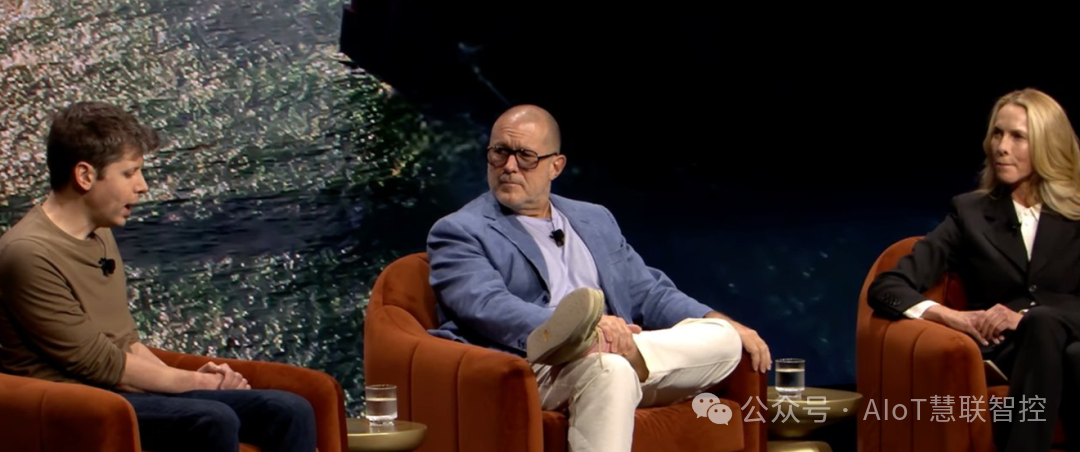
While the global tech community is still amazed by every update of ChatGPT, OpenAI has already set its sights on a more disruptive field—AI hardware.
“I want to lick it,” said OpenAI CEO Sam Altman when discussing the company’s first AI hardware prototype, a statement that is quite shocking.
What technical ambitions lie behind this seemingly absurd remark from the tech leader? Can OpenAI’s first hardware device redefine the boundaries of AI hardware just as ChatGPT has disrupted the software world?
01
Silicon-Based ‘Forbidden Fruit’: Why Does Altman Want to ‘Lick’ Hardware?
In the latest podcast, “Logan Bartlett Show,” Altman unexpectedly dropped a bombshell—OpenAI is developing the company’s first AI hardware device.
Even more surprising was his peculiar expression when describing the prototype: “I want to lick it.” This almost childlike instinctive reaction may hide a deeper design philosophy.
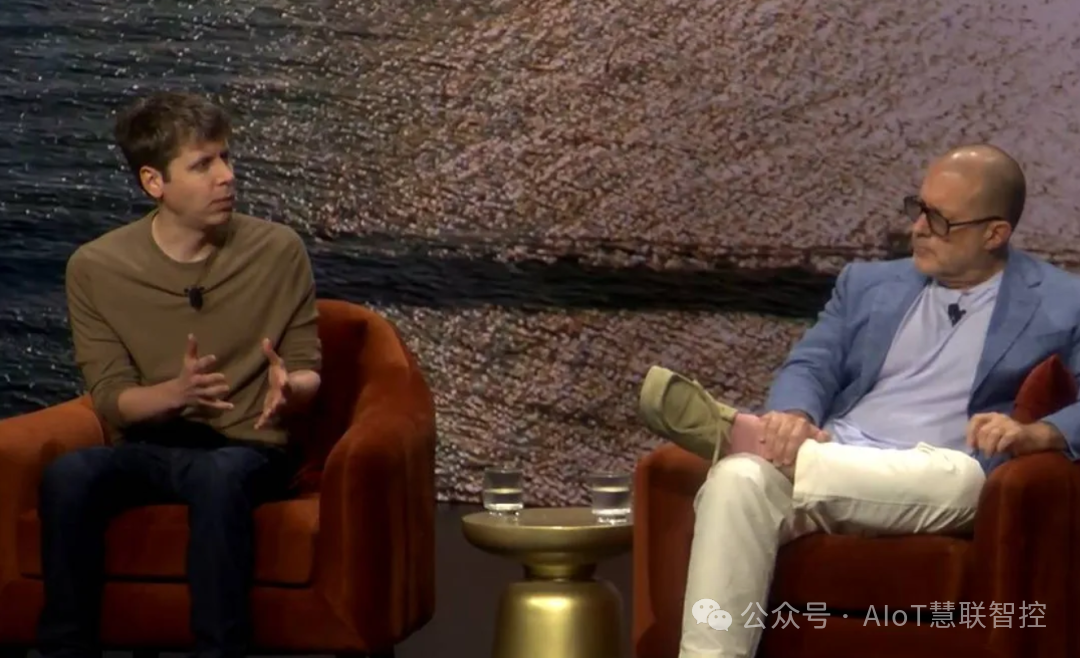
Altman explained that when something evokes such a primal impulse, it means it has reached a certain pinnacle in industrial design and user experience. This aligns with Steve Jobs’ perfect pursuit of products that one would want to lick.
The leader of OpenAI further elaborated on his hardware philosophy: “The best tech products should evoke emotional responses from people, even a sense of primal connection.”
In the history of technology, this almost physiological attraction to products often heralds the arrival of disruptive devices—just as the smooth, rounded edges of the original iPhone made people want to touch it.
Altman’s “licking impulse” may hint that OpenAI’s hardware products will bring unprecedented innovations in materials, shapes, or interaction methods.
02
Walking on Two Legs: OpenAI’s Hardware Ambitions Cannot Be Hidden
Altman clearly stated in the podcast that OpenAI is not satisfied with merely being a software company. “We will definitely develop more hardware,” he stated frankly, “and I hope they can embody more industrial design.”
This is not Altman’s first foray into the hardware field. In fact, his collaboration with former Apple design legend Jony Ive on an AI hardware project has long been an open secret.
The collaboration between two top figures from different fields aims to create an AI device with natural and intuitive interaction methods, potentially revolutionizing how we interact with technology.
Meanwhile, Altman has personally invested in hardware startups such as Humane and Rewind AI.Humane’s AI pin has already demonstrated the potential for AI interaction without a screen, while Rewind AI focuses on creating wearable devices that record everything.
These moves present a clear strategic picture: OpenAI is building a complete AI hardware ecosystem through a dual approach of self-development and ecological investment.
In today’s AI competition, which has shifted from pure software to integrated hardware and software, OpenAI clearly does not want to cede this strategic territory.
03
Challenging Giants: Where is the ‘Holy Grail’ of AI Hardware?
The field of AI hardware is no longer a blue ocean. Tech giants are fiercely competing here:
Meta’s smart glasses in collaboration with Ray-Ban have gone through multiple iterations; Amazon’s Alexa has long been integrated into various home devices; Google’s Project Astra showcases powerful capabilities for real-time visual Q&A, while Apple’s upcoming AI strategy is highly anticipated.
However, existing AI hardware still faces many pain points: limited understanding of voice assistants, difficulties in inter-device connectivity, insufficient battery life, privacy and security issues, and most critically—the lack of a truly intelligent experience.
Altman and his team believe that OpenAI, with its leading advantage in large language models, can create AI hardware that understands users better and possesses more “common sense.”
The real breakthrough may lie increating a completely new interaction paradigm that transcends the current “wake word + command” model, achieving a more natural and context-aware conversational experience.
This is precisely where OpenAI’s core competitiveness lies. If it can combine the powerful understanding and generative capabilities of the GPT series models with carefully designed hardware forms, it may truly create the next explosive computing platform in the market.
04
From Virtual to Physical: Why AI Must Be ‘Embodied’?
The leap from ChatGPT to AI hardware may seem sudden, but it actually aligns with the inherent logic of technological development.
AI needs more “senses” to understand the world. Pure text models are like a genius trapped in a dark room; although well-read, they cannot perceive the rich details of the real world. Hardware sensors can become AI’s eyes, ears, and even touch.
Physical forms can establish closer user relationships. People may keep a distance from Siri on their phones, but often form emotional connections with smart speakers that have a personalized image at home. The sense of physical presence is key to building trust.
Dedicated hardware can unleash the full potential of AI. AI applications on general-purpose devices are often limited by power consumption, computing power, and network, while hardware specifically designed for AI can provide a smoother and lower-latency experience through chip-level optimization.
What Altman is pursuing is likely a device that can become an “AI companion”— it is not just a tool, but a digital presence that truly understands you and grows with you.
This vision also echoes the ultimate goal of AGI (Artificial General Intelligence)—to create an agent that can fully understand and adapt to the human world.
05
The Long Road Ahead: The Life-and-Death Challenges of OpenAI Hardware
Despite the enticing prospects, OpenAI’s hardware journey is far from smooth.
The high barriers to hardware development are the foremost challenge. The transition from software to hardware is fraught with difficulties; even giants like Microsoft have faced setbacks in the hardware field.
Supply chain management, production processes, and quality control—every link could become a ” Waterloo” for software companies. Google’s development after acquiring Nest did not meet expectations, serving as a cautionary tale.
At the same time,the business model for AI hardware remains unclear. Currently, no company can achieve profitability solely through AI hardware; most devices still rely on subsequent service and subscription revenue.
Balancing user experience is an even trickier challenge. Devices need to find the perfect balance between powerful functionality and energy efficiency, between always listening and protecting privacy.
Moreover, OpenAI faces unique organizational challenges.Can a company focused on research and software successfully establish the design, engineering, and supply chain management capabilities required for hardware?
Can Altman replicate Jobs’ miracle, perfectly integrating software and hardware? All of this remains to be seen.
Altman has stated on various occasions: “True AI should not be confined to screens; it should integrate into our living environments, understand our needs, and even anticipate our intentions.”
Currently, OpenAI’s hardware device is still under strict confidentiality, but insiders have revealed thatit may be a home device that combines practicality with emotional connection, rather than a replacement for phones or computers.
History tells us that every revolution in human-computer interaction is accompanied by the birth of new hardware. Personal computers brought graphical interfaces, and smartphones ushered in the touch era. The next breakthrough hardware of the AI era may very well be hidden in that prototype in OpenAI’s lab that makes one “want to lick it.”

Previous Issues


Consultation for Cooperation:

Disclaimer:
This document may contain forward-looking information, including but not limited to information regarding future financial, operational, product lines, new technologies, etc. Due to many uncertainties in practice, actual results may differ significantly from the forward-looking information. Therefore, the information in this document is for reference only and does not constitute any breach or commitment. The above information may be modified without notice.